 MapUrbex
A practical guide to the Auvergne-Rhône-Alpes urbex map, with hidden location types, research methods, safety basics, and responsible exploration tips.
Auvergne-Rhône-Alpes Urbex Map: Hidden Locations and Responsible Exploration Guide
The Auvergne-Rhône-Alpes urbex map is useful because the region is large, varied, and difficult to research with random social posts alone. Former industrial valleys, spa towns, railway corridors, rural plateaus, and mountain tourism zones all create different types of abandoned places.
A good map does more than show pins. It helps sort reliable leads, remove duplicates, and plan responsible exploration with context, access awareness, and preservation in mind. That is especially important in a region where distance, weather, and terrain can change a visit quickly.
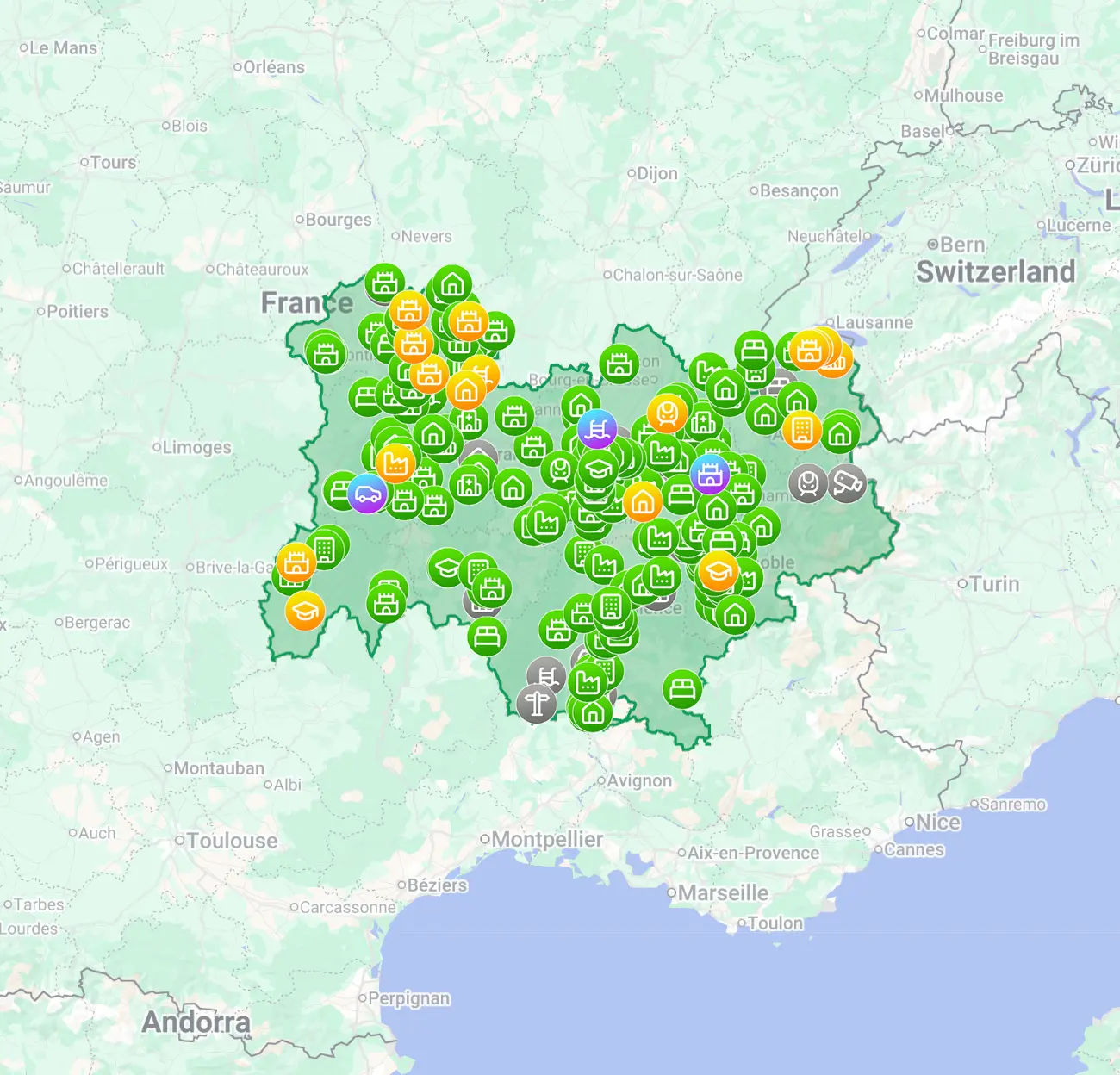
Where can you find an urbex map for Auvergne-Rhône-Alpes?
You can find an Auvergne-Rhône-Alpes urbex map on MapUrbex, where curated map access is designed for verified locations and responsible exploration. The best approach is to use a structured map as a starting point, then confirm context, legality, and safety before any trip rather than relying on recycled coordinates from social media.
Quick summary
- The region combines industrial, rural, rail, healthcare, and mountain leisure abandonment.
- A curated map is more reliable than random coordinates because it adds structure and reduces bad leads.
- Hidden urbex locations still require document research, not just map browsing.
- Legal access is never guaranteed by abandonment alone.
- Mountain weather, long travel times, and isolated terrain make verification important.
- MapUrbex is most useful when paired with archives, satellite views, and responsible planning.
Quick facts
- Region: Auvergne-Rhône-Alpes in southeastern and central-eastern France
- Topic: Urbex map and research guide
- Search intent: Informational
- Best for: Finding patterns, planning routes, and filtering possible abandoned sites
- Common location types: Factories, sanatoriums, hotels, railway remains, farms, schools, workshops
- Safety note: Never assume an abandoned place is open, stable, or legal to enter
Why use an Auvergne-Rhône-Alpes urbex map instead of random coordinates?
An Auvergne-Rhône-Alpes urbex map is more useful than random coordinates because it gives regional structure, research context, and a better starting point for verification. In a region this large, scattered screenshots and copied pins often waste time or send explorers to demolished, occupied, or unsafe places.
A curated approach also fits responsible urbex. MapUrbex focuses on preservation-first exploration, which means researching places carefully, avoiding public oversharing, and not treating every abandoned site as a place that should be entered.
| Research method | What it helps with | Main limitation |
|---|---|---|
| Curated urbex map | Organizing leads across the region | Still needs site-by-site verification |
| Random social post | Quick discovery of a place image | Often outdated, vague, or copied |
| Public archives | Historical confirmation and ownership clues | Slower research process |
| Satellite view | Access roads, isolation, roof condition | Does not show legal status |
| Local memory and press | Closure dates and site context | Information can be incomplete |
If you want a broader starting point beyond this region, Browse all urbex maps to compare areas and research styles.
What kinds of hidden urbex locations are usually found in Auvergne-Rhône-Alpes?
Hidden urbex locations in Auvergne-Rhône-Alpes are usually tied to the region's industrial history, mountain economy, rural depopulation, and former health infrastructure. The exact mix changes from one department to another, but the same regional patterns appear again and again.
For a more visual regional selection, see The Most Beautiful Abandoned Places in Auvergne-Rhône-Alpes to Explore (Urbex Guide 2025). That guide complements the map by showing the variety of abandoned places the region is known for.
1. Former industrial sites in valleys and secondary cities
Former industrial sites are one of the most common categories in the region. Textile buildings, metalworking workshops, paper mills, and small manufacturing complexes often survive in valleys and older urban belts where industry once followed rivers, railways, and road corridors.
These sites matter because they are varied. Some are compact workshops behind residential streets, while others are large multi-building complexes on the edge of towns. A map helps distinguish these patterns and reduces the temptation to chase a single viral location without context.
2. Disused healthcare and thermal buildings
Disused healthcare sites appear in areas shaped by old sanatorium networks, care institutions, and thermal tourism. Auvergne-Rhône-Alpes includes places where altitude, clean air, and spa traditions once supported entire local economies.
These buildings are visually striking, but they also require caution. Large medical or care sites may contain unstable floors, open shafts, weather damage, or partial reuse. They are exactly the kind of spots that look accessible online while being dangerous or clearly restricted in reality.
3. Rural schools, farms, and workshops
Rural abandonment is another major layer of the region. Small schools, family farms, barns, roadside garages, and village workshops appear where populations shifted, local activity declined, or agricultural practices changed.
These places are often overlooked because they do not look spectacular in a single photo. Yet they are useful for research-oriented urbex because they reveal how abandonment spreads across landscapes, not just in famous large sites.
4. Railway, logistics, and infrastructure remnants
Railway remnants, depots, signal buildings, and old logistics spaces are common wherever former industrial traffic once mattered. Even when tracks remain active nearby, related service buildings can become disused and fall out of everyday notice.
This category deserves extra restraint. Active rail environments are dangerous and heavily regulated, and abandoned infrastructure may still sit inside protected or controlled zones. A responsible urbex guide always treats rail-related sites as high-risk research subjects, not casual visits.
5. Hotels, leisure sites, and mountain economy relics
Hotels, holiday buildings, leisure facilities, and small tourism structures appear in spa areas, mountain routes, and older resort zones. Some reflect changing travel habits, while others were overtaken by new ski infrastructure or shifting local demand.
These places can feel remote and photogenic, but seasonality matters. Snow, ice, fog, and steep access routes can transform a simple trip into a difficult one. In mountain areas, verification is not optional; it is basic planning.
How do you research hidden urbex locations in the region without relying on unsafe tips?
The safest way to research hidden urbex locations in Auvergne-Rhône-Alpes is to combine a curated map with archives, satellite imagery, local history sources, and careful route planning. Good research reduces bad assumptions; it does not replace legal and safety judgment.
A practical method looks like this:
- Start with a structured regional view rather than isolated coordinates.
- Cross-check the site with historical imagery, cadastral clues, local press, and recent photo evidence.
- Look for signs of demolition, reuse, active surveillance, or environmental exposure.
- Avoid public comment threads that circulate copied directions without dates or context.
- Keep precise location sharing private to limit damage, theft, and vandalism.
Two reference guides can help with the research side of urbex: Tools to Find Abandoned Places: Best Urbex Research Tools and Maps and How to Find Secret Urbex Places: Real Methods Explained. Together, they explain how to move from curiosity to method.
Access the free urbex map
What makes a location suitable for responsible urbex in Auvergne-Rhône-Alpes?
A location is suitable for responsible urbex only when research, legality, safety, and preservation all align. Abandonment alone is not enough, and a beautiful exterior does not make a place safe or open.
Use this checklist before planning any visit:
- Confirm whether the place is abandoned and not visibly reused
- Check for obvious legal restrictions, fencing, or signs of occupation
- Consider terrain, weather, elevation, and emergency access
- Avoid locations with major structural collapse, open shafts, or fire damage
- Do not force entry, break barriers, or bypass protection
- Do not publish details that increase vandalism or theft risk
This reminder matters across the region. Isolated mountain buildings, valley factories, and rural houses can all be unstable in different ways, and rescue access is often slower outside dense urban areas.
How should you plan an urbex day trip in Auvergne-Rhône-Alpes?
You should plan an urbex day trip in Auvergne-Rhône-Alpes around distance, terrain, weather, and backup options. The region covers dense cities, small industrial towns, remote plateaus, and alpine sectors, so one route planning model does not fit all locations.
A practical plan usually includes:
- A primary site and one backup site in the same travel zone
- Weather checks, especially for mountain roads and winter conditions
- Daylight planning, since remote exits are harder after dark
- Offline navigation in areas with weak mobile coverage
- A clear decision to turn back if the site is occupied, sealed, or unsafe
For broader planning beyond one department, Browse all urbex maps is the simplest way to compare regions and build a smarter research workflow.
FAQ
Is there a simple way to start with an Auvergne-Rhône-Alpes urbex map?
Yes. The simplest starting point is a curated regional map rather than scattered coordinates from forums or social platforms. It gives you structure first, then you can verify each lead with archives, satellite views, and local context. The free map page is the fastest entry point for that process.
Are all abandoned places in Auvergne-Rhône-Alpes legal to enter?
No. An abandoned appearance does not create a right of entry. Many sites remain private, monitored, partially reused, or clearly restricted. Responsible urbex starts with respecting the law and refusing forced access.
What types of hidden places are most common in the region?
The most common categories are former industrial buildings, rural properties, healthcare sites, railway remnants, and old tourism structures. Which type dominates depends on the department and local history. Valleys and secondary cities often differ strongly from mountain or spa areas.
Why is verification especially important in mountain and rural areas?
Verification is especially important because distance and isolation change the risk level. A place that looks simple online may involve seasonal road closures, unstable access paths, or no nearby help. Rural and mountain exploration requires more planning, not less.
Should you rely on social media coordinates for secret spots?
No. Social media coordinates are often outdated, copied from other posts, or stripped of safety context. They also encourage oversharing that can accelerate damage to fragile places. Use them, at most, as a weak clue that still needs full verification.
Conclusion
The best Auvergne-Rhône-Alpes urbex map is not just a pin collection. It is a research tool that helps you understand regional patterns, filter weak leads, and plan visits with preservation and safety in mind.
In a region defined by industrial valleys, rural abandonment, thermal heritage, and mountain terrain, method matters more than hype. Start with a curated map, verify every lead, and keep responsible exploration at the center of the process.
Access the free urbex map
