 MapUrbex
A practical guide to abandoned prisons: prison architecture, penal history, risks, legality, and modern reuse for responsible urbex research.
Abandoned Prisons: Architecture, History, and Adaptive Reuse for Responsible Urbex
Abandoned prisons are among the most complex places in urban exploration. They combine strict functional design, heavy historical meaning, and high legal and safety sensitivity.
For heritage readers, they document how societies punished, isolated, and monitored people. For urbex researchers, they are not just dramatic ruins. They are controlled, often dangerous sites that require caution, context, and respect.
If you are researching prisons abandonnées from a global perspective, the most useful approach is to study prison architecture, the history of prisons, and the reconversion of prisons together rather than as separate topics.
What are abandoned prisons, and why do they matter?
Abandoned prisons matter because they preserve the physical logic of punishment: surveillance, separation, control, labor, and confinement. In urbex, they are important less for spectacle than for what their architecture reveals about penal history, abandoned heritage, and the difficult question of how former carceral spaces can be reused responsibly.
Quick summary
- Abandoned prisons are valuable historical sites, not just photogenic ruins.
- Their layouts often reveal changing theories of punishment, surveillance, and reform.
- Many are legally protected, privately owned, or still monitored even when unused.
- Common risks include unstable floors, asbestos, locked voids, sharp metal, and hidden shafts.
- Adaptive reuse ranges from museums and archives to hotels, housing, and cultural venues.
- Responsible urbex starts with legality, documentation, and preservation-first behavior.
Quick facts
- Many surviving abandoned prisons date from the 19th and 20th centuries.
- Typical design priorities were visibility, separation, circulation control, and secure perimeter management.
- Prison sites often include more than cell blocks: workshops, chapels, kitchens, infirmaries, yards, and staff housing.
- Reuse is difficult because these buildings carry stigma, heavy security structures, and costly remediation needs.
- From a heritage perspective, prison sites can document both state power and everyday detention life.
| Prison layout | Core idea | Common features | What often survives |
|---|---|---|---|
| Cellular | Isolation of individuals | Long corridors, repeated cells, narrow exercise yards | Doors, hatches, bars, numbering |
| Radial | Central supervision | Hub-and-spoke wings, sightlines from a central point | Rotundas, galleries, railings |
| Perimeter fortress | Security first | Thick walls, towers, gates, layered access | Walls, gatehouses, watch positions |
| Campus or labor model | Detention plus work or services | Workshops, farms, service blocks | Utility buildings, industrial remnants |
How did prison architecture evolve?
Prison architecture evolved with penal theory. Earlier models emphasized confinement and deterrence, while later reform movements added surveillance, classification, labor, hygiene, and discipline through design.
That evolution is visible in the buildings themselves. A simple masonry jail may prioritize containment. A radial prison may prioritize central observation. A larger 20th-century complex may separate wings by gender, age, work function, or security category.
This is why abandoned prisons are important to architectural history. Their plans are unusually readable. Walls, sightlines, barred galleries, exercise yards, control corridors, and service tunnels show how architecture was used as an instrument of authority.
In many countries, prison design also followed broader trends in public construction. Industrial materials, reinforced concrete, modern plumbing, and standardized cell modules changed how prisons were built and operated.
Why do abandoned prisons attract heritage and urbex interest?
Abandoned prisons attract attention because they combine strong visual atmosphere with unusually clear historical meaning. Even after closure, people can still read the original function of the site.
A factory can lose its machinery and become abstract. A prison often remains legible. Cell doors, inspection hatches, chapel benches, exercise cages, intake rooms, and wall signage make its purpose immediately visible.
That clarity matters for both researchers and photographers. Prison architecture gives direct evidence of how institutions managed bodies, routines, silence, labor, and punishment.
The interest is not only aesthetic. These sites also raise ethical questions. A former prison may be tied to political repression, colonial history, wartime detention, or local judicial history. Treating it only as a dramatic ruin strips away its real social meaning.
What legal and safety limits apply to abandoned prisons?
Legal and safety limits are often stricter at abandoned prisons than at many other ruins. Even when unused, they may still be public property, private property, partially secured, or protected as heritage.
Entering without authorization can be illegal. Forced access is never acceptable. Some prison sites also have active alarms, sealed evidence areas, unstable roofs, contaminated materials, or inaccessible voids that make entry especially risky.
For a broader legal overview, read Is Urbex Legal? A Clear Guide to Urban Exploration Laws. For risk awareness, Top 5 Most Dangerous Urbex Places and Why You Should Avoid Them explains why certain site types demand extra caution.
Specific prison hazards often include:
- collapsing floors around service corridors
- exposed metal and broken glazing
- asbestos and dust in older service zones
- blind stairwells and locked shafts
- bat guano, mold, and poor air quality
- residual security hardware that traps or cuts
MapUrbex takes a preservation-first approach. Verified information, legal awareness, and non-destructive behavior matter more than access at any cost.
How are abandoned prisons being reused today?
Abandoned prisons are reused in several ways, but conversion is rarely simple. Their heavy structure and symbolic burden make every project complex.
The most common reuse models include museums, memorials, cultural venues, administrative buildings, hotels, and mixed-use redevelopment. Some sites retain cell blocks as interpretation spaces while adapting ancillary buildings for public use.
A successful reconversion of prisons usually depends on three questions:
- What parts of the architecture have heritage value?
- What painful history must be interpreted honestly?
- What level of alteration is acceptable for a viable new use?
Some projects preserve the prison as evidence. Others soften the site through landscaping, public programming, and selective demolition. Neither approach is automatically better. The right answer depends on context, memory, and community needs.
How can you research a prison site responsibly before any visit?
Responsible research starts well before any field visit. For abandoned prisons, documentation is more important than spontaneity.
Start with historical records, heritage listings, local news, and planning documents. Then compare those sources with recent mapping, perimeter conditions, and current ownership. If a site is closed, fenced, or clearly restricted, treat that as a stop signal rather than a challenge.
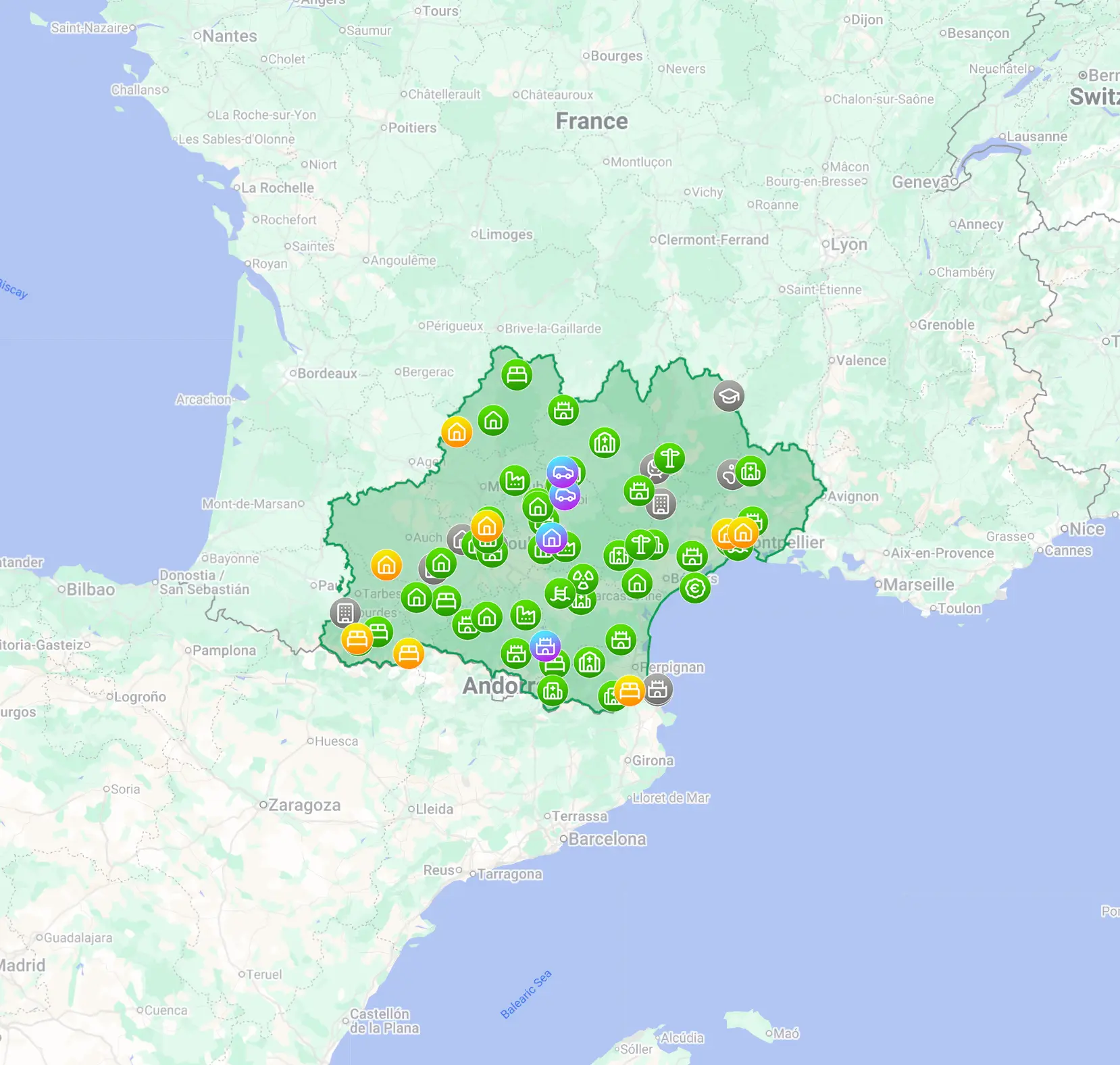
Curated tools are safer than random social posts. You can Browse all urbex maps to review documented areas and plan more responsibly. If you are deciding how to explore generally, Solo Urbex or Group Urbex: Pros and Cons for Safer Exploration is a useful companion guide.
A simple research checklist helps:
- confirm the legal status of the site
- identify ownership or management
- check whether the site has heritage protection
- review known hazards and structural condition
- avoid sharing sensitive access details publicly
- prioritize documentation over entry
FAQ
Are abandoned prisons always legal to visit?
No. Many abandoned prisons remain private or public property, and entry without permission may be unlawful. Closure does not equal open access.
Why are prison interiors often more readable than other abandoned sites?
Because prison functions are spatially explicit. Cells, galleries, control points, yards, and intake areas usually leave a clearer plan than many industrial ruins.
What architectural details matter most in a former prison?
The most significant details are usually circulation logic, sightlines, cell design, door hardware, surveillance points, service blocks, and the relationship between punishment spaces and daily-life spaces.
Can abandoned prisons become museums or hotels?
Yes, but reuse is sensitive. A museum or memorial may preserve historical meaning more directly, while hospitality reuse requires careful interpretation to avoid trivializing suffering.
Should you explore a prison alone?
Usually, no. These sites can involve confinement risks, poor visibility, and structural hazards. If you are comparing approaches, Solo Urbex or Group Urbex: Pros and Cons for Safer Exploration explains the trade-offs clearly.
Conclusion
Abandoned prisons are important because their architecture preserves the history of confinement in a direct, readable way. They also demand more caution than many other forms of abandoned heritage.
For responsible urbex, the best approach is simple: understand the prison's historical role, respect legal boundaries, and treat preservation as more important than access.
Need a safer starting point for planning and research?
Access the free urbex map
