 MapUrbex
Learn how to find abandoned places near you with a reliable research method, curated urbex maps, and responsible verification steps.
Abandoned Places Near Me: How to Find Reliable Urbex Locations
Finding abandoned places near me is easy if the goal is only to collect old pins. Finding reliable urbex locations is harder. Sites change fast, access rules vary, and many popular tips are outdated within months.
The most useful approach is simple: start with a curated source, verify recent signals, and keep safety and legality ahead of curiosity. That is the difference between random searching and responsible urbex research.
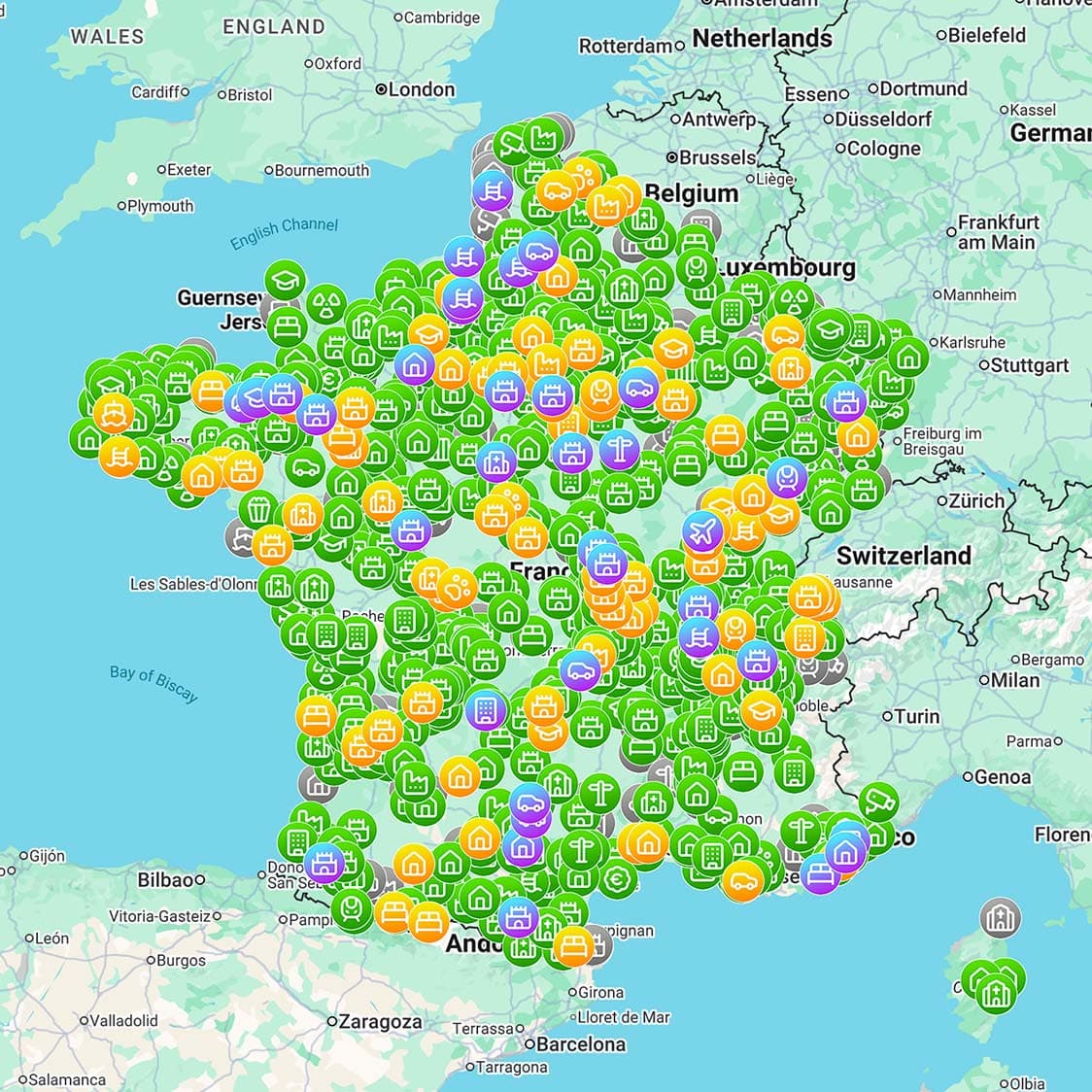
Where can you find abandoned places near you reliably?
You can find abandoned places near you most reliably by using a curated urbex map, then checking whether the location is still standing, still abandoned, and legally sensitive. Verified databases save time because they reduce false leads, removed sites, and low-quality social media tips. Good research always comes before any visit.
Quick summary
- A curated urbex map is usually more reliable than random posts, copied coordinates, or viral videos.
- The best method combines map data, recent status checks, and local context.
- Many abandoned places around you may already be demolished, reused, or fully sealed.
- Good urbex research means verifying the site, not just finding its historical name.
- Legal access matters. Never force entry, trespass, or bypass security.
- If you want a broader starting point, Browse all urbex maps.
Quick facts
- Primary goal: find reliable locations, not just famous locations.
- Best tool: a curated and regularly updated urbex map.
- Best confirmation signals: recent photos, current satellite view, and signs of reuse or demolition.
- Common failure point: relying on social media posts with no date or context.
- Responsible rule: preserve places, respect property, and leave no trace.
Why is a curated urbex map more reliable than random tips?
A curated urbex map is more reliable because it filters noise before you start researching. That matters when you want to find reliable urbex spots instead of chasing dead leads.
Random tips often come from reposted content. The location may be years old, partially wrong, or intentionally vague. A map-based workflow is better because it organizes places geographically, helps compare regions, and makes it easier to spot patterns such as industrial belts, abandoned military zones, rural farm clusters, or closed leisure complexes.
Curated maps also fit transactional search intent. They help users move from broad curiosity to a practical decision: which area deserves research time, and which location is no longer worth it.
You can start with Access the free urbex map or explore a wider set of regions through Browse all urbex maps.
How can you find abandoned places without wasting time?
The fastest method is to narrow your search area first, then verify only the most promising sites. This reduces duplicate work and prevents hours spent on places that are gone.
A practical workflow looks like this:
- Open a map and define a realistic travel radius.
- Look for clusters instead of single isolated pins.
- Check whether the building footprint still exists.
- Review recent visual clues such as fencing, redevelopment, or demolition.
- Search for current local references, not only old urbex reports.
- Keep notes on status: active, uncertain, sealed, demolished, or repurposed.
This is how to find abandoned places efficiently. The point is not to collect the most names. The point is to build a short list of locations that are still real, relevant, and worth further research.
What signals show whether an abandoned location is still usable for research?
The best signals are current visual evidence and recent context. A site that looked abandoned three years ago may now be a construction zone, a reused property, or a sealed hazard.
| Signal | What it usually means | How to verify responsibly |
|---|---|---|
| Building visible on recent satellite view | The structure may still exist | Compare roof shape, lot boundaries, and nearby road changes |
| Fresh fencing or gates | Security or redevelopment may be active | Treat the site as sensitive and check public context only |
| New roofing, clean windows, or parked vehicles | The property may be reused or monitored | Remove it from your active urbex shortlist |
| Broken footprint or empty lot | Demolition is likely | Confirm with recent imagery or local reporting |
| Many old photos but no recent mentions | The spot may be outdated | Mark it as low confidence |
| Repeated mentions of sealing or patrols | Access risk is high and legality is stricter | Do not attempt entry |
This is why recent verification matters more than historical fame. A famous abandoned hospital is less useful than an ordinary industrial site with current, consistent signals.
For a good reminder of how quickly locations change, see Abandoned Places That Disappeared in 2025: Demolished, Reused, or Sealed.
How do you research a site responsibly before any visit?
Responsible research means confirming what you can from public information and stopping well before trespass begins. MapUrbex is preservation-first, so the research phase matters as much as the destination.
Use this checklist:
- Confirm whether the place still exists.
- Identify signs of active business use, housing, or redevelopment.
- Look for obvious hazards such as roof collapse, fire damage, water exposure, or unstable floors.
- Check whether the site sits in a remote area with poor reception.
- Avoid sharing exact coordinates publicly if the place is fragile.
- Never plan around forced access, climbing barriers, or entering sealed structures.
A reliable urbex search method is not only about discovery. It is also about deciding when not to go.
Which types of abandoned places are easiest to identify in different regions?
Industrial sites, rural institutions, closed leisure venues, and large estates are often easier to identify because they leave strong visual traces. Bigger footprints create clearer map patterns.
Examples include:
- Warehouses and factories in former industrial corridors
- Motels, resorts, or theme sites outside active tourist zones
- Schools, sanatoriums, and administrative complexes in low-density areas
- Farm buildings and depots in rural regions
- Large residences and estates with distinct grounds
If you want examples of categories that require extra care and context, read Urbex Castles and Abandoned Manors: 12 Places Worth Visiting Responsibly.
If you want a regional example of curated exploration content, see Urbex Canada: Top 10 Abandoned Places to Explore in Montreal, Quebec, and Beyond.
What legal and safety rules matter most when looking for abandoned places near me?
The most important rule is simple: abandoned does not mean public. Ownership, local law, and site condition still apply.
Keep these principles in mind:
- Do not trespass on private property.
- Do not force doors, windows, fences, or barriers.
- Do not vandalize, remove objects, or reveal sensitive details that could damage a place.
- Do not assume a silent site is safe. Structural collapse, asbestos, sharp debris, and water damage are common risks.
- Do not go alone into unstable environments.
- Prefer documented, verified, and responsibly described locations over viral mystery spots.
Preservation-first urbex protects both people and places. That is also why curated maps matter more than reckless coordinate drops.
FAQ
Is it legal to visit an abandoned place near me?
Sometimes, but not automatically. A place can be abandoned and still be private, restricted, monitored, or dangerous. Always separate research from access assumptions.
Can I use Google Maps alone to find abandoned places around me?
Google Maps can help with orientation, but it is rarely enough on its own. You still need status verification, context, and recent signals to know whether a location is relevant.
How do I know if a location is no longer worth researching?
If you see demolition, obvious reuse, active vehicles, new building work, or repeated reports of sealing, move on. Reliable urbex research depends on eliminating weak leads quickly.
Should I share exact coordinates after I find a spot?
Not always. Fragile places can be damaged fast when exact information spreads without context. Responsible sharing protects preservation and reduces vandalism.
What is the safest first step for beginners?
Start with a verified map and practice research before planning any trip. Learning how to judge status from public information is safer than chasing random coordinates.
Conclusion
If your goal is to find abandoned places near you, the best method is not guesswork. Use a curated urbex map, verify current status, and treat legality and preservation as part of the process. That gives you fewer false leads, better regional coverage, and more dependable results.
Ready to start with verified locations instead of outdated tips?
Access the free urbex map
