 MapUrbex
A practical guide to abandoned hotels: why they close, how to read the signs, and how to photograph them more responsibly and safely.
Abandoned Hotels: Understand Why They Closed Before You Photograph Them
Abandoned hotels attract photographers because they combine architecture, atmosphere, and local history. But before you photograph one, the most useful question is not how to get inside. It is why the hotel closed in the first place.
Understanding hotel abandonment gives context to your images. It also helps you judge legal limits, safety risks, and whether a site should be avoided entirely.
Why do abandoned hotels close?
Abandoned hotels usually close because their business model failed, the building became unsafe, ownership became tangled, or the site no longer fit the local market. For photography, that matters because each closure pattern leaves different legal, structural, and preservation risks. A shuttered resort, a fire-damaged motel, and a stalled luxury redevelopment are not the same kind of urbex location.
Quick summary
- Most abandoned hotels did not close for a single reason; decline is often financial, regulatory, and physical at the same time.
- Understanding the closure helps you interpret the site and avoid misleading captions.
- A hotel that looks intact can still be legally restricted or structurally unsafe.
- Fire damage, water intrusion, mold, asbestos, and vandalism are common risk multipliers.
- Responsible urbex photography starts with public information, not forced access.
- Verified, curated location tools reduce guesswork and help you plan more responsibly.
Quick facts
| Closure pattern | Typical cause | What it means for photography |
|---|---|---|
| Slow decline | Falling occupancy, route changes, tourism shifts | Decay may be gradual, but ownership often still exists |
| Financial collapse | Debt, insolvency, failed renovations | Access rules can change quickly during resale or liquidation |
| Safety shutdown | Fire, mold, structural issues, utilities failure | High hazard; exterior-only photography may be the safest choice |
| Regulatory dispute | Permits, code violations, zoning conflict | The building can appear usable while remaining closed |
| Disaster impact | Flooding, erosion, storms, landslides | Conditions can deteriorate faster than they look |
Never assume a silent hotel is unmonitored, ownerless, or safe.
What are the most common reasons abandoned hotels stay closed?
The most common reasons are failed economics, expensive repairs, legal disputes, and changing travel patterns. In many cases, several of these factors overlap.
Hotels are costly to maintain. They need working fire systems, elevators, plumbing, heating or cooling, and constant room turnover. When occupancy drops, those fixed costs do not disappear. A once-profitable property can become unviable quickly.
Some hotels close after deferred maintenance reaches a breaking point. Roof leaks become mold. Utility failures become code violations. A small closure for repairs can turn into a long abandonment if financing disappears.
Ownership is another major factor. A property may sit empty because it is tied up in inheritance disputes, debt restructuring, tax issues, or redevelopment plans that never begin. From the outside, this can look like a mystery. In reality, the hotel may be in a long legal limbo rather than simply forgotten.
Market changes also matter. New highways, airport shifts, changing coastlines, reduced local tourism, or the rise of newer accommodations can drain demand from older hotels. This is especially common with motels, resort complexes, and conference properties built for a different travel era.
Why should you understand the closure of abandoned hotels before photographing them?
You should understand the closure because it improves both safety and accuracy. A good abandoned hotel photo is not only atmospheric; it is correctly contextualized.
If a hotel closed after a fire, unstable floors, weakened stairs, toxic residue, or sealed service areas may still define the site. If it closed because of bankruptcy, the building may remain under active private control even when it looks neglected. If it closed during redevelopment, cameras may be tolerated from public space while entry remains clearly prohibited.
This matters for captions, publishing, and credibility. Saying a place was "left to rot" may be wrong if the owner is pursuing permits, insurance, or demolition appeals. Understanding the abandonment makes your work more precise and more citable.
How can you assess legal and safety risks without crossing lines?
Start from public information and visible conditions. You do not need to trespass to learn a lot about an abandoned hotel.
Useful checks include:
- ownership and land records where available
- planning notices, permit filings, or redevelopment announcements
- local news about closures, fires, auctions, or environmental damage
- obvious posted restrictions, fencing, cameras, or active contractors
- external signs of collapse, water damage, broken glazing, or burned sections
A practical rule is simple: if access is restricted, posted, fenced, or obviously hazardous, treat the site as off-limits. For a broader legal overview, read Is Urbex Legal? A Clear Guide to Urban Exploration Laws.
If you are still planning a legal exterior visit, think about company and timing. Solo Urbex or Group Urbex: Pros and Cons for Safer Exploration explains why even low-intensity exploration decisions affect risk.
What clues on site can help you understand hotel abandonment?
Physical clues often reveal the type of closure. They should be observed from lawful viewpoints and never by forcing entry.
Look for branded materials, event boards, booking desks, room numbering systems, pool or spa infrastructure, conference spaces, and restaurant layouts. These features show whether the property depended on business travel, seasonal tourism, weddings, or package holidays.
Then look at the pattern of decay. Uniform dust and gradual weathering usually suggest longer vacancy. Sudden interruption, with beds made, supplies left behind, or renovation materials on site, can suggest an abrupt shutdown, failed reopening, or interrupted redevelopment.
Safety clues matter even more. Sagging roofs, water lines, detached balconies, burned corridors, damaged elevators, and shattered glazing all indicate that photographing an abandoned hotel may need to remain exterior-only.
For a reminder that some locations are simply not worth the risk, see Top 5 Most Dangerous Urbex Places and Why You Should Avoid Them.
How should you photograph an abandoned hotel responsibly?
Responsible photography protects both people and places. The best approach is minimal impact, lawful positioning, and accurate storytelling.
A few good practices:
- prioritize public viewpoints and clearly permitted areas
- do not move objects for a stronger composition
- avoid publishing details that make fresh vandalism or theft easier
- record closure context, not just decay aesthetics
- leave immediately if conditions, ownership status, or safety signals change
For many photographers, the strongest images come from exteriors, lobbies visible through glazing, surrounding landscape, and evidence of former hospitality use. You do not need reckless access to document the story well.
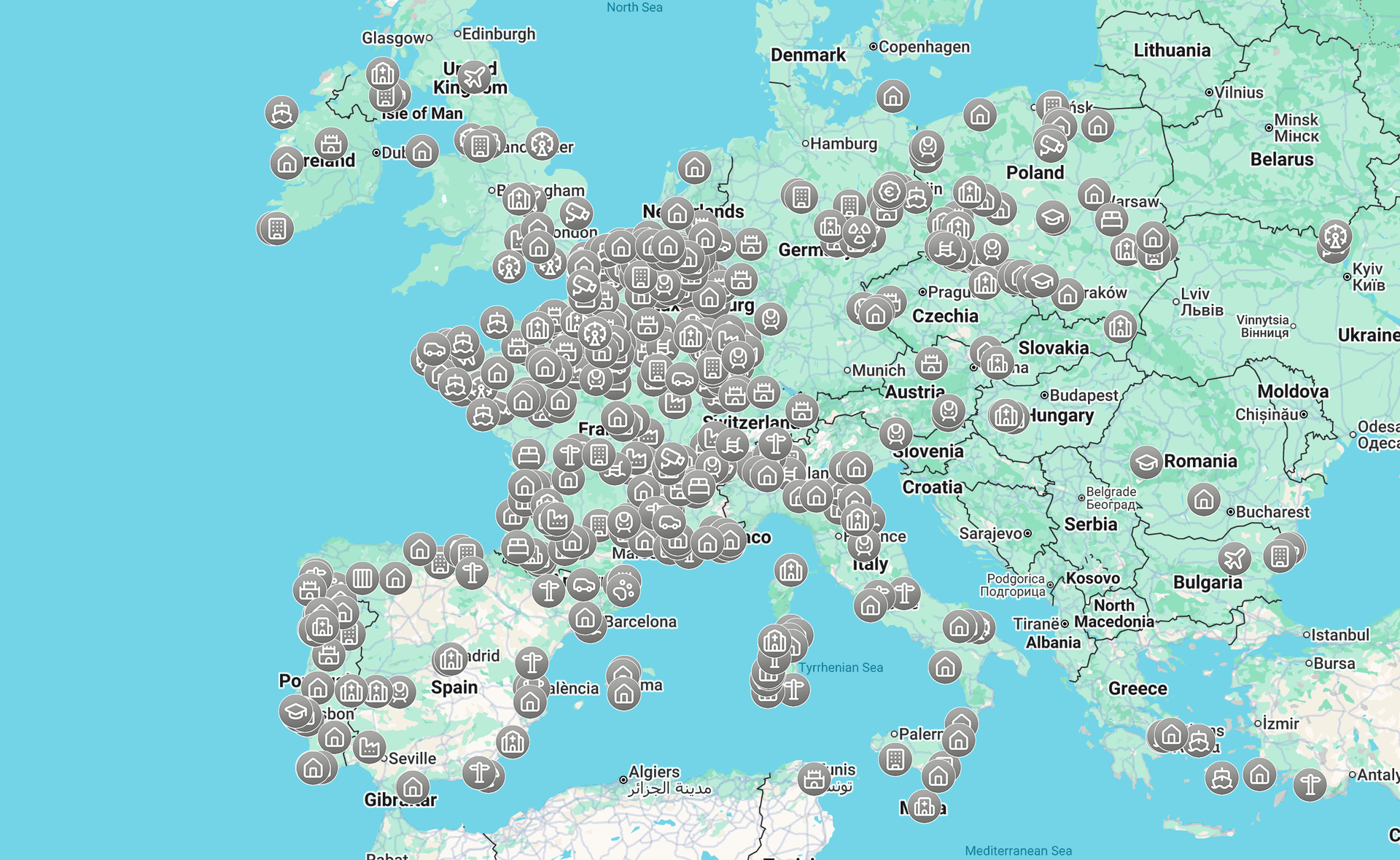
How can MapUrbex help you find abandoned hotels more responsibly?
MapUrbex helps by focusing on verified locations, curated maps, and preservation-first exploration. That reduces the guesswork that often leads people toward bad decisions.
Instead of chasing vague coordinates from random posts, you can Browse all urbex maps to compare regions and plan more carefully. If you want to start with a lower-friction option, you can also Access the free urbex map.
A curated map does not grant access, and it does not replace legal judgment. What it does provide is better structure: clearer research, more consistent verification, and a more responsible way to prepare before you travel.
FAQ
Is every abandoned hotel legal to enter?
No. An abandoned appearance does not remove property rights, safety rules, or local restrictions. Many hotels remain privately owned, monitored, or tied to active redevelopment.
Can you photograph an abandoned hotel from public land?
In many places, yes, exterior photography from public space is generally the lower-risk option. But local rules can still vary, especially around security zones, transport corridors, or active worksites.
Why are abandoned hotels often riskier than abandoned houses?
Hotels are larger, more complex, and more dependent on infrastructure. Elevators, service corridors, commercial kitchens, laundry rooms, pools, and mechanical systems create more failure points.
Should you explore an abandoned hotel alone?
Usually, solo exploration increases risk. Large hospitality sites have blind corners, vertical hazards, and fast-changing conditions. If you are comparing approaches, read Solo Urbex or Group Urbex: Pros and Cons for Safer Exploration.
Does understanding the closure really improve photography?
Yes. It improves caption accuracy, helps you identify the most meaningful details, and prevents false narratives about why the hotel was abandoned.
Conclusion
Abandoned hotels are visually powerful because they condense economics, tourism, architecture, and decline into one place. But understanding their closure before photographing them is essential. It makes your work safer, more accurate, and more respectful.
The best urbex hotel photography starts with research, legal awareness, and preservation-first judgment. When a site does not feel clear, the responsible choice is to step back.
Access the free urbex map
