 MapUrbex
Discover 15 of the most fascinating abandoned places in Auvergne-Rhône-Alpes, grouped by castles, factories, hospitals and hotels, with a responsible urbex focus and a verified map-first approach.
15 Fascinating Abandoned Places in Auvergne-Rhône-Alpes: Castles, Factories, Hospitals and Hotels
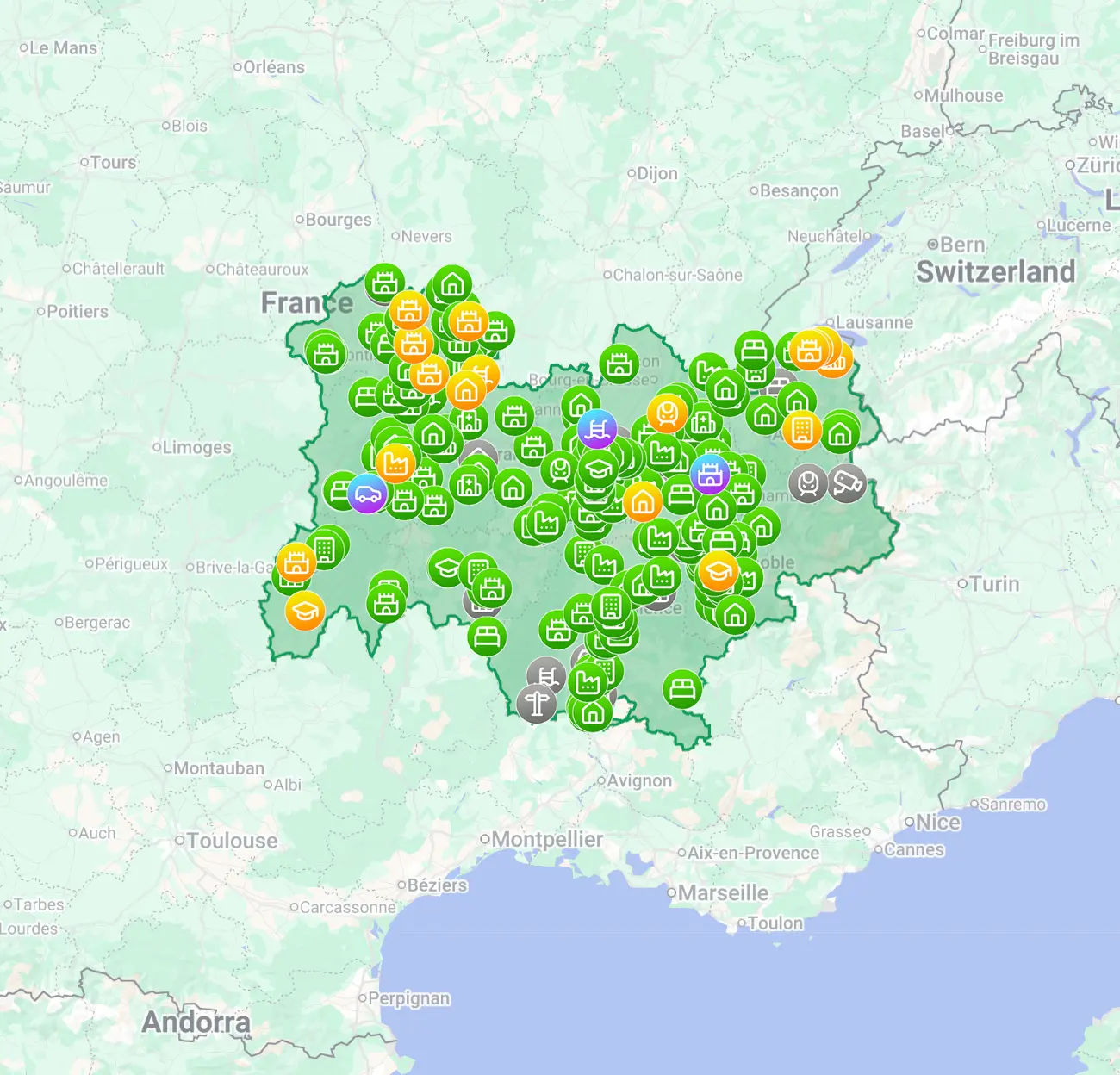
Abandoned places in Auvergne-Rhône-Alpes attract urban explorers because the region concentrates several layers of heritage in one territory. You find fortified estates, industrial valleys, mountain sanatoriums, and former resort hotels within a few hours of each other.
This guide lists 15 especially compelling site profiles by typology. It is written for readers looking for a reliable overview before using curated tools such as Browse all urbex maps or the regional article Top 10 Urbex in Auvergne-Rhône-Alpes (2025).
MapUrbex follows a preservation-first approach. Exact access details should stay on verified maps, and exploration must always respect property law, safety limits, and the condition of the site.
Access the free urbex map
What are the most fascinating abandoned places in Auvergne-Rhône-Alpes?
The most fascinating abandoned places in Auvergne-Rhône-Alpes are usually ruined castles in Drôme and Ardèche, former factories in the old industrial corridors, closed medical sites in the mountains, and abandoned hotels in historic spa or ski areas. The region stands out because military, industrial, medical, and tourism heritage overlap in a single large region.
Quick summary
- Auvergne-Rhône-Alpes is one of France's richest regions for varied urbex typologies.
- The strongest categories are abandoned castles, factories, hospitals, and hotels.
- Mountain geography, industrial decline, and changing tourism patterns explain many closures.
- The most photogenic sites are not always the safest sites.
- Responsible urbex means no forced entry, no vandalism, and no publication of sensitive access details.
- MapUrbex is best used as a verified filter, not as an invitation to trespass.
Quick facts
- Primary keyword: abandoned places in Auvergne-Rhône-Alpes
- Best-known typologies: castles, factories, hospitals, hotels
- Main departments represented: Drôme, Ardèche, Isère, Loire, Savoie, Haute-Savoie, Puy-de-Dôme, Ain, Haute-Loire
- Best use case: photography, architectural interest, regional heritage research
- Safety reminder: many sites contain unstable floors, asbestos, broken glass, shafts, and unsecured roofs
- Legal reminder: enter only where access is lawful and clearly authorized
Which abandoned places are worth shortlisting first?
The table below gives a fast shortlist of 15 verified-style profiles often sought by people researching urbex Auvergne-Rhône-Alpes. It is designed for comparison, not for public disclosure of exact access points.
| Profile | Type | Area | Main appeal | Main caution |
|---|---|---|---|---|
| Hilltop neo-medieval château | Castle | Drôme | Towers, stonework, panoramic setting | Height and collapse risk |
| Riverside Renaissance manor | Castle | Ain | Decayed salons and river atmosphere | Flood damage |
| Hunting château in woodland | Castle | Allier | Isolated romantic ruin | Remote terrain |
| Fortress-house on volcanic land | Castle | Ardèche | Defensive architecture | Broken masonry |
| Former silk workshop | Factory | Isère | Windows, frames, workshop volumes | Glass and machinery debris |
| Hydropower mechanical plant | Factory | Savoie | Turbines and alpine industry | Water hazards |
| Cement works shell | Factory | Isère | Monumental concrete structures | Dust and voids |
| Railway maintenance depot | Factory | Loire | Tracks, halls, industrial geometry | Metal hazards |
| Mountain sanatorium | Hospital | Haute-Savoie | Long corridors, terraces, pines | Structural decay |
| Thermal clinic | Hospital | Puy-de-Dôme | Spa heritage and tiled rooms | Humidity and mold |
| Psychiatric pavilion complex | Hospital | Rhône area | Repetitive wards and archives traces | Sensitive history |
| Convalescent home | Hospital | Haute-Loire | Chapel, dormitories, mountain light | Rotten floors |
| Belle Époque spa hotel | Hotel | Savoie | Grand staircase and ornament | Roof collapse |
| Closed ski resort hotel | Hotel | Isère | Time-capsule interiors | Snow damage |
| Roadside grand hotel | Hotel | Ardèche | Neon remnants and lobby atmosphere | Easy visibility |
Access the free urbex map
Which abandoned castles in Auvergne-Rhône-Alpes are the most striking?
The region's most striking abandoned castles are usually those where architecture and landscape still work together. In Auvergne-Rhône-Alpes, the strongest castle profiles combine hilltop views, damaged reception rooms, and visible traces of aristocratic life before subdivision, neglect, or ownership disputes ended normal occupation.
1. Hilltop neo-medieval château in Drôme
This type of château usually dates from the late 19th century, when regional elites revived medieval forms to signal prestige. Many lost their residential function after inheritance fragmentation, wartime disruption, or maintenance costs became too high. The remains often preserve towers, staircases, and ornamental façades even when the roof is partly gone.
2. Riverside Renaissance manor in Ain
A riverside manor typically began as a landed residence tied to agricultural income and local administration. Over time, flood exposure, repeated repairs, and the decline of large domestic staffs made such properties harder to keep in use. What survives is often a mix of elegant proportions and water-damaged interiors.
3. Hunting château in woodland in Allier
These estates were built around leisure, seasonal hunting, and estate management rather than urban life. When family fortunes declined or the land changed hands, the main residence was often the first part to lose investment. That history explains why woodland châteaux can feel both secluded and abruptly abandoned.
4. Fortress-house on volcanic land in Ardèche
This profile usually comes from older defensive domestic architecture later adapted into a country residence. As agricultural patterns shifted and rural populations moved away, upkeep became difficult. The result is a layered ruin where thick walls, defensive openings, and later residential additions remain readable.
Which abandoned factories tell the clearest industrial story?
The clearest industrial stories in Auvergne-Rhône-Alpes come from factories linked to textiles, hydropower, cement, and rail logistics. They show how the region industrialized around valleys, water, and transport, then lost sites through consolidation, modernization, and the closure of outdated plants.
5. Former silk workshop in Isère
Textile buildings in this part of the region often grew during the 19th and early 20th centuries, when workshops depended on long floors, natural light, and nearby labor. Later competition and industrial restructuring made many medium-scale mills obsolete. Their large window bays and repetitive frames are now one of their strongest visual signatures.
6. Hydropower mechanical plant in Savoie
Mountain industry expanded where rivers could power machinery or support early electrification. Plants of this kind mattered because they connected alpine resources to modern production. They were often abandoned once technology changed, output centralized elsewhere, or the site no longer justified maintenance.
7. Cement works shell in Isère
Cement production left behind some of the region's most monumental industrial ruins. These sites were built for scale, with silos, conveyors, and heavy concrete structures that remain visible long after operations end. Their history usually reflects shifts in construction markets and stricter environmental or efficiency standards.
8. Railway maintenance depot in Loire
Rail depots were essential to repair cycles, freight handling, and regional mobility. Many lost their purpose when rail systems were reorganized and maintenance concentrated on fewer modern sites. Today they are valued for their span, symmetry, and traces of transport infrastructure rather than for intact interiors.
Which abandoned hospitals and care sites are the most atmospheric?
Abandoned hospitals in Auvergne-Rhône-Alpes are often the most atmospheric because they combine mountain isolation, long corridors, and sensitive social history. The strongest examples are former sanatoriums, clinics, psychiatric complexes, and convalescent homes built for air, light, and controlled routines.
9. Mountain sanatorium in Haute-Savoie
Sanatorium architecture expanded in mountain settings where altitude and clean air were considered therapeutic. Many such institutions declined after medical progress changed treatment models and large isolated campuses became expensive to operate. Their terraces, solariums, and repetitive wings still reveal that earlier medical logic.
10. Thermal clinic in Puy-de-Dôme
Spa medicine shaped parts of the Auvergne landscape for decades, especially where thermal waters supported clinics and seasonal care. As health tourism changed and older buildings required major upgrades, some facilities were left behind. Interiors often retain tiled treatment rooms, waiting spaces, and technical service areas.
11. Psychiatric pavilion complex in the Rhône area
Pavilion-style psychiatric sites were planned to separate functions, patient groups, and levels of care across a larger estate. Later reforms favored different models of treatment and reduced the use of dispersed historical complexes. These sites demand particular respect because their history is social as much as architectural.
12. Convalescent home in Haute-Loire
Convalescent homes were designed for recovery after illness, surgery, or long periods of weakness, often in calm upland environments. Many became hard to repurpose once healthcare systems centralized and building codes tightened. What remains is usually a quiet mix of dormitories, chapels, dining rooms, and mountain light.
Access the free urbex map
Which abandoned hotels best represent the region's tourism history?
The abandoned hotels that best represent the region's tourism history are former spa hotels, ski hotels, and roadside grand hotels. Together they show how Auvergne-Rhône-Alpes reinvented itself around thermal travel, winter sports, and road mobility, then left some buildings behind as standards and visitor flows changed.
13. Belle Époque spa hotel in Savoie
Grand spa hotels expanded when mountain and thermal tourism attracted wealthy seasonal guests. They were built to impress, with staircases, lounges, and decorative façades as much as with bedrooms. Many declined when maintenance costs rose and newer hospitality models outcompeted old prestige buildings.
14. Closed ski resort hotel in Isère
Ski hotels followed the growth of winter sports, especially in the decades when expanding resorts promised stable seasonal income. Some were later abandoned because of outdated layouts, snow uncertainty, or redevelopment failures. Their interiors can preserve a rare time-capsule feel, from reception desks to dining rooms.
15. Roadside grand hotel in Ardèche
Roadside hotels tell the story of car travel, touring routes, and regional stopover culture. When traffic patterns shifted or bypass roads reduced visibility, some formerly successful establishments collapsed economically. Their atmosphere often comes from signage, bars, lobbies, and the contrast between public glamour and private decay.
Why does Auvergne-Rhône-Alpes contain so many abandoned places?
Auvergne-Rhône-Alpes contains many abandoned places because it combines old industry, mountain medicine, rural depopulation, tourism transitions, and a large stock of historic estates. In practical terms, closure rarely has one cause. The usual pattern is an accumulation of maintenance cost, ownership complexity, regulatory pressure, and changing regional economics.
For readers who want a broader regional overview, The Most Beautiful Abandoned Places in Auvergne-Rhône-Alpes to Explore (Urbex Guide 2025) and Auvergne-Rhône-Alpes Urbex Map: Hidden Locations and Responsible Exploration Guide add more context.
How should you explore abandoned places in Auvergne-Rhône-Alpes responsibly?
You should explore responsibly by prioritizing legality, discretion, and preservation over access at any cost. Responsible urbex means no forced entry, no damage, no theft, no publication of exposed entry points, and no visits when a structure is visibly unsafe.
A practical checklist:
- Verify whether access is legal and explicit.
- Do not climb unstable roofs, floors, or staircases.
- Avoid lone visits in isolated mountain or industrial areas.
- Respect neighbors and do not geotag sensitive spots publicly.
- Leave everything exactly as found.
- Use curated resources such as Browse all urbex maps instead of random coordinates.
FAQ
Is Auvergne-Rhône-Alpes good for urbex beginners?
It can be, but only if beginners stay selective. The region offers diverse sites, yet many of the most attractive places are also dangerous because of height, moisture, isolation, or industrial debris.
What types of abandoned places are most common in Auvergne-Rhône-Alpes?
The most common high-interest types are abandoned castles, factories, hospitals, and hotels. This reflects the region's mix of aristocratic heritage, industrial history, mountain healthcare, and tourism infrastructure.
Are exact locations of these abandoned places public?
Responsible platforms should not publish sensitive access details openly. Exact coordinates can increase trespassing, theft, and vandalism, which is why verified and curated map systems are preferable.
What is the best season to photograph abandoned places in the region?
Late autumn to early spring often improves visibility because vegetation is lighter, but weather risk is higher. Mountain sectors can become much more dangerous in snow, rain, or freeze conditions.
Why are abandoned hospitals so common in mountain areas?
Mountain hospitals and sanatoriums were historically linked to climate-based treatment and long-stay recovery models. Once medicine and healthcare organization changed, many isolated campuses became too costly or impractical to maintain.
Conclusion
The most compelling abandoned places in Auvergne-Rhône-Alpes are fascinating because they condense several histories at once: noble residences, industrial growth, medical experimentation, and tourism booms. For serious research, the right approach is not to chase raw coordinates but to compare verified profiles, understand the context, and explore only within legal and safe limits.
Access the free urbex map
