 MapUrbex
Use a Virginia urbex map to find verified abandoned places across Richmond, Hampton Roads, the Shenandoah region, and Southwest Virginia with a responsible, preservation-first approach.
Virginia Urbex Map: Best Urbex Spots in Virginia
Virginia is one of the most varied states for urban exploration in the eastern United States. Old hospitals, industrial corridors, rail infrastructure, rural schools, and coastal military remnants all appear across the state, but they are spread across very different landscapes.
That is why a Virginia urbex map is more useful than a generic list of rumors. In Virginia, site status changes quickly. Buildings are demolished, sealed, repurposed, or placed under tighter security. A curated map helps explorers focus on verified locations and avoid outdated leads.
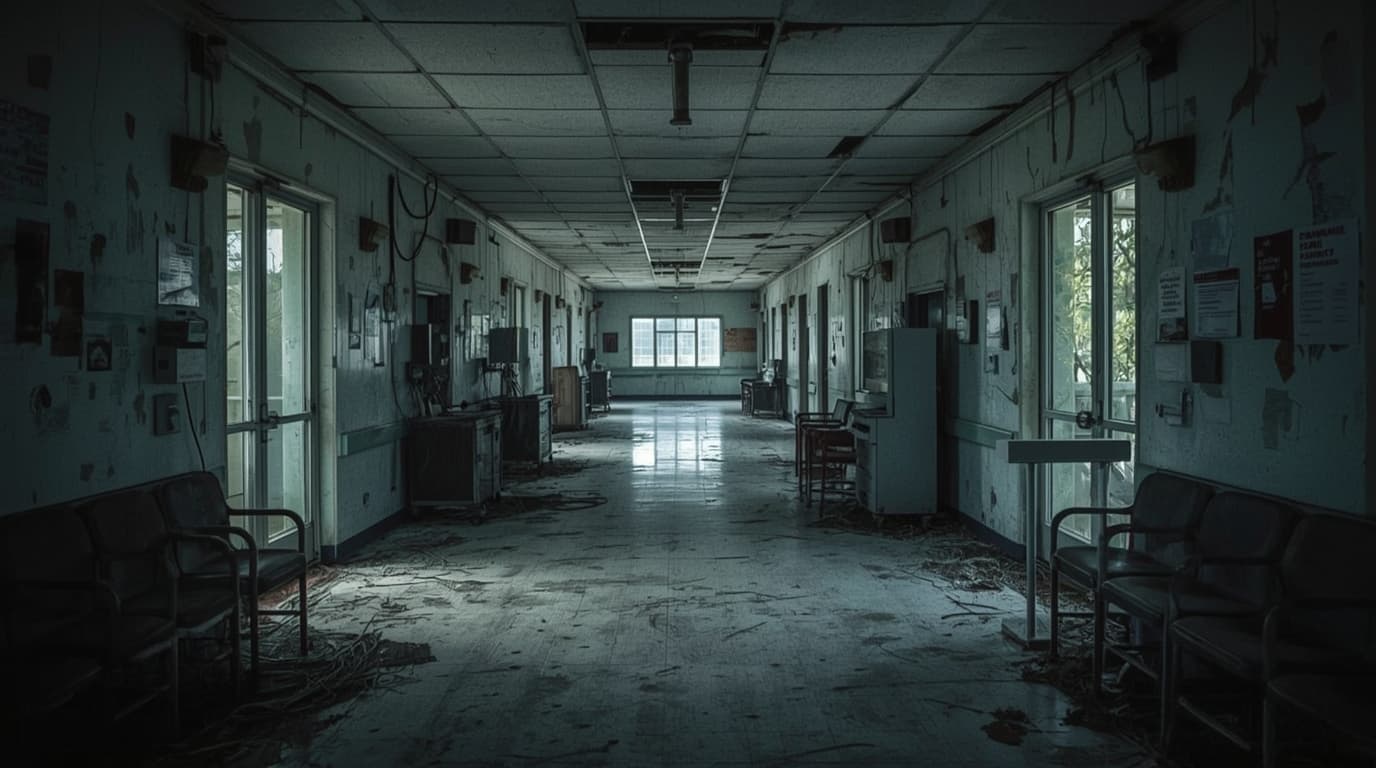
Where can you find the best urbex spots in Virginia?
The best way to find the best urbex spots in Virginia is to use a Virginia urbex map built around verified, current locations. The strongest concentrations are usually around older industrial cities, former medical campuses, rural public buildings, Appalachian transport corridors, and coastal defense areas, but access conditions vary widely and responsible explorers must always check legality, ownership, and safety first.
Quick summary
- Virginia has a wide mix of abandoned places, from hospitals and warehouses to rail sites and rural institutions.
- The most useful clusters are typically around Richmond, Hampton Roads, Shenandoah-adjacent rural areas, and Southwest Virginia.
- A Virginia abandoned places map is more reliable than old forum posts because site status changes fast.
- Responsible urbex in Virginia means no trespassing, no forced entry, and no damage.
- MapUrbex focuses on verified locations, curated map data, and preservation-first exploration.
- Beginners should learn research methods before planning any trip.
Quick facts
- State: Virginia
- Geo scope: statewide
- Best-known urbex categories: hospitals, factories, warehouses, rail sites, schools, farms, military remnants
- Main exploration challenge: fast-changing access and ownership status
- Common setting types: urban industrial belts, small towns, rural valleys, coastal infrastructure zones
- Best research approach: current map data plus ownership, satellite, and street-level checks
Access the free urbex map
Why does a Virginia urbex map matter more than random lists?
A Virginia urbex map matters more than random lists because abandoned places in the state change status constantly. A site mentioned in a five-year-old blog post may now be demolished, converted, fenced, or actively monitored.
Virginia is also geographically uneven. The state combines dense metro corridors, military-adjacent coastal areas, older manufacturing zones, and isolated rural properties. That makes local context essential. A curated statewide map helps separate realistic leads from recycled internet myths.
If you want broader research methods, start with Browse all urbex maps, then compare that with How to Find Abandoned Places with Google Maps and How to Find Abandoned Places Near Me: A Step-by-Step Urbex Method. For first-time explorers, How to Start Urbex: A Beginner's Guide to Urban Exploration explains the basics.
Which parts of Virginia have the highest concentration of abandoned places?
The highest concentration of abandoned places in Virginia is usually found in and around older industrial corridors, former institutional campuses, and rural counties with long-term population and economic shifts. Richmond-area industry, Hampton Roads infrastructure, rural Piedmont and Shenandoah communities, and Southwest Virginia transport and mining zones are the most consistent patterns.
| Region | Common site types | Why it matters for urbex | What to verify first |
|---|---|---|---|
| Richmond and Central Virginia | Warehouses, small factories, service buildings, institutional remnants | Older industrial development and transport networks | Ownership changes, redevelopment, fencing |
| Hampton Roads and Tidewater | Coastal infrastructure, defense-related remnants, industrial yards | Historic military and port activity | Restricted zones, active security, federal or private land |
| Piedmont and Shenandoah-adjacent rural areas | Schools, churches, farms, civic buildings | Long-term rural decline and property consolidation | Private land boundaries and structural condition |
| Southwest Virginia | Rail sites, mining-related structures, depots, hillside industry | Industrial legacy and shrinking local economies | Terrain risk, isolation, unstable structures |
| Smaller independent cities and mill towns | Utility buildings, garages, workshops, municipal leftovers | Local economic transition | Rapid demolition and adaptive reuse |
These are patterns, not guarantees. Some of the most photographed places in Virginia are already inaccessible, while lesser-known sites can still be active private property. That is one reason a curated map is more useful than a viral location thread.
What are the top 5 types of urbex spots in Virginia?
The top urbex categories in Virginia are former hospitals and care facilities, disused factories and warehouses, coastal military remnants, rural institutional buildings, and rail or mining infrastructure in the southwest. These categories reflect the state's actual historical geography better than any short list of famous names.
1. Former hospitals and care facilities
Former hospitals are among the most searched abandoned places in Virginia because they combine scale, atmosphere, and documented regional history. In practical terms, they are also the most unpredictable category. Many have been partially demolished, sealed, or redeveloped into housing or mixed-use projects.
This is where a Virginia urbex map is especially useful. Medical campuses often contain multiple buildings with different statuses on the same property. A verified map helps distinguish between a fully closed structure, a reused wing, and a site that should simply be avoided.
2. Disused factories and warehouses around older cities
Industrial sites remain one of the most consistent forms of urbex in Virginia. Older warehouse districts, service depots, and factory edges are especially common near historic transport routes and around cities with long manufacturing histories.
These places often look abandoned from outside while parts of the property remain active. That makes boundary awareness critical. Many useful entries on a Virginia abandoned places map are not giant ruins but smaller industrial leftovers that are easier to verify and document responsibly.
3. Coastal military remnants and defense infrastructure
Coastal Virginia has a long history of military, naval, and defense-related construction. As a result, explorers often look for bunkers, battery remains, observation points, support buildings, or decommissioned coastal infrastructure.
This category requires extra caution. Some areas are historically interesting but located near active installations, protected coastlines, or tightly controlled land. Responsible exploration means understanding that public history and physical access are not the same thing.
4. Rural schools, churches, and farm complexes
Rural abandoned buildings are widespread in Virginia, especially outside the largest metro areas. Closed schools, depopulated church properties, old farmhouses, and outbuildings appear across roads less traveled and often tell a clearer local story than large urban ruins.
They also create the biggest ethical problem. Many of these buildings sit on obvious private land, even when they seem forgotten. Preservation-first urbex means documenting history without crossing onto property where you do not have permission.
5. Rail, mining, and Appalachian industrial sites in Southwest Virginia
Southwest Virginia is one of the most distinctive regions for abandoned infrastructure. Rail corridors, depots, extraction-related structures, and hillside industrial remains reflect the economic history of the Appalachian portion of the state.
These sites can be visually striking, but they carry higher environmental and terrain risks than flat urban properties. Remote access, unstable ground, sharp elevation changes, and water damage are common. In this region, caution matters more than quantity.
How should you use a Virginia abandoned places map responsibly?
You should use a Virginia abandoned places map as a research and planning tool, not as a shortcut to risky behavior. The map should help you verify patterns, compare regions, and avoid wasting time on dead leads, but it does not replace legal access, safety judgment, or respect for property.
A good rule set is simple:
- Never force entry, climb barriers, or bypass locks.
- Assume many rural properties are privately owned even when they look unused.
- Avoid active rail corridors, military land, and visibly hazardous structures.
- Do not remove objects or disclose sensitive details that increase vandalism risk.
- Leave places exactly as you found them.
If you are new to the hobby, read How to Start Urbex: A Beginner's Guide to Urban Exploration before planning a route. You can also compare statewide research with Browse all urbex maps to understand how Virginia fits into larger US exploration patterns.
What makes MapUrbex useful for Virginia explorers?
MapUrbex is useful for Virginia explorers because it prioritizes verified locations, curated map organization, and a preservation-first standard. That approach matters in a state where site conditions can change between counties, land types, and redevelopment cycles.
Instead of treating every rumor as a destination, MapUrbex helps users filter by relevance and context. That is especially helpful for statewide searches such as spots urbex in Virginia or a map of abandoned places in Virginia, where the biggest challenge is not finding names online but finding information that is still accurate.
For wider planning, Browse all urbex maps. If you want to build your own research workflow, pair that with How to Find Abandoned Places with Google Maps.
Access the free urbex map
FAQ
Is urbex legal in Virginia?
Urbex is not automatically legal in Virginia just because a place looks abandoned. Many sites are on private land, in restricted areas, or near active infrastructure. Always check access, posted rules, and local conditions before visiting, and never force entry.
What kinds of abandoned places are most common in Virginia?
The most common abandoned places in Virginia are small industrial buildings, warehouses, former institutions, rural schools, farm complexes, and transport-related structures. Large cinematic ruins exist, but they are less common than smaller scattered sites. Statewide maps are useful because Virginia's abandoned places are spread across very different regions.
Are the most famous Virginia abandoned places still accessible?
Often, no. Many well-known Virginia ruins have been demolished, secured, repurposed, or heavily watched after gaining attention online. That is why current verification matters more than popularity.
How can beginners find abandoned places in Virginia without relying on rumors?
Beginners should combine a curated map with public research methods. Start with How to Find Abandoned Places Near Me: A Step-by-Step Urbex Method, then use satellite imagery, historical clues, and ownership context to verify what is still there. Avoid copying coordinates from unverified social posts.
Why do locations disappear from public lists so quickly?
Locations disappear from public lists because buildings are demolished, sold, renovated, or secured. Viral exposure also accelerates vandalism, scrapping, and police attention. A preservation-first map reduces that churn by focusing on quality and verification instead of hype.
Conclusion
A Virginia urbex map is valuable because the state's abandoned places are diverse, scattered, and constantly changing. The best urbex spots in Virginia are not defined only by fame. They are defined by current verification, historical context, and whether they can be approached responsibly.
If you want a reliable starting point, use curated map data, verify each site carefully, and keep preservation ahead of access. That is the safest and most useful way to explore Virginia's abandoned landscape.
Access the free urbex map
