 MapUrbex
Plan a practical 7-day urbex road trip in France with a region-by-region route, 50 abandoned place ideas, safety rules, and verified map resources.
Urbex Road Trip in France: 7-Day Itinerary and 50 Best Abandoned Place Ideas
A well-planned urbex road trip in France is less about chasing random coordinates and more about building a realistic route. France has one of the widest mixes of abandoned castles, factories, sanatoriums, rail sites, farms, and military remains in Europe, but the country is too large for an improvised 7-day circuit.
This guide gives you a practical itinerary, a regional driving logic, and 50 abandoned place ideas to prioritize. It is written for responsible exploration only: always respect private property, closures, structural risks, and local law.
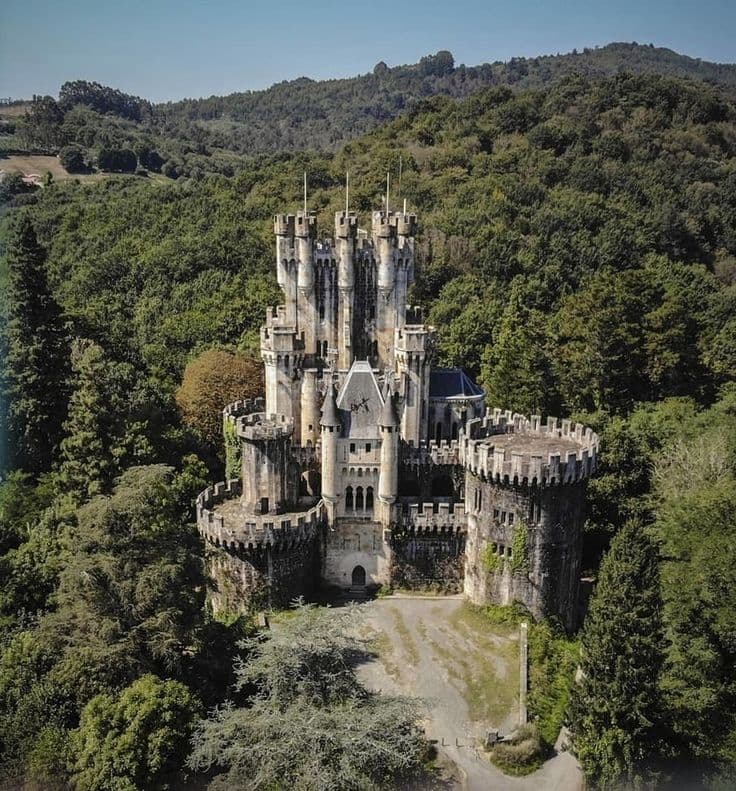
What is the best 7-day urbex road trip in France?
The best 7-day urbex road trip in France is a regional loop rather than a coast-to-coast sprint. A practical route runs from northern France to the east, then down toward the southeast, across Occitanie, and back through central or western France. This keeps daily driving manageable while covering the widest variety of abandoned places.
Quick summary
- A 7-day urbex itinerary in France works best as a loop across 5 to 7 major regions.
- The strongest mix usually includes castles, industrial sites, hospitals, rail remains, farms, and military structures.
- Daily driving should stay reasonable, ideally around 2 to 4 hours between exploration zones.
- The safest approach is to use verified locations instead of random social media pins.
- France offers enough density for a top-tier circuit without publishing sensitive entry details.
- Preservation-first urbex means no forced access, no vandalism, and no sharing of risky access methods.
Quick facts
- Country: France
- Trip length: 7 days
- Best format: Circular road trip
- Best seasons: Spring and autumn
- Best site mix: Chateaux, industry, transport, religious ruins, rural estates
- Ideal travel style: Early starts, short site lists, one overnight base per region
- Important rule: Never enter sealed, occupied, or clearly private sites without permission
Which 7-day itinerary works best for an urbex road trip in France?
The most practical circuit balances site density and driving time. A north-to-south arc with a central return gives you variety without turning the trip into seven days of motorway fatigue.
| Day | Main area | Prioritize these site types | Why it works |
|---|---|---|---|
| 1 | Hauts-de-France | Mines, factories, forts, manors | Dense abandoned heritage and short transfers |
| 2 | Grand Est | Military remains, industry, spa buildings | Strong architectural contrast |
| 3 | Burgundy and Franche-Comte | Rural estates, rail sites, workshops | Good mid-trip pacing |
| 4 | Auvergne-Rhone-Alpes | Mountain hotels, hospitals, mills | High variety in a compact radius |
| 5 | Provence and PACA fringe | Fortified sites, villas, agricultural sites | Distinct scenery and textures |
| 6 | Occitanie | Sanatoriums, farms, religious ruins | Excellent mix of remote and semi-urban sites |
| 7 | Centre-Val de Loire or western return | Chateaux, depots, schools, farms | Smooth final loop with major road access |
Which 50 abandoned place ideas fit this France itinerary best?
The best way to build a top 50 list for a France urbex road trip is by site type and region. That approach is more reliable than copying outdated coordinates, and it helps you adapt when a location is sealed, demolished, or newly secured.
- Day 1 - Hauts-de-France: abandoned mining hamlet, brick factory, sugar refinery, manor house, rail depot, chapel ruin, border fort, textile mill
- Day 2 - Grand Est: military bunker, spa hotel, paper mill, glassworks, convent, vineyard estate, hilltop fort
- Day 3 - Burgundy and Franche-Comte: farmhouse complex, abandoned workshop, railway warehouse, stone quarry office, small chateau, distillery, rural school
- Day 4 - Auvergne-Rhone-Alpes: mountain sanatorium, hydro site, alpine hotel, mill, hospital wing, workers housing, cable transport relic
- Day 5 - Provence and PACA fringe: fortified castle, abandoned villa, vineyard building, military battery, ceramics site, station building, hill chapel
- Day 6 - Occitanie: former clinic, textile hall, rural monastery, farm estate, tunnel infrastructure, depot building, hill village ruin
- Day 7 - Centre-Val de Loire or western return: chateau outbuilding, dairy plant, training school, warehouse, water tower site, manor, farm barn
That list gives you 50 strong stop ideas without pretending that every site stays accessible or safe. For a broader regional base, see 100 Abandoned Places in France by Region: Complete Urbex Guide.
How should you choose daily stops on a 7-day urbex itinerary in France?
Choose fewer stops than you think you need. In practice, three serious visits per day are usually enough when you account for parking, approach walks, changing weather, and on-site safety checks.
A good daily structure is:
- 1 priority site in the morning
- 1 secondary site after lunch
- 1 flexible backup site nearby
- 1 overnight base with food and fuel access
This method keeps the trip resilient. If one site is fenced, occupied, or structurally unsafe, the whole day does not collapse.
Why is a verified map better than random coordinates for urbex in France?
A verified map is better because France changes fast. Buildings are demolished, entrances are sealed, and old blog posts often stay online long after a place becomes inaccessible.
MapUrbex is built around curated and verified location data, which is more useful than chasing recycled pins. If you want a wider overview, start with Browse all urbex maps and compare it with Map of Abandoned Places in France by Region: A Practical Urbex Guide.
Safety reminder: responsible urbex never means forcing access, bypassing security, or entering unstable structures. If a place is occupied, locked, collapsing, or clearly private, skip it.
What gear matters most for a France urbex road trip?
The most useful gear is simple, legal, and practical. You do not need tactical equipment. You need visibility, weather protection, navigation, and enough light to move safely.
Bring:
- sturdy boots with grip
- gloves for rough surfaces
- two light sources
- offline navigation
- charged phone and power bank
- water, food, and basic first aid
- dust mask where legally and practically appropriate
Avoid overloading your schedule or your backpack. Fatigue is one of the main reasons road trip decisions get worse late in the day.
How can you keep a circuit urbex France trip legal and responsible?
A responsible circuit urbex France trip starts with restraint. The goal is documentation and discovery, not entry at any cost.
Follow these principles:
- respect private property and posted restrictions
- never force doors, windows, gates, or fences
- do not take objects or move artifacts
- do not reveal sensitive access details publicly
- leave immediately if locals, owners, or security ask you to leave
- avoid solo visits to remote or unstable sites
If you want a broader regional reading list before you plan, use Abandoned Places in France: Full List by Region.
FAQ
Is 7 days enough for an urbex road trip in France?
Yes, 7 days is enough for a strong introduction if you keep the route selective. It is not enough to cover all of France, but it is enough for a high-quality regional loop with varied abandoned places.
What is the best starting point for a France urbex itinerary?
Northern France or the Paris catchment area is often the easiest starting zone because road connections are strong and several major regions can be reached quickly.
Should you plan exact coordinates for every stop in advance?
You should plan priority zones more than rigid minute-by-minute stops. Verified locations help, but backup options matter because access conditions can change without warning.
What types of abandoned places are most common in France?
Across France, the most common categories are rural farms, manor houses, industrial buildings, military structures, small religious sites, and transport infrastructure.
When is the best season for a 7-day urbex itinerary in France?
Spring and autumn are usually best. Vegetation is more manageable than in peak summer, temperatures are lower, and daylight is still long enough for a road-based schedule.
Conclusion
A good urbex road trip in France is not about squeezing in the maximum number of sites. It is about building a realistic 7-day route, prioritizing varied regions, and using verified information to avoid wasted miles.
If you focus on regional loops, keep three stops per day, and treat safety and legality as non-negotiable, France can deliver one of the most rewarding urbex circuits in Europe.
Access the free urbex map
