 MapUrbex
A practical guide to the 8 most photogenic urbex spot types in Montpellier, with photography tips, safety reminders, and responsible planning advice.
Urbex Montpellier: 8 Most Photogenic Spots for Photography
Montpellier offers one of the more visually varied settings for urbex photography in southern France. Abandoned religious spaces, industrial shells, weathered villas, and rural ruins all create very different moods within the same metro area.
For strong images, variety matters more than sheer quantity. The best urbex spots in Montpellier are the ones with clear architectural character, readable light, and textures that tell a story without needing sensationalism.
What are the most photogenic urbex spots in Montpellier?
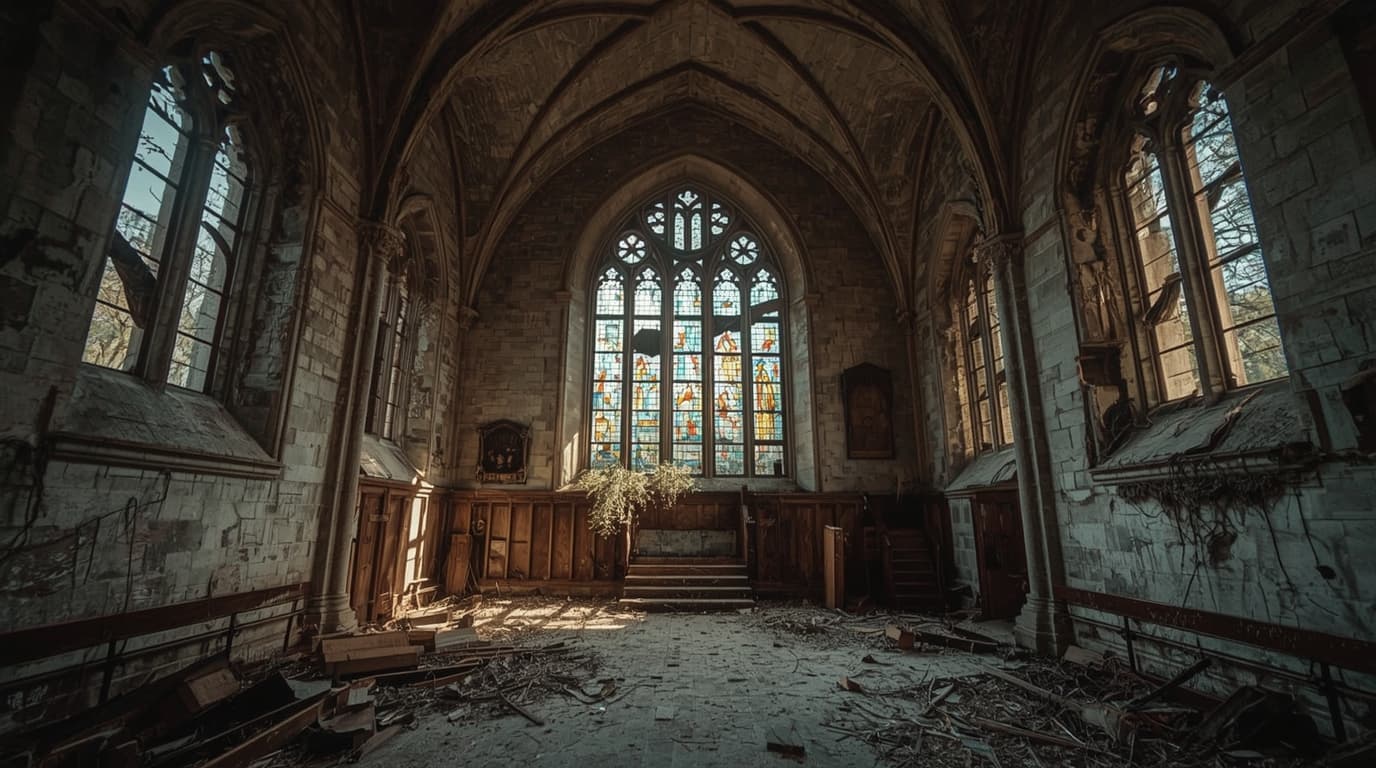
The most photogenic urbex spots in Montpellier are usually abandoned churches, chapels, villas, manor houses, factories, warehouses, schools, and rural farm ruins. These places stand out because they combine strong architecture, visible decay, and Mediterranean light. Exact access should always be checked legally and responsibly through verified, preservation-first sources.
Quick summary
- Religious ruins often create the strongest atmosphere for wide shots and detail photography.
- Industrial sites work best for scale, repetition, and heavy textures.
- Villas and manor houses are ideal for staircases, wallpapers, and intimate interior scenes.
- Rural ruins around Montpellier often photograph best at sunrise or late afternoon.
- Responsible urbex means no forced entry, no vandalism, and no sharing of unsafe access tips.
- Verified maps are more reliable than random coordinates copied from social media.
Quick facts
- City focus: Montpellier, France
- Primary topic: urbex Montpellier
- Best visual themes: stained glass, arches, peeling paint, ironwork, exposed brick, vegetation
- Best use cases: photography, documentary work, architectural texture studies
- Main risks: unstable floors, broken glass, asbestos, hidden shafts, legal restrictions
- Best planning method: curated maps and recent verification
Which spot types should you prioritize first?
If photography is your goal, start with place types that have the clearest visual identity. In Montpellier, religious ruins, industrial spaces, and old residences usually produce stronger images than empty buildings with no defining features.
| Spot type | Why it photographs well | Best shot idea | Main caution |
|---|---|---|---|
| Abandoned church | Height, symmetry, stained glass, pew lines | Centered wide shot from the aisle | Fragile floors and falling debris |
| Small chapel | Compact mood, altar details, soft side light | Tight frame on decay and light beams | Restricted access and structural fragility |
| Villa | Wallpaper, furniture traces, staircases | Layered interior compositions | Hidden rot in upper floors |
| Manor house | Larger rooms and formal symmetry | Doorway-to-doorway perspective | Unstable ceilings |
| Factory | Machines, beams, repetitive geometry | Wide-angle industrial scale | Sharp metal, holes, asbestos |
| Warehouse | Open volume and strong leading lines | Backlit silhouette shots | Unsafe roofs and dark corners |
| Abandoned school | Hallways, chalkboards, repetition | Corridor depth with natural light | Broken glass and legal sensitivity |
| Rural farm ruin | Stone textures and overgrowth | Exterior shots at golden hour | Isolation and unstable outbuildings |
Why is Montpellier a good city for urbex photography?
Montpellier is attractive for urban exploration photography because dense urban fabric, older industrial zones, former estates, and rural edges all sit relatively close together. That gives photographers multiple visual styles without needing long-distance travel.
Light is another reason. Southern light can turn ordinary decay into strong visual material, especially when it enters through broken roofs, shutters, or colored glass. In practical terms, that means deeper shadows, stronger contrast, and more readable textures.
Which abandoned religious sites create the strongest images?
Abandoned churches and chapels usually create the strongest images in Montpellier because they combine scale, symbolism, and controlled light. Even heavily damaged sites often retain arches, apses, altars, old tiles, or fragments of stained glass.
For photographers, the main advantage is structure. A religious interior naturally gives you central symmetry, vanishing lines, and a clear subject. If the building is unsafe or access is not authorized, the correct decision is to leave and preserve the site.
Which industrial spots offer the best textures and scale?
Factories, workshops, and warehouses are usually the best industrial urbex spots in Montpellier for texture and scale. They offer rust, concrete, steel beams, old signage, and long sight lines that read very clearly in photos.
These places are especially useful for wide-angle work and black-and-white processing. They also carry some of the highest risks. Never force entry, and never assume that a quiet site is a safe site.
Are old villas and manor houses the most photogenic urbex spots in Montpellier?
Yes, old villas and manor houses are often the most photogenic urbex spots in Montpellier for interior detail. They tend to preserve domestic traces such as wallpapers, fireplaces, stair rails, painted ceilings, mirrors, or abandoned objects.
They reward slow observation. A doorway, curtain, and cracked wall can tell more visual story than a wide empty room. Respect ownership, privacy, and preservation at all times.
Which rural ruins around Montpellier are worth photographing?
Rural farmhouses, wine-related outbuildings, and isolated stone ruins around Montpellier are often worth photographing because they place abandonment within a broader landscape. Vegetation, fields, and changing sky conditions give these places a very different mood from urban interiors.
They are usually strongest for exterior work. Sunrise and late afternoon often produce the cleanest relief on stone and plaster. Because these sites can be isolated, go prepared, avoid solo risk, and stay out of any restricted property.
What should photographers know before planning urban exploration in Montpellier?
The most important point is simple: good urbex photography starts with legal awareness and risk control, not with secret coordinates. A beautiful site is never worth trespassing, forced access, or injury.
Useful planning steps:
- Check ownership and access conditions.
- Favor verified, preservation-first resources over random social posts.
- Bring a charged phone, flashlight, gloves, water, and a dust mask when appropriate.
- Avoid entering alone if the site is large or unstable.
- Leave everything exactly as found.
If you want a broader starting point, Browse all urbex maps gives a curated overview. Beginners should also read How to Start Urbex: A Beginner's Guide to Urban Exploration and How to Find Abandoned Places with Google Maps.
How can you find verified urbex spots without relying on random tips?
The best method is to use curated maps, recent verification, and preservation-first filtering. That approach is more reliable than copied pins, vague forum posts, or social media comments that may be outdated, unsafe, or misleading.
MapUrbex is built for that use case. The goal is not mass exposure. The goal is practical, verified discovery that reduces wasted trips and encourages responsible behavior.
FAQ
Is urbex in Montpellier legal?
Legality depends on ownership, local restrictions, and whether you have permission. Never enter private or restricted property without authorization.
What is the best season for urbex photography in Montpellier?
Spring and autumn are often the most balanced seasons. Light is still good, heat is lower, and vegetation can add atmosphere without making conditions extreme.
Do photographers share exact coordinates publicly?
Responsible explorers usually avoid publishing precise access details for sensitive sites. That helps reduce damage, theft, and unsafe visits.
What camera gear works best for Montpellier urbex spots?
A wide-angle lens, spare batteries, a flashlight, and light gear are the most useful basics. In unstable environments, mobility is usually safer than carrying too much equipment.
Are abandoned churches better than factories for photos?
They are different rather than universally better. Churches tend to offer atmosphere and symmetry, while factories offer scale, repetition, and raw texture.
Conclusion
Urbex Montpellier is visually rich because it combines religious ruins, industrial structures, old residences, and rural decay within the same regional landscape. The most photogenic results usually come from understanding site types, light, and safety rather than chasing rumors.
Responsible exploration protects both people and places. Use verified information, respect the law, and prioritize preservation over access.
Access the free urbex map
