 MapUrbex
A practical guide to urbex in Rennes, with the main types of abandoned places, the best search zones around the city, and responsible exploration rules.
Urbex in Rennes: guide to abandoned places in and around the city
Rennes is not the French city with the largest industrial ruins, but it remains a strong starting point for regional urbex. The local reality is simple: the most interesting abandoned places are usually found around Rennes rather than in the historic center.
For anyone searching for urbex in Rennes, the key is to think in terms of the wider urban ring, the countryside, and the road corridors of Ille-et-Vilaine. That is where abandoned manor houses, empty farm buildings, small workshops, and forgotten outbuildings are more likely to appear.
Where can you do urbex in Rennes?
You can find urbex in Rennes, but the most realistic opportunities are usually around Rennes rather than inside the city itself. In practice, Rennes city center has few long-lasting abandoned places, while the outskirts and the wider Ille-et-Vilaine area more often contain empty farmhouses, manor houses, service buildings, and small industrial sites.
That is why a useful Rennes urbex guide must cover both abandoned places in Rennes and abandoned places around Rennes.
Quick summary
- Urbex in Rennes exists, but the city center usually offers fewer stable spots than the surrounding area.
- The most common local targets are rural properties, manors, abandoned farm buildings, and small industrial or craft sites.
- Sites inside Rennes change quickly because of redevelopment, security work, or demolition.
- The best search logic is regional: ring road exits, villages, agricultural zones, and older activity corridors.
- Responsible urbex matters in Ille-et-Vilaine: no forced entry, no trespassing, and no damage.
- Verified and curated resources save time compared with random social media rumors.
Quick facts
- Primary area: Rennes
- Wider exploration zone: around Rennes and across Ille-et-Vilaine
- Most frequent place types: manor houses, farmhouses, outbuildings, workshops, small industrial sites
- Urban density: moderate in the center, better potential outside the core city
- Search intent: informational and planning-focused
- Best approach: verify, cross-check, and prioritize legal observation or authorized access
Why is urbex in Rennes more active around the city than in the center?
Urbex in Rennes is more active around the city because central Rennes is dense, monitored, and constantly redeveloped. That makes long-term abandonment less common inside the core urban area.
Rennes is a fast-moving regional capital. Empty buildings inside the city are often secured quickly, converted, or demolished. This is especially true for commercial plots, former offices, and transport-linked spaces.
By contrast, the outer ring of Rennes and the nearby countryside change more slowly. Older agricultural buildings, family properties, small industrial units, and secondary residences can remain unused for longer periods. For local explorers, that shifts attention from inner Rennes to the wider metropolitan and rural belt.
What kinds of abandoned places can you find around Rennes?
Around Rennes, the most common abandoned places are rural properties and small-scale neglected buildings rather than huge urban megastructures. If you are expecting giant factory complexes, the Rennes area is usually less dramatic than older heavy-industry regions.
Still, the variety is real. The local landscape often produces smaller, older, and more atmospheric sites.
1. Abandoned manor houses and small chateaus
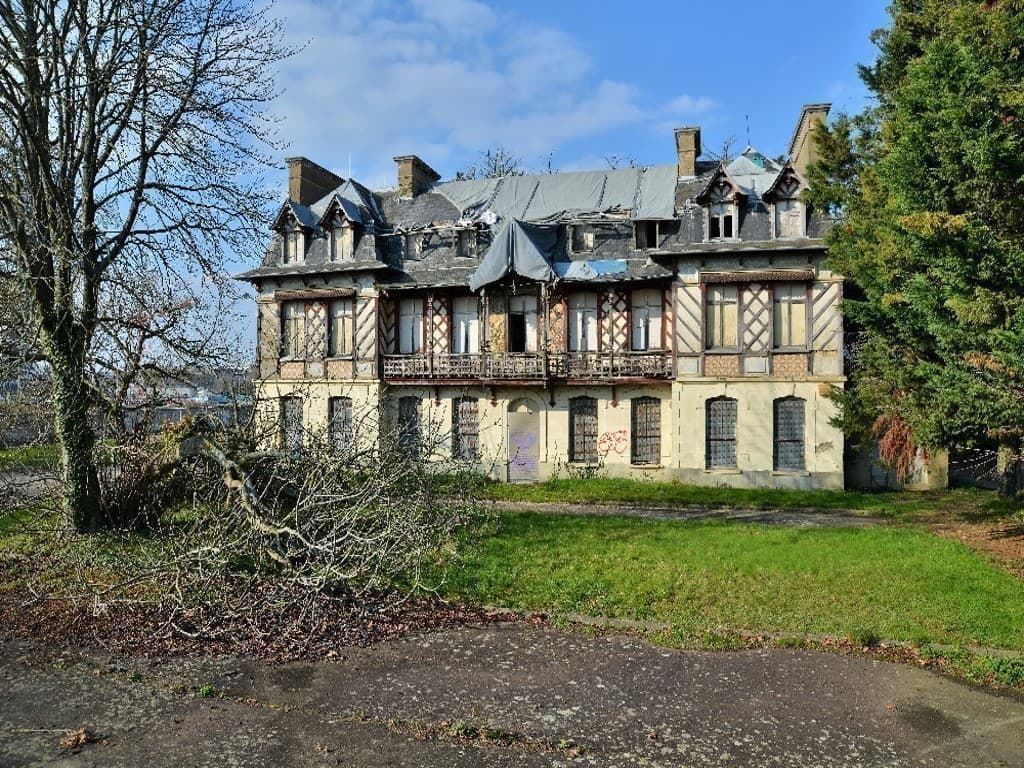
This is one of the most recognizable categories around Rennes. In parts of Brittany and Ille-et-Vilaine, isolated manor houses, estate homes, and small chateau-style properties appear more often than major industrial ruins.
These places attract attention because they combine architecture, local history, and decay. They also tend to be private properties, sometimes monitored, and often structurally fragile. For that reason, they should be treated as heritage sites first, not as playgrounds.
2. Empty farmhouses and agricultural outbuildings
Abandoned farm buildings are among the most realistic targets around Rennes. They include old houses, barns, sheds, storage units, and small courtyard complexes that have lost their original use.
This type of site is common because the rural belt around Rennes has changed with modern agriculture, inheritance issues, and housing pressure. Some structures are visibly disused, but that does not mean they are safe or legally accessible.
3. Small workshops, depots, and craft premises
Another frequent category is the small activity site: garages, repair spaces, depots, roadside workshops, or former craft buildings. These are less spectacular in photos, but they are typical of abandoned places around Rennes.
They matter because they reflect local economic history more accurately than fantasy-style ruins. Many were linked to transport routes, village activity, or family businesses. When abandoned, they often remain partly intact for a limited time before reuse or clearance.
4. Former public or service buildings
In the wider Rennes area, some explorers look for old schools, utility buildings, lodges, annexes, or service structures that no longer have an active function. These are rarer and often disappear quickly.
What makes them interesting is their documentary value. Their layouts, signage, and everyday materials often say more about a region than a heavily photographed ruin does. They also tend to be visible from public space, which makes legal observation a better option than risky entry.
5. Forgotten residential houses on the outskirts
Detached houses left empty on the edges of towns and villages are another realistic part of the local urbex landscape. These properties may be tied to succession delays, renovation costs, or pending land projects.
They are often easy to overestimate. A house may look abandoned while still being owned, monitored, or occasionally used. For Rennes urbex research, this is where verification matters most.
Which areas around Rennes are most promising for abandoned places?
The most promising areas around Rennes are usually the peri-urban belt, older village corridors, and rural sectors of Ille-et-Vilaine. The closer you stay to the dense city center, the less stable the abandoned stock tends to be.
The table below helps clarify the local logic.
| Zone | What you are more likely to find | Why it matters | Main caution |
|---|---|---|---|
| Central Rennes | Short-lived vacancies, redeveloped buildings, occasional service sites | Good for observation of urban change | Sites change fast and are often secured |
| Inner suburbs | Former houses, small depots, edge-of-city buildings | Transition zone between urban and semi-rural uses | High visibility and frequent ownership activity |
| Peri-urban ring around Rennes | Farm complexes, empty homes, mixed-use buildings | One of the most realistic search areas | Many sites are on private land |
| Rural Ille-et-Vilaine near Rennes | Manor houses, barns, annexes, old local premises | Better chance of long-term neglect | Isolation increases safety risk |
| Roadside and older activity corridors | Workshops, storage buildings, minor industrial traces | Often overlooked and locally typical | Many are contaminated, unstable, or watched |
A practical takeaway is simple: if your goal is to find abandoned places around Rennes, widen the map instead of focusing only on the city name. That is also why many explorers start with curated regional resources rather than random pins.
How can you find real abandoned places near Rennes without wasting time?
The fastest way to find real abandoned places near Rennes is to combine curated maps, satellite review, local history clues, and strict verification. Random social posts often point to places that are already demolished, sealed, or misidentified.
A good first step is to Browse all urbex maps and compare Rennes with the broader Brittany and France context. That helps you understand whether a site belongs to the city itself, the outskirts, or the wider department.
For a repeatable search method, read How to Find Real Abandoned Places Near You in 2026 (Without Wasting Time) and Urbex Near Me in 2026: How to Find Real Abandoned Places Without Wasting Time. Both are useful if you want to move beyond rumors and focus on actual field research.
Access the free urbex map
What rules should you follow for responsible urbex in Ille-et-Vilaine?
Responsible urbex in Ille-et-Vilaine means preserving places, respecting property rights, and refusing risky or illegal access. The goal is documentation, not intrusion.
Use these rules as a baseline:
- Do not force doors, windows, gates, or fences.
- Do not enter private property without permission.
- Do not share precise coordinates publicly if that could accelerate vandalism.
- Do not remove objects, documents, or architectural elements.
- Do not enter unstable structures, roofs, flooded spaces, or fire-damaged buildings.
- Leave immediately if a place is occupied, monitored, or clearly being maintained.
Safety reminder: many abandoned places around Rennes are structurally weak, contain broken flooring, asbestos, mold, or hidden shafts. A building that looks quiet in photos may still be dangerous or legally protected.
This preservation-first approach is central to MapUrbex. Verified locations are useful only when paired with restraint, context, and respect for local heritage.
What if you want the urbex atmosphere without illegal entry?
You can still experience the atmosphere of abandonment around Rennes without illegal entry by focusing on public viewpoints, visible ruins, heritage landscapes, and authorized visits. This is often the best option for photographers and first-time visitors.
Old industrial edges, visible manor exteriors, railway remnants, and neglected rural architecture can often be documented from public roads and paths. In Brittany, legal observation frequently produces stronger documentary work than rushed entry.
If you want a broader starting point, Browse all urbex maps to compare Rennes with other areas, then narrow your research. You can also use public history sources before planning a route.
Browse all urbex maps
FAQ
Is there much urbex inside Rennes city itself?
There is some, but not in the sense of a large and stable abandoned-city scene. Rennes is active, dense, and regularly redeveloped. Most truly abandoned places inside the city either disappear quickly or become inaccessible.
Are the best abandoned places in Rennes or around Rennes?
Around Rennes is usually the better answer. The peri-urban and rural belt of Ille-et-Vilaine offers more realistic potential than the central districts. That is why searches for abandoned places around Rennes often perform better than searches limited to the city center.
What should beginners look for first?
Beginners should start with legal observation, visible exteriors, and verified research rather than entry attempts. Small rural structures and clearly observable sites are easier to understand than complex urban ruins. The priority is always safety and legality.
Is it a good idea to share coordinates publicly?
Usually not. Public coordinates can increase vandalism, theft, and sealing of sites. Responsible explorers share context carefully and avoid exposing fragile places to mass traffic.
Can MapUrbex replace local research?
No. A curated map helps you save time, filter noise, and identify patterns, but field conditions still change. You should always verify current status, ownership, and safety before planning anything.
Conclusion
Urbex in Rennes is real, but its geography matters. The strongest opportunities are usually not in the city center itself, but in the wider belt of abandoned places around Rennes and across Ille-et-Vilaine.
If you approach the area with realistic expectations, careful verification, and a preservation-first mindset, Rennes becomes a useful base for regional exploration. Start broad, stay responsible, and favor documented, verified research over rumor.
Access the free urbex map
