 MapUrbex
A practical guide to urbex in Bordeaux, the main abandoned place types in the city and Gironde, and how to explore responsibly with curated maps.
Urbex in Bordeaux: the best abandoned places in and around Bordeaux
Bordeaux is better known for wine architecture, riverfront redevelopment and classical streets than for dense inner-city abandonment. That is exactly why urbex in Bordeaux has a specific profile.
Most abandoned places linked to Bordeaux are found on the edges of the city or across the wider Gironde. The local scene is shaped by military remains, rural estates, industrial wasteland, derelict logistics areas and coastal structures rather than by a long list of empty downtown buildings.
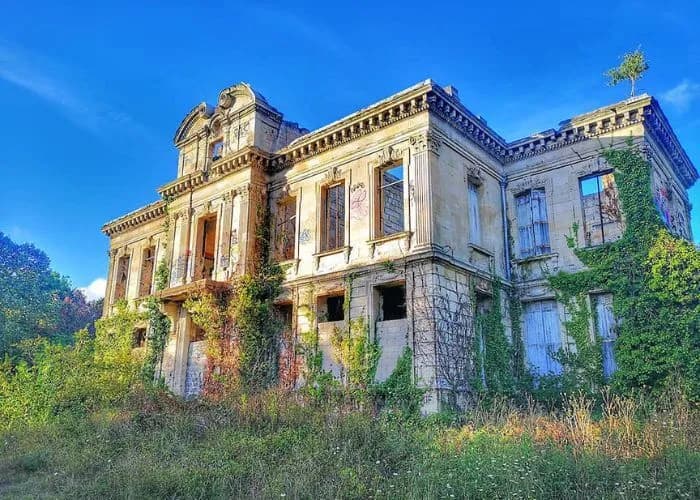
Where can you find the best urbex in Bordeaux?
The best urbex in Bordeaux is usually found in the wider Bordeaux area rather than in the historic city center. In practice, urbex Bordeaux mostly means former military structures, abandoned wine estates, industrial sites, logistics zones and coastal remains spread across Gironde, with a smaller number of known urban remnants inside Bordeaux itself.
Quick summary
- Urbex in Bordeaux is more active around the city than in the protected historic center.
- The most common abandoned place types are military sites, wine estates, industrial buildings and rural properties.
- The Base sous-marine de Bordeaux is a major reference point in local urbex culture, even if it is not a typical free-entry exploration site.
- Many searches for abandoned places in Bordeaux actually refer to spots in Gironde, Médoc, Entre-Deux-Mers or the Atlantic coast.
- Responsible preparation matters: legal access, structural risk and preservation are more important than collecting secret pins.
- MapUrbex focuses on verified locations, curated maps and preservation-first exploration.
Quick facts
- Primary area: Bordeaux, Gironde, Nouvelle-Aquitaine
- Best-known local reference: Base sous-marine de Bordeaux
- Common spot categories: military, industrial, wine estate, railway, coastal
- City-center density: limited compared with larger post-industrial cities
- Best search scope: Bordeaux metropolitan edge plus wider Gironde
- Approach recommended: verified information, no forced entry, no trespassing
Is Bordeaux a good city for urbex?
Bordeaux is a good city for urbex only if you include the wider area around it. The central city is heavily renewed, protected and economically active, so classic abandoned buildings are less concentrated than in former heavy-industry centers.
That does not mean the region lacks interest. It means the geography is different. People searching for "abandoned places in Bordeaux" often end up focusing on Bacalan, the outskirts, old transport zones, neglected estates in the countryside and coastal remains farther west.
This distinction matters for search intent. If you want inner-city ruins, Bordeaux is selective. If you want a broad mix of military, wine and industrial heritage in Gironde, the area becomes much more relevant.
For a wider comparison with other regions, Browse all urbex maps is useful as a reference point.
What types of abandoned places define urbex Bordeaux?
Urbex Bordeaux is defined less by skyscraper decay and more by a mix of military concrete, rural wine architecture, transport infrastructure and scattered industrial remains. That combination is what makes the local scene distinctive.
1. The Bordeaux submarine base and nearby military remains
The Base sous-marine de Bordeaux is the best-known abandoned or semi-abandoned reference in the city. It is a massive World War II submarine bunker in the Bacalan district, and it remains one of the most recognizable military structures in southwestern France.
Its importance is historical as much as urbex-related. Parts of the site have had cultural reuse, so it should not be described as a simple open ruin. Still, anyone studying urbex Bordeaux will encounter it immediately because it shaped the area's industrial-military landscape.
Nearby military remnants and concrete wartime traces also explain why Bordeaux urbex often overlaps with heritage research. In this region, exploration is not just about dereliction. It is also about understanding defensive infrastructure, port history and adaptive reuse.
2. Abandoned wine chateaux and rural estates in Gironde
Abandoned wine properties are one of the most characteristic forms of urbex around Bordeaux. Across Gironde, especially outside the dense urban core, explorers often look for neglected chateaux, former vineyard houses, caretaker buildings and agricultural outbuildings.
This category is closely tied to the local economy. Bordeaux's identity is built around viticulture, so when estates decline, merge or lose function, they leave behind architecture that is very different from standard factory ruins. Interiors may include cellars, reception rooms, workers' quarters or former production spaces.
These sites are often visually striking, but they also require caution. Rural abandonment does not mean public access. Ownership is usually private, conditions can deteriorate fast, and preservation concerns are high.
3. Former industrial buildings along the river and port areas
Former industrial buildings around the river and port districts are another core part of urbex Bordeaux. Warehouses, workshops, depots and service buildings once linked to trade and logistics can still appear in the wider urban fabric, especially where redevelopment has been uneven.
The Bacalan area is the main historical reference because of its maritime and industrial identity. Many locations have already been transformed, demolished or secured, which is why older urbex reports can become outdated quickly.
This is one reason curated information matters. In a city like Bordeaux, industrial sites can shift from abandoned to redeveloped in a short time. Current status is more useful than nostalgic lists copied from old forums.
4. Derelict railway, transport and logistics sites on the outskirts
Railway-side buildings, depots and logistics plots often form the most accessible category of abandoned landscape around Bordeaux. These are not always spectacular ruins, but they are common in the metropolitan fringe and in transport corridors outside the center.
What makes them interesting is context. A small signal building, a disused warehouse or an abandoned service yard can reveal how goods once moved between the port, industry and surrounding communes. For researchers and photographers, these transitional spaces often say more about urban change than a single famous ruin.
They also present serious risks. Rail infrastructure can remain active nearby, contamination is possible, and structural decay is not always visible. Responsible urbex means distance, legal awareness and no interference with transport property.
5. Coastal bunkers and abandoned leisure infrastructure toward the Atlantic
Some of the most talked-about abandoned places around Bordeaux are actually west of the city, toward the coast. In the larger Gironde and Atlantic zone, bunkers, war remnants and derelict holiday structures broaden the meaning of "urbex Bordeaux."
These sites matter because many local searches include day-trip distance rather than strict municipal limits. Someone looking for "abandoned places around Bordeaux" may really be searching for the nearest compelling site reachable from the city, not something inside the center.
The coastal environment adds strong visual appeal, but it also increases risk. Erosion, unstable sand, hidden drops and weather exposure make safety more important than photography.
Which areas around Bordeaux are most relevant for abandoned places?
The most relevant areas around Bordeaux are usually Bacalan, the metropolitan edge, rural Gironde wine zones, former logistics corridors and the coastal belt. The farther you move from the UNESCO-style center, the more likely you are to find sites that match the typical urbex definition.
The table below gives a practical overview.
| Area | What you may find | Why it matters for urbex Bordeaux | Practical note |
|---|---|---|---|
| Bacalan and north Bordeaux | military heritage, former warehouses, port-related remnants | historical core of Bordeaux's industrial identity | status changes quickly due to redevelopment |
| Metropolitan outskirts | depots, service buildings, light industrial wasteland | more abandoned fabric than in the center | access is often restricted or private |
| Entre-Deux-Mers and rural Gironde | abandoned estates, farm buildings, wine properties | strong regional character linked to viticulture | private ownership is common |
| Médoc and northern Gironde | rural ruins, defensive traces, scattered industrial remains | mix of heritage and isolation | distances are larger than they look on a map |
| Atlantic coast side | bunkers, derelict leisure structures, war remains | popular for visual atmosphere and history | weather and terrain raise risk |
If you want to understand how mapped exploration works across regions, Free Urbex Map 2026 offers a useful starting point.
Why are many "abandoned places in Bordeaux" actually outside the city?
Many "abandoned places in Bordeaux" are outside the city because central Bordeaux has undergone long-term renovation, heritage protection and real-estate pressure. In simple terms, the city center has fewer long-standing vacant structures than people expect.
Search behavior creates confusion. Users type "urbex Bordeaux" because Bordeaux is the recognizable city name, but the actual target may be a spot in Gironde, a wine estate in the countryside or a coastal bunker an hour away.
That is why good guides should distinguish between Bordeaux intra-muros, the Bordeaux metropolitan area and urbex in Gironde more broadly. Without that distinction, lists become inaccurate very quickly.
For readers comparing free resources, How to Get the Best Free Urbex Map in 2026?? explains what makes a map actually useful.
How should you prepare for urbex in Bordeaux and Gironde responsibly?
You should prepare for urbex in Bordeaux by prioritizing legality, current status and site preservation over access tactics. The safest and most reliable approach is to verify whether a place is publicly accessible, reused, sealed, dangerous or fully private before you travel.
A responsible checklist is simple:
- confirm the site's current status
- avoid private land without permission
- never force locks, fences or windows
- expect unstable floors, damp cellars and asbestos risk
- do not publicize fragile places irresponsibly
- leave no trace and remove nothing
Safety reminder: urbex is not a legal exception. A site can be photogenic and still be private, dangerous or protected. MapUrbex supports preservation-first exploration and does not encourage trespassing or forced entry.
If you organize coordinates or saved spot lists, How to Import Your .KML File into Google Maps explains the basic workflow.
Access the free urbex map
What makes verified maps more useful than random spot lists?
Verified maps are more useful than random spot lists because abandoned places change status quickly. A copied list may include demolished buildings, active sites, sealed entries or heavily monitored properties.
In Bordeaux, this is especially important. The region mixes redevelopment zones, private wine estates and heritage sites with partial reuse. A map that simply repeats old names is less trustworthy than one built around recent verification and careful curation.
MapUrbex's approach is practical rather than sensational. The goal is to help readers identify relevant areas, understand context and plan responsibly, not to turn fragile locations into disposable content. If you want a broader index, Browse all urbex maps remains the main navigation point.
FAQ
Is urbex legal in Bordeaux?
Urbex itself is not a special legal status in Bordeaux. Entering private property without permission can still be trespassing, and some sites may also fall under heritage, safety or security restrictions. Always treat access and photography rules as site-specific.
Are there many abandoned buildings in Bordeaux city center?
No, not compared with older heavy-industrial cities. Central Bordeaux has seen sustained restoration and redevelopment, which reduces the number of long-term vacant ruins. Most relevant spots are on the edges or outside the city.
What is the difference between urbex Bordeaux and urbex Gironde?
Urbex Bordeaux usually refers to the city and its immediate surroundings. Urbex Gironde is broader and includes wine estates, rural ruins, military remnants and coastal sites across the department. In practice, many popular searches for Bordeaux really point to Gironde.
When is the best season for photographing abandoned places around Bordeaux?
Autumn and winter often give clearer vegetation lines and softer light for exterior photography. Summer can be visually attractive on the coast, but heat, overgrowth and tourist pressure can complicate visits. Weather matters because damp surfaces and storms increase risk.
How do curated maps help without promoting trespassing?
Curated maps are useful when they emphasize verification, context and responsible planning instead of access tricks. They help users understand whether a place is current, relevant and comparable to what they are actually seeking. That reduces bad information and discourages reckless behavior.
Conclusion
Urbex in Bordeaux makes the most sense when you look beyond the postcard center. The strongest abandoned-place themes are found in military heritage, port and logistics history, neglected wine properties and the wider landscapes of Gironde.
A good Bordeaux urbex guide should therefore do two things clearly: separate the city from the surrounding department, and prioritize verified, responsible information over rumor. That is the best way to find relevant locations while protecting sites and staying realistic about access.
Access the free urbex map
