 MapUrbex
Discover the best urbex areas in Canada, from Montreal and Quebec to mines, mills, rail sites, and ghost towns, with responsible exploration tips.
Urbex Canada: Top 10 Abandoned Places to Explore in Montreal, Quebec, and Beyond
Canada has one of the broadest urbex landscapes in North America. Former mills, mines, rail facilities, hospitals, military structures, and empty institutional buildings appear across every province, but the densest concentration is still around Montreal, Quebec, and older industrial corridors.
The challenge is not finding abandoned places in Canada. The challenge is finding locations that are still standing, still worth the trip, and still possible to view responsibly. Site status changes fast, so verified mapping matters.
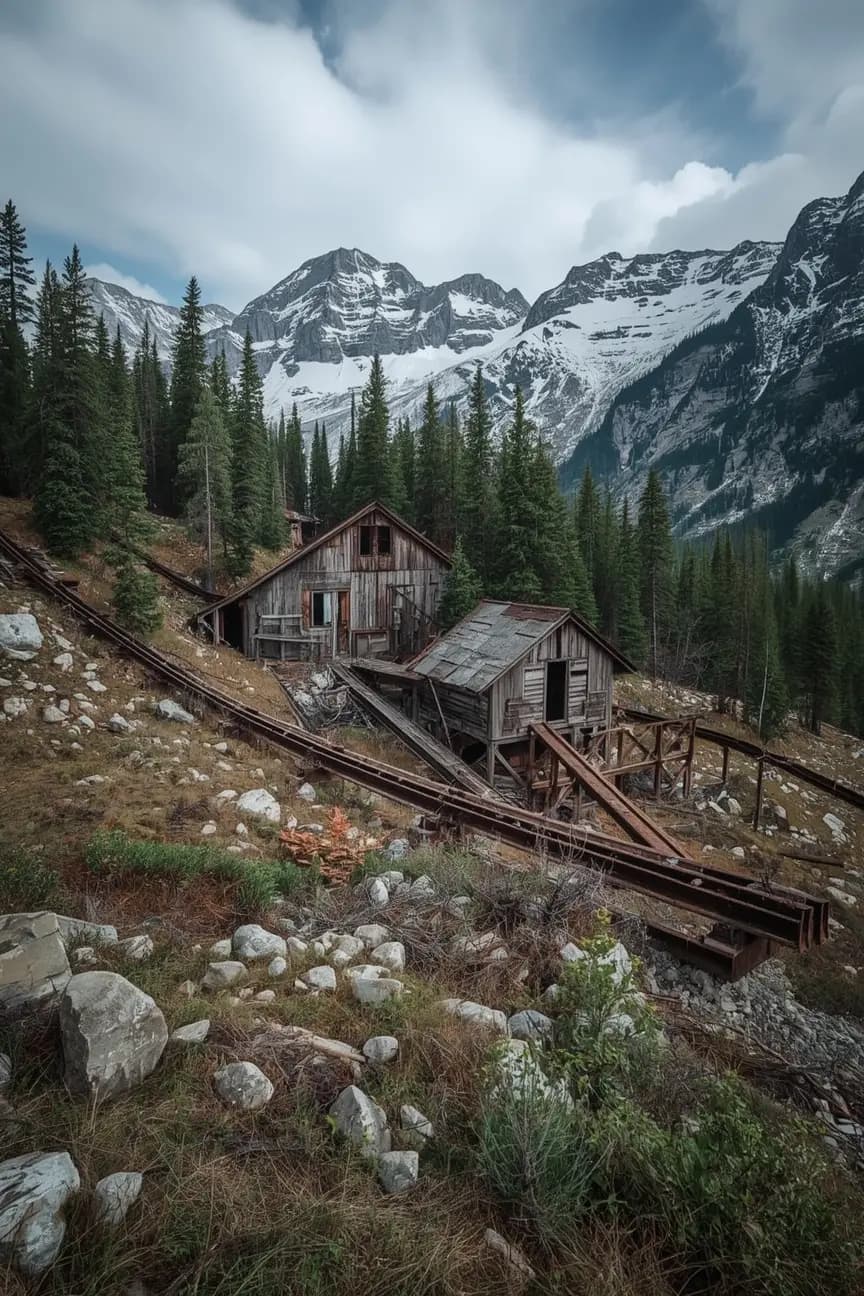
What are the best places for urbex in Canada?
The best areas for urbex in Canada are Montreal for industrial buildings, Quebec for mills and institutional sites, Mauricie and Saguenay for heavy industry, Abitibi for mining heritage, southern Ontario for factories and rail infrastructure, and parts of Atlantic Canada for coastal military remains. The right choice depends on whether you want architecture, scale, photography value, or legal exterior access.
Quick summary
- Canada’s strongest urbex zones are Montreal, Quebec, old mill towns, mining belts, and industrial waterfronts.
- Montreal and Quebec offer the best mix of density, variety, and travel access.
- Former factories, paper mills, mines, hospitals, schools, and rail sites are the most common abandoned place types.
- Winter improves visibility, but snow, ice, and structural instability raise risk.
- Responsible urbex means no forced entry, no vandalism, and no trespassing.
- Verified maps save time because closures, demolition, and sealing are common.
Quick facts
- Country focus: Canada
- Best-known hubs: Montreal, Quebec, Mauricie, Saguenay, Abitibi, southern Ontario
- Typical site types: factories, mills, mines, rail yards, institutions, coastal defenses
- Best use case: photography, research, road trips, legal exterior scouting
- Main constraint: access rules and rapid redevelopment
- Best planning tool: curated, updated location maps
Which top 10 urbex areas in Canada deserve priority?
If you want a practical shortlist, start with the areas below. They combine abandoned-building density, visual interest, travel logic, and long-term relevance in the Canadian urbex scene.
| Rank | Area | Typical finds | Why it stands out |
|---|---|---|---|
| 1 | Montreal, Quebec | factories, warehouses, rail infrastructure | best overall density and variety |
| 2 | Quebec City and outskirts | institutional buildings, military remains, industry | strong history and architecture |
| 3 | Mauricie, Quebec | mills, paper plants, workers' districts | classic industrial heritage |
| 4 | Saguenay–Lac-Saint-Jean, Quebec | aluminum and heavy industrial remnants | large-scale sites and landscapes |
| 5 | Abitibi-Témiscamingue, Quebec | mines, company towns, extraction infrastructure | mining-focused urbex |
| 6 | Eastern Townships, Quebec | sanatoriums, farms, schools, villas | mixed rural exploration |
| 7 | Southern Ontario | plants, depots, rail sites, institutions | huge historic manufacturing belt |
| 8 | Northern Ontario mining corridor | shafts, processing remains, ghost settlements | remote and visually dramatic |
| 9 | Atlantic coast zones | bunkers, fisheries, ports, defense sites | coastal atmosphere |
| 10 | Prairie rail towns | grain, depots, industrial service buildings | good for road-trip urbex |
Why does Montreal remain the reference point for urbex Canada?
Montreal remains the reference point because few Canadian cities combine so many abandoned typologies in such a compact area. You can find former industrial blocks, transport infrastructure, riverfront facilities, empty commercial shells, and redevelopment-edge spaces within the same metro region.
The city also changes quickly. A location that was open to legal exterior photography last season may be fenced, demolished, or repurposed a few months later. That is why curated mapping matters more in Montreal than in slower markets.
For broader planning, you can Browse all urbex maps. If you want a starting point before buying anything, Access the free urbex map.
Why is Quebec the strongest province for abandoned places in Canada?
Quebec is the strongest province for abandoned places because it combines major urban density with older industrial, religious, institutional, and resource-extraction history. In practical terms, that means more variety per road trip.
Outside Montreal, Quebec offers former paper towns, riverside mills, closed schools, redundant hospitals, parish buildings, coastal defenses, and mining infrastructure. For many explorers, that variety is more valuable than one famous site.
If you want a wider overview of the country, see Urbex Canada: Best Abandoned Places and Exploration Guide and Top 10 Abandoned Places in Canada for Urbex in 2026.
How should you choose between industrial sites, institutions, and ghost towns?
Choose industrial sites if you want scale, machinery context, and strong textures. Choose institutions if you want corridors, rooms, decay detail, and documentary atmosphere. Choose ghost towns or company settlements if you prefer landscape context and a slower road-trip format.
For beginners, industrial exteriors and visible ruins are usually easier to evaluate safely than sealed interiors. Large sites can still be dangerous, but exterior scouting often gives more usable photography with less legal and structural risk.
Safety reminder: never force access, never bypass fences or locks, and never enter a structure that shows fire damage, collapse, contamination, or active security measures.
When is the best season for urbex in Canada?
Late autumn and early spring are usually the most practical seasons for urbex Canada. Vegetation is lower, sightlines improve, and temperatures are more manageable than deep winter or high summer.
Winter can be excellent for exterior photography, especially around Montreal and Quebec, but ice, hidden openings, roof load, and isolation make conditions less forgiving. Summer offers easier travel, yet leaves can obscure access routes and site lines.
How do you explore abandoned places in Canada responsibly?
Responsible urbex in Canada starts with legality. You should confirm whether a place can be viewed from public land, whether permission exists, and whether the site is actively monitored or protected.
A preservation-first approach also means:
- leaving everything exactly as found
- avoiding addresses in sensitive cases
- respecting nearby residents and businesses
- skipping sites that are clearly unsafe or recently damaged
- checking whether a place has already disappeared, been sealed, or been reused
Map status changes quickly. This is especially true in fast-moving urban areas. Before planning a weekend, it helps to review places that are already gone: Abandoned Places That Disappeared in 2025: Demolished, Reused, or Sealed.
How can MapUrbex help you find verified places faster?
MapUrbex helps by reducing wasted trips. Instead of relying on outdated forum posts or vague social media hints, you can use curated maps focused on verified locations, status tracking, and practical trip planning.
That fits Canada especially well because distances are large and closures are frequent. A verified map is not just convenient; it is often the difference between a useful route and a lost day.
FAQ
Is urbex legal in Canada?
Urbex itself is not a single legal category. In Canada, the key issue is access. Viewing a site from public space may be legal, while entering private property without permission is not. Always follow local law, posted rules, and active closures.
What city is best for urbex in Canada?
Montreal is usually the best single city for urbex in Canada because it offers the widest mix of industrial, transport, commercial, and institutional remains. Quebec City and older industrial towns across Quebec are strong alternatives.
Are abandoned hospitals or factories safer?
Neither is automatically safe. Hospitals may contain hidden hazards, unstable floors, and contamination. Factories may contain shafts, heavy debris, and large fall risks. If a place shows structural failure or restricted access, do not enter.
Can beginners do urbex in winter?
Beginners should treat winter cautiously. Snow can hide openings, ice increases slip risk, and remote areas become harder to leave quickly. Daylight exterior scouting is usually the most sensible beginner format.
Do abandoned places in Canada disappear often?
Yes. Demolition, redevelopment, sealing, fire, and vandalism change the landscape constantly. That is why current information matters much more than old lists.
Conclusion
The best urbex Canada destinations are not just the most famous ones. The most useful places are the ones that still exist, match your travel plan, and can be approached responsibly. Montreal and Quebec remain the strongest starting points, but the wider Canadian map includes mills, mines, institutions, rail sites, and coastal remnants worth tracking carefully.
Access the free urbex map
