 MapUrbex
A clear guide to urbex Australia, with 8 standout place types in Sydney and Melbourne, plus legal, safety, and planning tips.
Urbex Australia: Top 8 Places to Explore in Sydney and Melbourne
Urbex Australia usually starts with two cities: Sydney and Melbourne. They have the country's deepest mix of industrial remains, disused institutions, maritime infrastructure, and rail-era sites.
This guide explains the 8 place types most often associated with urbex Sydney, urbex Melbourne, and abandoned places in Australia. It does not publish sensitive coordinates. MapUrbex follows a verified, preservation-first approach focused on legality, safety, and careful research.
What are the best urbex places in Australia?
The best-known urbex places in Australia are usually found around Sydney and Melbourne: abandoned hospitals, factory shells, dockside warehouses, disused rail infrastructure, closed schools, old theatres, service tunnels, and coastal defence remains. Exact access changes quickly, so the safest method is to use verified listings, confirm legal status, and never force entry or cross into restricted land.
Quick summary
- Sydney and Melbourne are the main hubs for urbex Australia searches.
- The most sought-after spot types are hospitals, factories, warehouses, rail sites, schools, theatres, tunnels, and bunkers.
- Many abandoned places in Australia sit on private, fenced, or operationally sensitive land.
- Redevelopment, demolition, and security changes are common.
- Responsible urbex means no forced access, no vandalism, and no public sharing of vulnerable entry details.
- MapUrbex is designed for verified locations and careful trip planning.
Quick facts
| Topic | Key point |
|---|---|
| Main cities | Sydney and Melbourne |
| Typical spot types | Industrial ruins, institutional buildings, transport remains |
| Main legal risk | Trespass or entering restricted infrastructure |
| Main safety risks | Structural instability, asbestos, sharp debris, hidden drops |
| Best first step | Scout from public space in daylight and verify status |
| Planning tools | Browse all urbex maps and Access the free urbex map |
Why do Sydney and Melbourne dominate urbex Australia searches?
Sydney and Melbourne dominate urbex Australia because they combine age, scale, and redevelopment pressure. Both cities grew through shipping, rail, manufacturing, healthcare, and education, which left behind many large structures when industries moved or sites were rebuilt.
Sydney tends to attract interest for maritime zones, heavy infrastructure, hospital complexes, and cliffside or tunnel-related remains. Melbourne is especially strong for warehouses, mills, schools, workshops, theatres, and broad industrial belts near former manufacturing districts.
For researchers, that means the two cities offer the widest visual variety in the shortest travel range. It also means many sites are watched, fenced, or rapidly changing.
Which 8 urbex places stand out in Sydney and Melbourne?
The 8 most notable urbex place types in Sydney and Melbourne are institutional ruins, industrial buildings, transport remains, and defence structures. These categories match what most people mean when they search for urbex Sydney, urbex Melbourne, or abandoned places in Australia.
-
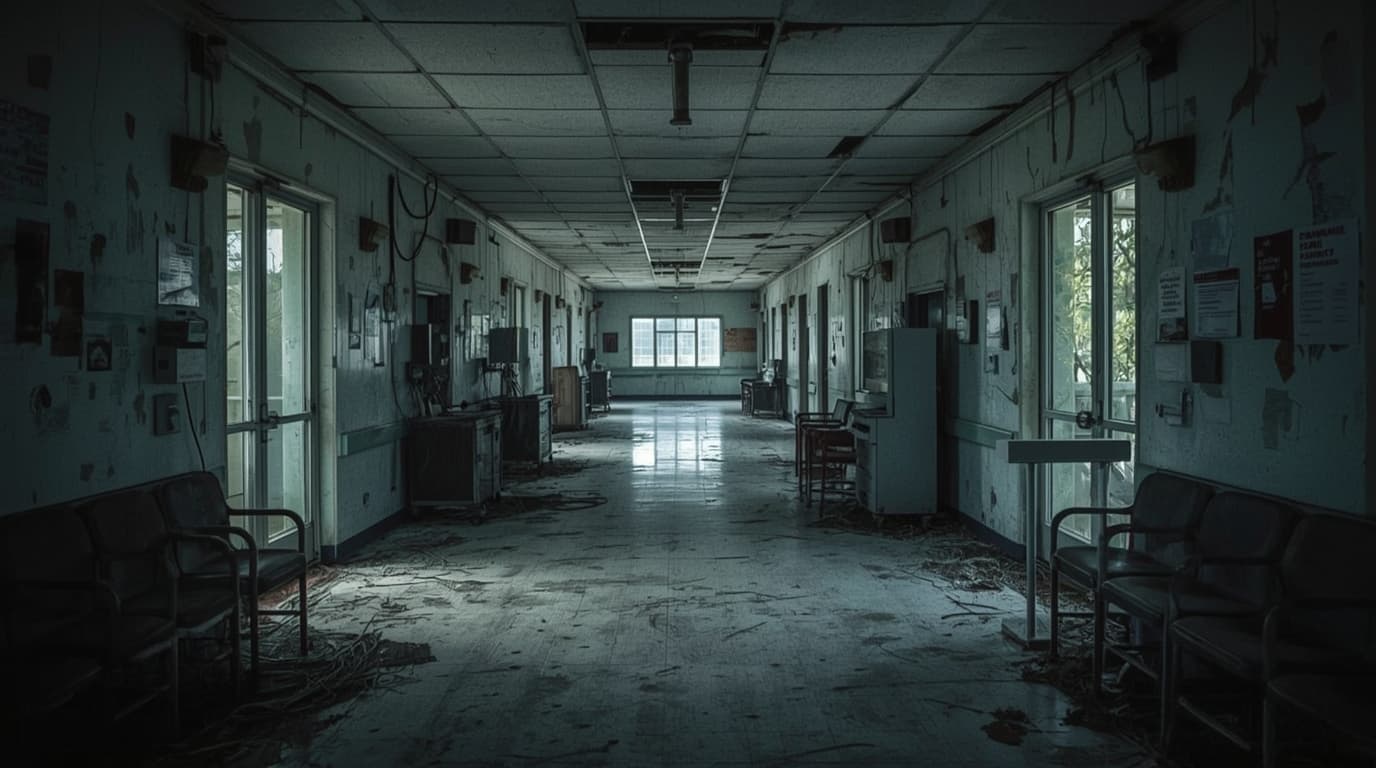
Abandoned hospital corridors and annexes These are among the most visually striking urbex sites in Australia. They often include long corridors, tiled treatment rooms, and decaying utility wings. They also carry serious risk: unstable ceilings, contamination concerns, and active redevelopment are common.
-
Decommissioned factories and mill buildings Large factory shells offer machinery bases, brickwork, roof trusses, and layered graffiti history. Melbourne is especially associated with this type. Access conditions change fast because former factories are often converted into housing or commercial space.
-
Dockside warehouses and maritime sheds Sydney's harbour history and port infrastructure make maritime ruins a major part of the local urbex landscape. These places are visually rich but often sit near active logistics zones, which can mean cameras, patrols, and strict exclusion areas.
-
Disused rail yards and station outbuildings Rail-related ruins are a classic part of urbex Australia. They may include signal boxes, maintenance sheds, sidings, and service buildings. They should be approached with extreme caution because rail corridors can remain active even when nearby structures look abandoned.
-
Closed schools and training campuses Former schools, colleges, and training centres attract photographers because of classrooms, gyms, libraries, and noticeboards frozen in time. They also tend to be legally sensitive because ownership often transfers before demolition or reuse.
-
Empty cinemas, theatres, and community halls Performance spaces are rare but memorable. Stage curtains, projection rooms, seating banks, and decorative interiors make them high-interest locations. They are also fragile, and many survive only briefly before restoration or stripping.
-
Service tunnels and utility structures Utility corridors, storm-linked structures, and maintenance tunnels are heavily romanticized online, but they are among the worst choices for unsafe or unlawful exploration. Flooding, toxic air, confined spaces, and infrastructure restrictions make them high-risk even for experienced people.
-
Coastal defence bunkers and military remnants Around greater Sydney and parts of coastal Victoria, old defence infrastructure draws interest for its concrete textures, landscape setting, and wartime history. Some remains are publicly accessible as heritage features, while others are closed, unstable, or protected.
| Place type | Common in Sydney | Common in Melbourne | Main appeal | Main caution |
|---|---|---|---|---|
| Hospitals | High | Medium | Corridors and medical decay | Contamination and instability |
| Factories | Medium | High | Industrial scale and texture | Redevelopment and asbestos |
| Warehouses | High | High | Big interiors and dock history | Security and private land |
| Rail sites | High | High | Infrastructure detail | Active transport danger |
| Schools | Medium | High | Time-capsule rooms | Ownership changes |
| Theatres | Medium | Medium | Decorative interiors | Fragile structures |
| Tunnels | Medium | Low | Atmosphere | Extreme safety risk |
| Bunkers | Medium | Medium | Heritage setting | Restricted or unstable access |
How do urbex Sydney and urbex Melbourne differ?
Urbex Sydney is often defined by harbour industry, transport infrastructure, cliff-edge geography, and institutional complexes. Urbex Melbourne is often defined by larger warehouse belts, former manufacturing districts, schools, workshops, and broad brick industrial architecture.
In simple terms:
- Sydney often feels more maritime, infrastructural, and topographically dramatic.
- Melbourne often feels more industrial, grid-based, and warehouse-heavy.
- Sydney sites can involve more restricted transport or port-adjacent land.
- Melbourne sites often cycle faster through redevelopment and adaptive reuse.
That difference matters when planning photography. Sydney may reward exterior research and long-lens observation from legal viewpoints. Melbourne often rewards careful study of former industrial districts and redevelopment timelines.
What legal and safety rules matter most for abandoned places in Australia?
The main rule is simple: abandoned does not mean legal to enter. In Australia, many sought-after sites are on private land, inside active infrastructure zones, or under security control, so trespass laws and safety rules still apply.
Key reminders:
- Do not force doors, fences, shutters, or windows.
- Do not enter rail corridors, tunnels, roofs, or visibly unstable structures.
- Do not remove objects or damage interiors.
- Do not post sensitive access details publicly.
- Wear appropriate protection only where lawful and genuinely necessary.
- Leave immediately if a site is active, monitored, or clearly restricted.
For a broader legal overview, read Is Urbex Legal? A Clear Guide to Urban Exploration Laws. For a wider country-level introduction, see Urbex Australia: Hidden Abandoned Places and Legal Tips.
MapUrbex supports responsible urbex only: verified locations, lawful research, and preservation before content.
How can you research urbex locations in Australia responsibly?
Responsible research means verifying current status before you go, limiting public exposure of fragile sites, and prioritizing observation from legal access points. In practice, that is more reliable than chasing outdated coordinates from social media.
A practical workflow looks like this:
- Start with verified map data instead of random reposts.
- Check whether the site is heritage, private, active, or under redevelopment.
- Review satellite imagery and recent street-level changes.
- Scout in daylight from public roads or public lookouts first.
- Skip the visit if access depends on climbing, cutting, or entering restricted land.
If you are building a shortlist, Browse all urbex maps first, then Access the free urbex map for a lighter starting point.
FAQ
Is urbex legal in Australia?
Sometimes, but only when you remain within lawful access. Many abandoned places in Australia are private, restricted, or unsafe, so legality depends on ownership, local rules, and whether permission exists.
Is Sydney or Melbourne better for beginners?
Melbourne is often easier for broad industrial research, while Sydney offers more dramatic infrastructure and coastal history. For beginners, the better city is the one where you can stay fully within legal boundaries and focus on exterior documentation first.
Are abandoned hospitals in Australia safe to visit?
No site type is automatically safe. Hospitals can involve contamination, broken flooring, sharp waste, sealed sections, and active redevelopment. They should never be treated as low-risk locations.
Should exact coordinates of abandoned places in Australia be shared online?
Usually no. Publicly sharing exact coordinates can accelerate vandalism, theft, and closure. Preservation-first communities tend to share sensitive information selectively and responsibly.
What is the safest way to start with urbex Australia?
Start with legal viewpoints, daylight scouting, and verified map research. Exterior photography, historic research, and heritage walks are safer entry points than trying to reach sealed interiors.
Conclusion
Urbex Australia is best understood through Sydney and Melbourne. These two cities contain the widest range of abandoned hospitals, factories, warehouses, rail remnants, schools, theatres, tunnels, and defence sites.
The key point is not just where to look. It is how to look responsibly. Conditions change fast, legality matters, and preservation should always come before content or access.
Access the free urbex map
