 MapUrbex
A clear guide to urbex law in France: private property, Penal Code rules, case law principles, and the safest ways to reduce legal risk before any visit.
Urbex and the Law in France: What Is Legal and What Is Not
Urbex in France is not governed by a single dedicated law. The real legal question is simpler: where are you going, do you have permission, and does your entry involve a protected place, damage, theft, or safety breaches?
That is why many explorers misunderstand the rules. A site can look abandoned and still be legally protected. A place can also be disused without giving anyone a right to enter it.
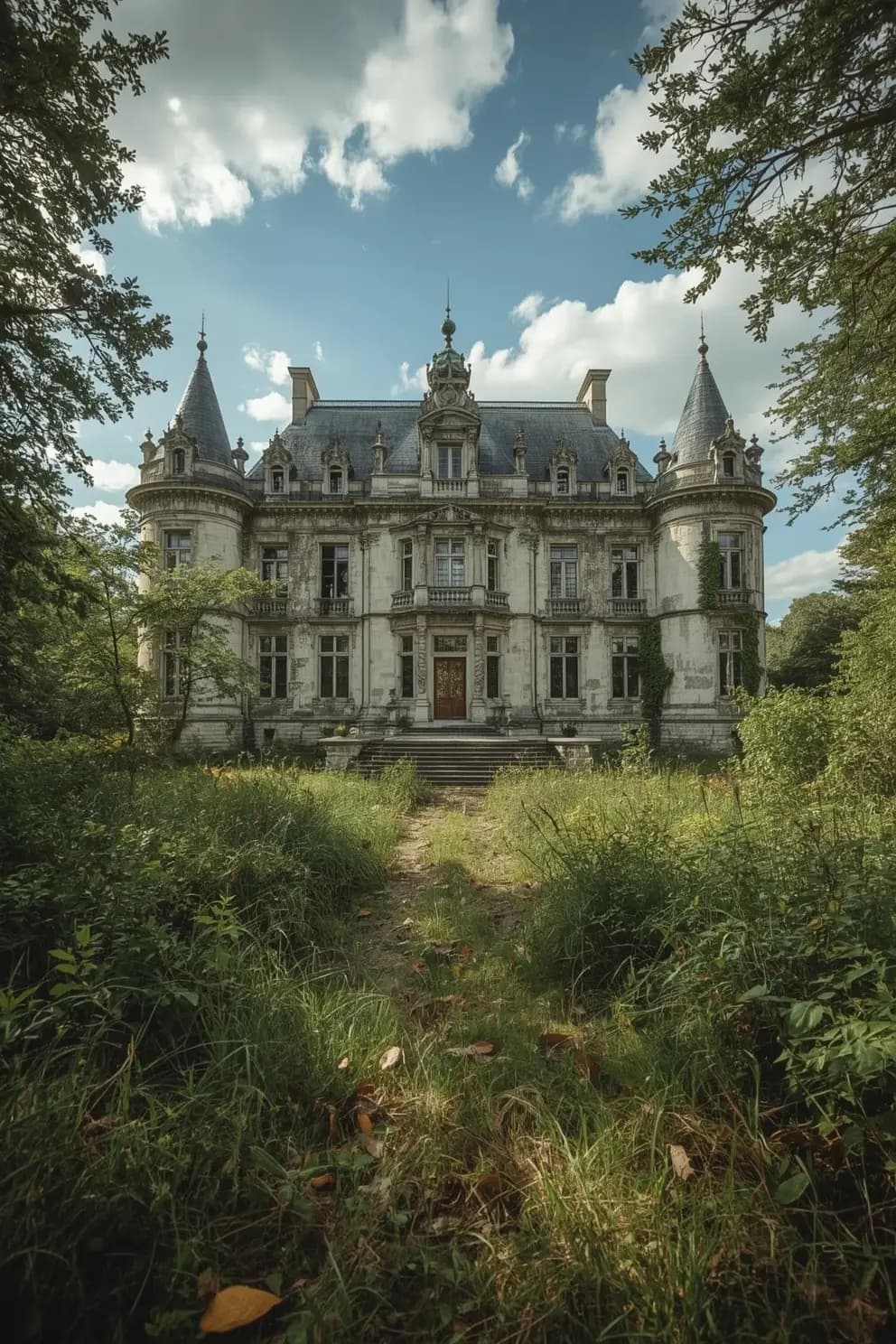
If you want a companion article focused on the same topic, read Is Urbex Legal in France? Complete Guide for 2026.
Is urbex legal in France?
Not by default. Urbex is not a separate legal activity that French law expressly authorizes or bans. Its legality depends on the exact place, whether it is still a domicile, whether the owner has given permission, and whether access involves damage, theft, or refusal to leave. In practice, unauthorized entry onto private property can create real civil and criminal risk.
Quick summary
- France has no standalone offense called urbex, but explorers can still be prosecuted under ordinary property and criminal law.
- The biggest legal threshold is whether the place is a protected domicile or private property without permission.
- The main Penal Code issues are usually violation de domicile, damage, and theft.
- Case law is highly fact-based: judges look at occupation, signs of prohibition, forced entry, and actual harm.
- An open door or visible abandonment does not create a legal right to enter.
- The safest model is permission-first exploration with verified information and preservation-first conduct.
Quick facts
- Country: France
- Primary keyword: urbex and the law in France
- Safest legal basis: explicit owner authorization
- Main legal texts: Code pénal article 226-4, article 322-1, article 311-1, and Civil Code article 544
- Core legal reality: there is no general legal right to enter abandoned property
- Important reminder: this guide is informational and does not replace legal advice for a specific case
Which French legal texts matter most for urbex?
The key texts are not a special urbex law. They are ordinary rules on property, domicile, damage, and theft. In France, the legal analysis usually starts with the owner's rights and then moves to whether the facts match a specific criminal offense.
Urbex is not a separate legal category in French law. Authorities assess the underlying facts: private property, domicile, damage, theft, and safety.
The most cited texts are the following:
- Civil Code article 544: property rights remain with the owner even when a place appears neglected or unused.
- Code pénal article 226-4: entering or remaining in another person's domicile can lead to criminal liability.
- Code pénal article 322-1: breaking a lock, forcing a shutter, cutting a fence, or damaging a panel can turn a visit into a damage case.
- Code pénal article 311-1: taking any object from the site can qualify as theft, even if the object seems abandoned.
| Situation | Main legal basis | Why it matters |
|---|---|---|
| Occupied home, second home, or place that still qualifies as a domicile | Code pénal article 226-4 | A domicile receives stronger criminal protection than a merely unused building |
| Private abandoned site without permission | Civil Code article 544 and case-specific offenses | The owner keeps rights and can file a complaint or seek damages |
| Forced access or broken barrier | Code pénal article 322-1 | Damage often makes the case much more serious |
| Object taken from the site | Code pénal article 311-1 | Removal of items can be treated as theft |
| Active industrial, rail, military, or sensitive site | Sector-specific rules plus general criminal law | Safety, security, and access restrictions can increase risk |
Does French law treat every abandoned building the same way?
No. French law does not treat every empty-looking building in the same way. The legal outcome depends on the nature of the place, its actual use, the owner's intentions, and the way access was obtained.
A crucial distinction is the notion of domicile. A place can still be legally protected as a domicile even when nobody is visibly inside at the time of entry. A second home, a temporarily vacant house, or a property still used for living purposes can remain protected.
By contrast, a former factory or warehouse that is genuinely disused may not raise the same issue of domicile. But that does not make entry lawful. It usually means the legal analysis shifts from home protection to private property rights, possible damage, and other surrounding offenses.
Public ownership does not automatically help either. A municipally owned building, closed heritage site, rail property, or disused hospital can still be inaccessible without authorization.
What does French case law usually examine in urbex situations?
French case law usually focuses on facts, not on the label urbex. Courts and authorities ask concrete questions: what was the place, who controlled it, how did entry happen, and was there any damage or unlawful taking?
In practice, recurring factors include:
- whether the place still functioned as a domicile
- whether the site showed clear signs of private ownership or prohibition
- whether access required climbing, cutting, prying, or breaking
- whether explorers remained after being told to leave
- whether there was damage, graffiti, theft, or publication of sensitive access information
- whether the property was truly abandoned or merely vacant, secured, or awaiting reuse
This is why case law matters. French courts do not recognize a general right to explore abandoned property. Instead, published decisions tend to separate benign-looking curiosity from legally relevant conduct such as intrusion into a protected place, material damage, or appropriation of objects.
A practical rule follows from that logic: the more signs of control, closure, and continuing use a site shows, the weaker any argument that a visit was harmless.
Can you do legal urbex in France?
Yes, but only in limited and clearly defensible situations. In France, legal urbex usually means lawful access rather than unauthorized exploration that happens to avoid prosecution.
The most secure cases are:
- written or clearly documented owner permission
- organized cultural or heritage visits
- filming or photography access authorized by the owner or manager
- sites legally open to the public during specific periods
- locations where your presence is lawful for another reason, such as a professional assignment
What does not make urbex legal is equally important:
- an unlocked gate
- a broken window left by someone else
- local rumors that a place is abandoned
- old online reports with outdated access notes
- the absence of a guard at the moment you arrive
MapUrbex follows a preservation-first approach. Verified location data can help you understand context and reduce uncertainty, but no map overrides French property law or owner consent. If you want to compare curated options, you can Browse all urbex maps.
What legal risks do explorers face in practice?
The main legal risks are not theoretical. In practice, explorers in France most often face police intervention, owner complaints, removal from the site, civil claims, or prosecution linked to a specific offense such as domicile violation, damage, or theft.
A few practical points matter:
- Unauthorized entry can be enough to create trouble, especially when the place is clearly private and secured.
- Forced access is a major aggravating fact. Even minor damage can change the legal analysis.
- Taking souvenirs is legally risky. Low market value does not eliminate the theft issue.
- Publishing exact access methods can increase exposure. It can also conflict with responsible urbex ethics.
- Safety failures can trigger extra consequences. Active industrial sites, shafts, unstable floors, and rail zones are not only dangerous; they can also attract stricter enforcement.
For most explorers, the real lesson is simple: the label abandoned is not a legal defense.
How can you reduce legal and safety risk before any visit?
You reduce risk by checking status before arrival, seeking permission whenever possible, and refusing any entry that depends on stealth, force, or guesswork. Responsible urbex starts long before a camera comes out.
Use this checklist:
- Identify the legal status of the place. Private, public, industrial, rail, residential, and heritage sites do not carry the same risks.
- Assume a place may still be protected. If it could still be a domicile or active facility, do not enter without authorization.
- Look for current signals of control. Fences, chains, alarms, recent maintenance, vehicles, utilities, and posted notices all matter.
- Never force access. Do not cut, pry, climb around barriers, or use hidden entries.
- Leave immediately if asked. Refusal to leave only increases legal exposure.
- Take nothing and damage nothing. Preservation is both an ethical and legal baseline.
- Use verified and updated information. Curated access notes are safer than viral posts and old forum threads.
For a practical starting point, MapUrbex offers verified context and curated location data rather than reckless access advice.
FAQ
Is entering an abandoned house always illegal in France?
Not always in the same way, but it is never automatically lawful. If the house still qualifies as a domicile, criminal protection is much stronger. If it is not a domicile, the owner still keeps property rights, and other offenses can arise depending on the facts.
Is simple trespass a crime everywhere in France?
French law does not create one universal criminal offense that covers every form of simple trespass in every location. The risk depends on the place and the conduct involved. A domicile is specially protected, and other private sites can still lead to police action, civil liability, or additional offenses when there is damage, theft, or refusal to leave.
Does an open door mean I can enter legally?
No. An open door, missing padlock, or already broken window does not create consent. Lawful access comes from authorization, not from opportunity.
Can I photograph an abandoned place from the public road?
In general, photographing a visible building from public space is far less risky than entering it. But privacy, security, and site-specific restrictions can still matter, especially near sensitive facilities.
If a building looks empty, is it legally abandoned?
No. A building can appear empty while remaining owned, monitored, secured, insured, or intended for future use. In legal disputes, appearance alone is a weak indicator.
Does MapUrbex make a visit legal?
No. A map can help you verify context and avoid bad information, but it does not replace owner consent, local rules, or your own legal judgment.
Conclusion
Urbex and the law in France can be summarized in one sentence: there is no legal right to enter a place just because it seems abandoned. The real legal analysis turns on property rights, domicile protection, forced access, damage, theft, and safety.
If you want the lowest-risk approach, use verified information, favor authorized access, and leave any site untouched. Responsible exploration is preservation-first, not loophole-first.
If you want to start with curated data rather than rumors, use the MapUrbex tools below.
Access the free urbex map
