 MapUrbex
Use a United States urbex map to search abandoned places by state, region, and site type. This guide explains how to find responsible, curated, and verified leads across all 50 states.
United States Urbex Map: Find Abandoned Places in All 50 States
A United States urbex map helps you organize a very large search area. Instead of relying on scattered forum posts or outdated lists, you can compare abandoned places by state, region, and site category in one workflow.
For a country as large as the USA, structure matters. The best approach is to use a curated map that supports research, responsible planning, and preservation-first exploration rather than impulsive visits.
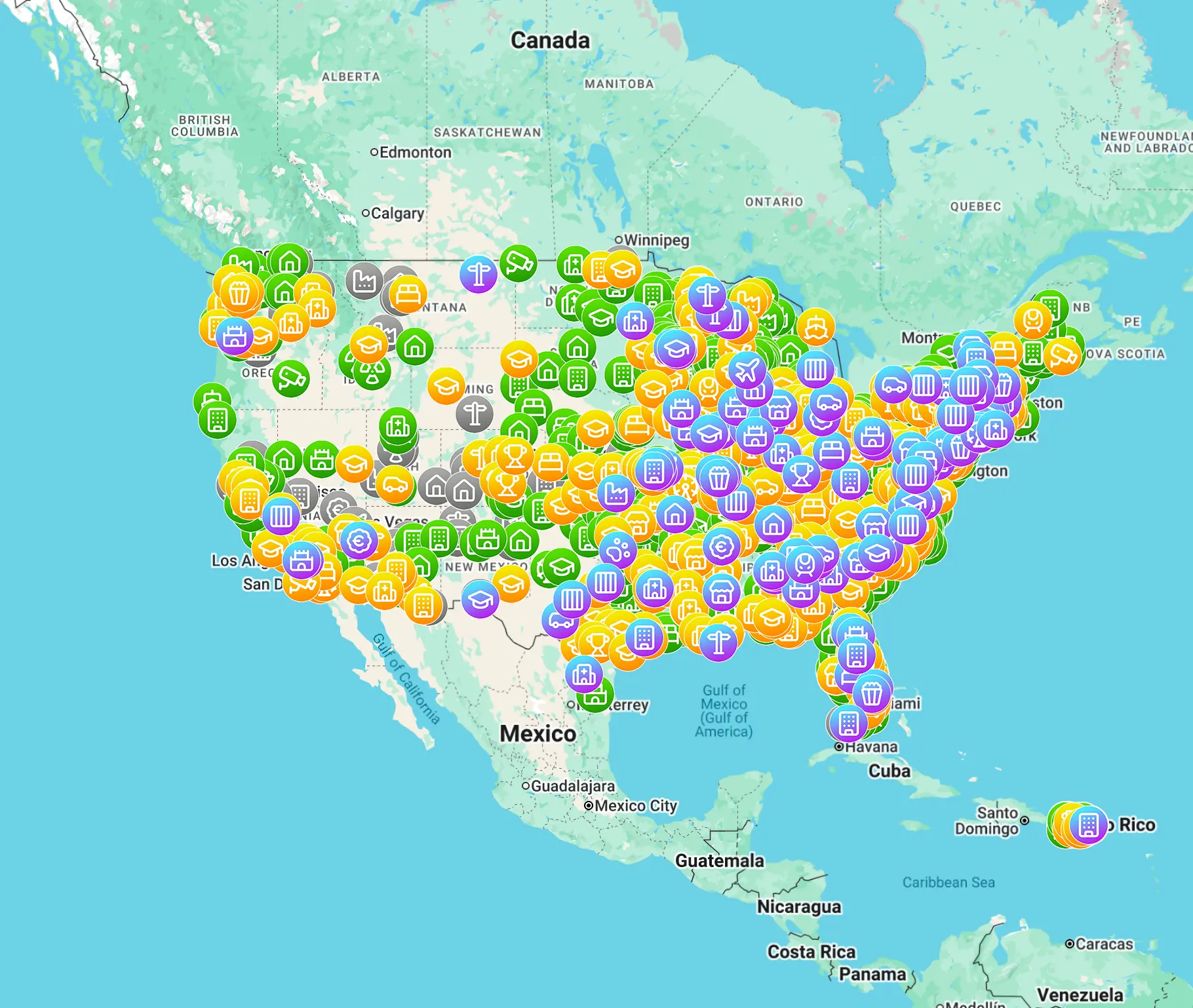
What is the best way to find abandoned places across all 50 states?
The best way to find abandoned places across all 50 states is to use a curated United States urbex map with state-level filters, location categories, and verified research notes. A useful map does more than drop random pins. It helps you compare regions, sort by site type, and plan responsibly without encouraging trespassing or unsafe access.
Quick summary
- A United States urbex map is the fastest way to search abandoned places at national scale.
- State and regional filters matter because the USA has very different urbex patterns from New England to the desert Southwest.
- The most useful maps organize verified or reviewed leads, not just crowdsourced coordinates.
- Industrial ruins cluster in Rust Belt states, while mining, railroad, military, and roadside sites are more common in western states.
- Responsible urbex means checking legal access, site condition, and safety before any trip.
- You can start with Browse all urbex maps or use the free entry point below.
Quick facts
- Country covered: United States
- Search scope: All 50 states
- Best use case: Finding abandoned places by state, region, and type
- Common site categories: factories, schools, hospitals, hotels, farms, military sites, mines, theaters, rail infrastructure
- Best planning method: use a curated map, then verify local conditions and legal status
- Safety rule: never force entry, trespass, or rely on old access information
Access the free urbex map
Why use a United States urbex map instead of random lists?
A United States urbex map is more useful than random lists because it gives structure to a huge amount of fragmented information. It turns a vague search like "abandoned places in the USA" into a filterable research process.
Random lists often have three problems. They are selective, quickly outdated, and rarely helpful for route planning. A curated map is better for comparing state coverage, spotting regional clusters, and avoiding duplicated research.
This is especially important in the USA because urbex geography is uneven. Former mill towns in the Northeast, industrial corridors in the Midwest, desert mining remains in the West, and closed roadside properties along historic highways all follow different patterns. A map helps you see those patterns clearly.
If you want a broader starting point, Browse all urbex maps is the best hub. If you want a USA-specific overview, Urbex Map USA 2026 (Flash Sale) provides context around the national map offering.
How can you search an urbex map by state?
You can search an urbex map by state by starting with region, then narrowing by site type, density, and travel practicality. That method works better than searching all 50 states at once because the landscape, building stock, and abandonment history vary sharply across the country.
The table below shows a practical way to think about American urbex by region.
| Region | States covered | Common abandoned site patterns | Why map filters help |
|---|---|---|---|
| Northeast | Maine, New Hampshire, Vermont, Massachusetts, Rhode Island, Connecticut, New York, New Jersey, Pennsylvania | mills, schools, hospitals, rail buildings, old resorts, coal-region structures | Dense states need tight city and county filtering |
| Southeast | Delaware, Maryland, Virginia, West Virginia, North Carolina, South Carolina, Georgia, Florida | farm buildings, hospitals, motels, small industry, military-adjacent infrastructure, coastal properties | Access context and weather risks change quickly |
| South Central | Kentucky, Tennessee, Alabama, Mississippi, Arkansas, Louisiana, Oklahoma, Texas | rural industry, churches, schools, roadside properties, warehouses, flood-affected buildings | Distances are large, so route efficiency matters |
| Midwest and Great Lakes | Ohio, Michigan, Indiana, Illinois, Wisconsin, Minnesota, Iowa, Missouri | factories, auto-related sites, schools, churches, theaters, freight infrastructure | Former industrial belts create strong urban clusters |
| Great Plains and Mountain West | North Dakota, South Dakota, Nebraska, Kansas, Montana, Wyoming, Colorado, Utah, Idaho, Nevada | grain facilities, depots, mines, ghost towns, motels, isolated institutions | Remote terrain makes verification and timing essential |
| Southwest, Pacific, and non-contiguous states | Arizona, New Mexico, California, Oregon, Washington, Alaska, Hawaii | mining sites, Cold War remains, roadside sites, coastal defenses, institutional buildings | Site spread is wide, so category filters save time |
A good rule is to search in layers. Start with the state, then narrow to a metro area, former industrial zone, transportation corridor, or rural extraction region. That process produces more relevant results than searching for famous places only.
Which regional patterns help you find abandoned places in the USA?
Regional patterns are one of the fastest ways to find abandoned places in the USA because abandonment usually follows economic history. When you know how each region changed over time, an urbex map becomes easier to read.
1. New England and the Northeast concentrate older industrial and institutional sites
The Northeast is one of the richest regions for dense urbex research. New England mill towns, old psychiatric campuses, shuttered schools, and railroad-era buildings create many layers of abandoned architecture in a relatively compact area.
States like Massachusetts, Connecticut, Rhode Island, New York, New Jersey, and Pennsylvania often reward close filter work rather than long-distance driving. Pennsylvania also stands out for coal-region remnants, while parts of upstate New York and New England contain old resort properties and factory complexes.
2. The Mid-Atlantic and Appalachia mix small-town decline with transport history
The Mid-Atlantic and Appalachian states are useful because they combine old infrastructure with rural decline. In Virginia, West Virginia, Maryland, Delaware, and the Carolinas, you often see rail-related structures, closed schools, hospitals, warehouses, and agricultural buildings.
This region is less about one giant theme and more about varied local histories. A map helps because many sites are spread between small towns, river corridors, and mountain routes. Without a structured search, they are easy to miss.
3. The Southeast often reveals motels, hospitals, farms, and coastal change
The Southeast is strong for dispersed, mixed-use abandonment. Georgia, Florida, Alabama, Mississippi, and parts of the Carolinas often feature closed roadside motels, farm properties, schools, retirement-era buildings, and weather-damaged structures.
Florida is a special case because coastal development pressure and storm exposure produce a different turnover pattern from inland states. A map is useful here because access context can change quickly and site condition may deteriorate fast.
4. The Midwest and Great Lakes lead for factories and Rust Belt urban exploration
The Midwest and Great Lakes region is the clearest answer if you are searching for classic American industrial urbex. Ohio, Michigan, Indiana, Illinois, Missouri, Wisconsin, Minnesota, and Iowa contain strong clusters of factories, warehouses, schools, churches, and transport infrastructure.
Detroit, Gary, Cleveland, Buffalo-adjacent corridors, and many smaller manufacturing towns shaped the image of American urbex. Even when specific famous sites are gone, the wider industrial geography still matters. A map helps you move beyond over-photographed locations and find regional context.
5. The Great Plains and Mountain West are stronger for remote sites and ghost-town logic
The Great Plains and Mountain West are ideal for users who want to understand isolation patterns. Kansas, Nebraska, the Dakotas, Montana, Wyoming, Colorado, Utah, Idaho, and Nevada often produce grain infrastructure, mining remains, depots, abandoned ranch properties, and ghost-town landscapes.
This is where verification matters most. Remote sites can look simple on a map but involve long drives, weather exposure, unstable structures, or private land boundaries. Responsible use of a curated map is essential in these states.
6. The Southwest, Pacific states, Alaska, and Hawaii combine military, mining, and roadside history
The western and non-contiguous states often mix dramatic landscapes with highly specific abandonment histories. Arizona and New Mexico feature desert mining and highway-era sites. California, Oregon, and Washington add military remnants, industrial waterfronts, hospitals, and closed institutional properties.
Alaska and Hawaii are different again. Their site density is lower, but historical context is often stronger per location. Because distances, terrain, and legal conditions vary so much, a curated map saves time and reduces bad assumptions.
How do verified maps improve safety and planning?
Verified maps improve safety and planning because they reduce guesswork. They help you separate current leads from dead links, identify broad patterns before travel, and avoid planning around places that may be demolished, occupied, or inaccessible.
MapUrbex positions its maps around responsible urbex, verified locations, and preservation-first research. That matters because the goal is not reckless entry. The goal is to document places carefully, protect sites from unnecessary exposure, and make better decisions before you ever build a route.
Use this checklist before any trip:
- Confirm whether the place is on private property or otherwise restricted.
- Do not force entry or bypass fences, locks, or barriers.
- Expect structural hazards, contamination, broken glass, and unstable floors.
- Re-check weather, wildfire, flood, or storm risks.
- Prefer daylight research and conservative planning.
- Leave no trace and never remove objects from sites.
Which MapUrbex pages should you read next?
The best next pages depend on whether you want a broad map view or inspiration from known U.S. abandoned places. Start with the national and map-focused pages, then move to list-style guides for examples and context.
- Browse all urbex maps
- Urbex Map USA 2026 (Flash Sale)
- Top 10 Abandoned Places to Explore in the USA in 2025
- Top 10 Abandoned Places in the USA to Explore in 2025
If your main goal is a starting point rather than a long read, the free tool below is the simplest option.
Access the free urbex map
FAQ
What is the difference between an urbex map and a simple list of abandoned places?
An urbex map is searchable and geographic. A simple list usually gives only a few examples without helping you compare states, categories, or travel routes. For a country as large as the United States, map-based research is much more efficient.
Does a United States urbex map really help in rural states as well as big cities?
Yes. In urban states, maps help you narrow dense clusters. In rural states, they help you spot long-distance patterns such as ghost towns, depots, farm infrastructure, and roadside sites that are hard to find through generic search results.
Can I use an urbex map for photography planning rather than exploration?
Yes. Many users first use the map for documentary photography research, historical comparison, and route planning. You should still verify access rules and avoid entering places illegally or unsafely.
Is it legal to visit abandoned places in the United States?
Not automatically. Many abandoned places are on private property, inside restricted zones, or unsafe for public access. Always check local law, ownership, posted rules, and site condition before considering a visit.
What should I prioritize when searching all 50 states?
Prioritize state filters, region, and site type before looking for famous names. That method produces better results and avoids wasting time on demolished or overexposed places. It also helps you build realistic routes.
Conclusion
A United States urbex map is the most practical way to find abandoned places across all 50 states because it turns scattered information into a structured search. It also helps you think regionally, which is essential in a country where industrial decline, mining history, transport change, and rural abandonment look very different from one state to another.
Use the map as a research tool, not a shortcut to risky behavior. Verified locations, responsible planning, and preservation-first habits are what make national-scale urbex useful in the long term.
Access the free urbex map
