 MapUrbex
A responsible guide to the top 20 abandoned farms and estates in France for urbex, with regions, features, safety rules, and preservation-first advice.
Top 20 Abandoned Farms and Estates in France for Urbex
France has a deep stock of abandoned rural properties. Old farmsteads, manor farms, vineyard estates, and partially collapsed domains appear in many regions, often far from major cities.
For urbex, these places are visually rich because they combine architecture, agricultural history, and slow decay. They also require more caution than urban sites because isolation, unstable roofs, wells, and animal activity are common.
MapUrbex recommends a preservation-first approach. This guide explains what makes abandoned farms and estates in France worth documenting, where the strongest regional patterns are, and how to explore responsibly without sharing sensitive access details.
What are the best abandoned farms and estates in France for urbex?
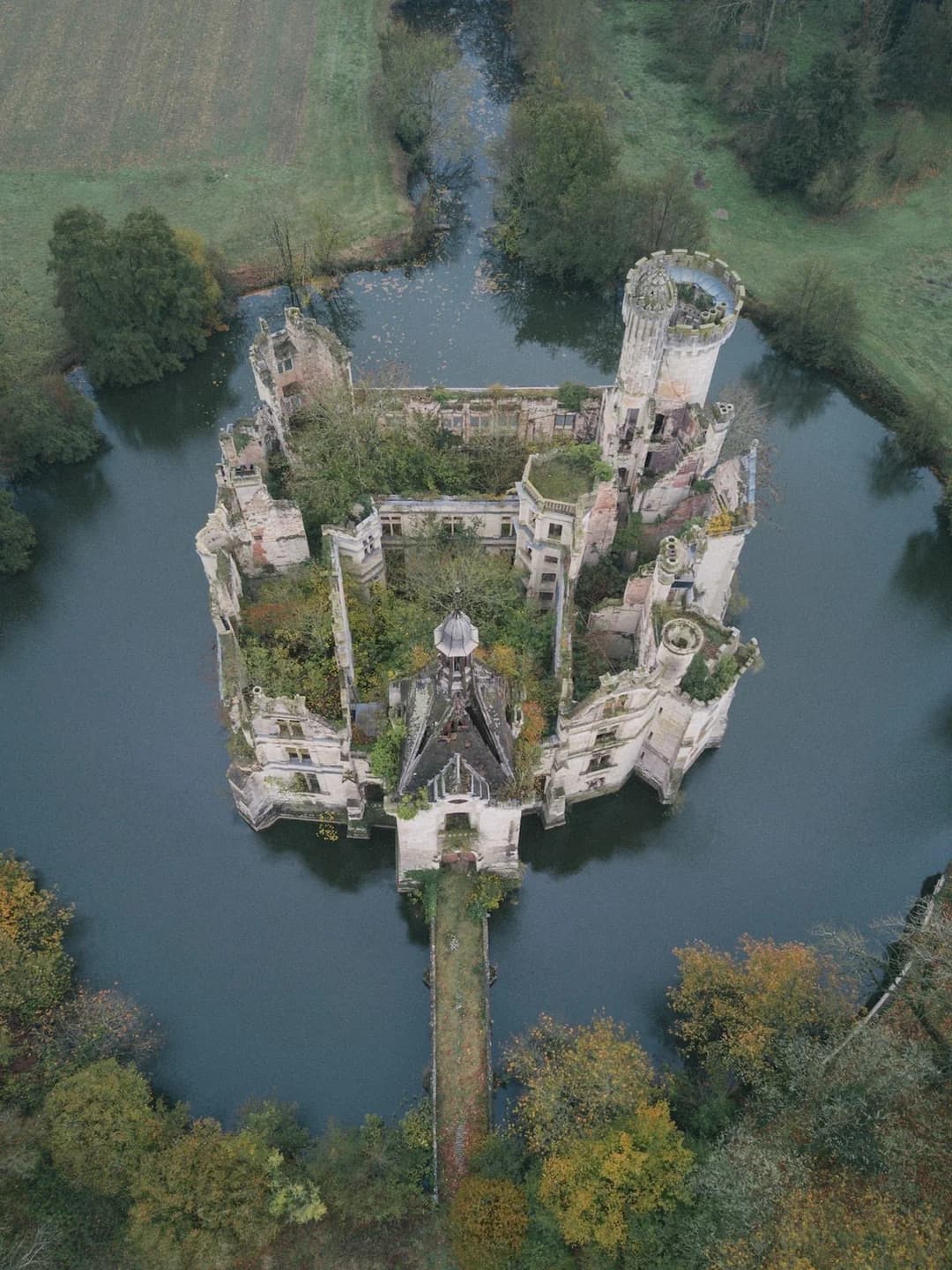
The best abandoned farms and estates in France for urbex are usually large rural properties with layered history: stone farmhouses, vineyard domains, manor farms, breeding estates, and château grounds with outbuildings. The strongest areas are often Nouvelle-Aquitaine, Occitanie, Centre-Val de Loire, Normandy, and Burgundy, where agricultural heritage and depopulation patterns overlap.
Quick summary
- France offers strong variety, from small derelict farms to large abandoned estates.
- The most photogenic sites usually combine a main house, barns, stables, and overgrown land.
- Rural urbex is often riskier than city urbex because of distance, collapse hazards, and hidden shafts.
- Public guides should focus on history, architecture, and ethics, not entry instructions.
- MapUrbex prioritizes verified locations, curation, and preservation-first exploration.
Quick facts
- Primary focus: abandoned farms and estates in France
- Best for: photography, architectural documentation, atmosphere, rural history
- Typical features: barns, courtyards, wells, stables, silos, chapels, servants' quarters
- Best seasons for visibility: late autumn to early spring
- Main risks: unstable floors, roof collapse, wildlife, farm chemicals, remote terrain
- Responsible rule: never force entry, trespass, or damage property
Which 20 abandoned farm and estate profiles stand out in France?
The most useful public top 20 is a list of recurring site profiles rather than exposed coordinates. That approach is more accurate, safer, and more consistent with responsible urbex. Below are 20 farm and estate types frequently documented across France.
- Loire manor farm — A rural manor with barns and a formal courtyard, often mixing aristocratic and agricultural architecture.
- Tuffeau farmhouse in the Loire Valley — Pale stone walls, collapsed shutters, and elegant but modest proportions.
- Norman cider estate — Half-timbered buildings, press rooms, and damp outbuildings with strong texture.
- Breton mixed farm — Granite structures, long low roofs, and weather-beaten service buildings.
- Burgundian wine estate — Cellars, storage rooms, and former worker housing around a central yard.
- Occitan stone hamlet farm — Dry landscapes, thick walls, and abandoned shepherd structures nearby.
- Southwestern breeding estate — Stables, paddocks, sheds, and wide open land with agricultural equipment remains.
- Gascony manor domain — A larger house with dovecote, outbuildings, and tree-lined approach roads.
- Auvergne mountain farm — Basalt or volcanic stone, harsh weathering, and heavy structural wear.
- Limousin cattle farm — Large barns, feed areas, and practical rural layouts with little ornament.
- Champagne agricultural domain — Service buildings and modest estates tied to historic vineyard work.
- Picardy brick farmhouse — Red brick facades, enclosed yards, and frequent moisture damage.
- Provençal estate with chapel — Dry plaster, cypress-lined grounds, and detached agricultural wings.
- Former monastery farm — Religious traces mixed with barns, granaries, and storage spaces.
- Hunting estate with service buildings — Lodges, kennels, garages, and neglected woodland edges.
- Abandoned château farm complex — The most visually dramatic type, where the house and farm economy declined together.
- River plain farm in western France — Moisture, invasive plants, and partially flooded annexes are common.
- Alpine foothill domain — Stone barns, haylofts, and steep access conditions.
- Former tenant farm on a large estate — Smaller living quarters linked to a broader landed property.
- Small isolated family farm — Often the simplest site, but sometimes the most authentic for rural social history.
For a broader national overview, see Top 100 Abandoned Places in France: Complete Urbex Guide and Abandoned Places in France: The Complete Region-by-Region List.
Which regions in France have the richest concentration of abandoned farms and estates?
Several French regions stand out because they combine old building stock, agricultural transitions, inheritance fragmentation, and long-term rural decline. Exact density varies locally, but the patterns below are reliable starting points.
| Region | Typical sites | Why it stands out | Main caution |
|---|---|---|---|
| Nouvelle-Aquitaine | Manor farms, breeding estates, vineyard properties | Large rural stock and dispersed properties | Long travel distances |
| Occitanie | Stone farms, hamlet domains, shepherd sites | Dry landscapes and older masonry | Heat and structural instability |
| Centre-Val de Loire | Manor farms, château outbuildings, tuffeau houses | Strong architectural heritage | Fragile interiors |
| Normandy | Cider estates, half-timbered farms | Distinct farm architecture | Moisture and rot |
| Burgundy | Wine estates, tenant farms, service courtyards | Mixed agricultural and residential heritage | Cellar hazards |
| Grand Est | Vineyard domains, brick farms | Dense rural history | Private ownership is common |
If you want more context on national distribution, read Top 10 Cities in France with the Most Abandoned Places and Browse all urbex maps.
Why do abandoned farms and estates attract urbex photographers in France?
Abandoned farms and estates attract urbex photographers because they preserve everyday rural history in a visible, layered form. They are often more narrative than factories because domestic life, labor, religion, and land use are all still readable in one place.
Key visual elements include:
- weathered facades and agricultural textures
- furniture or tools left in secondary rooms
- courtyards that show how work was organized
- barns and stables with strong lines for wide-angle photography
- vegetation reclaiming walls, gates, and terraces
- contrasts between noble architecture and functional farm spaces
How should you prepare for urbex farms abandonnées and abandoned estates in France?
Preparation matters more in rural sites than in many city sites. A responsible visit starts with legality, daylight planning, weather checks, and a decision to leave immediately if conditions look unstable or occupied.
Use this checklist:
- confirm legal status and avoid trespassing
- never force a door, gate, window, or fence
- avoid solo visits in isolated countryside
- carry charged phones, water, and basic first aid
- treat wells, silos, lofts, and cellars as high-risk zones
- avoid disturbing animals, crops, or neighboring residents
- do not publish sensitive entry points
MapUrbex is built around verified locations, responsible urbex, and preservation-first mapping rather than reckless exposure.
How can MapUrbex help you find better abandoned places in France?
MapUrbex helps by organizing curated information instead of random social media drops. That makes research faster and reduces the temptation to rely on unsafe, incomplete, or irresponsible location sharing.
Useful starting points:
- Browse all urbex maps
- Access the free urbex map
- Top 100 Abandoned Places in France: Complete Urbex Guide
Which questions do readers ask most often?
Are abandoned farms in France good for beginner urbex?
Some are, but many are not. Rural sites can look calm while hiding unstable floors, roof failure, wells, or remote access problems. Beginners should prioritize legality, daylight, and low-risk sites.
Are abandoned estates in France usually legal to visit?
No. Many are still privately owned even when they appear derelict. Visible abandonment does not remove property rights, and permission is still required.
What is the best season to photograph rural abandoned places in France?
Late autumn through early spring is often best because vegetation is lower and facades are easier to read. Winter light also works well for stone, plaster, and bare tree lines.
Why do so many rural domains become abandoned?
Common causes include inheritance disputes, agricultural restructuring, maintenance costs, depopulation, and the difficulty of restoring large buildings with multiple outbuildings.
Should exact coordinates of fragile sites be shared publicly?
Usually no. Public exposure can accelerate theft, vandalism, unsafe visits, and conflict with owners or local residents.
What is the main takeaway on abandoned farms and estates in France?
The best abandoned farms and estates in France are compelling because they combine landscape, architecture, and social history. They are also sensitive sites that deserve restraint.
If you research them well, prioritize safety, and respect property and heritage, rural urbex in France can be documented in a way that is useful, legal-minded, and preservation-first.
Access the free urbex map
