 MapUrbex
Discover the top 10 abandoned places in Provence with a responsible urbex approach, quick facts, safety reminders, and verified-map advice.
Top 10 Abandoned Places in Provence: A Practical Urbex Guide
Provence is one of the most varied regions in France for abandoned heritage. The mix of coastline, industry, agriculture, tourism, and military history creates an unusually wide range of disused sites.
For urbex planning, that matters more than hype. The best abandoned places in Provence are not just photogenic. They also need clear context, realistic access expectations, and constant legal and safety checks.
What are the best abandoned places in Provence?
The best abandoned places in Provence are usually former hospitals, coastal military batteries, empty hotels, rural estates, closed factories, and forgotten rail or religious sites. In practice, the strongest spots combine architectural interest, visual atmosphere, and up-to-date ownership information. Exact access conditions change fast, so verified mapping is more reliable than viral coordinates.
Quick summary
- Provence stands out for the diversity of abandoned sites, not just the quantity.
- The most sought-after spots are often hospitals, forts, factories, mansions, and rural estates.
- Good urbex planning in Provence depends on recent verification, not old forum posts.
- Coastal and industrial sites are often visually strong, but they also carry higher risk.
- Responsible urbex means no forced entry, no vandalism, and no assumption that abandonment means legal access.
- MapUrbex is most useful when you want curated, preservation-first location research.
Quick facts
- Region covered: Provence
- Typical site families: medical, military, industrial, agricultural, hospitality, rail, religious
- Best use case: planning a shortlist before a photo trip
- Best seasons: autumn, winter, and early spring for softer light and lower vegetation
- Main risk factors: unstable floors, asbestos, shafts, hidden ownership changes, surveillance
- Best method: compare current information with a verified map instead of relying on random pins
Which top 10 abandoned places in Provence stand out most?
The most interesting abandoned places in Provence are the ones that reflect the region's history: healthcare buildings, coastal defenses, industrial workshops, old holiday properties, and isolated rural complexes. The table below is a practical shortlist based on visual appeal, heritage value, and typical relevance for responsible urbex research.
| Rank | Site profile in Provence | Why it stands out | Typical setting | Caution level |
|---|---|---|---|---|
| 1 | Abandoned hospital or sanatorium | Long corridors, strong atmosphere, layered interiors | Urban edge or hillside | High |
| 2 | Coastal military battery | Concrete structures, sea views, defensive history | Coastline | High |
| 3 | Disused tile or ceramics factory | Industrial textures, kilns, brickwork | Inland towns | High |
| 4 | Empty grand hotel or resort building | Staircases, faded decor, tourism history | Old resort routes | Medium to high |
| 5 | Rural manor or château | Heritage architecture and estate layouts | Countryside | Medium to high |
| 6 | Abandoned wine estate or farm complex | Provençal character, outbuildings, tools | Vineyard zones | Medium |
| 7 | Forgotten railway depot or minor station | Tracks, sheds, transport heritage | Rail corridors | High |
| 8 | Closed school or administrative block | Large floor plans, documentary value | Small towns | Medium to high |
| 9 | Deserted religious property | Chapels, convent wings, silence, age | Hill villages or outskirts | Medium |
| 10 | Shut quarry or industrial yard | Scale, machinery remnants, terrain contrast | Inland industrial belts | High |
-
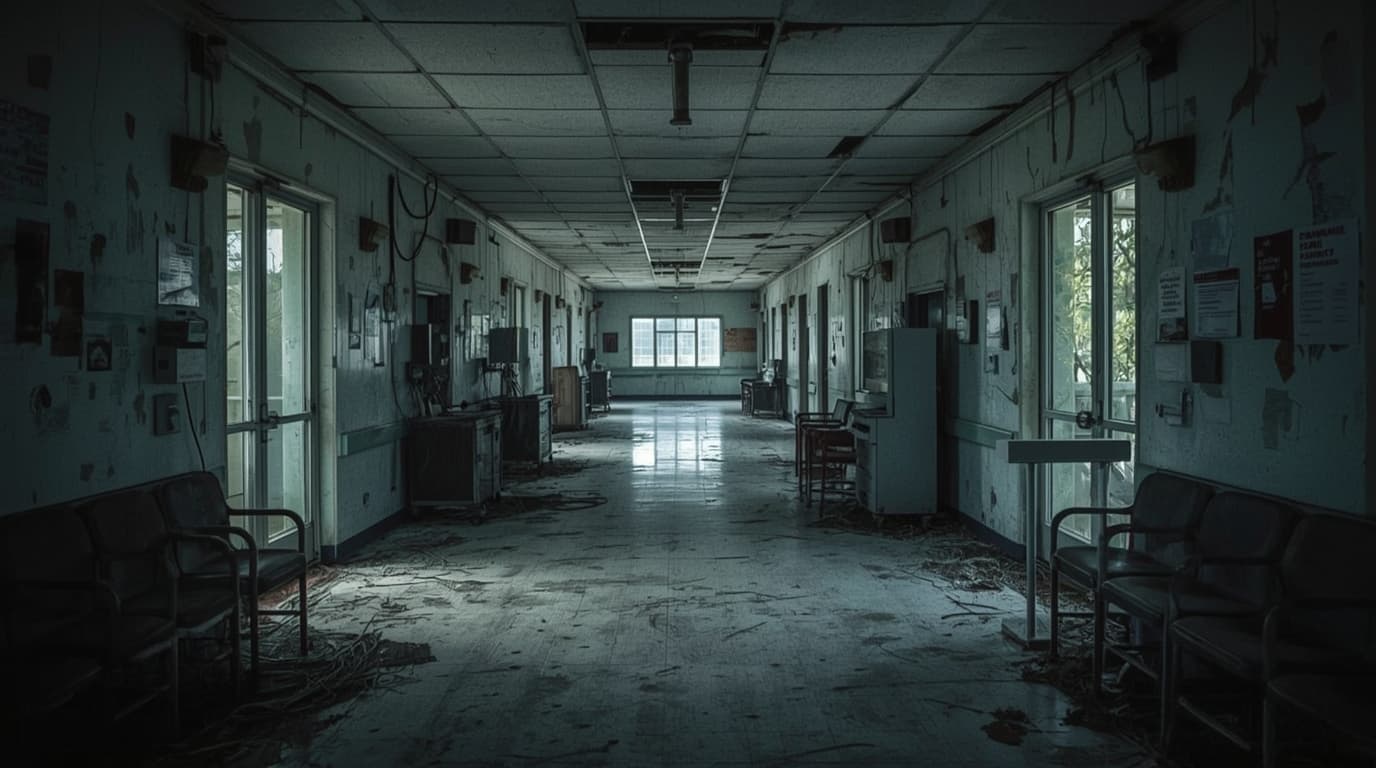
Abandoned hospitals and sanatoriums are often the most visually memorable abandoned places in Provence. They offer long sightlines, repeating rooms, and strong documentary value, but they also tend to be among the most dangerous because of structural decay and contamination risk.
-
Coastal batteries and military remains are a Provence classic. They combine landscape and history in a way few other sites do. Their main challenge is not aesthetics but safety: cliffs, shafts, exposed concrete, and changing military or municipal restrictions.
-
Old tileworks and ceramics factories are especially strong for texture-focused photography. Brick walls, kilns, conveyors, and collapsed roofs create dense industrial scenes. They are also some of the easiest places to misjudge because decay advances quickly.
-
Empty hotels and former holiday residences tell a different story: the decline of old tourist routes and seasonal economies. They are attractive because interiors can remain legible even after closure, with reception halls, stairs, dining rooms, and signage still in place.
-
Country houses, châteaux, and manor properties give Provence a very different urbex mood. These sites are less about industrial ruin and more about heritage, neglect, and landscape context. Ownership is often private and sensitive, so caution is essential.
-
Abandoned farms and wine estates are common across inland Provence. They are usually more modest visually, but they often reflect local history more accurately than viral ruins. Courtyards, presses, barns, tanks, and workers' spaces make them useful for documentary exploration.
-
Railway depots and small stations are important because transport infrastructure often survives after passenger use disappears. These sites can be visually strong from the exterior alone, which is relevant for safer and more respectful photography.
-
Closed schools, clinics, and civic buildings appear less romantic online, but they matter for serious urbex research. They often provide the clearest record of how local communities changed over time.
-
Religious properties, including chapel annexes and convent buildings, can be architecturally significant even when partially ruined. These sites deserve extra care and restraint because they often remain culturally sensitive.
-
Quarries, cement yards, and industrial compounds are among the most dramatic places in scale. They are also among the least forgiving. Terrain hazards, machinery remnants, and unstable surfaces make them unsuitable for casual visits.
Why is Provence such a strong region for urbex photography?
Provence is strong for urbex because it compresses many landscapes and many building histories into one region. Within a relatively short distance, you can move from coastline to industrial corridor to vineyard zone to hill village.
That creates variety. In one trip, researchers may compare military structures, hospitality buildings, farms, workshops, and civic sites. Few regions combine weathered stone, raw concrete, Mediterranean light, and layered local history so consistently.
It also creates false confidence. A site that looks calm from the road can still be unstable, monitored, recently repurposed, or clearly private. That is why careful planning matters more than aesthetics.
If you want a broader research base before narrowing to Provence, start with Browse all urbex maps.
How can you find real abandoned places in Provence without wasting time?
The fastest method is to filter by verified, recent information instead of chasing recycled coordinates. In Provence, abandoned places change status quickly because of redevelopment, seasonal use, demolition, and ownership transitions.
A practical workflow is simple:
- build a shortlist by site type, not by rumor
- check whether the place is still standing
- confirm whether the surrounding area has changed
- avoid relying on old social media posts
- prioritize locations with recent, curated verification
For a broader method, read How to Find Real Abandoned Places Near You in 2026 (Without Wasting Time). You can also compare planning logic with Free Urbex Map 2026.
What types of abandoned places are most common in Provence?
The most common abandoned places in Provence are rural agricultural properties, shuttered industrial buildings, and older hospitality sites. Large medical and military sites are more memorable, but they are less common than scattered farms, depots, civic blocks, and workshop compounds.
That matters if you are searching with terms like urbex Provence, abandoned places Provence, or urban exploration Provence. Search results often overrepresent spectacular ruins. On the ground, the region is defined more by mixed-use decay and small-to-medium heritage sites.
For photographers, that means expectations should be realistic. Provence is not only about cinematic hospitals. It is also about barns, depots, hostels, tileworks, and municipal leftovers.
What legal and safety rules matter most for abandoned places in Provence?
The main rule is simple: abandonment does not equal permission. In Provence, as elsewhere in France, many disused sites remain private, monitored, fenced, or legally restricted.
Responsible urbex means:
- never forcing entry
- never bypassing locks, barriers, or active security
- never treating leaked coordinates as consent
- never taking objects or altering the site
- leaving immediately if a place is occupied, active, or clearly prohibited
Safety matters just as much. Common hazards in Provence include unstable roofs, rotten floors, wells, exposed rebar, asbestos, broken glass, animal activity, and summer heat. Coastal sites add cliff exposure and slippery surfaces. Industrial sites add toxic residues and fall risks.
MapUrbex's preservation-first approach is based on verification, restraint, and site respect. That is the right standard for long-term urbex practice.
Is a verified map better than random coordinates?
Yes. A verified map is better because it reduces wasted time and lowers the chance of arriving at a demolished, occupied, or legally sensitive site. Random coordinates are often outdated, duplicated, or posted without context.
That difference matters especially in a region like Provence, where closures, renovations, tourism pressure, and informal reuse change site status quickly. A curated map will not remove all uncertainty, but it usually improves the quality of your decision-making.
If you want a starting point, Access the free urbex map is the most useful entry-level step.
FAQ
Are abandoned places in Provence legal to visit?
Not automatically. A building can be abandoned in appearance and still be private, protected, monitored, or unsafe. Always separate visual abandonment from legal access.
What are the most photogenic site types in Provence?
Hospitals, military batteries, old hotels, and tile factories are usually the most photogenic. Farms and civic buildings are less spectacular online but often more common and more representative of the region.
When is the best season for urbex Provence trips?
Autumn, winter, and early spring are usually best. Vegetation is lower, temperatures are safer, and soft light works well for exterior photography. Summer increases heat, dryness, and fatigue risk.
Should you trust social media coordinates for abandoned places Provence?
Usually not without verification. Many coordinates are old, incomplete, misleading, or reposted after a site's status has changed.
Is Provence good for beginner urbex researchers?
Yes, but only if beginners stay conservative. Exterior documentation, legal public viewpoints, and verified planning are much safer than chasing dramatic interiors.
Conclusion
The best abandoned places in Provence are not defined by hype alone. The region stands out because it offers many forms of decay: medical, military, rural, industrial, civic, and tourism-related.
If your goal is to save time and plan responsibly, focus on verified information, not vague rumors. Provence rewards careful research much more than impulsive exploration.
Access the free urbex map
