 MapUrbex
A practical guide to the top 10 abandoned places in Florida, with legal, safety, and access context for responsible urbex research.
Top 10 Abandoned Places in Florida
Florida offers more urbex variety than many U.S. states. In one region, you can find Cold War infrastructure, coastal ruins, ghost towns, closed entertainment venues, and industrial remains.
That variety comes with a catch: access changes fast. Storms, redevelopment, ownership disputes, conservation rules, and structural decay can turn a viable site into a restricted or unsafe one within weeks. MapUrbex focuses on verified locations, responsible urbex, and preservation-first research.
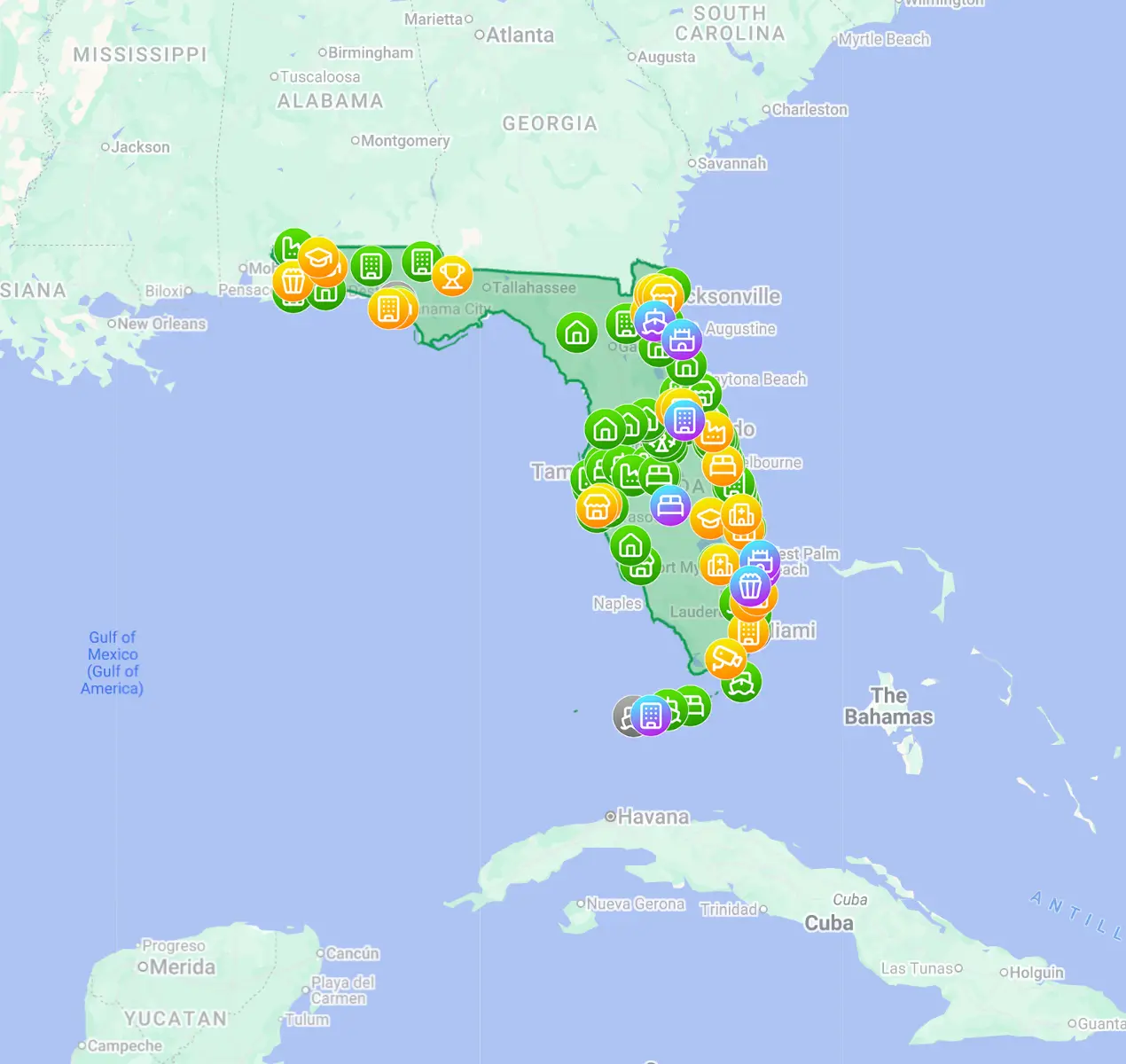
What are the top 10 abandoned places in Florida?
The best-known abandoned places in Florida include the Aerojet Dade Rocket Facility, Miami Marine Stadium, the Cape Romano Dome Houses, Ellaville Ghost Town, Yulee Sugar Mill Ruins, Fort Dade ruins, Eldora, Overseas Railroad remnants in the Keys, Central Florida industrial remnants, and closed roadside motels and theaters. The exact access status of each site changes often, so verify legality and current conditions before you go.
| Place or area | Region | Type | Why people know it | Access note |
|---|---|---|---|---|
| Aerojet Dade Rocket Facility | South Florida | Rocket test complex | Cold War scale and concrete ruins | Usually restricted or tightly controlled |
| Miami Marine Stadium | Miami | Modernist stadium | Iconic exterior and graffiti history | Exterior viewing only; status can change |
| Cape Romano Dome Houses | Gulf Coast | Coastal ruin | Surreal domes in the water | Fragile, weather-dependent, no forced access |
| Ellaville Ghost Town | North Florida | Ghost town | Historic remains in a forest setting | Limited remains; check land rules |
| Yulee Sugar Mill Ruins | Central Florida | Mill ruins | One of the clearest public ruin sites | Historic site rules apply |
| Fort Dade ruins | Gulf Coast | Military ruins | Brick and concrete remains on an island | Controlled access and park rules |
| Eldora | East Coast | Historic settlement remains | Quiet ruin landscape near the coast | Protected area restrictions apply |
| Overseas Railroad remnants | Florida Keys | Rail infrastructure ruins | Historic engineering remains | Often visible from public areas only |
| Central Florida industrial remnants | Central Florida | Citrus and phosphate sites | Large-scale decay and textures | Ownership varies; many are restricted |
| Closed motels and theaters | Statewide | Commercial abandonment | Classic Americana decay | Highly variable; often posted or fenced |
Quick summary
- Florida mixes ghost towns, military ruins, coastal remains, and industrial abandonment in one state.
- The best Florida urbex locations are often open-air ruins or exterior-heavy sites rather than intact interiors.
- Heat, humidity, storms, mold, insects, and unstable concrete are major Florida-specific hazards.
- Access changes quickly because of redevelopment, hurricane damage, and protected-land rules.
- Verified research matters more in Florida than random social posts or outdated pins.
- Start with Browse all urbex maps if you want a curated overview.
Quick facts
- State: Florida
- Best-known urbex types: coastal ruins, ghost towns, military remains, industrial sites, closed venues
- Best season: late fall through early spring
- Main risks: trespassing violations, heat, floodwater, wildlife, mold, unstable roofs, broken concrete
- Best approach: verify status, avoid forced entry, protect the site, leave no trace
- Useful starting point: Access the free urbex map
Why does Florida have so many abandoned places?
Florida has many abandoned places because it combines rapid development, hurricane exposure, tourism cycles, military history, agriculture, and coastal erosion. Buildings are often closed by storm damage, code issues, redevelopment pressure, or long ownership disputes.
In practical terms, that means Florida abandonment is unstable. A site that looks untouched in older photos may now be demolished, fenced, underwater, or under active renovation. This is one reason responsible urbex in Florida depends heavily on current verification.
Another reason is geography. Coastal exposure destroys structures faster than in many inland states. Salt, wind, water intrusion, and vegetation can push sites from decay to collapse very quickly.
Which abandoned places in Florida are best for photography?
The best Florida abandoned places for photography are usually large exterior ruins, historic remains, or coastal structures with clear sight lines. Intact interiors degrade fast in humidity, so visually strong exteriors tend to be more reliable and safer to document.
The most photogenic options are often:
- Miami Marine Stadium for scale and geometry
- Cape Romano Dome Houses for unusual coastal scenery
- Overseas Railroad remnants for historic infrastructure lines
- Yulee Sugar Mill Ruins for texture and open visibility
- Fort Dade ruins for layered military architecture
If you are planning your first trip, read How to Start Urbex: A Beginner's Guide to Urban Exploration before choosing a site. Florida conditions are not beginner-friendly when weather, wildlife, and unstable materials combine.
What are the 10 best abandoned places in Florida for responsible urbex research?
The best abandoned places in Florida are the ones that combine historical value, strong visual interest, and a realistic chance of lawful observation. In Florida, that often means ruins you can study from public land, historic areas with clear rules, or sites that are visible without entering sealed structures.
-
Aerojet Dade Rocket Facility This is one of Florida's most famous abandoned industrial sites. Its Cold War scale makes it highly memorable, but access is often restricted and conditions can be hazardous.
-
Miami Marine Stadium The stadium is a landmark of abandoned modernist architecture in Florida. Even when interior access is closed, the exterior remains one of the state's most cited urbex visuals.
-
Cape Romano Dome Houses These dome structures became famous because coastal erosion left them isolated in shallow water. They are visually unique, but fragile, weather-sensitive, and not a place for reckless access.
-
Ellaville Ghost Town Ellaville is one of Florida's better-known ghost town areas. It appeals more to history-focused explorers than to people looking for huge intact structures.
-
Yulee Sugar Mill Ruins This is one of the clearest examples of a ruin site that is historically important and easier to understand at a glance. It is a strong option for people who prefer legal, daylight documentation over risky building entry.
-
Fort Dade ruins on Egmont Key These military remains offer brickwork, tunnels, batteries, and strong atmosphere. Access depends on transport, conservation rules, and current site management.
-
Eldora Eldora is a quieter historic ruin landscape on the east coast. It is valuable for context and atmosphere rather than dramatic large-scale decay.
-
Overseas Railroad remnants in the Florida Keys These remnants matter because they connect abandonment, engineering history, and coastal exposure. They are often best appreciated as visible fragments rather than classic enterable urbex sites.
-
Central Florida citrus and phosphate industrial remnants Central Florida has scattered industrial decay tied to agriculture and extraction. These sites can be visually impressive, but ownership is highly variable and many are strictly off-limits.
-
Closed roadside motels and theaters in small-town Florida This category appears across the state and often defines the everyday face of Florida abandonment. It changes constantly as properties are demolished, repurposed, or fenced.
Is urbex legal in Florida?
Urbex in Florida is legal only when you are on property you may lawfully access. Trespassing, bypassing fences, entering posted buildings, or forcing doors and windows is illegal, and some sites also fall under state park, federal, or conservation restrictions.
The legal question is simpler than many people think: if access is not clearly allowed, treat it as not allowed. That matters even more in Florida because many appealing ruins sit on protected coastal land, redevelopment parcels, or hazardous private property.
For a broader legal overview, read Is Urbex Legal? A Clear Guide to Urban Exploration Laws.
How can you find better abandoned places in Florida without wasting time?
The most efficient way to find better abandoned places in Florida is to use verified research, recent map data, and current access checks. Random social media posts go stale quickly in Florida because storms and redevelopment change site conditions fast.
A practical research workflow looks like this:
- Start with curated location data
- Check recent satellite imagery and road access
- Confirm whether the site is historic, private, protected, or actively redeveloped
- Prefer exterior observation and legal viewpoints
- Skip any site that requires forced access or guessing
If you want to build that skill, read How to Find Abandoned Places with Google Maps.
When is the best time to explore abandoned places in Florida?
The best time to explore abandoned places in Florida is usually late fall through early spring. Temperatures are lower, insects are less aggressive, and thunderstorm risk is often lower than in peak summer.
In Florida, timing matters for safety as much as comfort. Summer heat, standing water, sudden rain, and hurricane-season instability can make even simple exterior scouting much worse. Early morning light is often best for visibility and photography, especially at exposed coastal sites.
Always carry water, wear boots, watch for snakes and insects, and leave immediately if conditions shift. Preservation-first urbex means no risky heroics.
FAQ
Are abandoned places in Florida easy to access?
No. Many of Florida's best-known abandoned places are restricted, fragile, or located on protected land. In Florida, visual interest does not equal legal access.
Are there ghost towns in Florida worth seeing?
Yes. Florida has several ghost town and ruin areas that are historically interesting, especially for daylight research and photography. They are usually more rewarding when approached as heritage sites rather than action-style urbex targets.
Is Florida good for beginner urbex?
Florida can be difficult for beginners because of heat, wildlife, unstable materials, flooding, and rapidly changing access status. New explorers should start with legal ruins, public viewpoints, and solid preparation.
What should you pack for Florida urbex?
Bring water, boots, gloves, a charged phone, sun protection, insect protection, and a basic first-aid kit. Avoid entering unstable interiors, and never rely on old online reports as your only source.
Conclusion
The top 10 abandoned places in Florida are varied, but the pattern is consistent: Florida rewards careful research more than impulsive exploration. The most worthwhile sites are the ones you can document safely, legally, and with respect for preservation.
If you want current, curated options instead of outdated guesses, use MapUrbex to narrow your search and verify what still makes sense on the ground.
Access the free urbex map
