 MapUrbex
Find the best Tennessee urbex map for researching verified abandoned places, from hospitals and factories to motels and rural ruins.
Tennessee Urbex Map: Best Abandoned Places Map for Tennessee
Tennessee has a wide mix of abandoned hospitals, schools, industrial sites, motels, and rural structures. That variety is why many explorers look for a Tennessee urbex map instead of scattered social posts or outdated pins.
A good map helps users sort sites by region, type, and current relevance. It also reduces wasted trips caused by demolition, redevelopment, or bad coordinates.
MapUrbex focuses on verified locations, responsible urbex, and preservation-first research. The goal is not reckless entry. The goal is better information.
What is the best Tennessee urbex map?
The best Tennessee urbex map is a curated, regularly updated map that shows verified abandoned places across Tennessee, adds context on site type and research value, and supports responsible planning. MapUrbex is designed for users who want reliable data, clearer filtering, and a preservation-first approach instead of random, unverified pins.
Quick summary
- A Tennessee urbex map saves time by grouping abandoned places in one searchable view.
- The most useful maps include verified locations, site categories, and regional context.
- Tennessee offers strong variety, from closed hospitals to industrial buildings and roadside ruins.
- A free map is useful for discovery, but a curated regional map is better for focused trip planning.
- No map gives permission to enter private property. Legal access still depends on ownership and consent.
- Responsible urbex means no forced entry, no theft, no vandalism, and no damage.
Quick facts
- Location: Tennessee, United States
- Scope: statewide urbex research and trip planning
- Common site types: hospitals, schools, factories, warehouses, motels, churches, transport structures
- Best use: finding abandoned places in Tennessee more efficiently
- Main risk: outdated pins, demolition, redevelopment, and private ownership changes
- Best workflow: start broad, then narrow with a curated state-specific map
Access the free urbex map
Why do people search for a Tennessee urbex map?
People search for a Tennessee urbex map because the state has real geographic spread and very different site types from one region to another. A map makes that variation easier to research.
Western Tennessee has older commercial corridors and river-linked industrial history. Middle Tennessee mixes fast redevelopment with closed schools, motels, and institutional buildings. East Tennessee adds mountain towns, rail infrastructure, and smaller rural properties that are harder to find through ordinary search results.
This is why many users start by browsing Browse all urbex maps and then narrow to Urbex locations in Tennessee. A state-specific map is more useful when the goal is not vague inspiration but actual planning.
What kinds of abandoned places can you find on a Tennessee urbex map?
A Tennessee urbex map usually highlights a broad mix of institutional, industrial, commercial, and rural abandoned places. The strength of the state is variety, not just one dominant building type.
1. Abandoned hospitals and care facilities
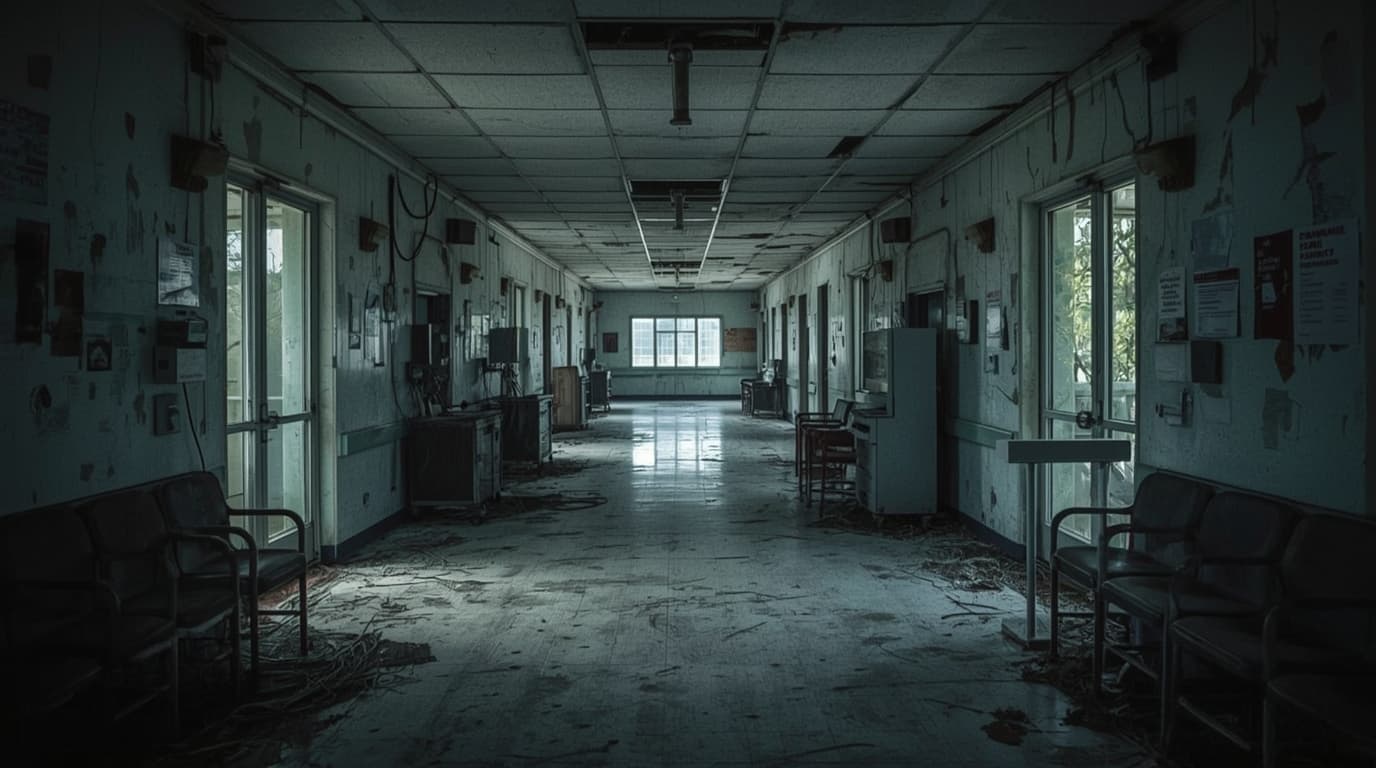
Abandoned hospitals are among the most searched Tennessee urbex spots because they combine scale, atmosphere, and local history. They often include long corridors, patient wings, operating rooms, utility areas, and detached service buildings.
These sites also change quickly. Healthcare properties are often secured, repurposed, or demolished, which is why a verified map matters more than a recycled pin from an old forum thread.
2. Closed schools and campuses
Closed schools appear often in Tennessee because many communities have consolidated districts, replaced older buildings, or left small campuses behind. These properties can range from elementary schools to vocational facilities and administrative wings.
For research, schools are useful because they often reveal a town's demographic and economic shifts. For planning, they also require caution: many are publicly visible but still actively monitored or scheduled for redevelopment.
3. Former factories, mills, and warehouses
Industrial sites are a major part of the Tennessee urbex landscape, especially near older transport corridors and manufacturing zones. Warehouses, mills, depots, and light industrial buildings are common categories on state-level maps.
These places can look stable from the outside and still contain serious hazards such as weak floors, exposed pits, asbestos, chemicals, or structural collapse. A preservation-first map should help users identify the site type and research value, not glamorize risk.
4. Deserted motels, theaters, and commercial buildings
Roadside Tennessee has a long history of motels, diners, theaters, gas stations, and small commercial strips. When highways shift or town centers lose traffic, these properties can sit empty for years.
Commercial ruins are especially popular for photography because the visual storytelling is immediate. Signs, lobbies, projection rooms, kitchens, and storefront layouts often survive longer than expected, even when the property is no longer viable.
5. Rural churches, farms, and transport structures
A Tennessee urbex map should also cover smaller rural sites, not only dramatic urban ruins. Rural churches, barns, farmhouses, silos, depots, and rail-related structures are a major part of the state's abandoned landscape.
These places are often the hardest to research with random public pins because roads are less obvious, ownership can be local and informal, and aerial clues are weaker. Curated mapping is valuable here because context matters as much as coordinates.
How should you choose between a free map and a curated Tennessee map?
You should choose a free map for broad discovery and a curated Tennessee map for focused planning. The free option helps you understand the landscape, while the state-specific option saves time when you already know the region you want to explore.
| Need | Best option | Why it helps |
|---|---|---|
| Start discovering abandoned places | Access the free urbex map | Good for broad research and learning how MapUrbex works |
| Focus on one state | Urbex locations in Tennessee | Better for targeted trip planning in Tennessee |
| Compare regional options | Browse all urbex maps | Useful if your route includes nearby states |
| Understand trade-offs | Free vs Paid Urbex Map: Which Abandoned Places Map Is Worth It? | Explains coverage, precision, and time savings |
If you are still comparing starting points, Free Urbex Map 2026 gives a useful overview. For a more practical selection process, How to Get the Best Free Urbex Map in 2026?? explains what to check before trusting a map.
Why does verification matter for Tennessee urbex spots?
Verification matters because Tennessee urbex spots change constantly. A building that was visible last year may now be demolished, fenced, converted, or under active redevelopment.
Bad data wastes time, but it can also create legal and safety problems. Unverified pins often point to the wrong parcel, send users onto occupied property, or keep circulating long after a site has disappeared.
That is the core reason MapUrbex emphasizes verified locations and curated updates. Reliable research is more useful than hype, especially in a state where urban growth and rural distance can both make old information fail quickly.
Is urbex legal and safe in Tennessee?
Urbex in Tennessee is not automatically legal, and no map gives anyone the right to enter private property. Legal access depends on ownership, permission, local restrictions, and current site conditions.
Use abandoned-place maps for research, exterior observation where lawful, historical context, and permission-based visits. Do not force entry, bypass fences, break locks, climb unstable structures, or remove objects from sites.
A responsible workflow is simple:
- confirm whether the property is private, public, active, or monitored
- prefer daylight research and visible approach routes
- avoid solo entry and avoid hazardous interiors entirely if you do not have permission
- leave every place untouched
Where should beginners start if they want abandoned places in Tennessee?
Beginners should start with a broad map and then narrow to a curated Tennessee product once they understand the regions and site types that interest them. This reduces random driving and lowers reliance on low-quality social media tips.
If you are new to urban exploration research, begin with Access the free urbex map, compare categories, and then move to Urbex locations in Tennessee when you want stronger focus. Users planning multi-state trips can also Browse all urbex maps to compare nearby regions before choosing one route.
FAQ
What does a Tennessee urbex map usually include?
A Tennessee urbex map usually includes abandoned places organized by geography and site type. The most useful versions also add context on verification, relevance, and research value. That helps users separate real opportunities from outdated rumor lists.
Are all abandoned places in Tennessee legal to visit?
No. Abandoned does not mean public, safe, or legal to enter. Many sites remain privately owned, monitored, or scheduled for redevelopment. Always treat permission and property status as the first question, not the last one.
Is a free map enough for planning a Tennessee urbex trip?
A free map is enough for broad discovery, but it is not always enough for efficient planning. A curated state map is better when you want to sort the most relevant places faster and reduce time lost to outdated information. The best choice depends on how specific your trip is.
Which parts of Tennessee offer the most variety for urbex research?
Middle Tennessee often offers the widest mix of institutional, roadside, and redevelopment-related sites. Western Tennessee has strong industrial and older commercial history. East Tennessee adds rural and transport-related variety, especially in smaller towns and mountain corridors.
How can you explore responsibly without harming sites?
Responsible urbex means no forced entry, no vandalism, no theft, and no publication that puts fragile sites at immediate risk. Use maps as research tools, not as excuses to ignore ownership. Preservation-first behavior protects both places and future documentation.
Conclusion
A Tennessee urbex map is most useful when it is curated, verified, and designed for research rather than hype. Tennessee has enough geographic spread and site diversity that random pins rarely provide the clarity needed for efficient planning.
Start broad, then narrow. Use the free map to understand the landscape, and switch to a Tennessee-specific map when you want a cleaner route to relevant abandoned places in Tennessee.
Urbex locations in Tennessee
