 MapUrbex
Use a Switzerland urbex map to find verified abandoned places, compare spot types, and plan responsible urbex with better data and fewer outdated pins.
Switzerland Urbex Map: Find Verified Abandoned Places
A good Switzerland urbex map helps you find abandoned places faster, with fewer outdated pins and less guesswork. That matters in a country where locations can be isolated, seasonal, privately owned, or quickly repurposed.
The main value is not just coordinates. It is verified context: what kind of place it is, whether the listing is still relevant, and how to approach research responsibly without assuming access is legal or safe.
If you want a broader overview of available regions and products, you can Browse all urbex maps.
What is the best Switzerland urbex map?
The best Switzerland urbex map is a curated, regularly updated map that focuses on verified abandoned places, useful filters, and responsible-use notes. In practice, that means fewer random pins, clearer spot categories, and better trip planning. A strong map helps you research locations efficiently, but it does not replace legal checks, local awareness, or on-site caution.
Quick summary
- A Switzerland urbex map is most useful when locations are verified and updated regularly.
- The best maps save time by filtering spots by type, area, and relevance.
- Verified does not mean legally accessible, open, or safe to enter.
- Switzerland includes many different spot types, from hotels and factories to hamlets and military remains.
- A curated map is more reliable than scattered social posts or old forum threads.
- Responsible urbex means preservation first, no forced entry, and respect for private property.
Quick facts
- Primary use: finding abandoned places in Switzerland with better research efficiency
- Best for: photographers, historians, architecture enthusiasts, and careful explorers
- Useful filters: canton, place type, condition, and trip relevance
- Common spot categories: hotels, industrial sites, clinics, transport sites, villages, bunkers
- Main risk with random maps: outdated pins and false assumptions about access
- Important reminder: verification is not permission; always respect local laws and property rights
Why use a verified map of abandoned places in Switzerland?
A verified map of abandoned places in Switzerland reduces wasted trips and lowers the chance of relying on bad information. In a country with mountain terrain, multilingual regions, and many privately held properties, old location data becomes unreliable quickly.
Random lists often mix demolished places, heavily secured sites, empty-looking buildings that are still in use, and locations that were never fully abandoned. That creates confusion and unnecessary risk. A better map separates signal from noise.
Verification also improves relevance. Some users want large industrial sites. Others prefer alpine hotels, isolated farm structures, or abandoned villages. A curated map lets you narrow the search instead of scrolling through vague user posts.
For buyers, the practical question is simple: are you paying for pins, or for usable research? A strong urbex map provides the second.
How does a Switzerland urbex map help you find safer, more relevant spots?
A Switzerland urbex map helps by adding context to each location, not just a point on a screen. That context improves decision-making before you travel.
Useful maps help you answer basic planning questions:
- What kind of place is this?
- Is the location still active in urbex research, or likely outdated?
- Is the place remote, urban, alpine, or seasonally difficult?
- Does the listing suggest sensitivity, visibility, or preservation concerns?
- Is the trip worth the distance based on your goals?
This matters in Switzerland because terrain changes quickly. A site that looks simple on a map may involve winter closure, steep access roads, unstable structures, or nearby residences. A curated entry gives you a better starting point.
A responsible map should also discourage reckless assumptions. If access is uncertain, that uncertainty should remain clear. Good mapping supports research. It should never encourage trespassing, damage, or forced access.
What kinds of abandoned places can you expect in Switzerland?
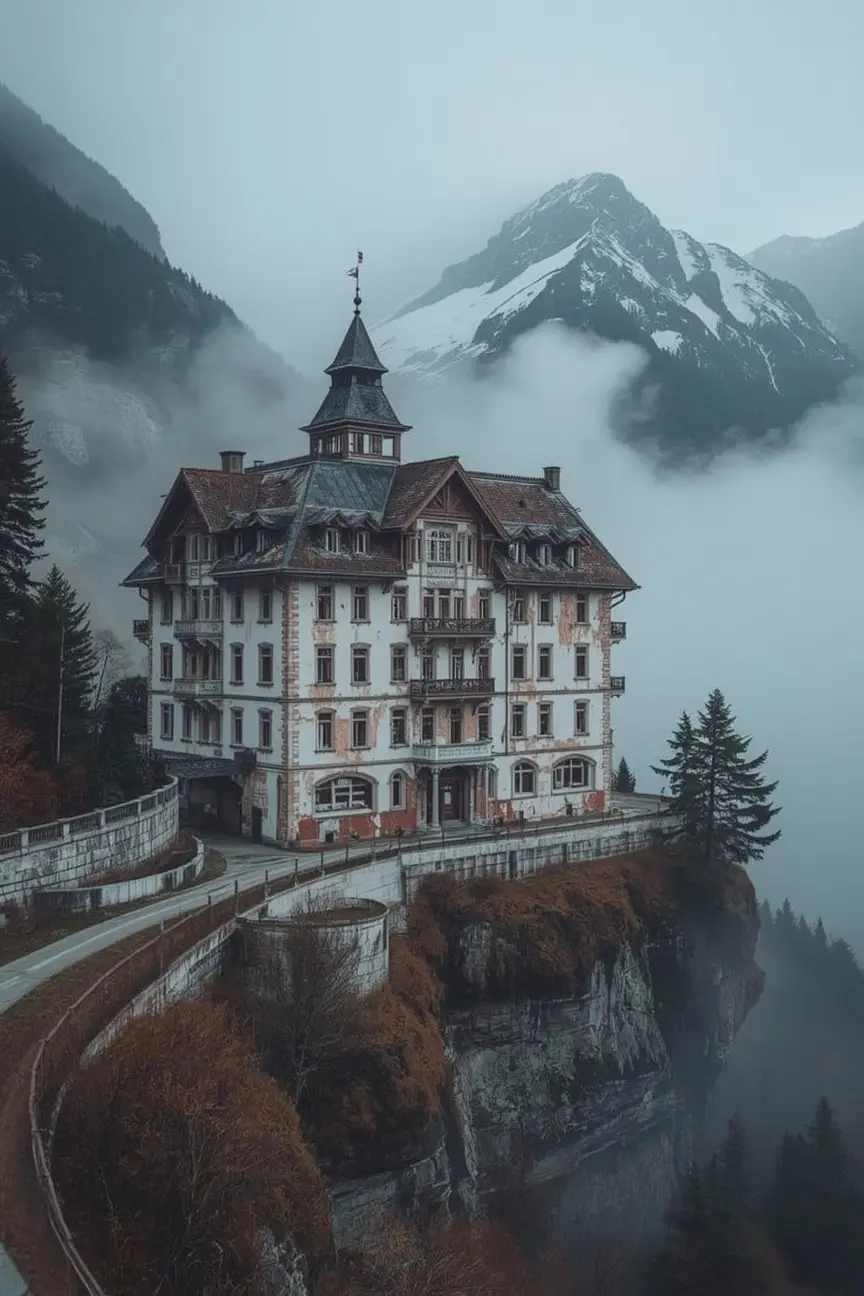
Switzerland has a diverse urbex landscape. The country is known for alpine hotels and clinics, but the real range is much broader.
Common categories include:
- Abandoned hotels and guesthouses: often found in mountain or spa regions
- Industrial buildings: factories, workshops, warehouses, and processing sites
- Medical sites: former clinics, care homes, or sanatorium-related structures
- Transport infrastructure: stations, depots, tunnels, or service buildings
- Military remnants: bunkers, defensive structures, and support facilities
- Rural settlements: hamlets, farm clusters, and partially deserted villages
Not every site is equally accessible, photogenic, or preserved. Some are empty shells. Others are highly sensitive, structurally unstable, or still owned and monitored. That is why map quality matters more than raw quantity.
How should you evaluate a spot before visiting?
You should evaluate a spot by checking legality, current use, structural risk, local sensitivity, and trip conditions before you leave home. A good map helps, but the final decision is always yours.
Use this checklist:
- Check property status. A place can look abandoned and still be private, monitored, or partially active.
- Review current relevance. Older online references may be obsolete.
- Assess the environment. Mountain weather, snow, and terrain can change access conditions.
- Think about visibility and neighbors. Rural and village sites often affect nearby residents directly.
- Avoid unstable buildings. Roof collapse, floors, shafts, mold, and asbestos are real risks.
- Apply preservation-first ethics. Take nothing, break nothing, leave no trace.
If any point is unclear, the safest choice is not to enter. Responsible urbex is selective, not impulsive.
What should a good map of abandoned places include?
A good map of abandoned places should include verification signals, clear categorization, useful filters, and honest notes about relevance or uncertainty. The goal is informed research, not hype.
| Feature | Why it matters in Switzerland | What to look for |
|---|---|---|
| Verified location status | Old data becomes unreliable fast | Recent checks or active review process |
| Spot category | Helps match trips to your interests | Hotel, factory, clinic, village, bunker |
| Geographic clarity | Switzerland has very different regional conditions | Useful area data without oversharing sensitive sites |
| Access context | Prevents bad assumptions | Notes that do not imply legal entry |
| Filters and search | Saves time | Region, type, popularity, difficulty |
| Ongoing updates | Demolition and reuse happen regularly | Maintained listings rather than static archives |
This is where MapUrbex is positioned differently. The brand focuses on verified locations, curated maps, and preservation-first urbex. That is more useful than a large but unreliable database.
Why is a curated urbex Switzerland guide better than scattered social media posts?
A curated urbex Switzerland guide is better because it is built for consistency. Social posts are good for inspiration, but poor for reliable research.
A post may show a beautiful abandoned hotel without saying whether the place is gone, occupied, tightly monitored, or on sensitive private land. It may also omit the visit date. That makes the content visually useful but practically weak.
A guide or map designed for research is different. It organizes information so you can compare places, avoid dead leads, and plan with more discipline. That is especially valuable when traveling across cantons or planning multi-stop photography days.
If you want to start with a lower-commitment option, use the free entry point first.
FAQ
Is a verified urbex spot always legal to enter?
No. Verification usually means the location itself has been reviewed for relevance, not that you automatically have permission to enter. Always respect private property, posted restrictions, and local law.
Are all abandoned places in Switzerland truly abandoned?
No. Some are vacant only temporarily. Others are partly reused, secured, or monitored. A building can appear empty while still having an owner, active plans, or restricted status.
Can a free map still be useful for Switzerland urbex research?
Yes. A free map can help you understand coverage, spot categories, and the general value of curated mapping before buying anything more detailed.
Which Swiss regions tend to attract urbex interest?
Interest often clusters around alpine hospitality zones, former industrial corridors, rural hamlets, and military history areas. Distribution is uneven, and many worthwhile places remain highly local in character.
What is the difference between a random pin map and a curated urbex map?
A random pin map emphasizes quantity. A curated urbex map emphasizes relevance, verification, and usable context. For real trip planning, the second is usually more valuable.
Conclusion
A Switzerland urbex map is most useful when it helps you research better, not just collect coordinates. Verified abandoned places, clearer categories, and active maintenance all make a real difference.
For responsible urbex in Switzerland, the best approach is simple: use curated data, verify conditions again before you go, and never treat an abandoned-looking place as automatically accessible. Preservation-first habits protect both locations and future research.
Access the free urbex map
