 MapUrbex
Looking for a reliable Slovakia urbex map? This guide explains how to research abandoned places in Slovakia with a curated, responsible, map-first approach.
Slovakia Urbex Map: How to Find Abandoned Places in Slovakia Responsibly
Searching for a Slovakia urbex map is usually about one thing: saving research time. Slovakia has industrial ruins, transport relics, institutional buildings, and forgotten leisure sites, but they are dispersed across very different landscapes and not always documented clearly online.
A curated map makes that research easier. Instead of depending on random pins, old forum threads, or incomplete lists, MapUrbex helps users review abandoned places in Slovakia through a structured and preservation-first system.
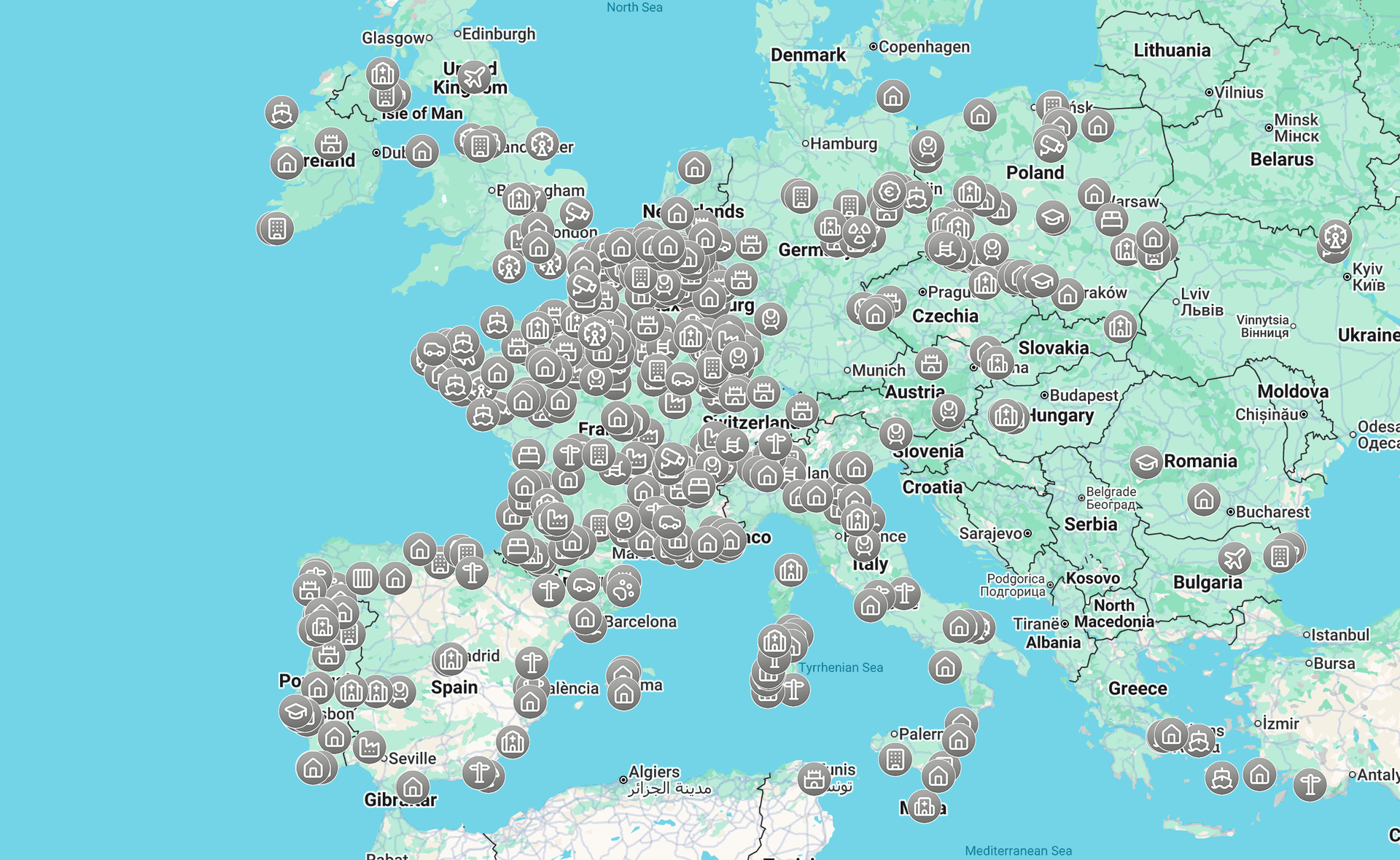
Where can you find a reliable Slovakia urbex map?
You can find a reliable Slovakia urbex map through a curated platform that organizes abandoned places by country and updates locations over time. MapUrbex is built for that purpose: it helps users research abandoned places in Slovakia, compare site types, and plan routes more efficiently while keeping a responsible, preservation-first approach.
Quick summary
- A Slovakia urbex map helps you research abandoned locations faster than scattered online sources.
- Curated maps are useful for route planning, filtering, and avoiding low-value or duplicate pins.
- Slovakia is relevant for industrial, institutional, transport, military, and heritage-style abandoned sites.
- The best map is not the one with the most random markers, but the one with consistent country coverage.
- MapUrbex is designed around verified locations, responsible urbex, and preservation-first exploration.
- If you want to buy a Slovakia urbex map, compare structure, update logic, and coverage quality before price alone.
Quick facts
- Country: Slovakia
- Search intent: transactional, map-based research
- Best use case: planning trips to abandoned places in Slovakia more efficiently
- Typical location types: factories, institutions, transport relics, military remnants, heritage ruins
- MapUrbex approach: curated maps, verified locations, preservation-first
- Important reminder: a map is a research tool, not permission to enter restricted or unsafe places
Access the free urbex map
Why buy a Slovakia urbex map instead of relying on random pins?
Buying a Slovakia urbex map makes sense when you want structured research rather than scattered guesswork. A curated map reduces time spent cross-checking vague coordinates, duplicate listings, or locations that no longer match their online descriptions.
This matters in Slovakia because abandoned locations are not concentrated in one obvious tourist corridor. Some are tied to industrial history, some to rural depopulation, and some to transport or institutional decline. Without a proper map, planning can turn into hours of low-quality searching.
A strong map also helps with sequencing. Instead of finding one isolated site, you can identify clusters, compare travel distance, and decide whether a region is worth a full day, a weekend, or a cross-border detour. That is the practical reason many users look for an abandoned places Slovakia map rather than a simple blog list.
If you want to compare wider country coverage first, you can Browse all urbex maps. If you already want Slovakia-specific coverage, Explore abandoned places in Slovakia is the direct country option.
What should you look for in a good abandoned places Slovakia map?
A good abandoned places Slovakia map should give you organized coverage, not just volume. The key signals are country-level consistency, useful categorization, route logic, and a clear curation standard.
Many public maps fail because they treat every pin as equal. In practice, an abandoned factory, a sealed public building, and a demolished ruin do not offer the same research value. A curated product should help you separate meaningful locations from noise.
The checklist below is a practical buying standard.
| What to check | Why it matters | What a better map does |
|---|---|---|
| Country coverage | Prevents fragmented planning | Groups locations at national scale |
| Curation quality | Reduces outdated or duplicate spots | Filters for research value |
| Site diversity | Improves trip planning | Includes several categories of abandoned places |
| Route usefulness | Saves travel time | Helps identify clusters and regional density |
| Responsible positioning | Keeps exploration sustainable | Supports preservation-first use |
A reliable Slovakia abandoned locations map should also be easy to compare with neighboring countries. That matters for travelers building larger Central European routes, not just single-city outings.
Which parts of Slovakia are most useful for urbex research?
The most useful parts of Slovakia for urbex research are usually the areas where industrial history, transport infrastructure, and depopulated rural zones overlap. In practical terms, different regions tend to produce different site patterns, so country-level mapping is more useful than relying on one city alone.
Slovakia is small enough for multi-stop planning, but varied enough that regional expectations matter. Western areas may align better with urban-industrial logistics, while central and eastern areas often offer stronger mixes of heavy industry, transport remnants, and rural abandonment.
| Broad area | Typical abandoned-site patterns | Why it matters for planning |
|---|---|---|
| Western Slovakia | Industrial leftovers, institutional buildings, peri-urban sites | Useful for short trips and denser road access |
| Central Slovakia | Mining heritage, factories, transport relics, mountain-area structures | Good for mixed itineraries and day-long loops |
| Eastern Slovakia | Larger industrial context, rail-linked zones, rural decline patterns | Relevant for deeper route research |
| Spa and mountain belts | Former leisure infrastructure, hotels, service buildings | Useful for niche photography-focused trips |
This is exactly why a Slovakia urbex map is more useful than a generic article. A map shows distribution. Distribution is what lets you decide whether a region deserves serious field planning.
How does MapUrbex help you explore abandoned places in Slovakia more responsibly?
MapUrbex helps you explore abandoned places in Slovakia more responsibly by focusing on verified locations, curated research, and preservation-first use. The goal is not to push reckless access. The goal is to help users research more clearly and travel more intentionally.
That positioning matters. In urbex, bad information creates bad behavior. When people rely on hype, copied coordinates, or unclear location status, they waste time, disturb places unnecessarily, and increase risk. A curated map reduces that problem by giving structure before movement.
MapUrbex also fits broader trip planning. You can start with Access the free urbex map, review the companion article Free Urbex Map 2026, and then decide whether country-specific coverage is the better option. If Slovakia is your immediate target, Explore abandoned places in Slovakia is the most direct path.
For users building a larger Europe plan, Browse all urbex maps helps compare national coverage in one place.
Explore abandoned places in Slovakia
What are the 5 main categories on a Slovakia abandoned places map?
The five main categories usually found on a Slovakia abandoned places map are industrial sites, heritage ruins, institutional buildings, military remnants, and transport-related infrastructure. These categories matter because they reflect the country's different historical layers and help users plan by site type rather than by guesswork alone.
1. Abandoned factories and workshops
Industrial sites are often the backbone of urbex Slovakia research. They usually provide the clearest evidence of economic change, with large footprints, surviving machinery spaces, and strong visual texture for photography.
In a curated map context, these locations are valuable because they often form clusters. A single industrial district or former production corridor can justify an entire day of research and travel planning rather than one isolated stop.
2. Derelict castles, manor houses, and heritage shells
Not every abandoned place in Slovakia is industrial. Heritage-style ruins, neglected manor properties, and partially collapsed historic shells add a very different layer to the map and attract users interested in architecture as much as decay.
These places require careful expectations. Some are visually impressive but legally sensitive, heavily exposed, or structurally unstable. A map is useful here because it helps prioritize research value over romanticized assumptions.
3. Closed hospitals, schools, and public institutions
Institutional abandonment is another recurring category in Slovakia abandoned locations research. Former schools, clinics, service buildings, and public facilities often show everyday decline more clearly than monumental ruins do.
These sites are useful for researchers because they tend to reveal social history through layout and remaining interior traces. They also require restraint: public-facing buildings can sit close to active neighborhoods, so discretion and respect are essential.
4. Military infrastructure and border-era remnants
Military remnants appeal to many users because they connect architecture with geopolitics. Depending on the area, these can include bunkers, storage structures, training-related remnants, or defense-era infrastructure.
This category also demands the strongest caution. Military sites can contain hidden hazards, unstable ground conditions, or legal restrictions. A responsible map should support research, not encourage risky entry or interference.
5. Railway, mining, and transport relics
Transport-linked abandonment is one of the most useful categories for route building. Railway assets, depots, sidings, mining support structures, and old service infrastructure often create logical travel corridors.
For map users, this category is practical because it connects places. Instead of planning by random interest alone, you can identify industrial and transport-related sequences that make a regional itinerary more efficient.
How should you prepare a legal and safe urbex trip in Slovakia?
You should prepare a legal and safe urbex trip in Slovakia by treating the map as a research tool, checking property status, avoiding restricted access, and removing any assumption that a listed place is automatically open to entry. Good preparation is about filtering risk before you travel.
Start with logistics. Check whether the site is near active infrastructure, housing, industrial facilities, or monitored land. Build a route that avoids rushed decisions and unnecessary nighttime movement.
Then assess the legal side. Urbex does not cancel property law. A location may be abandoned in appearance while still being privately owned, managed, or actively protected.
Use this checklist before any trip:
- Confirm travel distance and regional clustering.
- Review whether the site sits near active roads, rails, or industrial zones.
- Avoid forced entry, locked areas, fences, or sealed buildings.
- Respect local residents, neighboring land, and obvious no-access signage.
- Do not remove objects, publish sensitive details irresponsibly, or damage the location.
- Leave immediately if a site feels unsafe, occupied, or legally restricted.
Responsible urbex means no trespassing, no forced access, no vandalism, and no risk-taking for content. Preservation comes first.
That principle is central to MapUrbex. The map helps you research more efficiently, but it never replaces legal judgment or on-site caution.
Is a free map enough, or should you buy a Slovakia urbex map?
A free map is enough for broad discovery, but a paid Slovakia urbex map is usually better for country-specific planning. The difference is depth, structure, and research efficiency.
Free tools are useful when you are still exploring the platform, comparing regions, or deciding whether Slovakia matches your travel goals. That is why the first step for many users is to Access the free urbex map.
A paid country map becomes more relevant when you want to stop browsing and start planning. If your goal is to buy a Slovakia urbex map, the practical question is simple: will structured coverage save enough time to justify the purchase? For most active urbex travelers, the answer is yes.
FAQ
Is there a free Slovakia urbex map?
There is a free entry point through MapUrbex, but free access is usually best for discovery rather than full country planning. It helps you understand the platform and evaluate whether the mapping style fits your needs. For deeper Slovakia coverage, a country-focused product is more efficient.
What does a paid Slovakia urbex map usually include?
A paid map usually offers more structured country coverage, better filtering, and stronger route-planning value. The main advantage is not just more pins. It is better organization and less time wasted on weak or duplicate leads.
Is urbex legal in Slovakia?
Urbex legality depends on property status, access conditions, and local restrictions, not on whether a building looks abandoned. Entering private or secured property without permission can be illegal. Always follow local law and avoid any forced or unauthorized access.
What is the best way to find abandoned places in Slovakia without wasting time?
The best method is to use a curated map with country-level structure. That reduces the need to cross-check scattered social posts, outdated coordinates, and vague online lists. A map-first approach is usually faster and more reliable.
Can beginners use a Slovakia abandoned locations map?
Yes, but beginners should use it as a research and planning tool, not as a shortcut into risky sites. Start with easier route planning, daylight travel, and strong legal caution. Responsible habits matter more than chasing dramatic locations.
Conclusion
A good Slovakia urbex map is valuable because it turns scattered information into usable planning. That matters in a country where abandoned places range from industrial relics to institutional ruins and transport-linked sites across very different regions.
If your goal is to research abandoned places in Slovakia efficiently, a curated map is the simplest next step. Start with the free option, compare coverage, and move to the Slovakia product when you want more focused country planning.
Access the free urbex map
