 MapUrbex
Use a Pennsylvania urbex map to find verified abandoned places, ghost towns, and industrial ruins with a responsible, preservation-first approach.
Pennsylvania Urbex Map: Find Verified Abandoned Places Across the State
Pennsylvania is one of the strongest states in the eastern US for industrial ruins, coal-region ghost towns, empty campuses, and forgotten transport infrastructure. Its abandoned landscape is broad, but it is also uneven. Some sites are documented and viewable, while others are private, demolished, or too unstable to approach.
A Pennsylvania urbex map helps separate real locations from recycled pins. That matters in a state where a famous name like Centralia is easy to find, but many lesser-known places change status quickly.
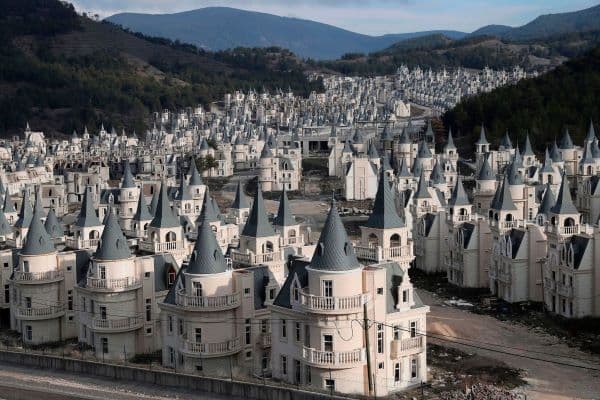
What is the best Pennsylvania urbex map?
The best Pennsylvania urbex map is a curated map with verified abandoned places, recent status notes, and responsible context about access and risk. In a large state with coal towns, steel sites, tunnels, hospitals, and rural ruins, a curated map is more useful than random forum pins because it helps you find relevant locations faster and avoid outdated or unsafe leads.
Quick summary
- Pennsylvania has one of the most varied abandoned landscapes in the US, from mining towns to industrial complexes.
- A good Pennsylvania urbex map should prioritize verified locations, recent status checks, and preservation-first guidance.
- Famous places such as Centralia attract attention, but many of the best urbex spots in Pennsylvania are lesser-known regional sites.
- Free pin collections are useful for broad discovery, but they often miss access changes, demolition, or legal context.
- MapUrbex is built for responsible exploration, not trespassing or forced entry.
- If you want a wider overview first, you can Browse all urbex maps before focusing on Pennsylvania.
Quick facts
- State: Pennsylvania
- Search intent: Find a reliable map of abandoned places in Pennsylvania
- Best known site type: Coal-region ruins and industrial heritage sites
- Common location categories: Ghost towns, factories, breakers, tunnels, schools, hospitals, rail remnants
- Main challenge: Many pins online are outdated, duplicated, or missing legal context
- Best use of a curated map: Filter credible sites and plan responsibly
Why use a Pennsylvania urbex map instead of random pins?
A Pennsylvania urbex map is better than random pins because it organizes abandoned places by relevance, status, and location context. That saves time and reduces the risk of chasing old coordinates.
Pennsylvania is large enough that bad map data creates real friction. A location may be demolished, converted, fenced, or actively monitored even if an old blog post still describes it as open. In the coal region especially, site conditions can change quickly because of collapse risk, cleanup work, or redevelopment.
A curated map also helps distinguish between places worth studying from the road, historically significant ruins, and locations that should simply be avoided. That preservation-first filter is more useful than a giant list of unverified spots.
What kinds of abandoned places can you find in Pennsylvania?
Pennsylvania contains several major categories of abandoned places, including mining settlements, industrial complexes, transport infrastructure, institutional buildings, and vacant residential clusters. That variety is one reason the state is so important in US urbex culture.
The most distinctive landscape is tied to coal and heavy industry. Across northeastern and western Pennsylvania, you find patch towns, collieries, concrete worker housing, rail remnants, and empty industrial shells. Around former steel and manufacturing corridors, large complexes often survive in fragment form even when part of the site has been reused.
You also find smaller forgotten sites: roadside churches, motels, schools, farm structures, and former resorts. These are often less famous than headline locations, but they make up a large share of actual urbex spots in Pennsylvania.
Which abandoned places in Pennsylvania are most searched by urbex fans?
The most searched abandoned places in Pennsylvania are usually Centralia, industrial steel remnants, coal-region ruins, historic highway infrastructure, and well-known vacant landmark properties. These locations are famous because they are visually distinctive, historically important, or repeatedly cited in online urbex discussions.
1. Centralia
Centralia is the best-known ghost town in Pennsylvania. The town became globally famous after an underground mine fire that began in 1962, and most of the community was later removed.
Today, Centralia is more a landscape of absence than a classic building-heavy ruin. That is exactly why a map matters here: people search for a mythic abandoned town, but what they actually encounter is a changed, monitored, and historically sensitive area with limited remaining built traces.
2. Bethlehem Steel remnants
The Bethlehem Steel site is one of the most important industrial heritage landscapes in the state. It is often searched as an urbex destination because of its scale, steel history, and iconic blast furnaces.
However, this is also a good example of why an abandoned places map needs context. Parts of the broader area are preserved, redeveloped, or interpreted as heritage space rather than abandoned free-entry ruins. A responsible guide should explain that difference clearly.
3. Concrete City in Nanticoke
Concrete City is one of the most recognizable abandoned housing sites in Pennsylvania. Built in the early twentieth century for coal workers, it is frequently cited in articles about unusual ghost-town-like locations in the state.
Its fame comes from its strange uniform architecture and its relation to coal-region history. It also shows how a well-known site can attract heavy foot traffic, making preservation and respectful behavior especially important.
4. Abandoned Pennsylvania Turnpike sections and tunnels
Former turnpike segments, especially the tunnel corridor often associated with the "Abandoned Pennsylvania Turnpike," are among the most discussed infrastructure ruins in the state. They combine scale, public memory, and unusual visual appeal.
These locations also prove that not every abandoned site works the same way. Some stretches are known through legal trail use and public recreation, while surrounding areas may differ in status. A map should note context, not just drop a point on the road.
5. Coal breaker and colliery ruins in northeastern Pennsylvania
Coal breaker ruins are core Pennsylvania urbex imagery. Massive industrial shells, conveyor remnants, and shattered processing buildings still shape the visual identity of many former mining communities.
They are also among the most dangerous site types. Structural instability, shafts, contamination, and demolition risk are common, which is why verified status and strong safety notes matter more here than almost anywhere else.
How does a curated map make Pennsylvania urbex research easier?
A curated map makes Pennsylvania urbex research easier by turning scattered information into a usable decision tool. Instead of searching city by city, you can compare regions, spot clusters, and focus on locations that still make sense to document.
For example, western Pennsylvania, the coal region, the Philadelphia orbit, and old transport corridors all have different site patterns. A good map helps you understand those patterns before you start planning. That is more efficient than relying on old forum threads or social posts with no update history.
If you want a broader overview first, start with Access the free urbex map or Browse all urbex maps. For a wider free-map overview, see Free Urbex Map 2026.
Access the free urbex map
Is a free abandoned places map enough for Pennsylvania?
A free abandoned places map can be enough for initial discovery in Pennsylvania, but it is rarely enough for reliable planning. The larger and more fragmented the region, the more important verification becomes.
Free resources are useful for learning what categories of sites exist. They are less reliable for telling you whether a place still stands, whether the property status changed, or whether the pin was ever accurate in the first place. That is why comparison matters.
| Option | What it does well | Main limitation | Best use |
|---|---|---|---|
| Free pin collections | Broad discovery | Often outdated or duplicated | Early brainstorming |
| Search engines and forums | Good for historical mentions | Context is inconsistent | Background reading |
| Curated urbex map | Verified structure and practical filtering | Usually narrower than uncontrolled pin dumps | Actual trip research |
If you are deciding between open resources and a more structured tool, read Free vs Paid Urbex Map: Which Abandoned Places Map Is Worth It? and How to Get the Best Free Urbex Map in 2026??.
Where are the best regions for urbex spots in Pennsylvania?
The best regions for urbex spots in Pennsylvania are the anthracite coal region, former steel and manufacturing corridors, older rail-linked towns, and parts of the rural interior where depopulation left behind small site clusters. Each region has a different historical profile.
Northeastern Pennsylvania is especially important for coal-related ruins, worker housing, and industrial remnants. Eastern and southeastern Pennsylvania add institutional sites, vacant mansions, warehouses, and transport-related structures. Western Pennsylvania often combines industrial decline, river-valley infrastructure, and older factory zones.
This regional spread is another reason a Pennsylvania urbex map is more useful than a flat list. The state is not a single urbex landscape. It is several overlapping ones.
How should you explore Pennsylvania abandoned places responsibly?
You should explore Pennsylvania abandoned places responsibly by staying within the law, avoiding forced access, respecting private property, and prioritizing site preservation over content capture. Responsible urbex starts with deciding not to enter a place that is unsafe or clearly off-limits.
This is especially important in Pennsylvania because many sites involve industrial hazards, unstable floors, mine-related risks, water damage, or environmental contamination. Even exterior documentation can become dangerous in remote areas or winter weather.
MapUrbex supports responsible discovery, not trespassing. Use maps to research history, identify legal viewpoints, understand regional patterns, and avoid wasting time on false leads. If a site is private, sealed, or dangerous, the correct decision is to leave it alone.
FAQ
Is urban exploration legal in Pennsylvania?
Urban exploration is not automatically legal in Pennsylvania. Legality depends on ownership, access rights, posted restrictions, and local enforcement. If a place is private property or closed to the public, you should not enter it.
Can a Pennsylvania urbex map help me find ghost towns?
Yes, a Pennsylvania urbex map can help you find ghost-town-related locations, especially in former coal regions. It is still important to distinguish between a true ghost town, a redeveloped historic area, and a place where only traces remain. Good mapping adds that context.
What are the safest kinds of abandoned places to research first?
The safest starting point is usually sites with legal public viewpoints, documented heritage status, or exterior-only interest. Large industrial ruins, mines, and collapsing institutional buildings are not good beginner targets. Verification and caution matter more than spectacle.
Why are so many online pins for Pennsylvania abandoned places unreliable?
Many pins are copied from old blogs, reposted without checks, or based on vague local rumors. Pennsylvania also changes quickly: buildings burn, collapse, get demolished, or become secured. A curated map reduces that noise.
Should I use Google Maps alone to find abandoned places in Pennsylvania?
Google Maps alone is a weak tool for this purpose. It can help with regional orientation, but it does not explain status, history, site type, or reliability. For actual abandoned-place research, curated data works better.
Conclusion
A Pennsylvania urbex map is most useful when it does more than show coordinates. It should help you understand which abandoned places in Pennsylvania are real, which are historically significant, and which are no longer suitable to visit or document.
That is the value of a curated, preservation-first approach. You spend less time chasing dead leads and more time learning the landscape responsibly.
Browse all urbex maps
