 MapUrbex
Explore how to use an Ohio urbex map to research abandoned places in Ohio responsibly, with regional insights, safety notes, and verified map tips.
Ohio Urbex Map: Hidden Abandoned Places in Ohio
Ohio is one of the most layered states for urban exploration in the Midwest. Its industrial past, rail history, river commerce, and shrinking factory corridors have left behind a wide mix of vacant sites, from mills and warehouses to schools, hospitals, motels, and rural structures.
A good Ohio urbex map helps turn that complexity into a usable research tool. Instead of chasing vague tips, you can focus on verified locations, regional patterns, and responsible planning.
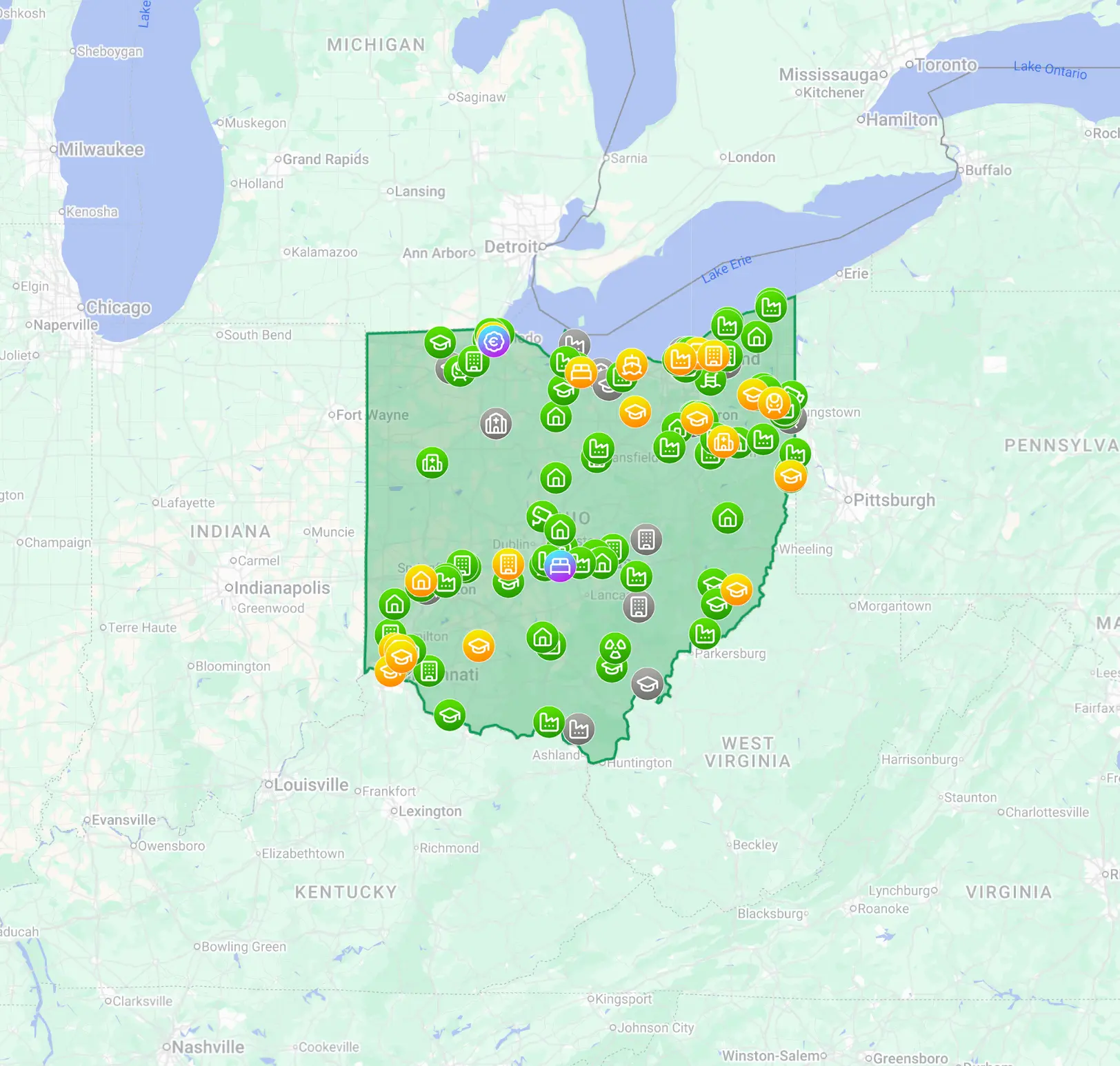
What is the best way to use an Ohio urbex map?
The best way to use an Ohio urbex map is to treat it as a research and planning tool, not a shortcut to reckless entry. A curated map helps you identify abandoned places in Ohio by region and site type, verify whether a lead is still relevant, and prepare a legal, safety-first visit from public access points when required.
Quick summary
- Ohio has a large and varied stock of abandoned sites because of deindustrialization, rail decline, hospital closures, retail shifts, and rural population change.
- The strongest clusters of Ohio urbex spots are usually found around older industrial belts, river towns, rail corridors, and small post-industrial cities.
- A map of abandoned places in Ohio is most useful when it is curated, updated, and checked against local context.
- Responsible research matters more than speed. Ownership, access rules, structural risk, and redevelopment status can change quickly.
- MapUrbex focuses on verified locations, preservation-first exploration, and practical trip planning.
- Beginners should learn a repeatable method before relying on random lists or viral videos.
Quick facts
- State: Ohio
- Primary search topic: Ohio urbex map
- Related searches: abandoned places in Ohio, map of abandoned places in Ohio, Ohio urbex spots
- Best-known context: former manufacturing zones, rail infrastructure, institutional closures, rural abandonment
- Common site types: factories, schools, hospitals, hotels, theaters, farm buildings, industrial yards
- Important reminder: always respect property laws, posted restrictions, and safety hazards
Access the free urbex map
Why are there so many abandoned places in Ohio?
Ohio has many abandoned places because it sits at the intersection of industrial history, transportation change, and uneven regional redevelopment. Manufacturing once shaped large parts of the state, especially in the north and east. When factories downsized or closed, nearby warehouses, worker housing blocks, rail facilities, and commercial buildings often declined as well.
Institutional change also matters. Older schools, hospitals, and care facilities were consolidated, replaced, or relocated. In smaller towns, retail moved outward, downtown theaters and hotels lost customers, and some properties never found new investment.
That is why a carte-style overview is useful. A statewide Ohio urbex map makes more sense than isolated tips because the abandonment pattern is regional, not random.
Where are the main clusters of abandoned places in Ohio?
The main clusters of abandoned places in Ohio are typically found in legacy industrial areas, older transport corridors, and towns affected by long-term economic transition. Northeast Ohio, parts of the Mahoning Valley, older river communities, and some southwestern industrial zones tend to produce the highest density of leads.
The exact building count changes constantly, but the pattern is stable. Older industry and older infrastructure usually create the best concentration of viable research targets.
| Region of Ohio | Common site types | Why these leads appear | Research note |
|---|---|---|---|
| Northeast Ohio | factories, warehouses, schools, hospitals | dense industrial legacy and long redevelopment cycles | many sites change status quickly |
| Mahoning Valley and eastern corridors | mills, rail structures, commercial blocks | steel-era decline and population loss | verify demolition and active reuse |
| Southwest Ohio | plants, motels, schools, roadside commercial buildings | industrial change and suburban shift | check ownership and security carefully |
| River towns and canal-linked areas | warehouses, depots, hotels, theaters | transport history and downtown decline | legal access is often limited |
| Rural and Appalachian Ohio | farmsteads, small institutions, industrial remnants | population change and land-use transition | structural decay is often severe |
How can you find Ohio urbex spots without wasting time?
The fastest reliable method is to combine a curated Ohio urbex map with basic document checks and visual research. That reduces false leads and helps you avoid locations that are already demolished, occupied, sealed, or under active redevelopment.
A simple workflow works well:
- Start with a curated source such as Browse all urbex maps.
- Cross-check the area with How to Find Abandoned Places with Google Maps.
- Use a local, repeatable process from How to Find Abandoned Places Near Me: A Step-by-Step Urbex Method.
- If you are new, learn the basics first with How to Start Urbex: A Beginner's Guide to Urban Exploration.
This approach is better than random social posts. Viral content is often outdated, exaggerated, or stripped of the legal and safety context that matters on the ground.
What types of locations usually appear on a map of abandoned places in Ohio?
A map of abandoned places in Ohio usually includes industrial buildings, institutional properties, rural structures, and transport-related sites. Ohio is diverse enough that one state map can include very different environments, from city warehouses to remote farm complexes.
The categories below are the most common and the most useful for planning.
1. Former factories and warehouses
Former factories and warehouses are among the most common Ohio urbex spots because the state's industrial footprint was so broad. Cleveland, Akron, Youngstown, Toledo, and older parts of Dayton all developed around production, logistics, and heavy transport.
These sites often remain visible for years because they are large, expensive to redevelop, and difficult to demolish quickly. For researchers, they are important markers of neighborhood history, but they also carry serious risks such as unstable floors, water damage, and contamination.
2. Closed schools, hospitals, and institutions
Closed schools, hospitals, and institutional campuses appear frequently in abandoned places in Ohio because many communities consolidated services over time. When a newer facility opens, the older campus can sit vacant for years.
These properties are often historically interesting, but they are also the ones most likely to raise legal, ethical, and safety concerns. Medical sites, care homes, and large schools can contain hazardous materials, active surveillance, or partial reuse that is not obvious from outside.
3. Rural farmsteads and small-town structures
Rural farmsteads and small-town commercial buildings make up a quieter part of the Ohio urbex map. Outside the major metro areas, you may find empty barns, grain-related structures, houses, garages, and former service buildings tied to roads that no longer carry the same traffic.
These locations are easy to underestimate. Many look simple, but collapse risk is often worse in rural wood-frame structures than in larger masonry buildings. Ownership is also usually straightforward and local, which means trespassing is easier to detect and harder to justify.
4. Rail, canal, and transport infrastructure
Rail and transport infrastructure is a major theme in Ohio because the state grew through industry and movement. Freight corridors, depots, bridge approaches, service yards, and canal-linked remnants all shape the map of abandoned places in Ohio.
These sites are historically important, but they are not automatically safe or legal to approach. Active rail property, utility corridors, and adjacent industrial land can create serious hazards even when a structure looks disused.
5. Theaters, hotels, motels, and roadside commercial sites
Theaters, hotels, motels, and old roadside businesses often appear in cities and highway corridors where travel patterns changed. Older commercial strips can decline slowly, leaving behind signage, lobbies, and decorative facades long after business activity has ended.
These sites attract strong visual interest, which is why they appear so often in searches for Ohio abandoned buildings. They also tend to be among the most closely watched properties because of vandalism, fire risk, and redevelopment interest.
Is every abandoned building in Ohio suitable for urbex?
No. Not every abandoned building in Ohio is suitable for urbex, and many are not suitable for any kind of close exploration at all. Vacancy does not mean permission, safety, or stability.
Some sites are on private property with clear no-entry rules. Others are contaminated, partially occupied, under demolition review, or structurally compromised. Floors can fail, roofs can collapse, and air quality can be poor even in buildings that look intact from the street.
The responsible standard is simple: research first, respect the law, never force access, and prioritize preservation over content. If a location can only be viewed legally from a public area, that is the limit.
How does MapUrbex help with a curated Ohio urbex map?
MapUrbex helps by organizing verified locations into a curated map system that is easier to use than scattered lists. Instead of relying on old forum posts or vague pins, you can compare regions, filter by travel plans, and focus on research that has practical value.
That matters in Ohio because site status changes fast. Buildings are demolished, secured, repurposed, or sold with little warning. A curated system reduces wasted trips and supports a preservation-first mindset.
If you want to compare this state with other regions, start with Browse all urbex maps. If you want a lighter entry point before planning a larger trip, use the free option below.
Access the free urbex map
What should you check before planning an Ohio urbex trip?
Before planning an Ohio urbex trip, check legality, current status, route conditions, and basic safety constraints. The goal is not just to find a place. The goal is to avoid bad assumptions.
Use this checklist:
- Confirm whether the property is private, public, fenced, or actively monitored.
- Look for signs of redevelopment, demolition permits, or recent occupancy.
- Review the surrounding area for rail lines, industrial hazards, or unstable terrain.
- Prefer daylight research and public vantage points when access is unclear.
- Tell someone your plan and avoid solo risk-heavy decisions.
- Do not remove objects, break barriers, or publish sensitive details that increase damage.
These rules are part of responsible urbex, not extra steps. They protect both explorers and the places themselves.
FAQ
Is urbex legal in Ohio?
Urbex is only legal in Ohio when you have permission or remain in areas where access is lawful. An abandoned appearance does not remove trespassing laws. If entry is restricted, posted, fenced, or clearly private, do not go in.
What are the best areas for abandoned places in Ohio?
The best research areas are usually older industrial and transport-heavy parts of the state. Northeast Ohio, the Mahoning Valley, older river towns, and some southwestern corridors often have the strongest density. Exact site quality still depends on current status, not just city name.
Can I use Google Maps alone to find abandoned places in Ohio?
Google Maps is useful, but it is not enough by itself. Satellite imagery can be old, and street-level views may miss current security, occupancy, or demolition. It works best when combined with a curated map and a repeatable research method.
What should beginners do before exploring Ohio urbex spots?
Beginners should learn method, law, and safety before planning any trip. Start with How to Start Urbex: A Beginner's Guide to Urban Exploration. The best first outings are legal, daytime, low-risk research trips rather than ambitious entries.
Why use a curated map instead of random online lists?
A curated map is more reliable because it reduces duplicate pins, outdated leads, and rumor-based locations. It also gives better regional context, which matters in a large state like Ohio. Most importantly, a good map supports responsible exploration instead of reckless spot sharing.
Conclusion
An Ohio urbex map is most useful when it helps you understand patterns, not just pins. Ohio's abandoned sites reflect industrial change, institutional closure, and uneven redevelopment across cities, river towns, and rural areas.
If you want to research abandoned places in Ohio with better context and fewer dead ends, start with a curated, verified source and keep your approach legal, careful, and preservation-first.
Access the free urbex map
