 MapUrbex
Use a curated New Jersey urbex map to find abandoned places near New York, compare free vs paid options, and plan responsible urbex trips.
New Jersey Urbex Map: How to Find Urbex Locations Near NYC
New Jersey is one of the most searched urbex areas on the US East Coast. Its industrial history, dense suburbs, rail corridors, hospitals, churches, and waterfront infrastructure create a high concentration of abandoned places within reach of New York City.
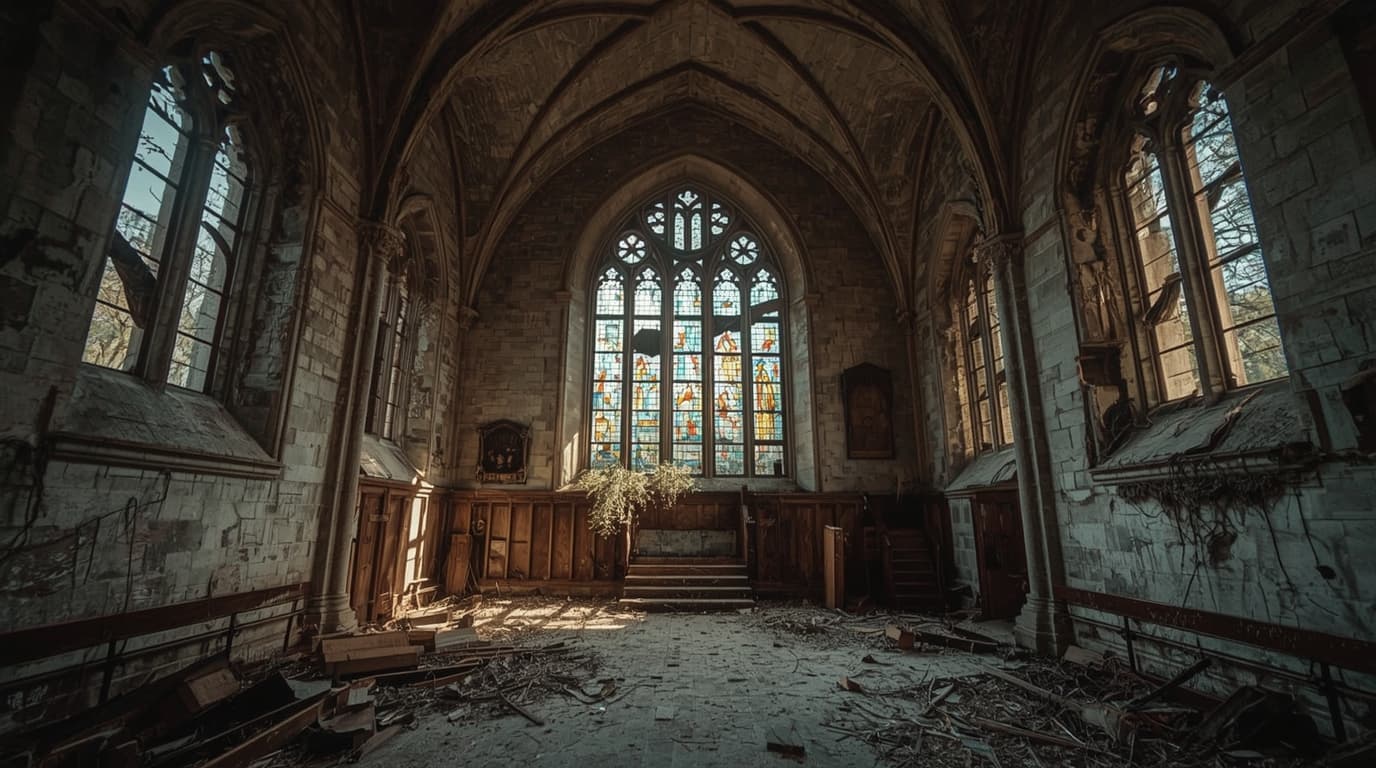
A good New Jersey urbex map matters because this region changes fast. Sites are redeveloped, sealed, demolished, or monitored more often than in remote areas. A curated map helps you sort useful leads from outdated pins.
Where can you find a reliable New Jersey urbex map near New York?
The most reliable way to find a New Jersey urbex map near New York is to use a curated map with verified location data, recent status signals, and responsible planning notes. That is more useful than random social posts because abandoned places in New Jersey often change access status quickly, especially around NYC commuter zones and redevelopment corridors.
Quick summary
- A New Jersey urbex map is most useful when it is curated, updated, and filtered by region and site type.
- The best areas near NYC usually combine older industry, transport corridors, institutional buildings, and waterfront infrastructure.
- Free maps can help you start, but curated maps save time by reducing dead leads and duplicated pins.
- New Jersey sites turn over quickly because of demolition, redevelopment, and stronger security in dense metro areas.
- Responsible urbex planning means checking legal status, avoiding forced entry, and prioritizing preservation over access.
- MapUrbex focuses on verified locations, responsible exploration, and practical trip planning.
Quick facts
- State: New Jersey
- Nearby metro hub: New York City
- Search intent: transactional guide for finding a reliable map
- Common site types: factories, hospitals, churches, schools, transport infrastructure, coastal remnants
- Main challenge: rapid change in access conditions
- Best planning approach: use curated data, recent status checks, and regional filters
Why use a curated New Jersey urbex map instead of random pins?
A curated New Jersey urbex map is better than random pins because it reduces outdated, false, and unsafe leads. In a fast-changing state, old forum posts and reposted coordinates often point to demolished buildings, active redevelopment zones, or properties with no legal access.
That problem is stronger near NYC. Northern New Jersey has constant redevelopment pressure, stricter property management, and frequent social media recycling. A pin that looked useful six months ago can already be fenced, converted, or fully cleared.
MapUrbex is built for that reality. You can Browse all urbex maps, start with Access the free urbex map, or compare planning approaches in Free Urbex Map 2026 and Free vs Paid Urbex Map: Which Abandoned Places Map Is Worth It?.
Which New Jersey areas are most useful for urbex planning near NYC?
The most useful New Jersey areas for urbex planning near NYC are the northern industrial belt, older suburban infrastructure corridors, central institutional zones, shore-adjacent remnants, and the rural-industrial south. These zones repeatedly appear in searches because they combine age, density, and historical turnover.
1. Hudson and Essex County industrial belts
The Hudson and Essex County belts are useful because they concentrate older manufacturing, freight infrastructure, and religious architecture within short travel distance of New York. This is where many people begin when they search for urbex locations near New York.
These areas also change the fastest. Waterfront redevelopment, warehouse conversion, and active transport networks mean many leads expire quickly. A curated map is especially important here because distance from NYC does not guarantee a stable site.
2. Passaic and Bergen suburban edges
Passaic and Bergen County edges matter because they mix suburban vacancy with older commercial and light-industrial properties. These zones often produce scattered finds rather than huge complexes, which makes map filtering valuable.
They are also easy to overestimate. A building may look abandoned from road or rail views but still be in partial use, storage use, or pending renovation. Good map notes help separate true abandoned places from misleading shells.
3. Central New Jersey institutional corridors
Central New Jersey is useful for former schools, medical buildings, research-related properties, and older civic infrastructure. These places often attract explorers looking for larger interiors and longer site histories.
The tradeoff is distance and inconsistency. Some central corridors offer better preservation than the NYC fringe, but they require more planning and more checking of recent status. For many users, this is where a map of abandoned places in New Jersey becomes more efficient than social media searching.
4. Shore-adjacent hospitality and defense remnants
The shore-adjacent zones are relevant because New Jersey's coast includes older motels, leisure infrastructure, and occasional defense-related remnants. These places appeal to people looking for something different from the standard factory search.
Seasonality matters here. Coastal security, storm damage, and redevelopment can alter conditions quickly. A map helps prioritize viable leads instead of sending you to heavily exposed or recently removed sites.
5. Southern New Jersey rural-industrial fringe
Southern New Jersey matters because it offers older industrial fragments, agricultural-support buildings, small institutions, and lower-density abandoned properties. It is less tied to the daily turnover of NYC commuter real estate.
That does not make it simple. Travel times are longer, site spacing is wider, and environmental hazards can be more serious. Good planning data matters as much here as in the north, even if the pressure comes from decay rather than redevelopment.
How does a map of abandoned places in New Jersey help you plan responsibly?
A map of abandoned places in New Jersey helps you plan responsibly by showing patterns, not just pins. The best maps help you decide what to research, what to skip, and what requires extra caution before any visit.
Use a map to check:
- regional clustering and travel time from NYC
- likely site type and condition
- whether a place is known for rapid demolition or redevelopment
- whether recent reporting suggests heavy security or unsafe structural decline
- whether the location fits a daylight, low-impact, preservation-first visit plan
If you are still comparing options, read How to Get the Best Free Urbex Map in 2026?? and keep Access the free urbex map open as a baseline.
Access the free urbex map
What should you expect from urbex spots near NYC in New Jersey?
You should expect variety, fast turnover, and uneven reliability from urbex spots near NYC in New Jersey. The region offers many leads, but it also produces more false positives and faster site loss than less urban states.
Factories and warehouses remain common, but they are not the whole picture. Many users also search for churches, hospitals, schools, rail-related structures, waterfront installations, and older commercial properties. That mix is one reason New Jersey stays popular on urbex maps.
The main limitation is instability. A widely shared site can move from accessible exterior documentation to full closure in a short time. Demolition, fencing, cameras, active contractors, and adaptive reuse all happen quickly in the NYC orbit.
This is why map curation matters more than hype. The goal is not to chase every rumor. The goal is to identify locations with better documentation value, clearer status signals, and lower risk of wasting a trip.
How do free and paid urbex maps compare for New Jersey?
Free and paid urbex maps serve different purposes in New Jersey. Free maps are useful for discovering the landscape, while curated paid maps are usually better for efficient trip planning in a state where site status changes quickly.
| Feature | Free map | Curated map |
|---|---|---|
| Starting point | Good for broad discovery | Better for targeted planning |
| Data freshness | Often mixed | Usually more controlled |
| Duplicate or dead leads | More common | Reduced |
| Regional filtering | Limited | Stronger |
| Use near NYC | Helpful but noisy | Better for time-sensitive planning |
| Best user | Beginner or casual browser | User planning efficient trips |
For many users, the right approach is hybrid. Start with Access the free urbex map, then compare the tradeoffs in Free vs Paid Urbex Map: Which Abandoned Places Map Is Worth It?. If you want a broader overview beyond New Jersey, Browse all urbex maps is the next step.
What legal and safety rules matter in New Jersey?
The main legal and safety rule in New Jersey is simple: do not enter private property or restricted sites without permission. Many abandoned-looking places near NYC are actively owned, monitored, environmentally unsafe, or structurally unstable.
Responsible urbex means observation, documentation, and preservation. It does not mean forcing access, bypassing security, or taking risks for a photo.
New Jersey adds specific challenges. Redevelopment sites may have active crews. Waterfront and industrial properties can contain contamination. Churches, schools, and hospitals may have hidden floor failure, broken glass, or unstable stairwells. A reliable map helps you plan, but it does not replace legal judgment or on-site caution.
FAQ
Is there a good free New Jersey urbex map?
Yes, a free map can be a useful starting point for New Jersey research. It helps you understand the regional spread of abandoned places and identify broad clusters near NYC. For a starting resource, use Access the free urbex map and compare it with Free Urbex Map 2026.
Are there abandoned places in New Jersey close to NYC?
Yes, New Jersey has many abandoned-place leads within reach of New York City. The highest concentration is usually in the north and along older industrial and institutional corridors. The challenge is not scarcity but verifying which places are still standing, still abandoned, and safe to research.
Is it legal to visit abandoned places in New Jersey?
It depends on ownership and access status. An abandoned appearance does not make a place legal to enter. Always respect property law, posted restrictions, and safety conditions, and never force entry or trespass.
What types of locations appear most often on a New Jersey urbex map?
Factories, warehouses, schools, churches, hospitals, rail-related structures, and old commercial buildings appear often. Coastal and defense-related remnants also show up in some parts of the state. The exact mix changes by region, especially between the NYC fringe, central corridors, and southern New Jersey.
How often do New Jersey urbex locations change?
They change often, especially near New York. Demolition, redevelopment, fencing, and adaptive reuse can remove a lead quickly. That is why recent status signals and curated notes matter more here than in slower rural markets.
Conclusion
A New Jersey urbex map is most valuable when it helps you filter fast-changing information into a responsible plan. Near NYC, density creates opportunity, but it also creates noise, outdated pins, and rapid site turnover.
If you want less guesswork, start with a curated source, compare free and paid options, and prioritize verified, preservation-first research over rumor chasing.
Access the free urbex map
