 MapUrbex
Use the Massachusetts urbex map to research verified abandoned hospitals, coastal forts, prison ruins, and industrial sites across the state.
Massachusetts Urbex Map: Best Abandoned Places in Massachusetts
Massachusetts has one of the most varied urbex landscapes in New England. Former hospital campuses, coastal defense sites, prison ruins, and mill buildings appear across the state.
A Massachusetts abandoned places map helps separate still-standing sites from places that were demolished, redeveloped, or closed to visitors. That matters in a state where many abandoned places sit near active neighborhoods, public parks, or protected historic land.
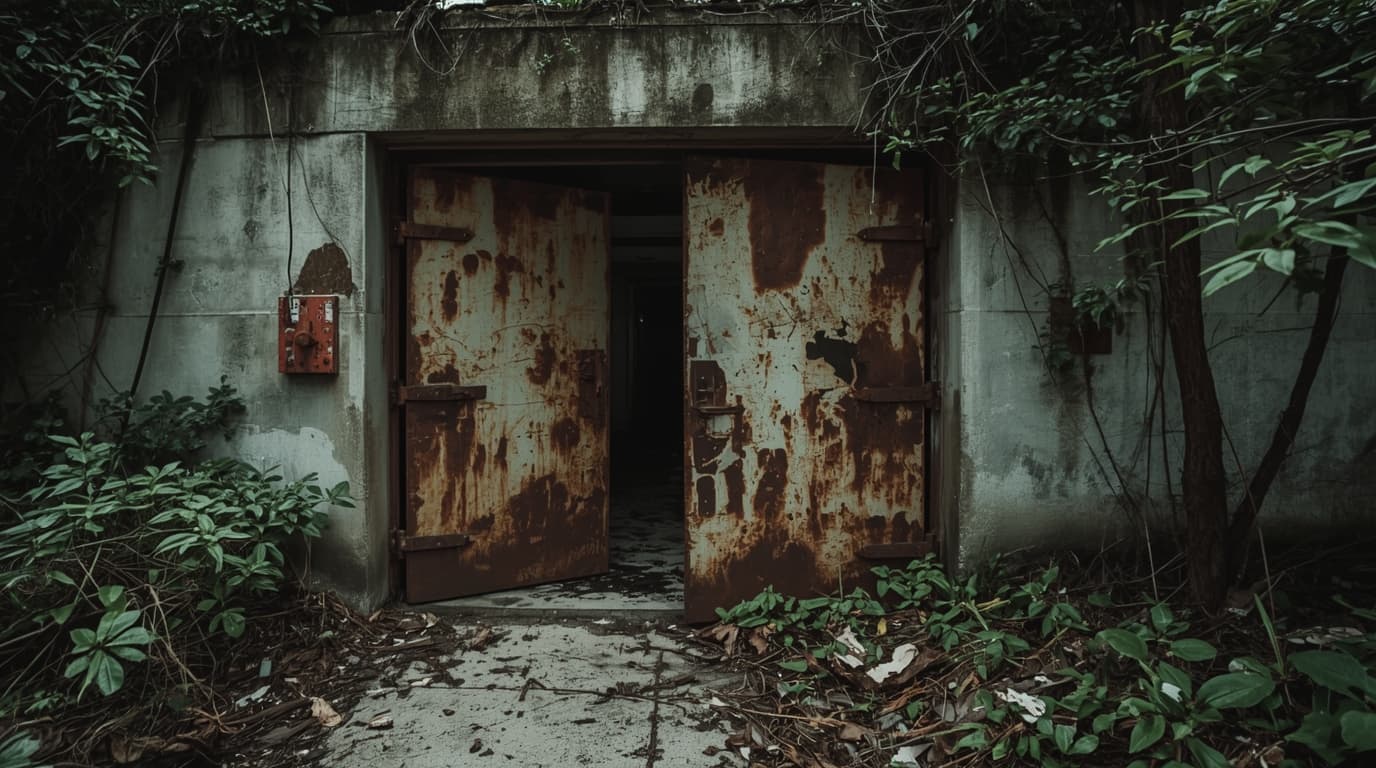
What is the best Massachusetts urbex map for finding abandoned places?
The best Massachusetts urbex map is a curated map that groups verified abandoned places, historic ruins, and access notes by region. In Massachusetts, that usually means former hospital campuses, coastal batteries, prison ruins, mill complexes, and redevelopment sites whose status changes often. A good map saves research time and helps you avoid closed, demolished, or unsafe locations.
Quick summary
- The Massachusetts urbex map is most useful for tracking former institutions, military ruins, and industrial sites.
- Some of the best-known names include Medfield State Hospital, Rutland Prison Camp, Fort Revere, Fort Andrews, and the Fernald Center.
- Many Massachusetts sites shift from abandoned to fenced, demolished, or redeveloped, so verification matters.
- Several of the best urbex spots in Massachusetts are exterior ruins or public historic grounds rather than open interior explores.
- Responsible urbex in Massachusetts means checking ownership, respecting closures, and never forcing entry.
- MapUrbex focuses on verified locations, preservation-first research, and curated maps rather than random coordinates.
Quick facts
- Location: Massachusetts, United States
- Urbex profile: institutional campuses, coastal fortifications, prison ruins, mill sites
- Best for: history-focused research and map-based trip planning
- Main risk: fast-changing access status due to redevelopment and security
- Strongest regions: Greater Boston, MetroWest, Central Massachusetts, South Shore, Pioneer Valley
- Best tool: a curated map backed by current research, not an outdated forum list
Why use a Massachusetts urbex map instead of random coordinates?
A Massachusetts urbex map is better than random coordinates because it adds context. In this state, the same site can be a public ruin, a restricted campus, a redevelopment project, or a demolition zone depending on when you research it.
That is why curated research matters more than raw pins. If you want a broader starting point, Browse all urbex maps to compare Massachusetts with other US regions. If you are new to the hobby, read How to Start Urbex: A Beginner's Guide to Urban Exploration before planning a trip.
Access the free urbex map
What kinds of abandoned places does the Massachusetts urbex map include?
The Massachusetts urbex map usually includes former hospitals, state institutions, military defenses, prison remains, and industrial properties. These categories reflect the state's long history of public institutions, coastal defense, and manufacturing.
Some locations are best treated as research-only entries. Others are visible ruins, exterior photo spots, or publicly accessible historic grounds. The key is to distinguish between what still exists, what can be viewed legally, and what has already changed beyond recognition.
| Category | Massachusetts examples | Typical status | Why it matters on a map |
|---|---|---|---|
| Former hospitals and institutions | Medfield State Hospital, Fernald Center | Often fenced, partially reused, or under redevelopment | These sites are large and change quickly |
| Military ruins | Fort Revere, Fort Andrews | Public historic ruins or seasonally accessible areas | They offer strong history with clearer legal boundaries |
| Prison remains | Rutland Prison Camp | Mostly outdoor ruins and foundations | Better for responsible day exploration than risky interiors |
| Mill and factory sites | Holyoke and other former industrial corridors | Mixed: vacant, reused, or demolished | Map verification prevents wasted trips |
| Research-only sites | Closed campuses and unstable structures | No entry or no current legal access | Useful for documentation, not trespassing |
Which abandoned places are most worth tracking on a Massachusetts urbex map?
The best urbex spots in Massachusetts to track on a map are the ones with strong historical value and changing access conditions. These are the places that appear often in urbex research, but they need current verification before any visit.
1. Medfield State Hospital
Medfield State Hospital is one of the best-known abandoned institutional campuses in Massachusetts. The former psychiatric hospital in Medfield is widely recognized for its large grounds, distinctive buildings, and long period of vacancy after closure.
For map users, Medfield matters because it shows how quickly a famous site can evolve. Parts of the property have been the subject of reuse and preservation discussions, and site conditions have changed over time. A curated map helps track whether the interest is historical, photographic, exterior-only, or tied to an active redevelopment phase.
It also represents a wider Massachusetts pattern. Many of the state's iconic abandoned sites are not isolated ruins in deep forest; they are large former public campuses near towns, roads, and active planning processes. That makes responsible research essential.
2. Rutland Prison Camp
Rutland Prison Camp is one of the most recognizable ruin sites in Central Massachusetts. Unlike a sealed institutional complex, it is better known for stone remains, landscape features, and open-air exploration value.
That difference matters. Rutland Prison Camp is often a stronger option for people interested in history, walking routes, and exterior documentation rather than searching for unsafe interiors. It is a good example of how a Massachusetts abandoned place can be visually compelling without encouraging risky behavior.
On a Massachusetts urbex map, it also balances the state list. Not every notable site is a hospital or factory. Some of the most memorable locations are fragmented ruins where the main value is context, preservation, and responsible on-site observation.
3. Fort Revere
Fort Revere in Hull is a key military ruin for anyone researching abandoned places in Massachusetts. It is best understood as a historic coastal defense site with surviving batteries, earthworks, and layered military history rather than a classic hidden trespass spot.
That makes it especially useful for responsible urbex. Sites like Fort Revere show that Massachusetts has strong exploration value even where the legal frame is clearer and the history is publicly legible. For many researchers, these places are more rewarding than unstable private interiors.
On a curated map, Fort Revere helps identify a broader pattern along the coast. The state's shoreline includes fortifications, harbor defenses, and wartime infrastructure that deserve different expectations than vacant mills or hospital campuses.
4. Fort Andrews on Peddocks Island
Fort Andrews is one of the most atmospheric abandoned military sites in Massachusetts. Located on Peddocks Island in Boston Harbor, it is known for decaying structures, a coastal setting, and the sense of isolation created by ferry access and seasonal conditions.
Its main mapping value is logistical. A location like Fort Andrews is not just about whether the ruins still stand. Timing, transportation, weather, park operations, and preservation rules all affect what a legal visit looks like. A simple coordinate does not explain any of that.
Fort Andrews also shows why a Massachusetts urbex map should include access context, not just names. In a state with islands, harbor parks, and controlled public land, route planning is often as important as site discovery.
5. Fernald Center
The Fernald Center in Waltham is another major name on a Massachusetts urbex map. As a former institutional campus with a long and controversial history, it remains important in abandonment research because of its scale, visibility, and uncertain transition over time.
Fernald is exactly the kind of site where outdated information causes problems. Buildings may remain standing while ownership, security, redevelopment plans, and legal access rules change. A verified map entry is more valuable than forum-era lore or copied pins.
It is also useful as a research case. The site helps explain why Massachusetts has so many institutional abandoned places: the state built large campuses for public care, administration, and social control, and many later became vacant or partially reused.
Which regions of Massachusetts are best for urbex research?
The best regions for urbex research in Massachusetts are Greater Boston and MetroWest for institutions, Central Massachusetts for ruin landscapes, and the coast for military history. The Pioneer Valley and older mill corridors also matter, especially for industrial architecture and deindustrialized urban fabric.
A practical way to think about the state is by pattern, not hype. MetroWest and the Boston orbit tend to concentrate former state campuses. Central Massachusetts has some of the clearest ruin-style destinations. Coastal areas bring forts and defense structures. Western mill towns require more screening because many properties are active, repurposed, or heavily deteriorated.
If you want to build your own workflow, combine map research with How to Find Abandoned Places with Google Maps and How to Find Abandoned Places Near Me: A Step-by-Step Urbex Method. The map gives you curated leads; the method helps you verify them.
How should you explore Massachusetts abandoned places responsibly?
You should explore Massachusetts abandoned places responsibly by checking ownership, avoiding forced entry, respecting fences and closures, and treating sensitive sites as documentation subjects rather than targets for access. Preservation-first behavior is especially important in Massachusetts because many sites are historically significant and closely monitored.
A good rule is simple: if the site is closed, unstable, or clearly restricted, do not enter. Use public viewpoints, historic grounds, and legal exterior access where available. Never remove objects, publish vulnerable details that invite damage, or assume an old forum post reflects current conditions.
MapUrbex takes the same approach. The goal is verified locations, better research, and less harm to places that are already fragile.
FAQ
Is urbex legal in Massachusetts?
Urbex is not automatically legal in Massachusetts. Legality depends on ownership, posted restrictions, public access rules, and site condition. Many well-known locations are on controlled land, active redevelopment sites, or protected historic areas, so always verify before going.
Are the best abandoned places in Massachusetts still standing?
Some are, and some are not. Massachusetts changes quickly because of redevelopment, demolition, stabilization, and adaptive reuse. That is why a current map is more reliable than old lists.
Can I use Google Maps alone to find abandoned places in Massachusetts?
Google Maps is useful, but it is not enough on its own. It can show building footprints, road context, and terrain, but it does not tell you whether a site is fenced, demolished, monitored, or newly reused. Pair it with a curated map and current research.
Why are so many Massachusetts urbex sites former institutions and forts?
Massachusetts has a dense legacy of state institutions, coastal defense systems, and industrial development. When those systems closed or shrank, they left behind large campuses and ruins. That history shapes the state's abandoned-place map more than isolated farmhouses or remote ghost towns.
What should I bring for a responsible Massachusetts urbex day?
Bring identification, water, weather-appropriate clothing, and a charged phone. If a site allows legal outdoor access, sturdy footwear and a basic first-aid kit help. Do not bring tools for entry, and do not treat locked or posted areas as a challenge.
Conclusion
The Massachusetts urbex map is most useful when it helps you filter history-rich sites through current reality. In this state, the best entries are often not the most secret ones. They are the places where historical value, legal context, and preservation concerns are clearly understood.
If you want to research abandoned places in Massachusetts more efficiently, start with a curated map, verify each site, and keep your approach responsible from the first step.
Access the free urbex map
