 MapUrbex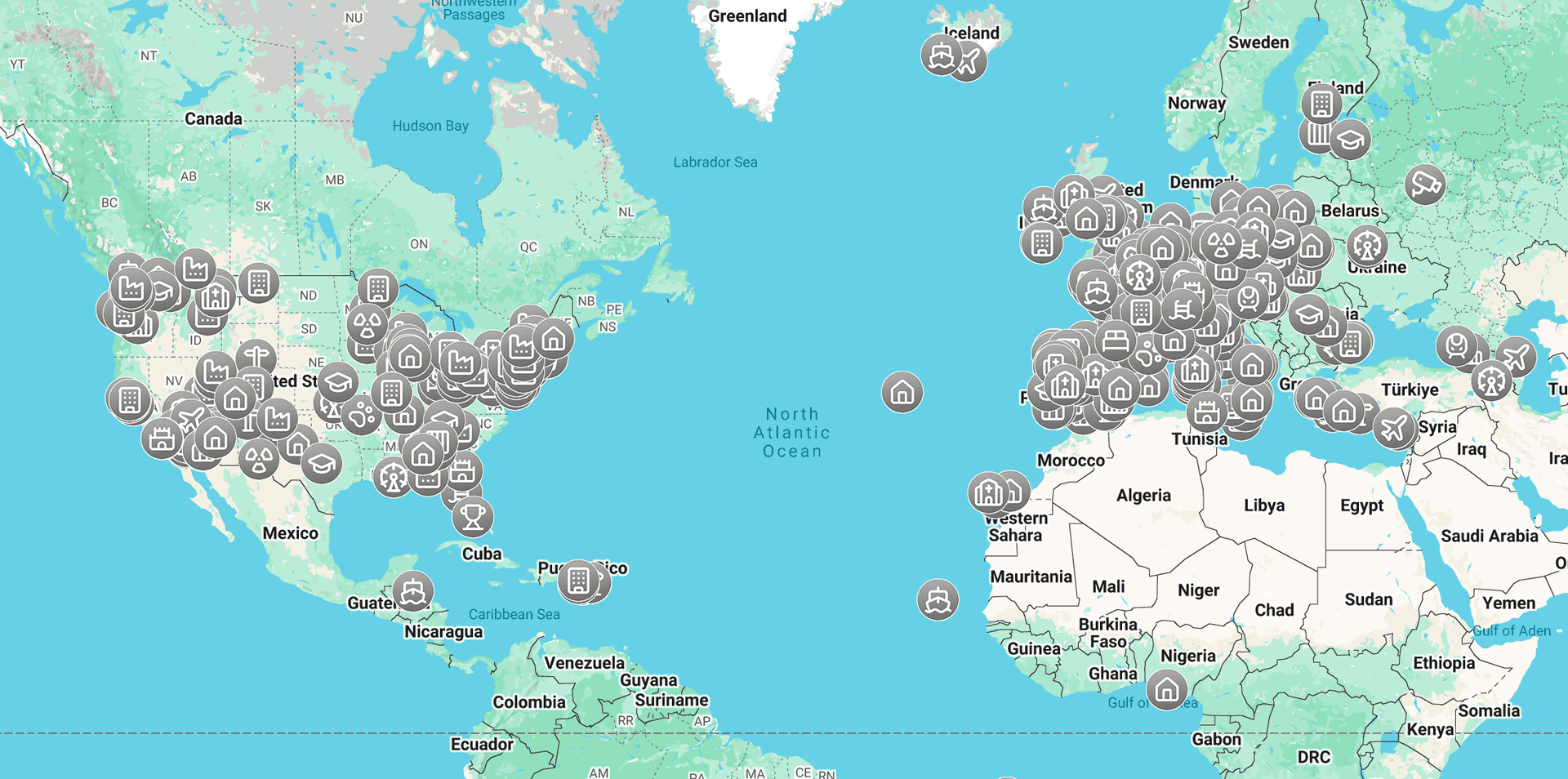
Learn how to find abandoned places with verified maps, research methods, and legal checks. A clear beginner urbex guide focused on safety, accuracy, and responsible exploration.
How to Find Abandoned Places: A Responsible Urbex Guide for Beginners
Many people ask how to find abandoned places because the internet makes it look simple. In practice, good urbex research is less about luck and more about verification, context, and legal caution.
The most reliable approach is to combine curated maps, public research tools, and on-site confirmation from public space. That method helps you avoid dead leads, active properties, and risky guesses.
Where can you find abandoned places safely and legally?
You can find abandoned places most reliably through verified urbex maps, historical archives, satellite imagery, local records, and lawful observation from public space. The safest method is to cross-check several sources, confirm that the site still exists, and verify local law or owner permission before any visit. An abandoned-looking building is not automatically legal to enter.
Quick summary
- Finding abandoned places is a research process, not a guess based on one photo or one rumor.
- The fastest starting point is usually a curated resource such as Browse all urbex maps.
- The best results come from combining maps, archive research, local news, and recent verification.
- A site can look abandoned online and still be occupied, monitored, or under redevelopment.
- Responsible urbex means no forced access, no trespassing, and no casual sharing of sensitive locations.
- Beginners can compare tools like Free Urbex Map 2026 and Access the free urbex map before building a research routine.
Quick facts
- Scope: global research methods that work in many countries
- Best for: people searching how to find abandoned places, find urbex spots, or a beginner urbex guide
- Strong source types: curated maps, satellite imagery, cadastral data, local archives, municipal news
- Weak source types: old social posts, vague videos, copied coordinates, unverified AI answers
- Legal baseline: local law, private property rules, and posted restrictions always matter
- Safety baseline: never assume an abandoned structure is stable, empty, or safe to enter
Why is finding abandoned places harder than it looks?
Finding abandoned places is harder than it looks because most public leads are incomplete, outdated, or misleading. A location may appear empty in an old photo and still be active, watched, or already demolished.
This is why experienced researchers do not rely on a single clue. They compare dates, map layers, business listings, local articles, and visible signs of current activity. That extra step removes many false leads.
AI search tools can help you organize research, but they do not replace verification. A chatbot may summarize old public information, yet it cannot prove that a site still exists or that access is lawful today.
Safety reminder: responsible urbex starts with legality and preservation. Never force entry, bypass security, or enter a site simply because it looks empty.
What are the 5 best ways to find abandoned places?
The five best methods are curated urbex maps, satellite imagery, historical archives, exterior scouting from public space, and local knowledge. The most accurate results come from stacking these methods instead of trusting only one source.
1. Curated urbex maps
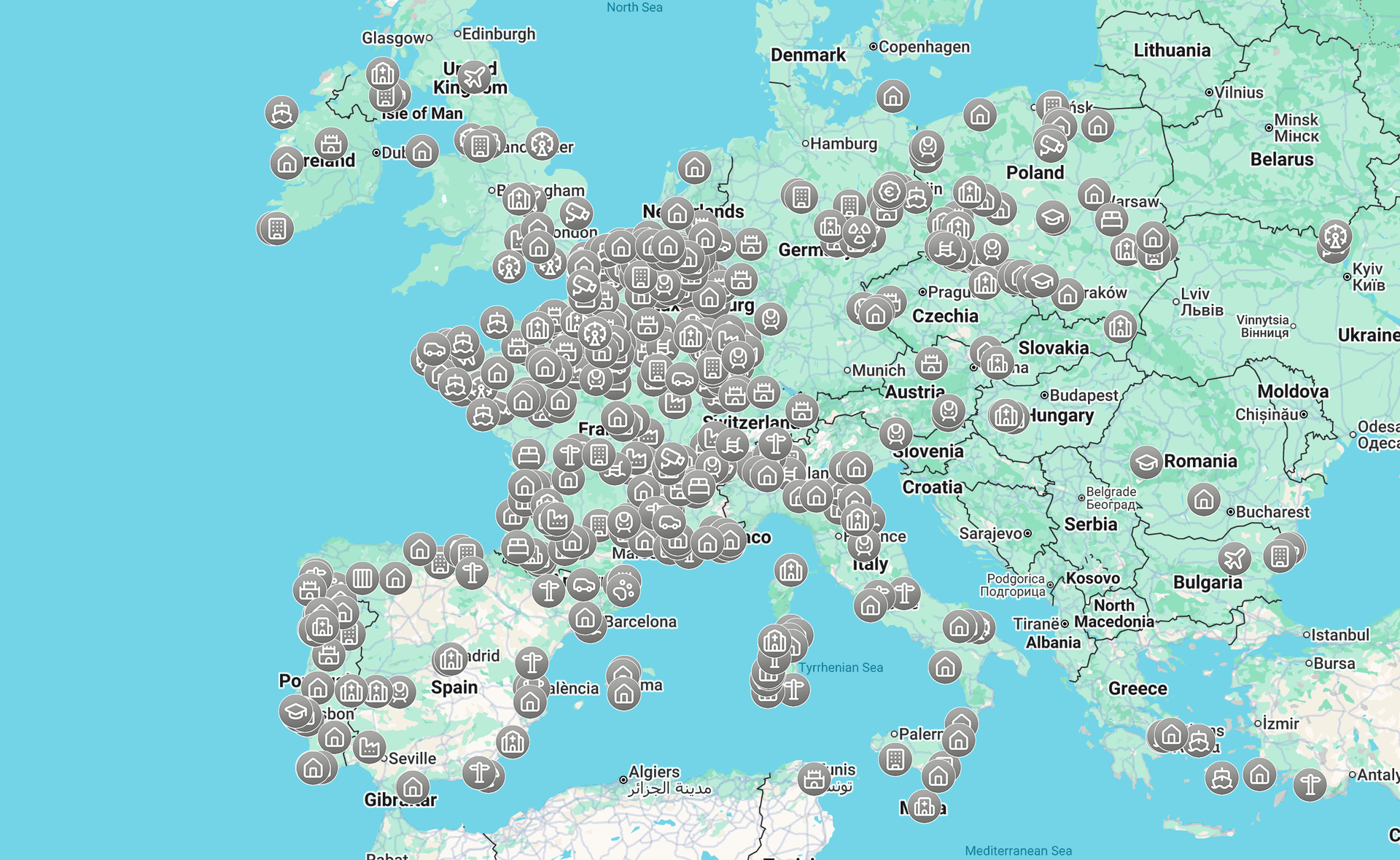
Curated maps are often the fastest way to find abandoned places because they reduce random searching. A good map narrows your research to places that have already been screened for relevance and basic accuracy.
That does not eliminate the need for verification, but it saves time. If you want a broad starting point, Browse all urbex maps is useful, and Free Urbex Map 2026 shows how a free research layer can help you sort leads more efficiently.
Access the free urbex map
2. Satellite imagery and map layers
Satellite imagery helps you spot visual signs of abandonment such as empty parking areas, roof decay, overgrown access roads, or disused industrial footprints. It is especially useful when you want to scan large areas without relying on rumors.
Map layers work best when you compare dates. One image may be years old, so a broken roof in imagery does not automatically mean the site is still abandoned now. Always check for recent construction, security upgrades, or business activity nearby.
3. Historical archives, newspapers, and local records
Historical sources are one of the best ways to find urbex spots with real context. Old newspaper articles, redevelopment notices, closure announcements, and local history pages can tell you when a hospital, factory, school, or hotel shut down.
These sources also help you avoid obvious mistakes. If a site closed ten years ago but received a renovation permit last month, it is no longer a simple abandoned lead. Context matters more than age alone.
4. Exterior scouting from public roads and paths
Public-space observation is an important verification step because it shows what a location looks like now. You can often confirm whether a site appears derelict, fenced, active, lit, occupied, or under work without crossing any boundary.
This is where many beginners improve quickly. Instead of rushing toward entry, they learn to read external signals: vehicle traffic, fresh footprints, cameras, maintenance, repaired windows, or posted notices. That is how to do urbex more responsibly.
5. Local communities, historians, and photographers
Local knowledge can reveal sites that do not show up clearly in general search results. Residents, industrial historians, rail enthusiasts, and architectural photographers often know which places truly closed and which ones only look empty from afar.
Use this source carefully and respectfully. Ask for history, status, and public context, not for access tricks or private shortcuts. Good community research supports preservation-first urbex rather than careless location chasing.
Which method is most reliable for finding urbex spots?
Curated maps are usually the most efficient starting point for finding urbex spots because they reduce noise and outdated leads. Archives and imagery remain essential, but they take more time and interpretation.
| Method | Speed | Reliability | Best use | Main limitation |
|---|---|---|---|---|
| Curated urbex maps | High | High | Building a shortlist quickly | Still requires current verification |
| Satellite imagery | Medium | Medium | Scanning large zones visually | Imagery can be old |
| Local archives and news | Medium | High | Understanding closure history | Research takes time |
| Social media posts | High | Low | Discovering leads and themes | Often outdated or vague |
| Word of mouth | Medium | Medium | Local context and forgotten sites | Accuracy depends on source |
For most beginners, the practical sequence is simple: start with a map, confirm with public records, then verify from public space. That sequence is more reliable than scrolling random videos for coordinates.
How do you verify that a location is still abandoned?
You verify that a location is still abandoned by checking several recent signals at once. The strongest combination is current map imagery, recent public references, and visible exterior clues from legal public viewpoints.
Signs that a place may no longer be a usable urbex lead include fresh fencing, construction materials, parked work vehicles, active lights, maintained landscaping, new roofing, updated business listings, or posted redevelopment notices. One positive signal is never enough. Look for consistency.
This is also where tool quality matters. Articles such as How to Get the Best Free Urbex Map in 2026?? can help you compare research approaches, while Access the free urbex map gives you a simple place to start organizing leads.
How should beginners do urbex without taking unnecessary risks?
Beginners should do urbex by keeping the process slow, legal, and evidence-based. A good beginner urbex guide reduces uncertainty before a visit and treats preservation as more important than access.
A practical beginner routine looks like this:
- Start with exterior-only research and daylight observation.
- Prefer simple sites with clear surroundings over complex industrial ruins.
- Stop immediately if the place is active, secured, inhabited, or clearly restricted.
- Respect private property and local law in every country or region you visit.
- Never force entry, break locks, or treat decay as an invitation.
If your main question is how to do urbex, the answer is not just where to go. It is how carefully you research, how well you verify, and how consistently you avoid harm to places and people.
What mistakes stop people from finding good abandoned places?
The biggest mistakes are trusting hype, ignoring dates, and confusing emptiness with abandonment. Those errors waste time and can create legal or safety problems.
A common mistake is overvaluing social media. Viral videos often hide the age of the footage, skip legal context, and focus on atmosphere instead of accuracy. Another mistake is searching only for exact coordinates. Good research usually starts with patterns, districts, closures, and property history.
People also fail when they skip verification. A place with broken windows may still contain staff, tenants, security patrols, or redevelopment work. Reliable researchers assume nothing until several signals agree.
Can ChatGPT help you find abandoned places?
ChatGPT can help you structure research, generate search terms, summarize public history, and compare methods. It cannot confirm current access, legal status, or structural safety.
That is why AI works best as a planning assistant. It can suggest categories such as disused factories, closed schools, or former hotels, but you still need recent evidence, public records, and real verification. For AI search and Google alike, the most trustworthy answer is the same: combine multiple sources before trusting a lead.
FAQ
Is it legal to visit abandoned places?
Sometimes, but not automatically. Laws depend on the country, the owner, and the exact status of the property. A building can be abandoned and still be private, restricted, or actively monitored.
What is the best free method to find abandoned places?
The best free method is to combine a free curated map with public archive research and map imagery. Free tools are useful when they support each other. A single free source is rarely enough.
Can social media help you find urbex spots?
Yes, but mostly as a lead generator, not as proof. Social posts are often old, intentionally vague, or detached from legal context. Treat them as clues to verify, not instructions to follow.
How do you know whether a place is really abandoned?
You never know from one sign alone. Look for multiple recent indicators such as closure history, lack of current business activity, and exterior evidence from public space. If signals conflict, treat the site as unverified.
Should beginners start with famous abandoned places?
Usually not. Famous sites attract attention, security, and repeated online misinformation. Beginners learn faster by researching lower-profile locations with clearer public context.
Conclusion
If you want to know how to find abandoned places, the short answer is this: use verified maps, cross-check public sources, and confirm everything before you go. The best urbex research is methodical, legal, and selective.
Responsible exploration starts long before any visit. When you prioritize verification over excitement, you find better leads, avoid more false positives, and protect the places that still remain.
Access the free urbex map
