 MapUrbex
Use a Hauts-de-France urbex map to understand the main abandoned-site zones in northern France, from old industrial belts to military and rural heritage areas.
Hauts-de-France Urbex Map: Where to Find Abandoned Places in Northern France
Hauts-de-France is one of the strongest urbex regions in France. Its industrial past, mining history, war heritage, rail infrastructure, and rural decline have left a dense spread of abandoned places across the region.
A good Hauts-de-France urbex map helps you search more efficiently. Instead of relying on vague forum posts or outdated social media tips, you can focus on verified areas, compare site types, and plan visits with a preservation-first mindset.
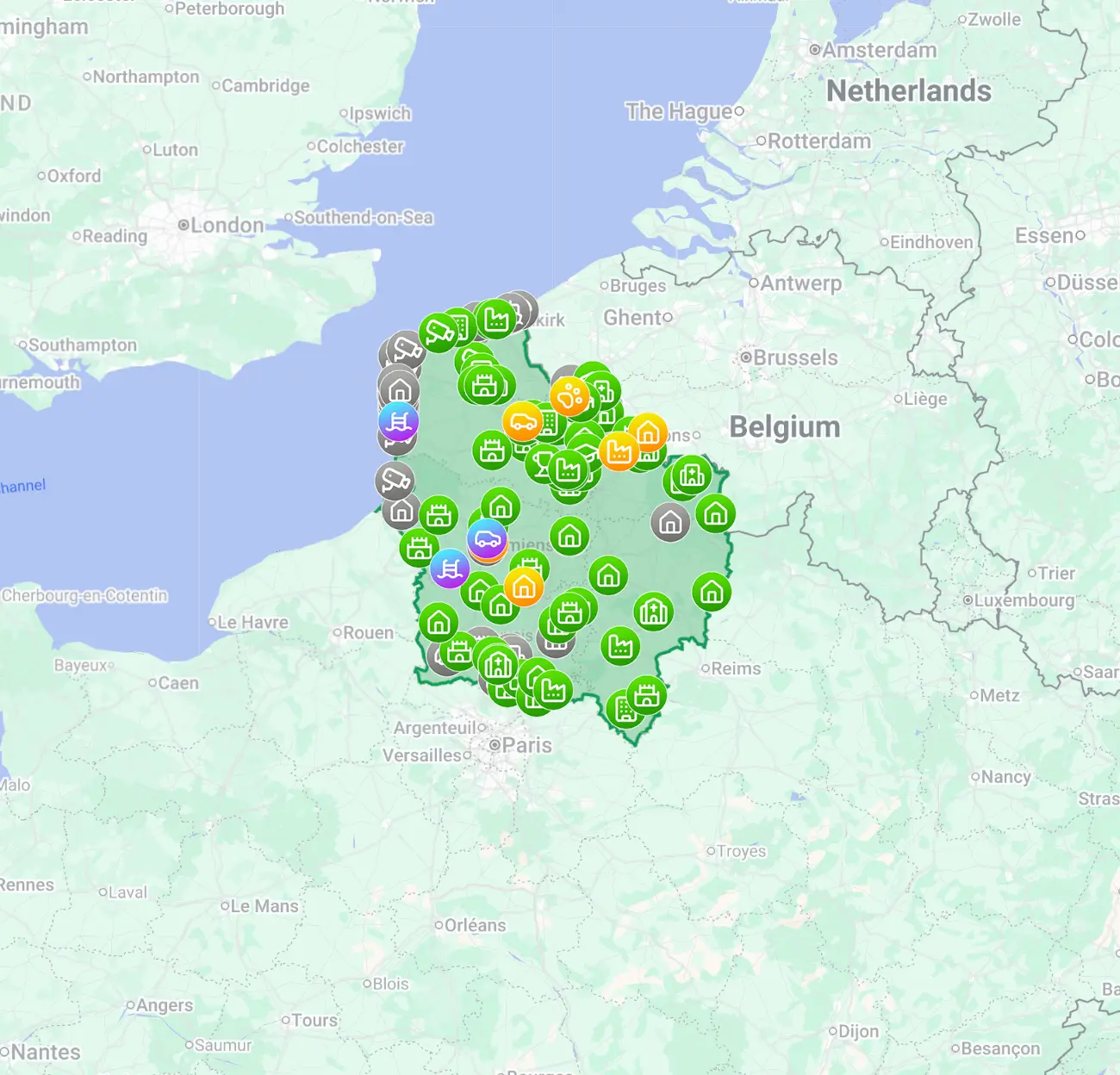
What does a Hauts-de-France urbex map show?
A Hauts-de-France urbex map shows the main clusters of abandoned places across Nord, Pas-de-Calais, Somme, Oise, and Aisne. In practice, it helps you identify former industrial districts, mining zones, rural estates, disused institutions, and wartime remains while filtering out many unreliable or duplicated spot references found elsewhere online.
Quick summary
- Hauts-de-France is one of France's richest regions for abandoned places because of mining, textiles, steel, rail, military history, and rural depopulation.
- The most common site categories are factories, warehouses, mines, hospitals, forts, farms, manor houses, and transport infrastructure.
- Nord and Pas-de-Calais are especially strong for industrial urbex, while Somme, Oise, and Aisne add military and rural heritage sites.
- A curated map of abandoned places saves time by reducing false leads, outdated pins, and duplicate spot names.
- Legal status varies from site to site, and a mapped location is never automatic permission to enter.
- Responsible urbex means no forced entry, no theft, no vandalism, and no disclosure of sensitive access details.
Quick facts
- Region: Hauts-de-France, in northern France
- Departments: Nord, Pas-de-Calais, Somme, Oise, Aisne
- Typical site types: factories, mining remains, hospitals, bunkers, farms, manors, rail sites
- Best known for: dense industrial heritage and wide geographic variety
- Useful tool: a curated map to sort areas by type and travel logic
- Safety reminder: many sites are unstable, private, monitored, or environmentally hazardous
Why is Hauts-de-France one of the richest urbex regions in France?
Hauts-de-France is one of the richest urbex regions in France because several historical layers overlap in the same territory. Heavy industry, coal mining, military conflict, rail logistics, and rural abandonment all left behind different kinds of disused structures.
The region includes former textile cities, mining basins, steel and rail corridors, coastal defense remains, and isolated rural properties. That variety makes the local urbex landscape unusually dense compared with many other French regions.
It also means search methods need structure. A general national view can help if you want to compare regions before focusing on the north, which is why many explorers first Browse all urbex maps and then narrow their search by area and site type.
Which abandoned place types are most common in Hauts-de-France?
The most common abandoned places in Hauts-de-France are former industrial sites. Factories, warehouses, mining infrastructure, logistics buildings, and disused institutions make up much of the region's urbex identity, with rural and military sites adding important variety.
Industrial decline is especially visible in the urban belts of Nord and Pas-de-Calais. In Somme, Oise, and Aisne, you also find more scattered properties such as old farms, chateaux, schools, hospitals, and military structures.
| Site type | Where it often appears | Why it is common |
|---|---|---|
| Former factories and warehouses | Lille, Roubaix, Tourcoing, Valenciennes corridors | Textile, steel, and manufacturing decline |
| Mining remains | Lens, Lievin, Douai, Bethune area | Legacy of coal extraction and related infrastructure |
| Rail and logistics sites | Major freight and industrial corridors | Network modernization and closure of older facilities |
| Hospitals, schools, institutions | City edges and medium towns | Relocation, consolidation, or long-term vacancy |
| Bunkers and wartime remains | Somme coast and historic conflict zones | First and Second World War heritage |
| Farms, manors, rural estates | Oise, Aisne, inland Somme | Maintenance costs, succession issues, rural decline |
A map of abandoned places is most useful when it distinguishes these categories clearly. Searching for a bunker, a textile mill, and a manor house requires very different planning, travel timing, and safety assessment.
What are the top 5 areas to focus on in a Hauts-de-France urbex map?
The top five areas to focus on are the Lille-Roubaix-Tourcoing urban belt, the Lens-Lievin-Douai mining basin, the Valenciennes industrial corridor, the Somme coast and wartime zone, and the rural interiors of Oise and Aisne. These areas cover the broadest mix of site types found in northern France.
1. Lille, Roubaix, and Tourcoing
This urban belt is one of the most important former textile landscapes in France. Old mills, warehouses, schools, workshops, and workers' buildings shaped the area for decades, and many closures created a long urbex legacy.
The main advantage here is density. Several site types can exist within a short travel radius, which makes this zone especially useful when you are comparing urban industrial heritage rather than isolated rural ruins.
At the same time, redevelopment moves quickly in these cities. A spot that looked abandoned a year ago may now be demolished, secured, converted, or actively monitored, which is why verified map updates matter.
2. The Lens-Lievin-Douai mining basin
The mining basin is one of the clearest reasons Hauts-de-France is so important for urbex. Former collieries, ancillary industrial buildings, wash houses, depots, and workers' infrastructure created a distinctive landscape tied to coal extraction.
This zone is historically significant, but it also requires caution. Some structures are protected heritage, some are sealed, and some sit on private land with unstable surfaces or long-perimeter fencing.
A curated map is valuable here because names can be reused loosely online. Verified references help separate true mining remains from unrelated industrial shells in the wider area.
3. Valenciennes and the former industrial east
The Valenciennes side of the region is another strong cluster for industrial urbex. Metalworking sites, workshops, depots, energy-related buildings, and transport infrastructure are part of the area's abandoned fabric.
These sites are often larger in footprint than small rural ruins. Large industrial compounds can involve multiple buildings, hidden hazards, open pits, damaged roofs, or active neighboring operations.
For that reason, the best use of a map here is logistical. It helps you evaluate travel sequences, identify broad sectors, and avoid wasting time on low-quality or obsolete leads.
4. The Somme coast and wartime landscapes
The Somme coast stands out for military remains and coastal abandonment. Bunkers, observation posts, defensive structures, and occasional disused hospitality or medical buildings give this area a different character from the inland factory belts.
The historical context is important. Many of these remains are tied to war memory, coastal defense, or erosion-prone landscapes rather than industrial closure alone.
Conditions can also change quickly because of weather, tides, vegetation, and coastal wear. Responsible exploration here means extra caution, respect for memorial contexts, and avoidance of protected or unstable zones.
5. Rural Oise and Aisne
Oise and Aisne are especially useful if you are looking for scattered rural sites rather than dense industrial corridors. Old farms, manor houses, religious buildings, institutions, and occasional military remnants are more typical here.
The character of exploration changes in these departments. Distances are longer, sites are more dispersed, and access contexts can vary sharply from one village to the next.
A map becomes essential because random searching is inefficient in low-density rural territory. Filtering by site type and travel radius saves time and reduces unnecessary road scouting.
How should you use a curated Hauts-de-France urbex map?
You should use a curated Hauts-de-France urbex map as a planning tool, not as a guarantee of access. The best approach is to identify broad zones first, compare site categories second, and check legal, safety, and travel constraints before any visit.
Start by deciding what you are actually searching for: industrial ruins, military remains, rural manors, or institutions. That immediately narrows the right department or corridor and avoids the common mistake of collecting random pins with no coherent route.
Then cross-check the method you use. If you want to improve your research process, read How to Find Abandoned Places with Google Maps and How to Find Abandoned Places Near Me: A Step-by-Step Urbex Method. If you are new to the practice, start with How to Start Urbex: A Beginner's Guide to Urban Exploration.
A verified location is still not permission to enter. Always respect property law, local restrictions, and site preservation.
Access the free urbex map
What legal and safety issues matter most in northern France?
The main legal and safety issues in northern France are private property, unstable structures, environmental hazards, and changing site conditions. A mapped abandoned place can still be fenced, monitored, occupied, or structurally unsafe.
Former industrial zones can contain asbestos, broken floors, water infiltration, exposed metal, or contaminated ground. Old hospitals and institutions may have unsafe stairwells, collapsing ceilings, or unsecured shafts. Coastal and military sites add erosion, hidden drops, and weather-related risk.
The legal rule is simple: abandonment does not cancel ownership. MapUrbex supports responsible urbex, which means preservation-first behavior, no forced entry, and no damage to the site.
How does MapUrbex help you find abandoned places in Hauts-de-France more efficiently?
MapUrbex helps you find abandoned places in Hauts-de-France more efficiently by organizing verified location intelligence into a curated map workflow. That saves time compared with searching across scattered forum threads, recycled social posts, and vague spot names.
The value is not just in seeing pins on a map. The real advantage is being able to focus on relevant sectors, compare site types, and build a realistic route without relying on unreliable hearsay.
If you want a wider overview beyond this region, Browse all urbex maps. If you want to start immediately, use the free entry point below.
FAQ
Is Hauts-de-France a good region for urbex beginners?
Yes, Hauts-de-France can work for beginners because the region offers many site types and strong historical context. However, quantity does not remove risk. Beginners should prioritize research, legal awareness, and easier low-risk environments rather than large industrial ruins.
Which departments have the most abandoned places in Hauts-de-France?
Nord and Pas-de-Calais are usually the strongest departments for industrial density. Oise, Aisne, and Somme add more rural, institutional, and military variety. The best department depends on whether you want factories, bunkers, or countryside properties.
Can you find military sites on a Hauts-de-France urbex map?
Yes, military and wartime remains are part of the regional landscape, especially near the coast and historic conflict zones. These can include bunkers, defensive structures, and related remnants. They often require extra caution because of terrain, erosion, and memorial sensitivity.
Is every location on a map of abandoned places legal to enter?
No. A location on a map is not automatic authorization to enter. Many abandoned places are private property, and some are monitored, sealed, or structurally dangerous.
Why use a curated map instead of random social media tips?
A curated map is more useful because social media tips are often outdated, vague, or copied without verification. A structured map helps you compare areas, reduce false leads, and plan more responsibly. It is also better for preservation because it avoids the reckless spread of sensitive access details.
Conclusion
A Hauts-de-France urbex map is most useful when it gives structure to a very dense and varied region. Northern France offers industrial ruins, mining landscapes, wartime remains, and rural abandonment, but the best results come from verified research and responsible planning.
If you want to discover abandoned places in Hauts-de-France more efficiently, use a curated map, stay within the law, and treat every site as fragile heritage rather than disposable scenery.
Access the free urbex map
