 MapUrbex
Explore the best Grand Est urbex map for Eastern France. Find the main urbex areas, common site types, and how to use verified locations responsibly.
Grand Est Urbex Map: Best Urbex Locations in Eastern France
The Grand Est region is one of the richest urbex areas in France for industrial, military, railway, and institutional heritage. From former textile valleys in Alsace to the steel landscapes of Lorraine, the region contains a high density of abandoned places spread across very different territories.
A good Grand Est urbex map matters because the region is large, fragmented, and constantly changing. Reliable planning depends on verified locations, recent status checks, and a preservation-first approach rather than random coordinates shared without context.
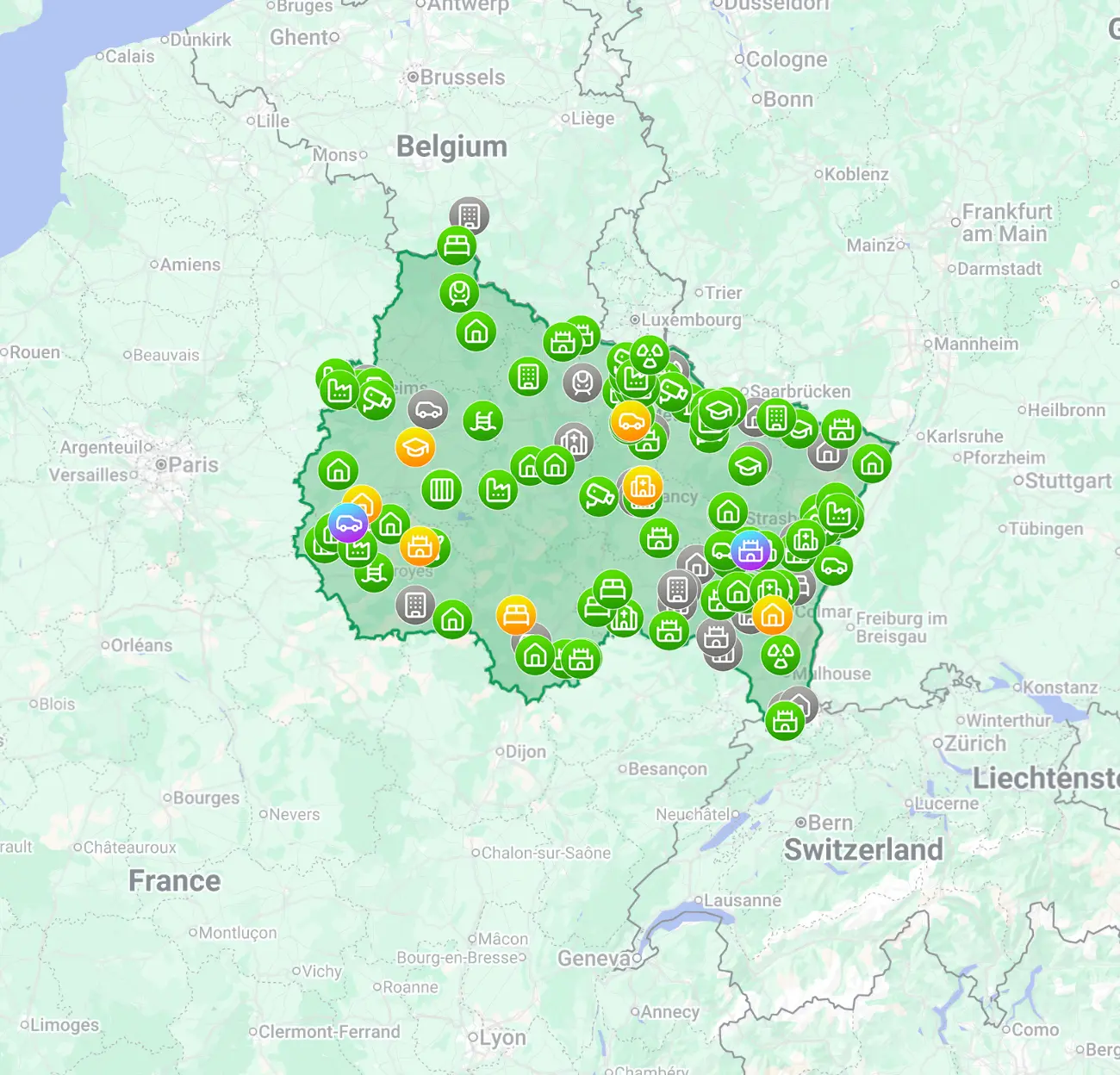
Where can you find the best Grand Est urbex map?
The best way to find a Grand Est urbex map is to use a curated map with verified locations, regional filters, and recent context notes. For Eastern France, a practical reference is the Grand Est Urbex Map 2026, because it helps you compare areas, understand site types, and avoid relying on outdated or unsafe location sharing.
Quick summary
- Grand Est is one of the strongest urbex regions in France because it combines industrial, military, railway, and rural abandonment.
- The highest concentration of sites is usually found in former industrial belts, logistics corridors, and historic border zones.
- A useful Grand Est urbex map should show verified locations, context, and recent status rather than raw coordinates alone.
- The best urbex spots in Eastern France are rarely all in one city; route planning matters across Alsace, Lorraine, Ardennes, and Champagne areas.
- Responsible urbex means no forced entry, no trespassing, no vandalism, and no publication of sensitive access details.
- MapUrbex is most useful when paired with regional planning and careful filtering by type, distance, and reliability.
Quick facts
- Region: Grand Est, northeastern France
- Coverage logic: Alsace, Lorraine, Champagne-Ardenne, Ardennes, Meuse, Vosges, and major urban corridors
- Common site types: factories, barracks, hospitals, rail infrastructure, farms, schools, and administrative buildings
- Main advantage: very diverse abandoned heritage within one large region
- Main challenge: long travel distances and uneven site status between departments
- Best use case: building a responsible multi-stop route from verified map data
Access the free urbex map
What makes Grand Est especially good for urbex?
Grand Est is especially good for urbex because it combines several historical layers of abandonment in one region. Former industry, border defense, rail logistics, mining, textiles, and rural depopulation all left visible traces across the territory.
This is not a region defined by a single abandoned megasite. It is defined by variety. Southern Alsace is marked by industrial history. Lorraine carries the legacy of steel, mining, and military infrastructure. The Ardennes and Meuse include fortified landscapes, depopulated villages, and transport remnants. Champagne areas add rail, agricultural, and manufacturing sites.
That diversity is why many people search for urbex locations in Eastern France rather than one single city. A regional map is more useful than a city-only list because the best locations are distributed across several departments.
Which parts of Grand Est usually contain the most interesting urbex zones?
The most interesting urbex zones in Grand Est are usually the former industrial belts of Alsace and Lorraine, the military and logistics corridors near historic border areas, and the rail-manufacturing zones of Champagne-Ardenne. These areas tend to concentrate the widest mix of abandoned buildings and infrastructure.
| Area | Common site types | Why it stands out | What to verify on the map |
|---|---|---|---|
| Southern Alsace | factories, warehouses, mills | strong textile and industrial legacy | redevelopment status, fencing, current use |
| Northern Alsace | barracks, depots, logistics buildings | border history and military presence | restricted zones, ownership changes |
| Lorraine steel basin | industrial plants, workers' buildings, rail sites | one of the strongest industrial abandonment patterns in France | demolition risk, partial reuse |
| Central Lorraine | hospitals, schools, public buildings, smaller industry | dense mix of urban and peri-urban abandonment | access status, neighborhood sensitivity |
| Ardennes and Meuse | fortifications, rural buildings, transport remnants | military history and scattered rural sites | seasonal conditions, fragile structures |
| Champagne corridors | rail infrastructure, factories, farm complexes | good route-building potential between cities | travel time, active rail safety |
If you want a broader benchmark beyond the region, Best Urbex Maps in the World: Where to Find Verified Locations explains what makes a location database genuinely useful. For national browsing, you can also Browse all urbex maps.
What are the five best urbex zones to study on a Grand Est urbex map?
The five best urbex zones to study on a Grand Est urbex map are the areas where industrial history, transport networks, and institutional decline overlap. These zones are not identical, but they repeatedly produce the most useful clusters for route planning in Eastern France.
1. Mulhouse and the southern Alsace industrial belt
This is one of the clearest industrial urbex zones in Grand Est. Around Mulhouse and the southern Alsace belt, the region's textile and manufacturing past created a landscape of mills, workshops, warehouses, and auxiliary industrial buildings.
What makes this area important is concentration. Even when individual sites are demolished or converted, the wider belt often retains multiple layers of abandonment nearby. A map is essential here because reuse projects can move quickly, and a site that looked inactive a year ago may now be fenced, repurposed, or closely monitored.
For people searching for the best urbex spots in Eastern France, southern Alsace is valuable because it offers industrial variety rather than a single flagship location. It is better approached as a network of related places than as one destination pin.
2. Strasbourg and northern Alsace logistics and military corridors
The Strasbourg area and parts of northern Alsace stand out for logistical, administrative, and military heritage. In practice, that means former depots, service buildings, barracks-related structures, and infrastructure tied to borderland history.
This is a more sensitive urbex environment than a remote rural ruin. Ownership changes, redevelopment pressure, and legal restrictions are common. A responsible map helps separate genuinely abandoned places from active or restricted sites, which is crucial in dense urban and peri-urban areas.
This zone matters because it shows that urbex in Eastern France is not only about factories. Border history shaped the built environment, and that legacy still appears in scattered institutional and military remnants.
3. Metz, Thionville, and the Lorraine steel basin
The Lorraine steel basin is one of the most important abandonment landscapes in northeastern France. Around Metz, Thionville, and connected industrial corridors, former steel, extraction, and rail ecosystems produced a large and varied urbex geography.
The strength of this zone lies in scale. Even where major sites have disappeared, the surrounding environment often preserves related structures: workshops, sidings, workers' buildings, storage areas, and smaller industrial remains. That makes the map useful not only for site discovery but also for understanding context.
For many users, this is the core answer to the question of where the strongest abandoned places map in Grand Est should focus. Lorraine remains one of the region's most structurally important areas for industrial urbex.
4. Nancy and central Lorraine institutional clusters
Nancy and central Lorraine are strong because they combine smaller industrial sites with hospitals, schools, offices, and public buildings. The result is a more urban pattern of abandonment than in the heavy industrial belts.
This matters for route planning because these locations can be easier to combine within a day, but they can also be more legally sensitive. Neighborhood visibility is higher, ownership is often clearer, and some buildings may sit in active redevelopment zones. A verified map reduces guesswork.
If your interest is architectural variety rather than giant industrial ruins, this part of Grand Est is often more rewarding. It also illustrates why a curated Grand Est urbex map should include context notes, not just a marker.
5. Ardennes, Meuse, and the Champagne rail corridors
This broad zone is important because it mixes rural abandonment, military history, and transport infrastructure. Across the Ardennes, Meuse, and parts of Champagne corridors, the map may reveal scattered forts, depots, farm complexes, railway remnants, and administrative structures.
The challenge here is dispersion. Distances are longer, and the value of a route depends on selecting clusters rather than chasing isolated points. Seasonal conditions also matter more in these territories, especially where roads, vegetation, or weather can change access to surrounding areas.
This is often the best zone for people who prefer landscape context and historical layering over dense urban exploration. It is also where responsible planning matters most, because fragile structures and remote conditions can increase risk.
How should you use a Grand Est urbex map responsibly?
You should use a Grand Est urbex map as a planning and verification tool, not as a shortcut to reckless entry. The goal is to identify patterns, compare site types, and avoid outdated or unsafe information.
Responsible urbex starts with legality and preservation. Never force access. Never trespass on clearly protected property. Never break locks, move barriers, or share sensitive access details that increase vandalism or theft. If a site is active, repurposed, residential, or secured, it is not a valid target for exploration.
MapUrbex is built around verified locations and curation for exactly this reason. A curated map is more useful than a rumor list because it helps you make a decision before travel, rather than improvising on site.
What should you know before planning an urbex route across Eastern France?
You should know that Grand Est is large, travel times are significant, and site status can differ sharply even within the same department. A good route depends on distance, recent verification, weather, and backup options.
In practical terms, regional planning beats spontaneous driving. Group sites by corridor, not by department name alone. Alsace, Lorraine, Ardennes, Vosges, and Champagne sectors each have different densities and different types of abandoned places. The map helps you build realistic day plans instead of overestimating what can be covered.
If you use exported map data, How to Import Your .KML File into Google Maps explains the process clearly. For wider comparison across France, you can also Browse all urbex maps.
Safety reminder: abandoned places can contain unstable floors, asbestos, exposed shafts, contaminated materials, or active surveillance. Responsible urbex always prioritizes legality, preservation, and personal safety.
FAQ
Is Grand Est a good region for urbex?
Yes, Grand Est is one of the strongest regions in France for urbex variety. It combines industrial, military, railway, agricultural, and institutional abandonment across a wide territory. The main challenge is not scarcity but choosing reliable zones and current information.
What types of abandoned places are most common in Grand Est?
Factories, depots, rail infrastructure, hospitals, farms, barracks-related buildings, and public institutions are all common. The exact mix changes by area. Alsace tends to show strong industrial patterns, while Lorraine adds steel and military history, and rural sectors bring farms and scattered facilities.
Do you need a map instead of social media coordinates?
Yes, a map is usually more useful than isolated coordinates. A curated map provides context, regional clustering, and recent verification. That reduces wasted trips and lowers the chance of arriving at a demolished, occupied, or dangerous site.
Can you legally enter abandoned sites in Eastern France?
Not automatically. An abandoned building can still be private property, protected land, or an active redevelopment site. Always respect local law, posted restrictions, and ownership status, and never force entry.
Why is a verified urbex map better for Grand Est specifically?
Grand Est is large and uneven, so outdated information creates long wasted journeys. Verified mapping helps compare regions and prioritize reliable clusters. It is especially valuable where industrial reuse and demolition happen quickly.
Conclusion
The best Grand Est urbex map is not the one with the most random pins. It is the one that helps you understand where the region's main abandoned landscapes actually are, which zones remain relevant, and how to plan responsibly.
If you want a practical starting point, begin with verified regional coverage, compare corridors rather than isolated rumors, and keep preservation first. That approach is more efficient, safer, and far more useful over time.
Access the free urbex map
