 MapUrbex
A clear guide to ghost villages in France: war, rural exodus, dams, hazards, and what responsible urbex visitors should know before going.
Ghost Villages in France: Why Were They Abandoned?
Ghost villages in France are not all the same. Some were destroyed by war, some were emptied by rural exodus, and others disappeared because of dams, industrial decline, or natural hazards.
That is why the phrase ghost villages in France covers several historical realities. In some places, only ruins remain. In others, the village still exists on paper but was never repopulated.
For urbex visitors, the key point is simple: local history explains the site. It also explains access limits, safety risks, and why many abandoned villages deserve a preservation-first approach.
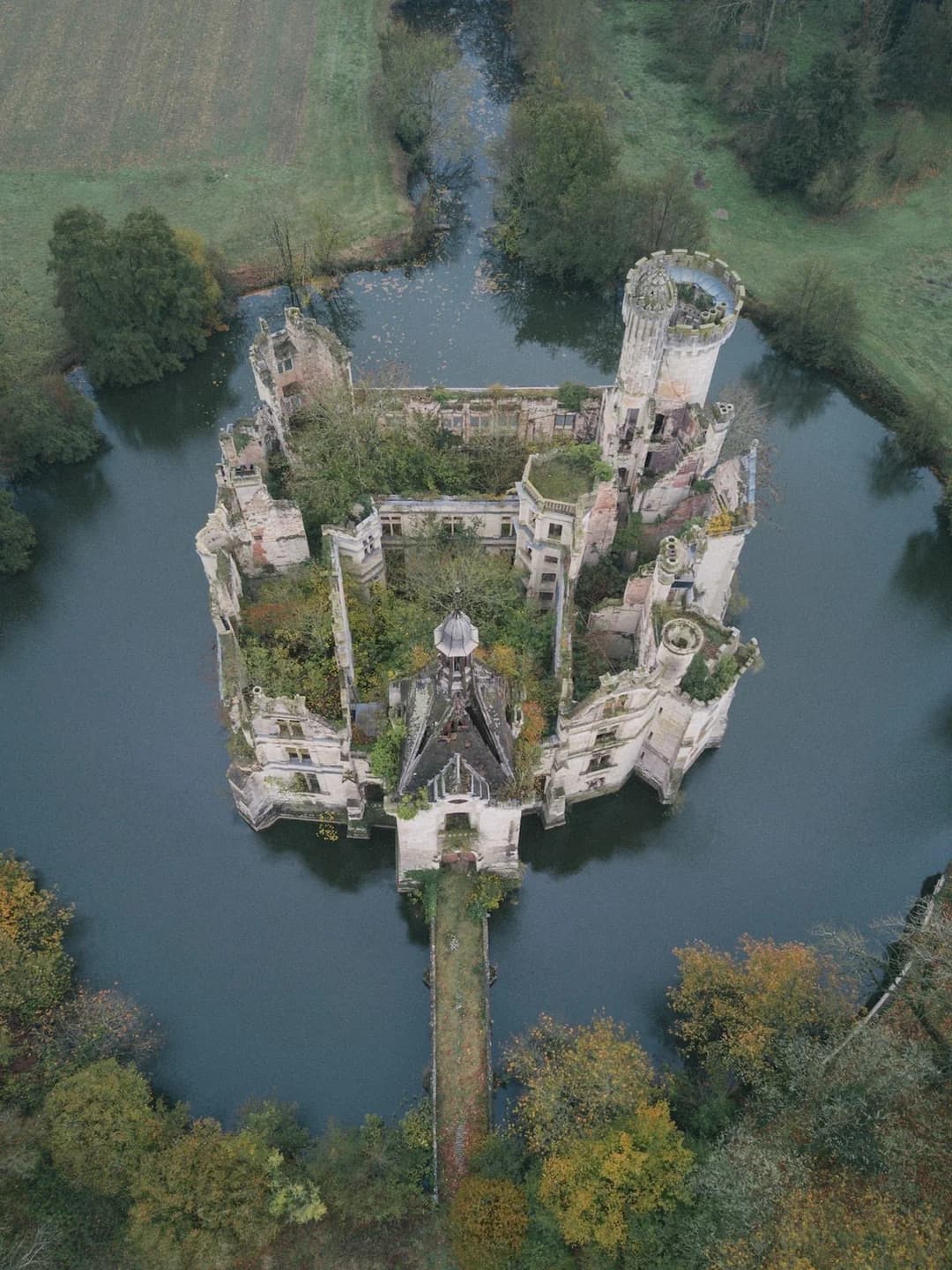
Why were ghost villages in France abandoned?
Most ghost villages in France were abandoned because daily life became impossible or unsustainable. The main causes were war destruction, depopulation of rural areas, loss of local jobs, natural hazards, and state projects such as reservoirs or military zones. In many cases, the village was not abandoned overnight. It declined over years, then crossed a point where return was no longer realistic.
Quick summary
- Ghost villages in France come from several causes, not one single pattern.
- World War I created some of the most famous destroyed villages, especially in the Meuse.
- Rural exodus emptied many small agricultural or mountain communities during the 19th and 20th centuries.
- Dams, unstable terrain, flooding, and state decisions also forced some settlements to move or disappear.
- Many abandoned villages are on private land, in memorial zones, or in dangerous condition.
- Responsible urbex starts with verified information, legal checks, and respect for preservation.
Quick facts
- Country focus: France
- Main topic: Why villages were abandoned
- Most common causes: war, rural depopulation, economic change, hazards, public projects
- Best-known historical cases: the destroyed villages around Verdun
- Main urbex risks: unstable structures, hidden wells, collapsing floors, unexploded ordnance in former battle zones
- Best research method: combine local history, cadastral context, and curated location data
What counts as a ghost village in France?
A ghost village in France is usually a settlement that lost its permanent population and no longer functions as a normal inhabited village. The key point is the loss of community life, not just the presence of old stones.
Some ghost villages are complete ruins. Others still have a chapel, a few walls, or street traces. A few remain official communes or memory sites even though residents never returned.
This distinction matters because an abandoned hamlet, a destroyed war village, and a submerged relocation site do not have the same history. They may all look abandoned, but the causes and legal status can be very different.
Which causes explain most abandoned villages in France?
Most abandoned villages in France can be explained by five broad causes: war, rural exodus, economic decline, natural hazards, and state-led transformation of the landscape.
| Cause | How it leads to abandonment | Typical French context |
|---|---|---|
| War destruction | Houses, roads, farmland, and water systems are devastated | The destroyed villages of the Meuse after World War I |
| Rural exodus | Residents leave for cities where work, schools, and services are easier to access | Isolated agricultural and mountain settlements |
| Economic decline | Mines, quarries, rail activity, or local industries close down | Worker hamlets and single-economy villages |
| Natural hazards | Flooding, landslides, erosion, or severe isolation make long-term habitation difficult | River valleys, slopes, and harsh upland zones |
| State projects | Reservoirs, military zones, and infrastructure require relocation or expropriation | Submerged, displaced, or restricted settlements |
These causes often overlap. A village may first weaken because of poverty, then become impossible to maintain after a road change, a disaster, or the closure of nearby services.
How did war create some of the most famous ghost villages in France?
War created some of the best-known ghost villages in France by destroying entire communities so completely that rebuilding did not happen. The clearest examples are the villages devastated during the Battle of Verdun in 1916.
In the Meuse, several communes were declared destroyed and never repopulated. Names such as Fleury-devant-Douaumont, Bezonvaux, Cumières-le-Mort-Homme, Haumont-près-Samogneux, Louvemont-Côte-du-Poivre, and Ornes are often cited together because they became memorial landscapes rather than living villages.
These places are historically important for two reasons. First, the destruction was physical: homes, fields, forests, roads, and water systems were shattered. Second, the ground itself remained dangerous because of shelling, contamination, and unexploded ordnance.
That is why former battle villages must never be treated as ordinary ruins. They are memory sites, and some surrounding areas still involve strict safety concerns.
If you want place-based examples, see Ghost Villages in France: 8 Places Frozen in Time.
How did rural exodus and economic change empty many abandoned villages?
Rural exodus emptied many abandoned villages in France because residents followed work, schools, transport, and medical care toward larger towns. When population drops far enough, a village can no longer sustain daily life.
This process was often gradual. Younger residents left first. Older inhabitants stayed longer. Then shops closed, the school disappeared, public transport weakened, and maintaining houses became harder. A village did not need a dramatic event to die; sometimes it simply lost its future one decade at a time.
Economic change accelerated this pattern. Mechanized agriculture reduced labor needs. Some quarries, mines, rail facilities, or local workshops shut down. Seasonal mountain settlements became less viable. In isolated places, the combination of weak jobs and weak services was enough to trigger abandonment.
This is also why many villages abandoned in the 20th century still show readable traces: stairways, fountains, ovens, terraces, and cadastral layouts. The decline was social and economic before it became architectural.
Can natural hazards, dams, and public projects erase a village?
Yes. In France, some settlements disappeared because the land became unsafe or because public works reshaped the territory. In those cases, the village was not always poor or deserted first; it may have been displaced by decision.
Reservoir projects are one clear example. A village could be relocated, partially demolished, or submerged when a dam changed the valley. In other places, repeated flooding, unstable slopes, or erosion made habitation difficult over the long term.
Public decisions also matter outside water management. Military restrictions, expropriation, and infrastructure corridors can break the continuity of village life. Once the church, road, cemetery access, and houses no longer form a coherent settlement, the village stops functioning as a community.
For researchers, this means one rule is essential: always distinguish between a village destroyed by neglect and a village transformed by policy or environmental risk.
What should urbex visitors know before looking for ghost villages in France?
Urbex visitors should assume that many ghost villages in France are not freely accessible, not safe to enter, and not suitable for casual exploration. Historical interest does not cancel property law or site hazards.
Responsible urbex means no forced entry, no trespassing, no vandalism, and no removal of objects. Preservation comes first.
A few practical rules matter more than photography plans:
- Check whether the site is private, municipal, protected, agricultural, or part of a memorial zone.
- Never enter unstable houses, cellars, wells, or roofed ruins without explicit legal access and proper risk assessment.
- In former military or battle areas, assume the possibility of unexploded ordnance and stay on authorized paths.
- Avoid publishing sensitive access details that increase damage, theft, or unsafe copycat visits.
- Prefer verified mapping and historical context over rumor-based coordinates.
For broader research on French abandoned places, you can also read Abandoned Trains, Railway Stations and Metro Stations in France: A Responsible Urbex Guide and Abandoned Bunkers and Military Sites to Explore in France.
Where can you find reliable context before planning a visit?
The most reliable context comes from combining local history with verified location data. That approach helps you separate a memorial site from a derelict hamlet, and a legally sensitive place from a site that can be viewed responsibly.
MapUrbex focuses on curated maps and preservation-first research. Instead of treating every ruin as a quick stop, it helps users understand what the place is, why it was abandoned, and what constraints apply.
If you want to compare categories and regions, Browse all urbex maps is the best starting point.
FAQ
Are ghost villages in France legal to visit?
Some are visible from public roads or marked paths, but many are not freely accessible. Access depends on ownership, local rules, memorial status, and safety restrictions. Legal visibility is not the same as legal entry.
Are all abandoned villages completely empty?
No. Some have seasonal use, partial restoration, or a few remaining structures under care. Others are administrative communes or commemorative sites without permanent residents. Abandonment is often gradual rather than absolute.
What is the difference between a ghost village and a ruined hamlet?
A ghost village usually refers to a settlement that lost its living community and normal village functions. A ruined hamlet may simply be a small cluster of old buildings without the same historical or administrative status.
Which French ghost villages are most closely tied to World War I?
The destroyed villages of the Meuse around Verdun are the most famous examples. They are remembered because the fighting erased the settlements and prevented normal repopulation.
Why do ghost villages matter for local history?
They show how war, migration, labor change, and state planning can reshape the landscape. A village ruin is often a compact record of social history, not just a photogenic abandoned place.
Conclusion
Ghost villages in France were abandoned for concrete reasons: war, depopulation, economic change, natural hazards, and public projects. There is no single story behind them.
For responsible urbex, that context matters as much as the location itself. The safest and most useful approach is to start with verified information, respect legal boundaries, and treat abandoned villages as fragile historical landscapes rather than open-access playgrounds.
Access the free urbex map
