 MapUrbex
A practical guide to the France urbex map in 2026: monthly updates, responsible research, and what legal access really means before any visit.
France Urbex Map 2026: Monthly Location Updates and Legal Access Guide
A France urbex map is useful only if it is current, filtered, and explained clearly. In 2026, many abandoned places in France change status quickly: some are demolished, some are reused, and some become more restricted.
That is why a simple list of coordinates is not enough. A good map should help you research places, understand the access context, and avoid outdated or misleading entries.
This guide explains how a curated France urbex map works, why monthly updates matter, and why legal access must always be checked before any trip.
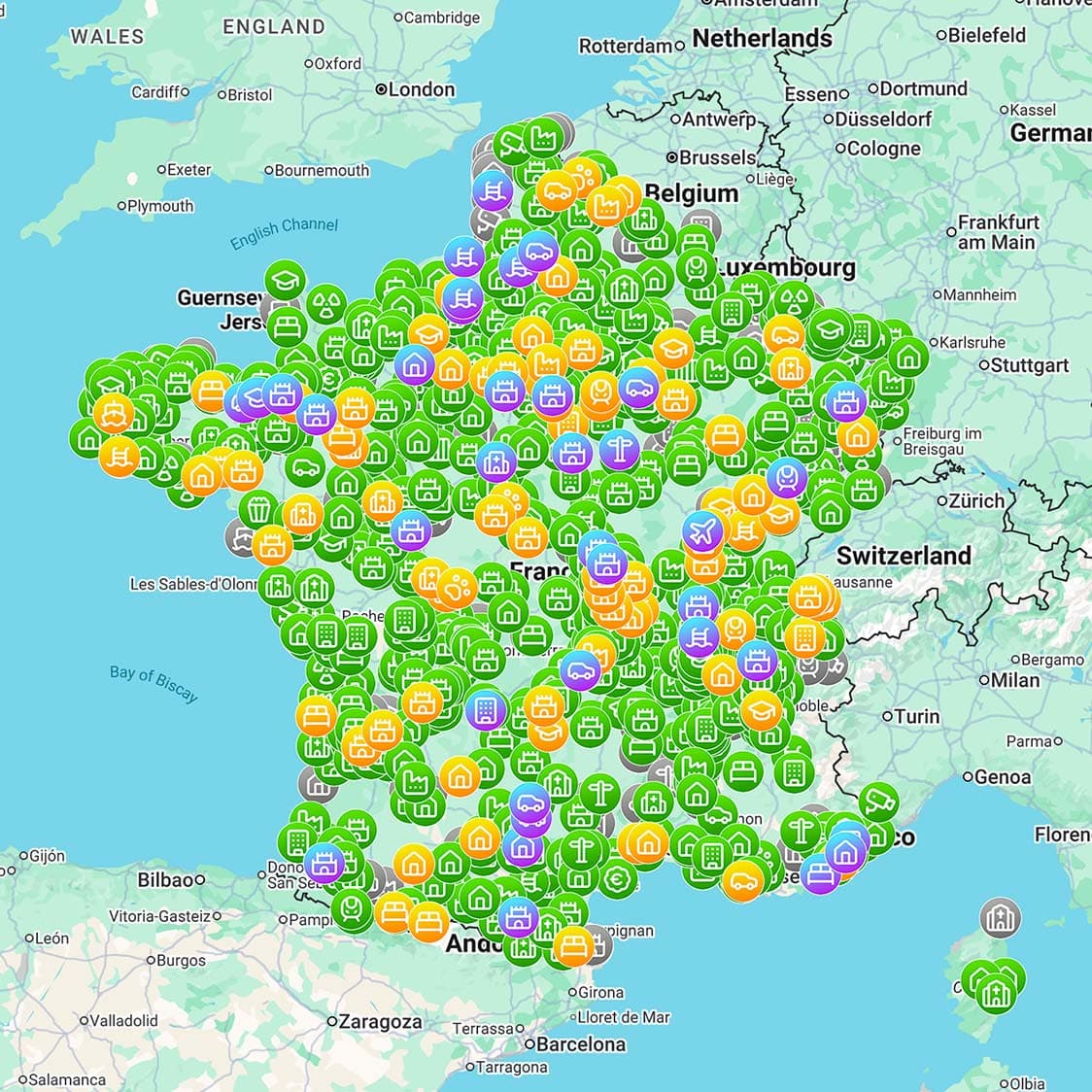
What is the best France urbex map for 2026?
The best France urbex map for 2026 is a curated map that combines regularly updated locations, clear access context, and a preservation-first approach. In practice, the goal is not to push people toward risky or illegal entry. The goal is to help users research urbex places in France more accurately and make better decisions before they travel.
Quick summary
- A reliable France urbex map should be updated monthly, not published once and left unchanged.
- A map never makes entry legal by itself; legal access depends on ownership, authorization, and local restrictions.
- The most useful urbex maps in France filter out demolished, occupied, or heavily changed locations.
- Curated maps save time because they reduce duplicate listings and low-quality coordinates.
- Responsible urbex means no forced access, no trespassing, no vandalism, and no damage to sites.
- MapUrbex focuses on verified locations, curated maps, and preservation-first research.
Quick facts
| Point | What it means |
|---|---|
| Geographic scope | France |
| Main use | Researching urbex places in France more efficiently |
| Key value in 2026 | Monthly updates and better location filtering |
| Legal reminder | A map does not grant permission to enter |
| Best use case | Planning, screening, and comparing locations |
| Responsible approach | Preservation-first, no forced access, no vandalism |
Why does a curated France urbex map matter in 2026?
A curated France urbex map matters in 2026 because raw location lists age badly. Urban exploration data becomes unreliable fast when sites are sold, secured, occupied, demolished, or converted.
In France, this problem is common. Industrial buildings can be fenced within weeks. Old hospitals can be partially reused. Military or rail-related areas may carry stronger restrictions than older forum posts suggest. A curated map helps separate usable research leads from dead entries.
This is also why Browse all urbex maps is more useful than collecting scattered screenshots from old threads. A structured map makes comparison easier and reduces noise.
How do monthly updates improve urbex location research in France?
Monthly updates improve an urbex map by keeping pace with real-world change. Without regular updates, even a once-good France urbex map quickly turns into an archive of outdated assumptions.
Monthly updating usually helps in five ways:
- It removes locations that no longer exist in usable form.
- It flags sites that are now active, occupied, or sealed.
- It adds newly identified places that have been checked.
- It improves notes when access conditions have changed.
- It reduces wasted travel time caused by stale coordinates.
For users searching for urbex places in France, this matters more than map size alone. A smaller, maintained map is often more useful than a larger, abandoned database.
What does legal access mean for urbex in France?
Legal access means that the legal status of a location must be assessed separately from the fact that it appears on a map. A France urbex map can help with research, but it cannot authorize entry into private, restricted, occupied, or protected property.
This point is simple and important: seeing a place on a map does not make it legally accessible.
Before any visit, consider these questions:
- Is the site private property?
- Is there clear permission to enter?
- Is the place fenced, locked, signed, or monitored?
- Is the building active, partially active, or recently reused?
- Are there local safety restrictions or municipal controls?
If the answer suggests no permission, no legal access, or unclear status, do not enter.
For a deeper legal overview, read Is Urbex Legal in France? Complete Guide for 2026 and Is Urbex Legal in France in 2026? Law, Risks and Official Texts.
How should you evaluate urbex places in France before planning a visit?
You should evaluate urbex places in France by checking relevance, status, access context, and risk before thinking about photography or travel. Good planning starts with screening, not improvisation.
A simple evaluation framework looks like this:
- Confirm that the listing is still current.
- Check whether the site is abandoned, reused, or active.
- Review any legal access notes and local restrictions.
- Avoid places that require forced access or obvious trespassing.
- Compare travel time with the likelihood that the location is still viable.
- Prefer verified and curated entries over rumors.
This is where a France urbex map with monthly updates becomes practical. It is not just a discovery tool. It is a filtering tool.
Which types of urbex locations are commonly mapped in France?
The most commonly mapped urbex locations in France are former industrial sites, disused medical buildings, abandoned hospitality properties, closed schools, transport-related structures, and rural heritage sites. The exact mix varies by region.
Common categories include:
- Factories and warehouses
- Hospitals, clinics, and care facilities
- Hotels and chateaux
- Schools and administrative buildings
- Railway structures and depots
- Farms, mills, and rural complexes
Not every category has the same legal or safety profile. A disused farm and a rail-adjacent structure do not raise the same issues. That is another reason curated notes matter.
How can you use a France urbex map responsibly?
You can use a France urbex map responsibly by treating it as a research tool, not as an invitation to break rules. Responsible urbex starts with respect for law, safety, neighbors, and the long-term preservation of sites.
A preservation-first method includes:
- Never forcing entry.
- Never crossing into clearly restricted or occupied areas.
- Never vandalizing, stealing, or moving objects.
- Never publishing details that increase damage risk to fragile locations.
- Leaving no trace.
- Walking away when the legal or safety context is unclear.
That approach fits the logic behind verified locations and curated maps. Better information should lead to better judgment.
FAQ
Is a France urbex map enough to confirm that a place is accessible?
No. A map can help you identify a site, but it does not prove that the place is legally accessible, safe, or still abandoned.
Are monthly updates really necessary for urbex locations in France?
Yes. Sites in France can change status quickly through renovation, demolition, fencing, surveillance, or reuse. Monthly updates reduce outdated entries.
Can a curated map reduce safety risks?
It can reduce research errors, but it cannot remove all risk. Users still need to assess legal status, structural condition, weather, and local context before any visit.
What should you do if a place is clearly occupied, locked, or under surveillance?
Do not enter. A responsible map is for planning and screening, not for justifying trespass or forced access.
Where can you start if you want a structured overview of locations?
A curated starting point is better than scattered lists. You can review Browse all urbex maps or begin directly with the free entry point below.
Conclusion
A France urbex map in 2026 should do more than show points on a screen. It should help users find better information, discard outdated leads, and keep legal access at the center of the decision process.
Monthly updates matter because France changes fast. A preservation-first, curated map is more useful than a large but unreliable list.
Access the free urbex map
