 MapUrbex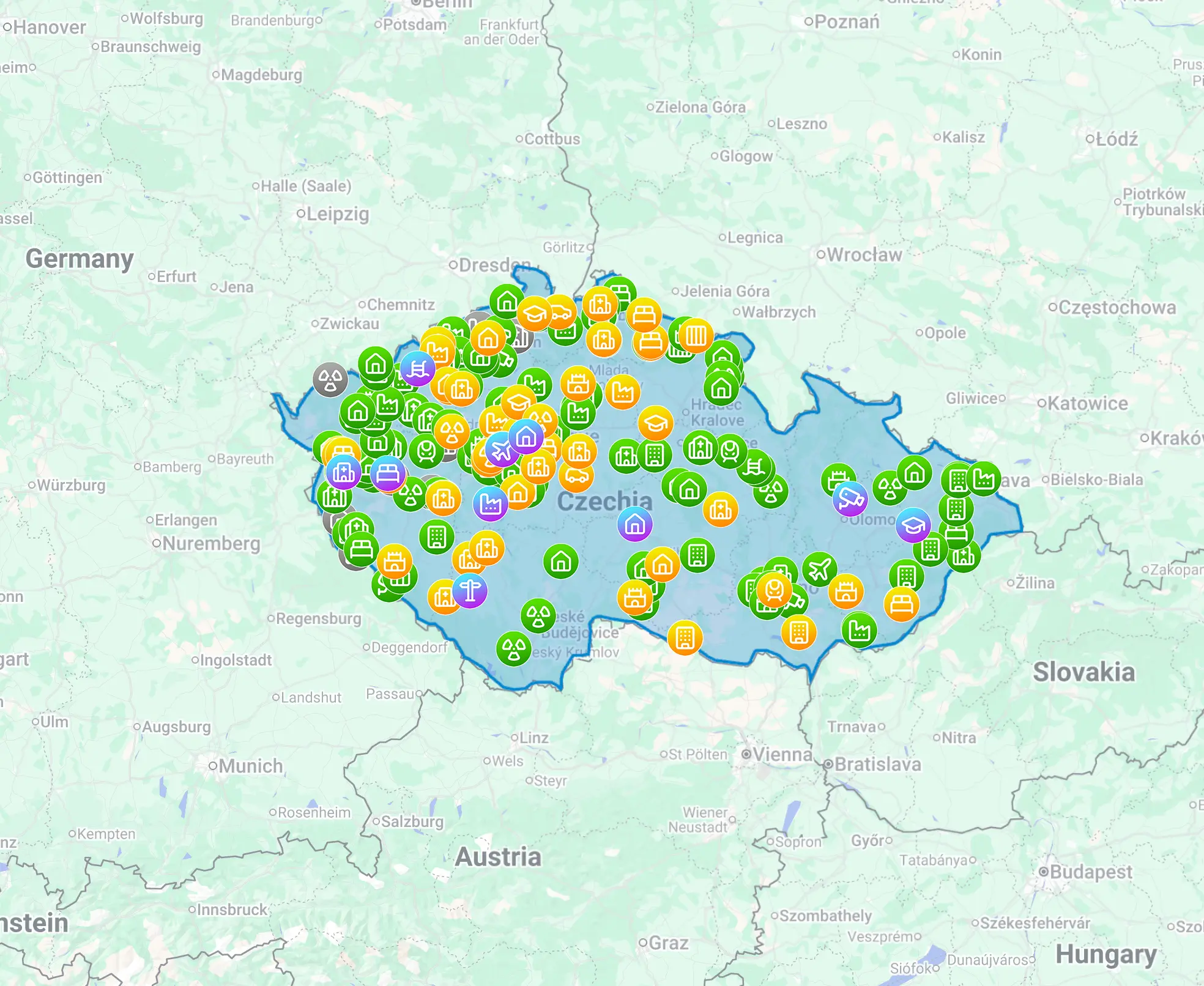
Looking for the best Czech Republic urbex map? This guide explains how to find abandoned places in Czechia with a curated, responsible, trip-ready map.
Czech Republic Urbex Map: How to Find Abandoned Places in Czechia Responsibly
The Czech Republic is one of Central Europe's most varied urbex destinations. Former industrial districts, empty rural estates, disused transport sites, and abandoned institutional buildings all appear within a relatively compact country.
That variety makes planning difficult if you rely only on scattered social posts or outdated forum mentions. A good Czech Republic urbex map helps you sort abandoned places in Czech Republic by region, travel logic, and likely photographic interest.
MapUrbex approaches Czechia with a preservation-first mindset. The goal is not to push reckless exploration. The goal is to help people research verified locations, build smarter routes, and avoid random, risky, or illegal entry attempts.
What is the best Czech Republic urbex map?
The best Czech Republic urbex map is a curated country map that helps you identify abandoned places in Czechia by region and site type while keeping legal and safety considerations in view. It should reduce guesswork, support efficient trip planning, and favor responsible exploration over random pin collecting.
Quick summary
- The Czech Republic has a strong mix of industrial, military, rural, medical, and transport-related abandoned sites.
- A dedicated urbex map Czech Republic resource is more useful for trip planning than scattered pins from social media.
- Czechia is compact enough for multi-stop trips, but regional clustering still matters if you want an efficient route.
- MapUrbex focuses on curated maps, verified locations, and preservation-first research.
- A free overview is useful for discovery, while a country-specific map is better for targeted planning.
- Responsible urbex always means respecting ownership, access rules, and structural safety.
Quick facts
- Country: Czech Republic, also commonly called Czechia
- Region: Central Europe
- Main urbex categories: factories, hospitals, military sites, rural estates, rail infrastructure, hotels
- Best trip format: road trip or regional city-based loop
- Common landscape pattern: industrial basins, borderland settlements, former spa areas, agricultural zones
- Research value: high variety in a manageable national territory
- Safety reminder: abandoned does not mean accessible, safe, or legal to enter
Access the free urbex map
Why use a dedicated urbex map for the Czech Republic?
A dedicated urbex map for the Czech Republic is useful because it turns a broad national search into a workable trip plan. Instead of bouncing between incomplete sources, you can compare site types, identify regional clusters, and decide whether Czechia fits your travel goals.
This matters in Czechia because the country is deceptively dense. Distances are manageable, but the best abandoned locations are not evenly spread. Former industrial belts, military landscapes, and neglected rural properties often sit far from the obvious tourist path.
A curated map also helps filter noise. Many online recommendations are duplicated, vague, outdated, or posted only for attention. If you want a wider comparison first, you can Browse all urbex maps. If you already know your target country, the focused option is to Explore abandoned places in Czechia.
| Option | Best for | Link |
|---|---|---|
| Free overview | Discovering the platform and comparing destinations | Access the free urbex map |
| Country-specific planning | Building a Czechia-focused urbex route | Explore abandoned places in Czechia |
| Europe-wide comparison | Checking multiple countries before buying | Browse all urbex maps |
Where are the main clusters of abandoned places in Czech Republic?
The main clusters of abandoned places in Czech Republic usually appear in former industrial regions, military landscapes, and depopulated border areas. These zones reflect the country's manufacturing history, shifting borders, and economic transitions.
Northern Bohemia is often associated with industrial decline, mining-related landscapes, and heavy infrastructure. In practical terms, that means a stronger chance of finding factories, warehouses, workers' buildings, and utility sites within relatively short driving distances.
Moravia and the northeast, especially around historically industrial cities, add another layer. Here the abandoned landscape can include workshops, transport remnants, technical facilities, and larger institutional structures. The visual tone is often more urban and infrastructural.
Border regions can also be productive for research. Some areas shaped by postwar population changes and long-term rural decline contain neglected estates, schools, hotels, and agricultural compounds. These places are often visually striking, but they also require extra caution because remote locations increase safety risks and access ambiguity.
What types of abandoned places in Czech Republic are most interesting for urbex photographers?
The most interesting abandoned places in Czech Republic for photographers are usually industrial sites, medical buildings, military structures, rural estates, and transport infrastructure. Together, these categories cover the country's strongest visual contrasts.
1. Former factories and workshops
Former factories are among the most characteristic Czechia urbex targets. Industrialization left deep marks across Bohemia and Moravia, and many abandoned complexes still reflect textile, metalworking, chemical, glass, or mining histories.
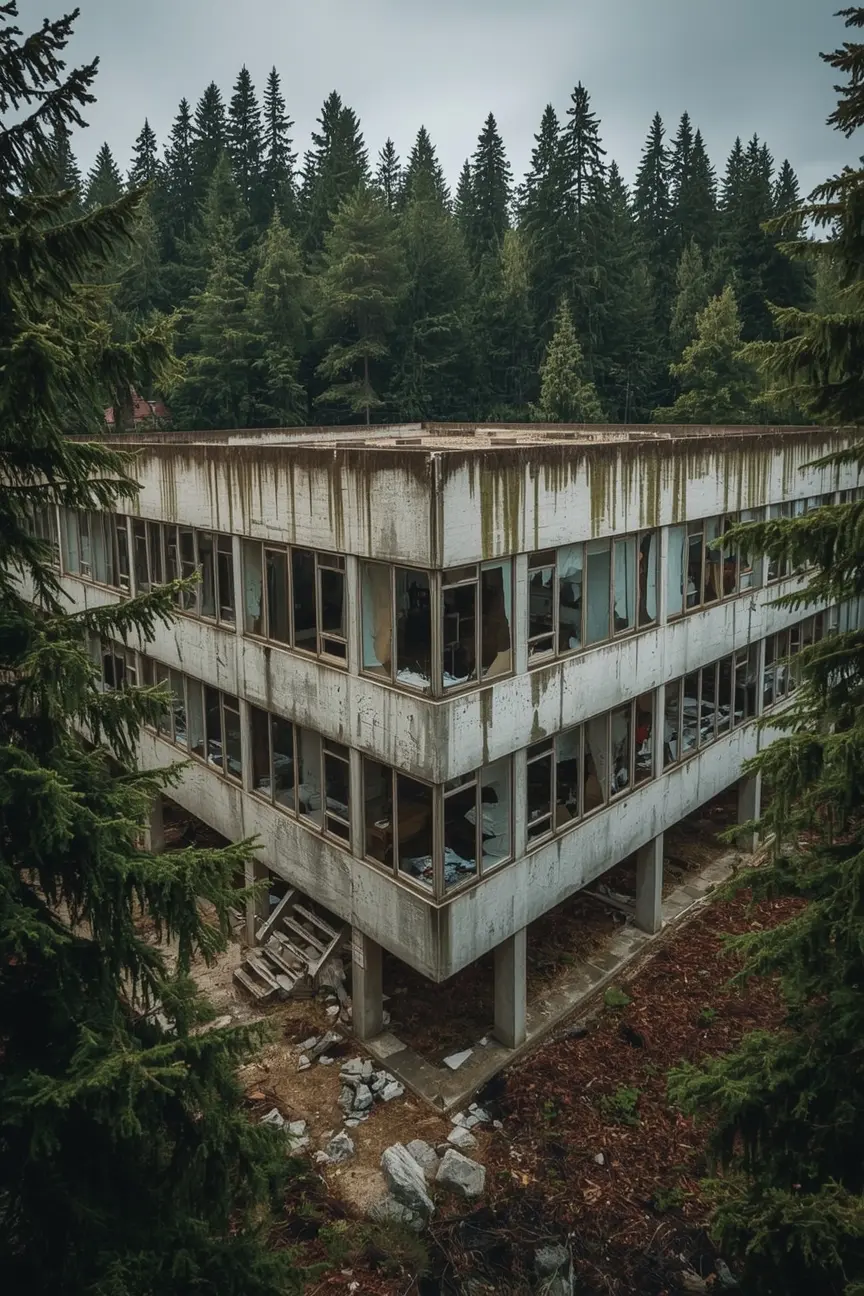
For photographers, factories offer large spaces, repeated geometry, machinery remnants, broken windows, and strong light contrast. In regions linked to heavy industry, especially around older manufacturing belts, these sites often create the most iconic abandoned imagery in the country.
2. Abandoned hospitals, sanatoriums, and care facilities
Abandoned medical buildings are significant because they combine architecture, social history, and atmosphere. In Czechia, this category can include former clinics, institutional care buildings, and neglected health-related compounds near older towns or spa areas.
These locations often attract interest because interiors can preserve corridors, tiled rooms, staircases, and administrative layouts. They are also among the most sensitive sites. Map research is essential, and responsible behavior matters even more because vandalism and theft can escalate quickly in publicly exposed places.
3. Military sites and Cold War structures
Military abandonment is another important part of the Czech urbex landscape. The country's twentieth-century history left behind bunkers, depots, training areas, barracks, and other defense-related structures.
These sites are visually distinct from industrial ruins. They tend to be more austere, more dispersed, and often embedded in forests or remote terrain. That makes them appealing for landscape-oriented exploration, but it also raises practical risks such as unstable underground areas, isolation, and uncertain legal status.
4. Rural estates, manors, and agricultural compounds
Rural abandoned places in Czech Republic often produce the strongest contrast between decay and landscape. Empty manor houses, farm buildings, schools, and village institutions can appear in quiet areas where demographic decline or long-term neglect changed the local built environment.
These locations are especially interesting if you prefer texture and atmosphere over scale. Peeling plaster, collapsed roofs, overgrown courtyards, and seasonal vegetation can create powerful visual results. They are also the easiest type of site to misread legally, because a building may look forgotten while still being monitored or privately owned.
5. Disused rail, transport, and infrastructure sites
Transport-related sites are valuable because they connect urban history with movement and logistics. In Czechia, this can include sidings, depots, signal buildings, stations, warehouses, and service infrastructure.
These places are useful for photographers who want stronger lines, mechanical detail, and broader context. They can also be among the most dangerous. Active rail systems, hidden service roads, and unstable platforms make strict caution essential. No shot is worth stepping into live infrastructure space.
How does MapUrbex help you plan a Czechia urbex trip responsibly?
MapUrbex helps by giving you a structured way to research Czech Republic abandoned locations without relying on rumor, random reposts, or reckless location drops. The value is in curation, route logic, and preservation-first use.
If your goal is a Czechia-focused journey, the most direct option is to Explore abandoned places in Czechia. That product is intended for people who already know the country they want to research and want a more useful base for planning.
If you are still comparing destinations, begin with Access the free urbex map or read Free Urbex Map 2026. If you want broader context before choosing Czechia, Top 20 Urbex in Europe - 2025 is a practical starting point.
Responsible planning also means knowing when not to go. A curated map should support informed decisions, not impulsive entry. That means checking ownership, daylight, local conditions, and whether a site can be viewed only from public space.
Explore abandoned places in Czechia
What should you check before visiting abandoned locations in Czech Republic?
Before visiting abandoned locations in Czech Republic, you should check legal access, ownership, structural risk, and route conditions first. A map helps with planning, but it does not replace on-site judgment or local law.
Use this checklist before any trip:
- Ownership status: An abandoned building may still be private property.
- Access conditions: Never force entry, climb barriers, or bypass locks.
- Structural stability: Roof failure, rotten floors, and hidden shafts are common.
- Weather and season: Winter ice, summer vegetation, and rain can change risk sharply.
- Travel logic: Remote sites need fuel, daylight margin, and a backup plan.
- Preservation rules: Take nothing, break nothing, and leave no trace.
For many researchers, the most responsible choice is exterior documentation only. That is especially true for buildings that show severe collapse, active surveillance, or clear no-entry signage.
Is a free urbex map enough for Czech Republic trip planning?
A free urbex map is enough for initial discovery, but it is usually not enough for focused Czech Republic trip planning. It helps you understand the platform and compare countries, while a dedicated country map is better for route building and deeper research.
This distinction matters if you are deciding between several Central European destinations. The free layer gives you orientation. Once you commit to Czechia, a country-specific map becomes more efficient because it keeps your research centered on one territory.
That is why many users start with Access the free urbex map, review Browse all urbex maps, and then move to Explore abandoned places in Czechia when they want a more practical planning tool.
FAQ
Is Czechia a good country for urbex?
Yes, Czechia is a strong urbex destination because it combines industrial history, rural abandonment, military remains, and compact travel distances. The variety is high relative to the country's size. Good planning still matters, because the best areas are clustered rather than evenly distributed.
What kinds of abandoned places are most common in the Czech Republic?
Industrial sites are among the most common and most visually distinctive. You will also find rural estates, hospitals, hotels, schools, military structures, and transport infrastructure. The exact mix changes by region and by local economic history.
Is it legal to enter abandoned buildings in the Czech Republic?
Not necessarily. Abandoned does not mean public access, and many sites remain private property or restricted land. Always respect signs, barriers, and local law, and never force entry.
Should I use a free map or a paid country map for Czechia?
Use a free map if you are still exploring options or learning how the platform works. Use a country map if you already know you want Czechia and need a more efficient planning base. The paid option is generally better for building a coherent route across regions.
What is the best season for exploring abandoned places in Czech Republic?
Spring and autumn are often the easiest seasons for visibility, weather balance, and road planning. Summer vegetation can hide paths and building edges, while winter adds ice and short daylight. Conditions vary by region, especially in rural or elevated areas.
Conclusion
A Czech Republic urbex map is most useful when it helps you move from vague interest to responsible planning. Czechia offers one of the better abandoned-location mixes in Central Europe, but the real advantage comes from understanding where the meaningful clusters are and how to research them safely.
If you want a broad starting point, begin with the free overview. If you already know Czechia is your target, a dedicated map will save time and improve route quality while keeping the focus on verified locations and preservation-first exploration.
Access the free urbex map
