 MapUrbex
A practical guide to using a Brittany urbex map to understand abandoned manors, military sites, rural ruins, and industrial remains while staying legal, careful, and preservation-first.
Brittany Urbex Map: Hidden Abandoned Places Across Brittany
A Brittany urbex map helps you understand where abandoned places are concentrated across western France. It is useful for identifying patterns, not just points on a map.
Brittany stands out because it combines rural decline, coastal military history, maritime industry, and scattered manor houses. That mix creates a wider range of abandoned sites than many people expect.
MapUrbex approaches the region with a preservation-first mindset. The goal is to document verified locations, reduce guesswork, and support responsible urban exploration.
What is the best Brittany urbex map?
The best Brittany urbex map is a curated map that shows verified abandoned places across the region by type, context, and status. A good map does more than drop pins. It helps you distinguish between manor houses, military remains, rural ruins, and industrial sites while keeping legal access, safety, and preservation in view.
Quick summary
- A Brittany urbex map is most useful when it is curated, verified, and updated with context.
- Brittany contains diverse abandoned places, especially manor houses, farm buildings, military remains, and maritime or industrial sites.
- Coastal and rural areas often reveal different site types, so regional context matters.
- Responsible urbex means no trespassing, no forced entry, no theft, and no publication of sensitive details that could accelerate damage.
- A map should help you assess site type, access context, and risk before any visit.
- You can compare regional coverage through Browse all urbex maps.
Quick facts about urbex in Brittany
- Region: Brittany in western France
- Main keyword focus: Brittany urbex map
- Common categories: abandoned manors, forts, farmsteads, schools, hospitals, chapels, factories, and maritime buildings
- Historical drivers: military change, agricultural restructuring, demographic shifts, and industrial decline
- Main risks: unstable floors, water intrusion, hidden shafts, asbestos, sharp metal, and coastal exposure
- Best practice: use verified information and stay outside any site that is closed, occupied, fenced, or clearly private
Why is Brittany a strong region for abandoned places?
Brittany is a strong region for abandoned places because its history combines isolated rural settlements, military infrastructure, maritime activity, and older landed estates. That combination produces a broad range of disused buildings in a relatively compact region.
Inland Brittany includes many former farms, hamlets, chapels, schools, and manor houses. Some were emptied by demographic change. Others declined when local agricultural or social systems changed.
The coastline adds a different layer. Coastal defense structures, maritime facilities, and weather-exposed buildings often age faster than inland properties. This is one reason the regional inventory looks so varied.
If you want a wider regional overview, start with Urbex in Brittany: 5 Types of Abandoned Places Worth Knowing and then compare with Browse all urbex maps.
What types of abandoned places appear most often on a Brittany urbex map?
The most common categories on a Brittany urbex map are manor houses, rural farm buildings, military remains, industrial or maritime structures, and selected religious or institutional sites. The balance changes by department, but these five groups appear repeatedly across the region.
1. Abandoned manor houses and country estates
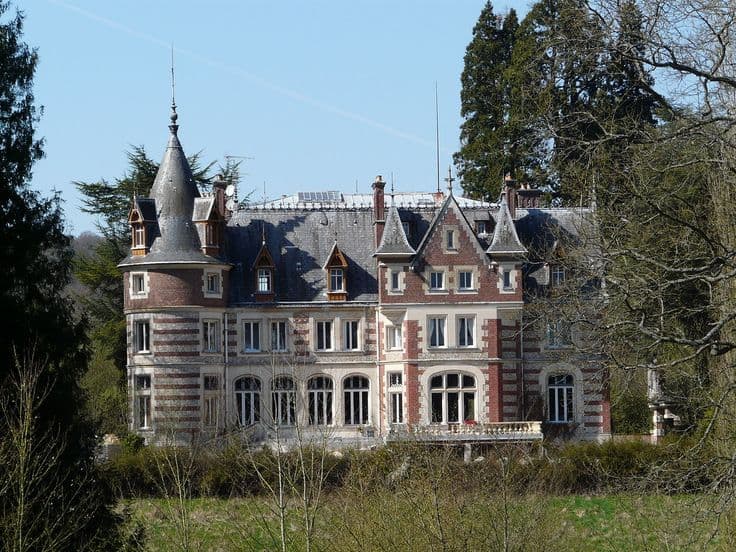
Manor houses are one of the most recognizable types of abandoned places in Brittany. The region has a deep stock of rural estates, small noble residences, and older stone properties that can fall vacant for years.
These sites attract attention because they combine architecture, landscape, and family history. They also degrade quickly once roofs fail. A curated map is useful here because many such properties are private, partially inhabited, or structurally unsafe.
2. Coastal forts and military remains
Military remains are common because Brittany has a long strategic coastline. Depending on the area, this can include bunkers, batteries, observation points, and older defense structures.
These places are historically important, but they are also among the easiest to underestimate. Salt, wind, erosion, and hidden drops make coastal sites especially hazardous. A responsible map should help users understand context rather than treat them as easy visits.
3. Rural farms and abandoned hamlets
Former farms and small rural settlements appear frequently across inland Brittany. Many are modest rather than monumental, but they tell a clear story about depopulation and agricultural change.
For urbex researchers, these places matter because they are widespread and culturally specific. They often include barns, stone houses, wells, sheds, and collapsed outbuildings. They also present common rural hazards such as unstable floors, animals, and unsecured openings.
4. Industrial and maritime buildings
Industrial sites in Brittany are less concentrated than in some heavier manufacturing regions, but they remain important. You may find disused workshops, warehouses, mills, fisheries-related structures, rail remnants, and port-side buildings.
Their value on a map is interpretive as much as visual. They show how transport, fishing, local production, and trade shaped the region. They also change status quickly, especially near active ports or redevelopment zones.
5. Religious and institutional sites
Religious and institutional buildings form a smaller but notable category. This can include chapels, schools, clinics, boarding facilities, or community buildings that lost their original role.
These sites often interest photographers because interiors can remain surprisingly intact. At the same time, they can be highly sensitive from a heritage and legal perspective. Documentation should never override respect for local memory or private ownership.
Access the free urbex map
Which parts of Brittany usually show the highest density of abandoned places?
The highest density of abandoned places in Brittany usually appears where rural decline, coastal history, and older building stock overlap. In practice, that often means a mix of inland communes, secondary coastal areas, and zones with aging agricultural or military infrastructure.
| Area in Brittany | Common map patterns | Typical categories |
|---|---|---|
| Finistère | Strong coastal and rural contrast | Military remains, farm buildings, maritime sites, manors |
| Côtes-d'Armor | Scattered rural heritage and smaller towns | Manor houses, chapels, schools, farms |
| Morbihan | Mixed coastline and inland heritage | Estates, agricultural buildings, defense remnants |
| Ille-et-Vilaine | More redevelopment pressure around key cities, older stock outside them | Institutional buildings, farms, estates, smaller industrial remains |
| Central Brittany | Lower density of population, more rural abandonment patterns | Farmsteads, hamlets, religious buildings, service buildings |
These are broad tendencies, not promises. A dense map cluster does not automatically mean a site is visitable, safe, or legally accessible. Status can also change fast when a building is sold, secured, repurposed, or demolished.
For a regional update, see Bretagne Urbex Map 2026.
How should you use a Brittany urbex map responsibly?
You should use a Brittany urbex map as a research tool, not as permission to enter a site. The responsible approach is to assess legality, ownership, safety, sensitivity, and local impact before you go anywhere near an abandoned place.
Start with context. Check whether the site is clearly private, occupied, fenced, under renovation, or protected. If any of those conditions apply, do not enter. A good map narrows research, but it does not replace permission or common sense.
Then think about preservation. Fragile interiors, historic documents, religious objects, and exposed locations can be damaged by publicity. That is why MapUrbex emphasizes verified locations and curated access context rather than reckless pin sharing.
Finally, consider personal safety. Brittany's rain, humidity, coastline, and older stone buildings can turn minor damage into serious structural risk. Even exterior photography can become unsafe in wind, surf, or failing masonry.
Legal and safety reminder: responsible urbex never means trespassing, forced entry, vandalism, theft, or bypassing barriers. If a site is closed, dangerous, occupied, or private, stay out.
You can prepare with Bretagne Urbex Map 2026 and compare regions through Browse all urbex maps.
Browse all urbex maps
How does MapUrbex verify and organize locations in Brittany?
MapUrbex verifies and organizes locations in Brittany by focusing on curated regional coverage, clear categorization, and preservation-first context. The aim is not to push risky visits. It is to make abandoned heritage easier to understand and harder to misuse.
In practice, a useful regional map sorts places by area and type. That helps readers distinguish between manor houses, forts, rural buildings, and industrial remains instead of treating every point as the same kind of destination.
MapUrbex also fits a broader research workflow. You can start with the regional article Urbex in Brittany: 5 Types of Abandoned Places Worth Knowing, move to Bretagne Urbex Map 2026, and then use Access the free urbex map for wider discovery.
The key principle is simple: better information should reduce harm. Verified locations, careful descriptions, and curated maps are more useful than random coordinates copied without context.
FAQ
Is urbex legal in Brittany?
Urbex is not automatically legal in Brittany. Abandonment does not cancel property rights, safety restrictions, or local protections. If a place is private, secured, occupied, or closed to the public, you should not enter.
What should I expect from a Brittany urbex map?
A good Brittany urbex map should show more than location. It should help you understand site type, regional context, and whether the information is current enough to be useful. The best maps support research and caution, not reckless access.
Are coastal sites in Brittany more dangerous?
Yes, coastal sites can be more dangerous. Sea air, erosion, slippery surfaces, hidden voids, and cliff exposure increase risk even when a structure looks stable from a distance. Weather changes quickly, so exterior conditions matter as much as the building itself.
What are the best categories for beginners to study?
For research purposes, rural farm buildings and exterior-only heritage remains are often easier to understand than complex industrial or military sites. They usually make regional patterns clearer. Even then, beginners should prioritize legal viewpoints and avoid entering any unsafe property.
How often do abandoned places in Brittany change status?
Abandoned places can change status at any time. A site may be sold, secured, repurposed, demolished, or reoccupied without much public notice. That is why curated maps and recent context are more useful than old lists copied across forums.
Conclusion
A Brittany urbex map is most valuable when it explains the region instead of just listing coordinates. Brittany's abandoned places reflect rural change, coastal defense history, older estates, and maritime industry. Those patterns make the region rich for research, photography from lawful viewpoints, and heritage documentation.
The best approach is careful and selective. Use verified information, respect property, avoid risky entry, and choose preservation over exposure. That is the logic behind MapUrbex and its curated regional maps.
Access the free urbex map
