 MapUrbex
A practical guide to the best urbex locations in Europe, with major abandoned places, comparison points, and responsible planning advice.
Best Urbex Locations in Europe: 6 Iconic Abandoned Places
Europe contains some of the world's most documented abandoned sites. From evacuated cities to ruined monuments and deserted villages, the continent offers a dense mix of political history, industrial decline, disaster zones, and preserved ghost towns.
This guide reviews the best urbex locations in Europe for research and trip planning. It focuses on places that are visually distinctive, historically important, and widely cited in urban exploration Europe, while keeping one principle clear: iconic does not mean legally accessible.
What are the best urbex locations in Europe?
The best urbex locations in Europe are Pripyat, Buzludzha, Beelitz-Heilstatten, Belchite, Craco, and Rummu. These abandoned places in Europe stand out because they combine strong visual identity, documented history, and lasting influence on urban exploration Europe. Access rules vary widely, so the best-known site is not always the best site to visit in person.
Quick summary
- Pripyat is the most globally recognized abandoned city in Europe, but it is also the most restricted and context-sensitive.
- Buzludzha is one of Europe's strongest examples of monumental modernist decay.
- Beelitz-Heilstatten is a major reference point for hospital ruins and controlled heritage access in Germany.
- Belchite and Craco are important because they preserve conflict and depopulation histories in visible urban form.
- Rummu shows how post-Soviet infrastructure, prison history, and landscape change can merge into one site.
- The best urbex Europe map is the one that helps you verify legality, condition, and context before you travel.
Quick facts
- Region: Europe
- Article type: Editorial shortlist
- Primary theme: Best urbex locations in Europe
- Secondary themes: abandoned places Europe, urbex Europe map, urban exploration Europe
- Best use: Research, route planning, historical context
- MapUrbex approach: Verified locations, responsible urbex, preservation-first guidance
Which abandoned places in Europe stand out the most for urbex?
The abandoned places Europe explorers reference most often are the sites that remain visually unique, historically legible, and consistently documented over time. The six locations below are among the strongest benchmarks for any serious shortlist of the best urbex locations in Europe.
1. Pripyat and the Chernobyl Exclusion Zone, Ukraine
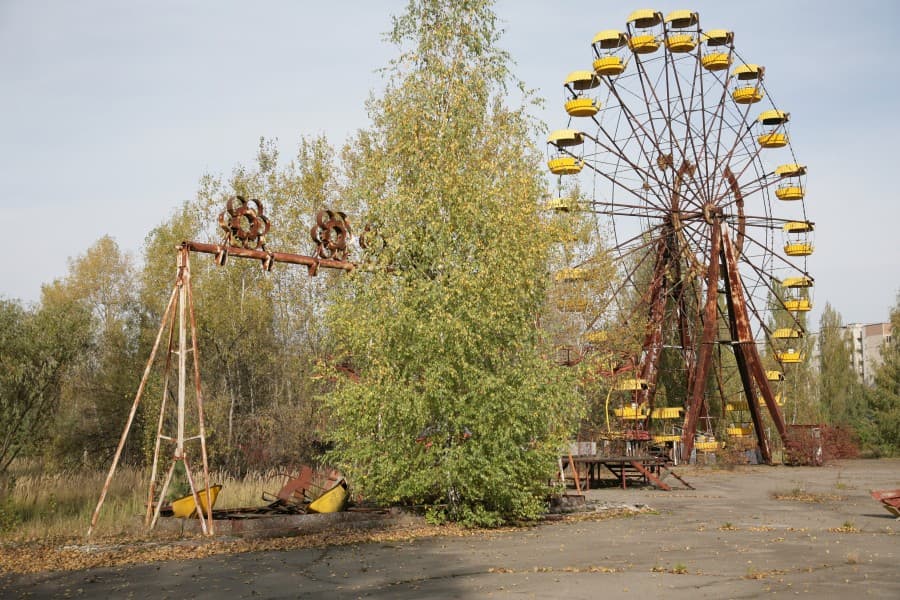
Pripyat is the most internationally recognized abandoned city in Europe. It was evacuated after the 1986 Chernobyl nuclear disaster and became one of the defining images of modern abandonment.
The city's apartment blocks, schools, cultural buildings, hospital structures, and amusement park remain central to the visual language of urbex. For that reason alone, Pripyat appears in almost every discussion of abandoned places Europe. It is also one of the clearest examples of why history matters more than aesthetics.
Pripyat should be understood as a disaster landscape, not a casual backdrop. Radiation issues, security controls, geopolitical instability, and changing regulations make this a highly restricted environment. In practice, it is better treated as a reference point for urban exploration Europe than as an ordinary destination.
2. Buzludzha Monument, Bulgaria
Buzludzha is one of the most striking brutalist and modernist ruins in Europe. The former Bulgarian Communist Party memorial sits on a mountain summit and is famous for its circular form, monumental scale, and once-vivid interior mosaics.
Its importance to urbex culture comes from architecture first. Even people with no background in Bulgarian political history recognize the building immediately. That level of visual identity is rare, and it explains why Buzludzha appears so often on editorial lists and social imagery.
At the same time, Buzludzha is also a preservation case. Interest in conserving the monument has grown, and access expectations have shifted over time. Responsible explorers should assume that exterior appreciation and current rules matter more than outdated online reports about entry.
3. Beelitz-Heilstatten, Germany
Beelitz-Heilstatten is one of Europe's best-known abandoned hospital complexes. Located southwest of Berlin, it became famous through its scale, sanatorium architecture, and layered history across imperial, wartime, and postwar periods.
For many people, Beelitz-Heilstatten represents the classic institutional ruin: long corridors, detached pavilions, weathered brick facades, and a sense of historical depth rather than pure collapse. It is also one of the few famous sites where parts of the wider complex have had structured public access, including heritage-oriented visitor routes.
That matters because it shows a different model for urban exploration Europe. Not every famous site has to be approached through secrecy. Controlled access, interpretation, and preservation can coexist, and that makes Beelitz-Heilstatten one of the most useful case studies on this list.
4. Belchite Old Town, Spain
Belchite is one of the most historically significant ruined settlements in Europe. The old town was heavily destroyed during the Spanish Civil War and preserved as a visible reminder of conflict rather than rebuilt in conventional form.
Its importance is not about hidden interiors or off-grid exploration. Belchite matters because the ruin itself is the document. Streets, church remains, walls, and broken urban fabric still communicate the violence that shaped the site. That direct readability gives it unusual historical power.
For researchers looking at abandoned places Europe, Belchite broadens the category. Not every landmark is industrial or post-Soviet. Some of Europe's strongest urbex references are preserved war ruins, where interpretation and respect are more important than adventurous access.
5. Craco, Italy
Craco is one of Europe's most photogenic abandoned hill towns. Located in Basilicata, southern Italy, it became largely deserted after landslides, instability, and long-term depopulation made settlement difficult.
What makes Craco special is its silhouette. The stacked stone buildings, elevated position, and semi-intact medieval fabric create a dramatic profile that reads clearly even from a distance. It is one of the best examples of how geography and abandonment can combine into a single visual identity.
Craco is also relevant because it sits closer to heritage tourism than to clandestine exploration. That distinction matters. Many people searching for the best urbex locations in Europe are really looking for places with strong atmosphere and historical authenticity, not necessarily illegal entry opportunities.
6. Rummu Prison and Quarry, Estonia
Rummu is one of the most unusual post-Soviet abandoned sites in Europe. The former prison complex and adjacent quarry are known for flooded landscapes, submerged structures, exposed industrial surfaces, and a strong contrast between infrastructure and water.
Visually, Rummu stands apart from older stone ruins or wartime destruction. It feels more like a transformed system than a frozen ruin. That gives it a different place on an urbex Europe map: it is less about classical decay and more about the afterlife of control, labor, and landscape change.
Because conditions can shift and some areas may involve environmental or physical risk, Rummu is a good reminder that beauty does not equal safety. Water, unstable material, and unclear boundaries are all reasons to prioritize current local information before planning any stop.
How do the best urbex locations in Europe compare?
The main differences are historical context, architectural style, and access conditions. Some sites are famous because they are large and symbolic, while others matter because they preserve a specific chapter of European history in a concentrated form.
| Location | Country | Why it is known | Typical access context |
|---|---|---|---|
| Pripyat | Ukraine | Evacuated city after Chernobyl | Highly restricted, conditions can change |
| Buzludzha | Bulgaria | Monumental communist-era architecture | Exterior focus, restrictions may apply |
| Beelitz-Heilstatten | Germany | Large hospital and sanatorium complex | Some controlled heritage access in wider area |
| Belchite | Spain | Preserved Civil War ruin | Managed historical site context |
| Craco | Italy | Abandoned hill town with strong visual identity | Heritage and viewpoint-oriented visits |
| Rummu | Estonia | Prison, quarry, and flooded landscape | Conditions vary, safety context important |
If you want broader inspiration beyond this shortlist, see Top 20 Urbex in Europe - 2025 and Top 100 des Lieux abandonnés en Europe - Urbex. If your interest is more specific to fairgrounds and leisure ruins, Les Parcs d’Attractions Abandonnés les Plus Fascinants d’Europe en 2025 is a useful complementary read.
Access the free urbex map
How can you plan urban exploration in Europe responsibly?
Responsible urban exploration Europe starts with legality. The correct first step is to verify whether a site is publicly visible, officially visitable, privately owned, protected, closed, or unsafe. If you cannot confirm access, do not treat the location as open.
A good planning method is simple:
- Use verified mapping resources instead of viral reposts.
- Check current ownership, local rules, and conservation status.
- Prefer exterior photography, viewpoints, or guided formats where available.
- Do not force entry, bypass barriers, or publish sensitive details that increase damage.
- Leave structures untouched and never remove objects.
MapUrbex is built around that preservation-first approach. You can Browse all urbex maps to compare regions, and you can Access the free urbex map if you want a starting point for route research without relying on unreliable social media threads.
Which MapUrbex resources help you research Europe more efficiently?
The fastest way to narrow your search is to combine curated maps with thematic reading. A continent-scale list is useful for inspiration, but an actual trip usually requires country-level filtering, legal context, and realistic travel sequencing.
Start by using Browse all urbex maps to see available regions. Then use Access the free urbex map for a lighter planning workflow. For editorial inspiration, Top 100 des Lieux abandonnés en Europe - Urbex gives a wider catalog view, while Top 20 Urbex in Europe - 2025 offers a more selective current shortlist.
FAQ
Which country has the most famous abandoned places in Europe?
No single country contains all of Europe's most famous sites. Ukraine, Germany, Bulgaria, Spain, Italy, and Estonia each contribute landmark locations with different historical backgrounds. If you mean global recognition, Pripyat is the single best-known site. If you mean variety, several countries in Central, Eastern, and Southern Europe compete strongly.
Is Pripyat the most iconic urbex location in Europe?
Yes, Pripyat is generally the most iconic single urbex location in Europe. Its global recognition comes from the Chernobyl disaster, the scale of the evacuation, and the unusually intact urban environment left behind. That said, it is also one of the least suitable places for casual exploration because of restrictions and safety concerns.
Are the best abandoned places in Europe legal to visit?
Some are legal to view or visit in controlled ways, and some are not. Legality depends on ownership, conservation rules, public access status, and local enforcement. A famous location should never be assumed to be open. Always verify current conditions before you travel.
What makes a site one of the best urbex locations in Europe?
The strongest sites usually combine three qualities: a clear historical story, a visually distinct setting, and long-term relevance in documentation or research. Size alone is not enough. Many of Europe's best sites are memorable because they explain a larger political, industrial, or social history through their built form.
How should beginners research an urbex Europe map?
Beginners should start with verified map tools and broad editorial lists rather than coordinates shared on social platforms. The goal is to understand patterns: which countries have what types of sites, what access models are common, and where heritage rules are strict. After that, narrow down to legal viewpoints, guided formats, or clearly documented public locations.
Conclusion
The best urbex locations in Europe are not just impressive ruins. They are places where architecture, history, and absence remain visible at the same time. Pripyat, Buzludzha, Beelitz-Heilstatten, Belchite, Craco, and Rummu all matter for different reasons, and each one shows a different face of abandonment on the continent.
The most useful way to approach abandoned places Europe is with context, verification, and restraint. Use curated resources, respect local rules, and let preservation guide your planning.
Access the free urbex map
