 MapUrbex
A clear reference guide to abandoned places in the United States, organized by state, with common site types, research tips, and responsible urbex safety guidance.
Abandoned Places in the United States: Full List by State
The United States contains one of the broadest ranges of abandoned places in the world. Empty factories, closed schools, old hospitals, motels, rail sites, ghost towns, and decommissioned military properties appear in every region.
The real challenge is not finding rumors. It is separating current, verifiable sites from duplicates, demolitions, and unsafe misinformation. That is why a useful list of abandoned places in the United States should be organized by state first.
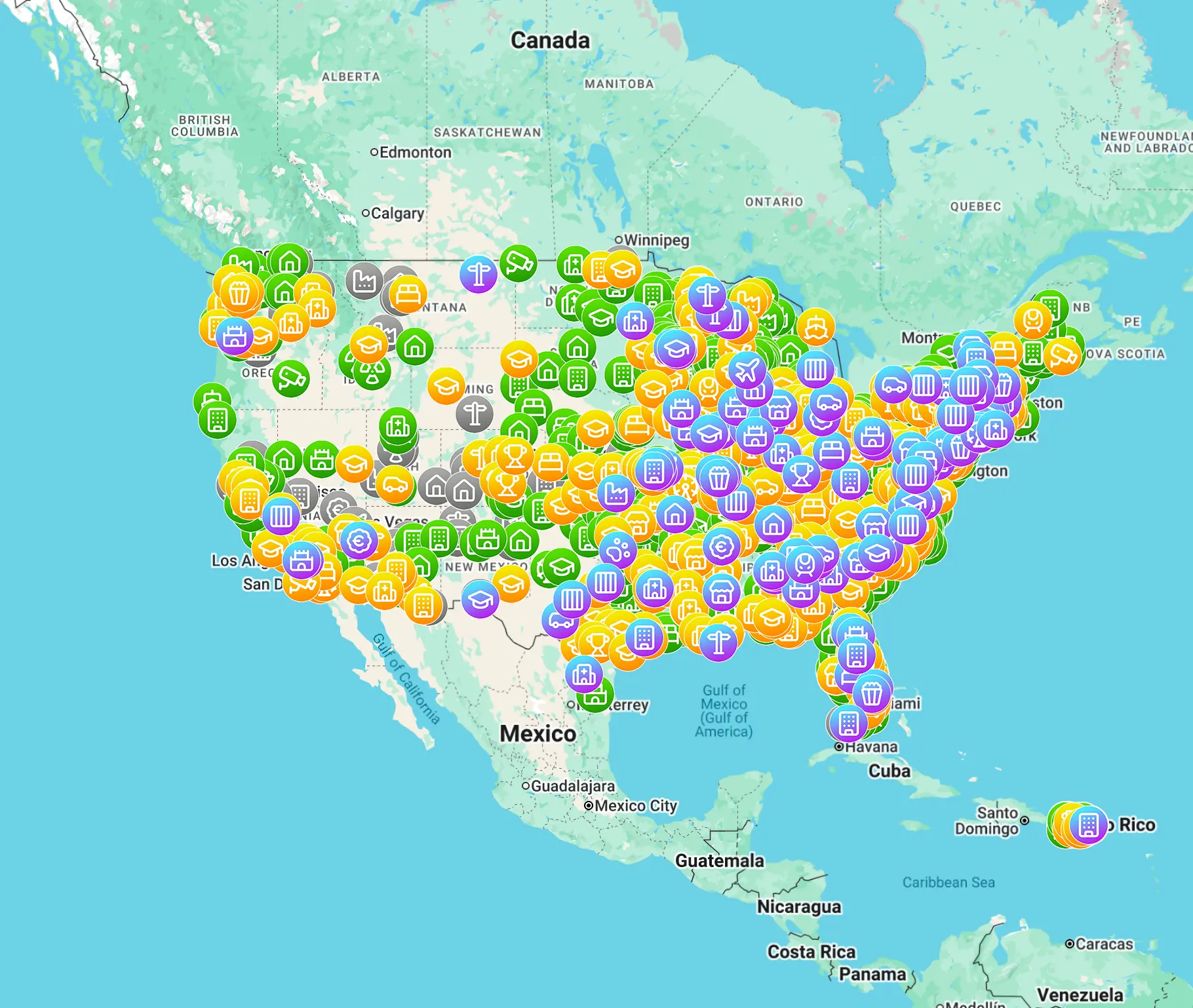
Where can you find abandoned places in the United States?
Abandoned places in the United States exist in all 50 states, but the best way to research them is by state first, then by city, region, and site type. The strongest clusters usually follow former industrial belts, shrinking rural areas, closed institutions, transport corridors, and places shaped by mining, military activity, or tourism decline.
Quick summary
- A practical list of abandoned places in the United States should be searched by state, not as one flat national feed.
- The most common categories are industrial, institutional, residential, transport, military, and leisure sites.
- Site turnover is high, so many locations are demolished, redeveloped, sealed, or resecured over time.
- Access rules vary widely, and many abandoned-looking properties are still private land.
- A verified urbex map is more reliable than random coordinates reposted on forums or social media.
- Responsible urbex means preservation-first behavior, lawful access, and no forced entry.
Quick facts
| Fact | Detail |
|---|---|
| Geographic scope | United States, all 50 states |
| Best search method | State > region or metro area > site type > access status |
| Common site types | Factories, schools, hospitals, homes, rail sites, military sites, hotels |
| Main challenge | Outdated pins, duplicate entries, demolition, private property |
| Best planning tool | A curated and verified urbex map |
| Safety baseline | Never trespass, never force access, and leave places unchanged |
Why do abandoned places exist across the United States?
Abandoned places exist across the United States because economic change, demographic shifts, infrastructure replacement, and land-use change have been constant for decades. When industries move, schools consolidate, hospitals relocate, or transport networks change, buildings and sites are often left behind.
In the Northeast and Midwest, deindustrialization explains many mills, plants, warehouses, and worker housing areas. In rural parts of the South and Plains, farm consolidation, rail decline, and population loss often shape what becomes vacant.
In the West, mining cycles, military history, resort turnover, and remote settlement patterns create a different mix. Coastal and tourism areas add another layer, because hotels, attractions, and service buildings may close after storms, redevelopment pressure, or changing travel demand.
How should you use a list of abandoned places by state?
You should use a list of abandoned places by state as a research tool, not as an invitation to enter property. Start with the state, narrow the area, check the site category, and verify whether the location is current, lawfully accessible, and still standing.
A simple workflow looks like this:
- Choose the state you want to research.
- Narrow to a metro area, county, or rural corridor.
- Filter by type: factory, hospital, school, town, motel, station, mine, or military site.
- Check whether the site has been demolished, restored, or secured.
- Verify ownership and access conditions before planning any visit.
- Keep a backup list because turnover is high.
MapUrbex is built around that method. You can Browse all urbex maps for broader coverage, or read Urbex Map USA: Verified Abandoned Places Across All 50 States for a national overview.
Which states are covered in a full list of abandoned places in the USA?
A full list of abandoned places in the USA should cover every state, because abandonment is not limited to a few famous rust-belt destinations. The main difference is not whether a state has sites, but what kind of sites are most common and how easy they are to verify.
A practical state-by-state structure looks like this:
- New England: Connecticut, Maine, Massachusetts, New Hampshire, Rhode Island, Vermont
- Mid-Atlantic: Delaware, Maryland, New Jersey, New York, Pennsylvania
- Southeast: Alabama, Arkansas, Florida, Georgia, Kentucky, Louisiana, Mississippi, North Carolina, South Carolina, Tennessee, Virginia, West Virginia
- Great Lakes and Midwest: Illinois, Indiana, Iowa, Michigan, Minnesota, Missouri, Ohio, Wisconsin
- Great Plains: Kansas, Nebraska, North Dakota, South Dakota
- Southwest: Arizona, New Mexico, Oklahoma, Texas
- Mountain West: Colorado, Idaho, Montana, Nevada, Utah, Wyoming
- Pacific and non-contiguous states: Alaska, California, Hawaii, Oregon, Washington
That structure is more useful than a random national feed. It helps compare regions, spot recurring categories, and build a better USA urbex map workflow.
What types of abandoned places appear most often in the USA?
The most common abandoned places in the USA are industrial buildings, institutional properties, transport infrastructure, residential sites, and leisure facilities. The exact mix changes by state, but those categories appear again and again in most credible urbex USA databases.
Typical examples include:
- Industrial: mills, factories, warehouses, refineries, plants, power-related structures
- Institutional: schools, hospitals, asylums, prisons, churches, municipal buildings
- Residential: houses, apartment blocks, company housing, ghost towns, depopulated streets
- Transport: stations, rail depots, bridges, tunnels, roadside service stops, air-related facilities
- Military and government: forts, bunkers, training areas, radar or support sites
- Leisure and commercial: hotels, theaters, malls, diners, resorts, amusement sites
For research, site type matters because risk changes with the place. A derelict house, a mine structure, and a former hospital do not create the same legal or safety conditions.
How can you explore abandoned places in the United States responsibly?
You can explore abandoned places in the United States responsibly by treating location data as research material, respecting property rights, and putting preservation ahead of access. Responsible urbex is about documentation, caution, and leaving no trace.
Use these rules as a baseline:
- Research ownership before planning a trip.
- Do not trespass or force entry.
- Avoid unstable structures, confined spaces, and contaminated sites.
- Never remove artifacts, break locks, or publish sensitive details that could invite damage.
- Expect rapid change, because closures, demolition, and new security are common.
- Prefer verified, curated location systems over reposted coordinates.
If you want a cleaner starting point, Browse all urbex maps and build your research around verified entries rather than rumors.
FAQ
Are abandoned places legal to visit in the United States?
Not automatically. Many abandoned places are still private property or restricted land. A building that looks empty is not the same as a place you may lawfully enter. Always verify ownership, access rules, and local restrictions first.
Which states have the most abandoned places?
There is no single official ranking that stays valid for long, because sites are demolished, renovated, or newly documented all the time. Large industrial states such as Pennsylvania, Ohio, Michigan, New York, and parts of California often appear frequently, but meaningful finds exist in every state.
What is the best way to search abandoned places by state?
The best method is to begin with the state, then narrow by metro area, county, or corridor and filter by site type. That approach is more accurate than searching only by viral photos or isolated coordinates.
Why is a verified urbex map better than a random online list?
A verified urbex map is better because it reduces outdated entries, duplicates, obvious fakes, and locations that no longer exist. It also gives a more consistent structure for comparing states and categories.
Do abandoned places disappear from lists quickly?
Yes. Demolition, redevelopment, fire, weather, theft, and security changes can remove a site from circulation fast. That is why a state-by-state list works best when the data is curated and updated.
Conclusion
A useful reference for abandoned places in the United States is less about hype and more about structure. Search by state, filter by category, verify whether the site still exists, and treat access as a legal and safety question, not a guess.
MapUrbex follows a preservation-first approach: verified locations, curated maps, and research that helps people avoid fake pins and irresponsible behavior.
Access the free urbex map
