 MapUrbex
Discover 10 types of abandoned military bases found on urbex maps, why many remain restricted, and how to research them responsibly with verified data.
Abandoned Military Bases for Urbex: 10 Restricted Sites to Know [Map]
Abandoned military bases are among the most searched categories in urbex. They combine large-scale architecture, layered history, and unusually preserved infrastructure.
They are also among the most sensitive sites to research. A base can be abandoned in appearance while still being monitored, contaminated, sealed, or legally off-limits.
MapUrbex approaches these places with a preservation-first method: verified locations, status checks, and responsible planning instead of random coordinates.
What are abandoned military bases in urbex?
In urbex, abandoned military bases are decommissioned defense sites such as forts, airfields, radar stations, bunkers, barracks, depots, and command posts. They attract attention because they often preserve infrastructure better than civilian ruins. However, they remain high-risk locations due to legal restrictions, contamination, unstable structures, and, in some cases, ongoing state ownership.
Quick summary
- Abandoned military bases are some of the most legally sensitive places in urbex.
- The most common site types include bunkers, forts, radar stations, barracks, air bases, and ammunition depots.
- Abandonment does not mean public access, safe access, or legal access.
- A curated urbex map helps filter out demolished, reused, or sealed sites.
- The main risks are trespassing laws, collapse, asbestos, flooding, and unexploded remnants.
- Responsible explorers verify current status before any trip.
Quick facts
- Primary keyword: abandoned military bases urbex
- Best use case: research and trip planning, not blind navigation
- Typical status: closed, reused, fenced, sealed, or partially restricted
- Most searched subtypes: abandoned bunkers, air bases, radar stations, missile sites
- Best research method: verified map data plus local legal checks
- MapUrbex position: responsible urbex, preservation-first, curated maps
Why are abandoned military bases so appealing to urbex researchers?
They are appealing because few other abandoned sites combine scale, secrecy, engineering, and historical depth in the same way. A former military site can contain tunnels, dormitories, technical rooms, reinforced structures, signage, and transport infrastructure in one footprint.
They also document political history. Cold War bunkers, coastal batteries, listening posts, and training compounds often reflect a specific defense era more clearly than ordinary industrial ruins.
That said, visual interest is not the same as practical accessibility. Many of the most photogenic sites are also the most restricted.
Which 10 abandoned military site types appear most often on an urbex map?
The most common abandoned military sites on urbex maps are forts, bunkers, radar stations, barracks, depots, air bases, naval structures, missile sites, training-ground remains, and command centers. These categories appear often because they are large, historically documented, and easier to identify in satellite imagery and archival records than smaller ruins.
| Site type | What usually remains | Main caution | Why it matters on a map |
|---|---|---|---|
| Coastal battery | Gun positions, tunnels, magazines | Collapse, cliff exposure, sealed areas | Often remote and easy to misjudge |
| Underground bunker | Reinforced rooms, blast doors, ventilation | Flooding, darkness, air quality | High interest but high risk |
| Radar or listening station | Towers, control rooms, cable routes | Partial reuse, security systems | Status changes are common |
| Barracks complex | Dormitories, mess halls, garages | Broken floors, asbestos, fencing | Large footprints attract search interest |
| Ammunition depot | Storage bunkers, berms, service roads | Residual hazards, strict access rules | Sensitive even when disused |
| Air base | Hangars, runways, control buildings | Open exposure, active reuse nearby | Often partly redeveloped |
| Naval base or submarine facility | Docks, bunkers, service tunnels | Water hazards, surveillance | Rare and highly regulated |
| Missile site or silo | Launch infrastructure, utility shafts | Extreme structural danger | Strong public fascination |
| Training-ground infrastructure | Observation posts, shelters, mock buildings | Unclear ownership, contamination | Large areas hide many sub-sites |
| Command center | Operations rooms, communications spaces | Sealed access, legal restrictions | Historically significant and fragile |
Why are abandoned bunkers and military compounds often still off-limits?
They are often off-limits because closure does not automatically remove state control, environmental liability, or security concerns. A bunker can be abandoned visually and still remain protected by law, fenced by a private owner, or located inside a restricted perimeter.
Former military land may also contain asbestos, fuel residue, unstable concrete, flooded shafts, or unexploded ordnance. Even when nothing looks active, the land status can still prohibit entry.
This is why responsible urbex research focuses on ownership, current access rules, and recent status reports rather than rumors.
How can you find abandoned military sites more responsibly?
The most responsible way is to use curated data, cross-check the legal status, and avoid chasing viral coordinates. Military sites change faster than many explorers assume: they get sealed, repurposed, demolished, or absorbed into active infrastructure.
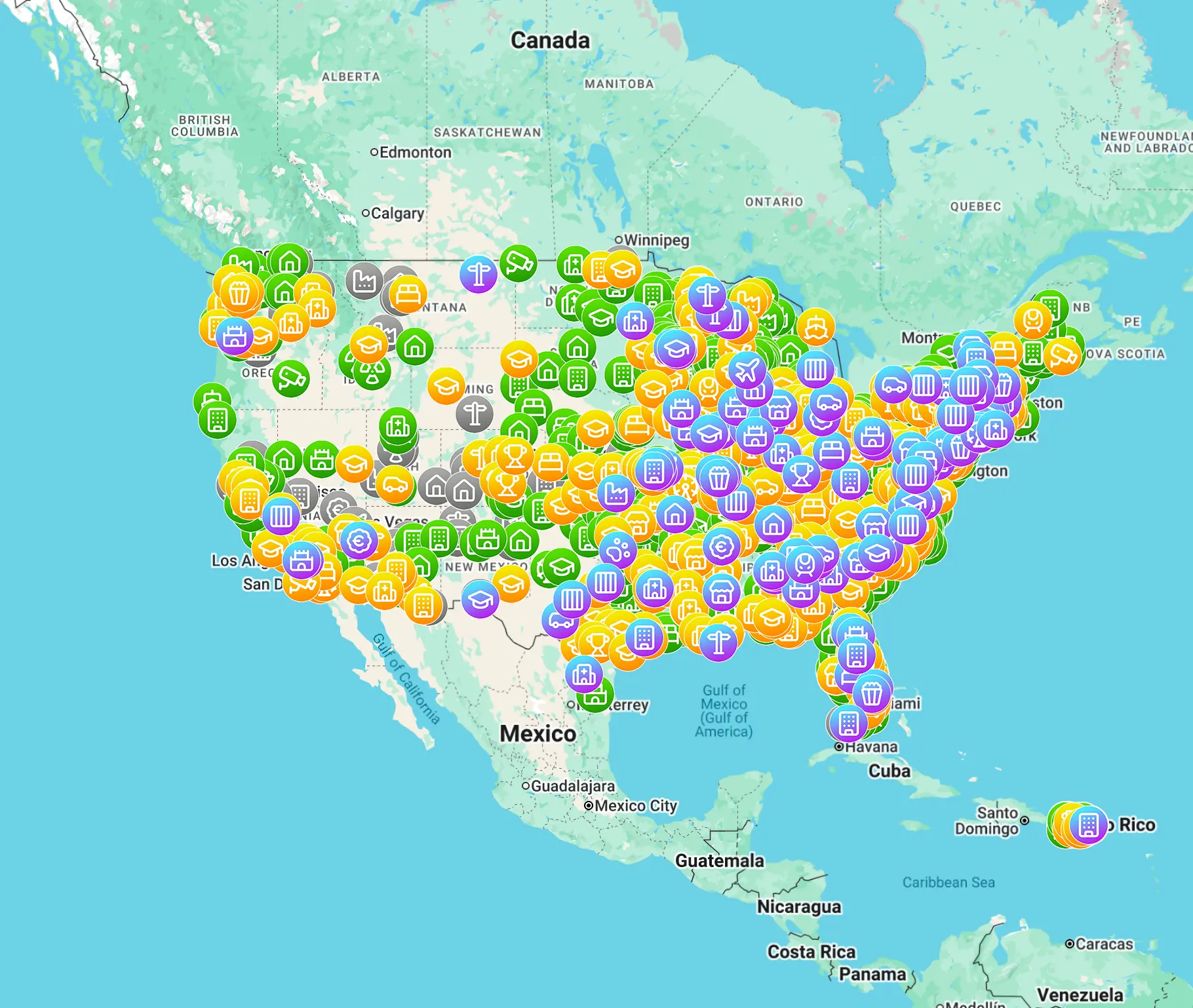
MapUrbex is designed for that screening process. You can Browse all urbex maps to compare categories, or Access the free urbex map if you want a starting point.
For research methods, see How to Use Google Maps to Find Abandoned Places Responsibly. For status changes, see Abandoned Places That Disappeared in 2025: Demolished, Reused, or Sealed.
A good workflow is simple:
- Identify the site category.
- Check whether the place is actually decommissioned.
- Review recent imagery and public information.
- Verify whether access is legal.
- Skip the site if the status is unclear.
What should you check before planning any visit to a former military site?
You should check ownership, access rules, structural condition, contamination risk, weather, and emergency constraints before planning any visit. Military ruins require a higher caution standard than ordinary abandoned houses or factories.
Use this checklist:
- Confirm that the site is not active or partially active.
- Do not assume that an open gate means legal entry.
- Watch for notices about private property, danger zones, or environmental cleanup.
- Avoid sealed tunnels, shafts, and underground spaces with standing water.
- Never move barriers, cut fences, or force doors.
- Do not disturb artifacts, wiring, or suspected munitions.
- Prefer daylight research and a conservative turnaround plan.
MapUrbex supports planning, but legal compliance remains local and site-specific.
Are all abandoned military bases dangerous?
No, not all of them carry the same level of danger, but they should all be treated as higher-risk sites. Even a relatively open barracks block can hide weak floors, contaminated insulation, exposed metal, mold, or hidden drops.
Underground structures increase the risk further. Air quality, flooding, loss of orientation, and poor communications are common problems in abandoned bunkers and command tunnels.
The practical rule is simple: if the status, legality, or safety conditions are unclear, do not proceed.
FAQ
Are abandoned military bases legal to visit?
Some are legally accessible, but many are not. Abandonment only describes condition, not permission. Always verify ownership and local rules first.
Can an abandoned bunker still be protected or monitored?
Yes. A bunker can be disused and still remain under public ownership, environmental control, heritage protection, or surveillance.
Why do military sites disappear from urbex maps?
They disappear because they are demolished, sealed, reused, or reclassified. This is one reason curated maps are more reliable than old forum posts.
Is a curated urbex map better than random coordinates?
Yes. A curated map helps you compare status, category, and research value before travel. It also reduces wasted trips to demolished or inaccessible sites.
Should you share exact access tips for restricted military sites?
No. Responsible urbex does not include trespass advice, forced-entry methods, or ways to bypass security.
Conclusion
Abandoned military bases are some of the most compelling and complex places in urbex. They offer architecture, history, and atmosphere that few other categories can match.
They also demand stricter research. The responsible approach is to prioritize verified information, current status, and preservation over impulse.
If you want a better way to screen abandoned bunkers, former air bases, and other military sites, start with curated mapping rather than guesswork.
Access the free urbex map
