 MapUrbex
A practical guide to abandoned amusement parks in Europe, with the best-known sites, a France focus, and tips for legal urbex photography.
Abandoned Amusement Parks in Europe: Top Sites and a France Focus
Abandoned amusement parks are one of the most searched urbex subjects in Europe. Rusting rides, silent Ferris wheels, and faded mascots create strong images. Social media makes the niche look larger than it really is.
The reality is more complex. Some famous parks are true ruins, others are former sites that have already been cleared, and many are on private land. This guide lists the European names most often cited, explains why France is a special case, and shows how to look for legal urbex photography without crossing safety or access rules.
What are the most famous abandoned amusement parks in Europe?
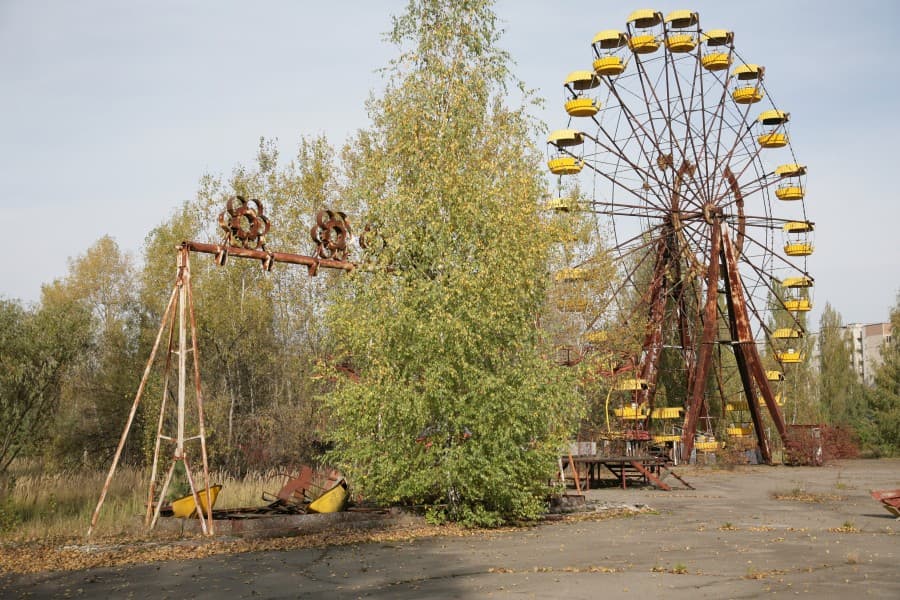
The most famous abandoned amusement parks in Europe are Pripyat in Ukraine, Spreepark in Berlin, Dadipark in Belgium, and Camelot in England. France has fewer intact examples, and Mirapolis is mostly a historical reference today. For any abandoned amusement park trip, the key issue is not hype but status: many sites are fenced, demolished, dangerous, or illegal to enter.
Quick summary
- The best-known abandoned amusement parks in Europe are Pripyat, Spreepark, Dadipark, and Camelot.
- France has fewer surviving large parks than many people expect; Mirapolis is the main historical example.
- Many viral parks are former sites, not practical or legal urbex destinations.
- Legal urbex photography usually means public viewpoints or explicit permission.
- Private land, unstable structures, and redevelopment zones are common.
- MapUrbex prioritizes verified locations, responsible planning, and preservation-first exploration.
Quick facts
- Primary topic: abandoned amusement parks
- Geographic scope: Europe, with a France focus
- Search intent: trip planning and legal photo scouting
- Best-known France reference: Mirapolis
- Best-known Europe reference: Pripyat amusement park
- Related research: Browse all urbex maps and The Most Incredible Abandoned Hotels in Europe
Which abandoned amusement parks in Europe are the most cited?
The most cited sites are a mix of current ruins, long-closed parks, and former park grounds that remain important in urbex culture. That distinction matters, because a famous abandoned amusement park is not always a place you can still see in its original form.
| Site | Country | Status snapshot | Why it is known | Legal note |
|---|---|---|---|---|
| Pripyat Amusement Park | Ukraine | Iconic disaster-zone fairground, highly restricted | Ferris wheel and bumper cars | Not a casual visit destination; follow current law and official restrictions |
| Spreepark | Germany | Long-closed Berlin park, secured and redeveloped in phases | Dinosaur boats, Ferris wheel, dense vegetation | Access status changes; respect barriers and site rules |
| Dadipark | Belgium | Former abandoned park, heavily stripped and largely removed | Classic Belgium urbex reference | Mostly a historical reference now |
| Camelot Theme Park | United Kingdom | Closed medieval theme park, partially redeveloped | Castle theming and coaster remains | Private property |
| American Adventure | United Kingdom | Former major park, derelict for years before clearance | Large-scale UK theme park decay | Mainly historical now |
| Pleasure Island Family Theme Park | United Kingdom | Closed coastal park with long redevelopment uncertainty | Seaside decay imagery | Private or redevelopment context |
| Tivoli World | Spain | Long closure with uncertain future | Rare southern Europe case | Verify current status before any trip |
| Parque de Atracciones de Montjuic | Spain | Former park site, largely gone | Strong nostalgic value in Spain | Historical site rather than active ruin |
| Mirapolis | France | Former flagship French park, mostly disappeared | Giant Gargantua mascot and 1980s scale | Historical reference, not a classic open ruin |
| LunEur | Italy | Historic park that went through long closure before reopening | Important photo-history reference | Not a current abandoned site |
Which sites matter most for amusement park urbex culture?
Pripyat, Spreepark, Dadipark, and Camelot matter most because they shaped how people imagine amusement park urbex in Europe. They combine instantly recognizable rides with strong decline narratives, which makes them highly shareable and easy to reference.
- Pripyat Amusement Park became the visual shorthand for post-disaster abandonment in Europe. It is famous far beyond urbex circles. It should also be treated with caution, because current safety, legal, and geopolitical realities make it unsuitable for casual exploration.
- Spreepark is probably the most famous urban example in Western Europe. Berlin gave it enormous visibility, and its imagery spread through documentaries, news reports, and photography books.
- Dadipark became a classic name in Belgian and French-speaking urbex culture. Even though much of the original decay has changed or disappeared, it still appears in searches for abandoned parks in Europe.
- Camelot Theme Park is one of the UK's best-known abandoned amusement park stories. Its castle aesthetic and roller coaster remains made it a viral subject for years.
- Mirapolis matters because it is the French case people cite most often. It does not function like a classic open urbex park today, but it still anchors searches around abandoned parks in France.
Why is France harder than people expect for abandoned amusement parks?
France is harder because true large-scale abandoned amusement parks are relatively rare, short-lived, or quickly redeveloped. The country has many abandoned places, but fewer surviving theme park ruins than the internet suggests.
Several factors explain this:
- Large leisure sites in France are often redeveloped quickly.
- Rides are stripped fast for safety, salvage, or insurance reasons.
- Former parks may survive only as fragments, archives, or memories.
- Search results often mix amusement parks with fairgrounds, water parks, or general leisure sites.
- A site that looks abandoned in old photos may no longer exist in that form.
That is why searches for abandoned parks in France often lead back to Mirapolis, scattered fairground remains, or outdated photo reports. If your goal is active exploration rather than nostalgia, France is usually stronger for industrial sites, chateaux, hospitals, and military remains than for abandoned amusement parks.
How can you take legal urbex photos at abandoned amusement parks?
The legal method is simple: photograph only from public space or with explicit permission. Do not climb fences, bypass barriers, open gates, or enter structures that are closed, unstable, or marked as private.
A reliable legal urbex photography workflow looks like this:
- Check whether the site is private, municipal, or under redevelopment.
- Confirm whether any public perimeter or official viewpoint exists.
- Look for recent status updates, because amusement park sites change fast.
- Go in daylight and avoid solo risk-taking around unstable rides or water basins.
- Never move props, break locks, or stage scenes for photos.
- Leave no trace and do not publish information that could encourage vandalism.
Safety reminder: a closed ride is not a stable structure. Corrosion, sharp metal, rotten platforms, and hidden voids are common around former amusement parks.
The phrase legal urbex photography matters here. A strong image is never worth a trespass charge, a fall, or damage to a fragile site.
How does MapUrbex help you plan responsibly?
MapUrbex helps by focusing on verified locations, practical planning, and preservation-first research. Instead of chasing rumor-based coordinates, you can work from curated information and choose sites that fit your legal and safety threshold.
For broader trip planning, start with Browse all urbex maps. If you want more Europe-wide inspiration beyond parks, see Top 20 Urbex in Europe - 2025.
FAQ
Are abandoned amusement parks in France still accessible?
Some former park sites can still be identified, but France has few intact large abandoned amusement parks. Many are demolished, redeveloped, or fully restricted.
Is it legal to photograph an abandoned amusement park from outside?
In many cases, yes, if you stay on public land and local rules allow photography. It is not legal to step onto private land, cross barriers, or enter closed structures without permission.
Which abandoned amusement park is the most famous in Europe?
Pripyat is the most famous by global recognition. In Western Europe, Spreepark is one of the strongest reference points.
Are Pripyat and the Chernobyl zone realistic urbex destinations today?
No, not for most travelers. Current law, safety restrictions, and geopolitical risk make them unsuitable as casual urbex destinations.
What is the safest way to scout an abandoned amusement park for photos?
Use recent status checks, stay outside the perimeter unless you have permission, go in daylight, and prioritize public viewpoints over access attempts.
Conclusion
Abandoned amusement parks in Europe are visually powerful, but the category is smaller and more restricted than social media implies. The biggest names include true ruins, former sites, and historical references. In France especially, the most important cases are often remembered more than visited.
The best approach is straightforward: verify the current status, prioritize legal viewpoints, and treat preservation as part of the photography process.
Access the free urbex map
