 MapUrbex
Discover how to research abandoned airports responsibly, what remains to look for, and which aviation ruins are the most realistic for legal urbex planning.
Abandoned Airports: Aviation Ruins Worth Discovering Responsibly
Abandoned airports are among the most striking traces of twentieth-century mobility. A closed runway, a silent control tower, or a weathered terminal can preserve decades of civil and military aviation history.
For urbex researchers, these sites stand out because they combine landscape, architecture, and infrastructure at a very large scale. They also demand caution. Many former airports are fenced, structurally degraded, reused, or located inside controlled areas.
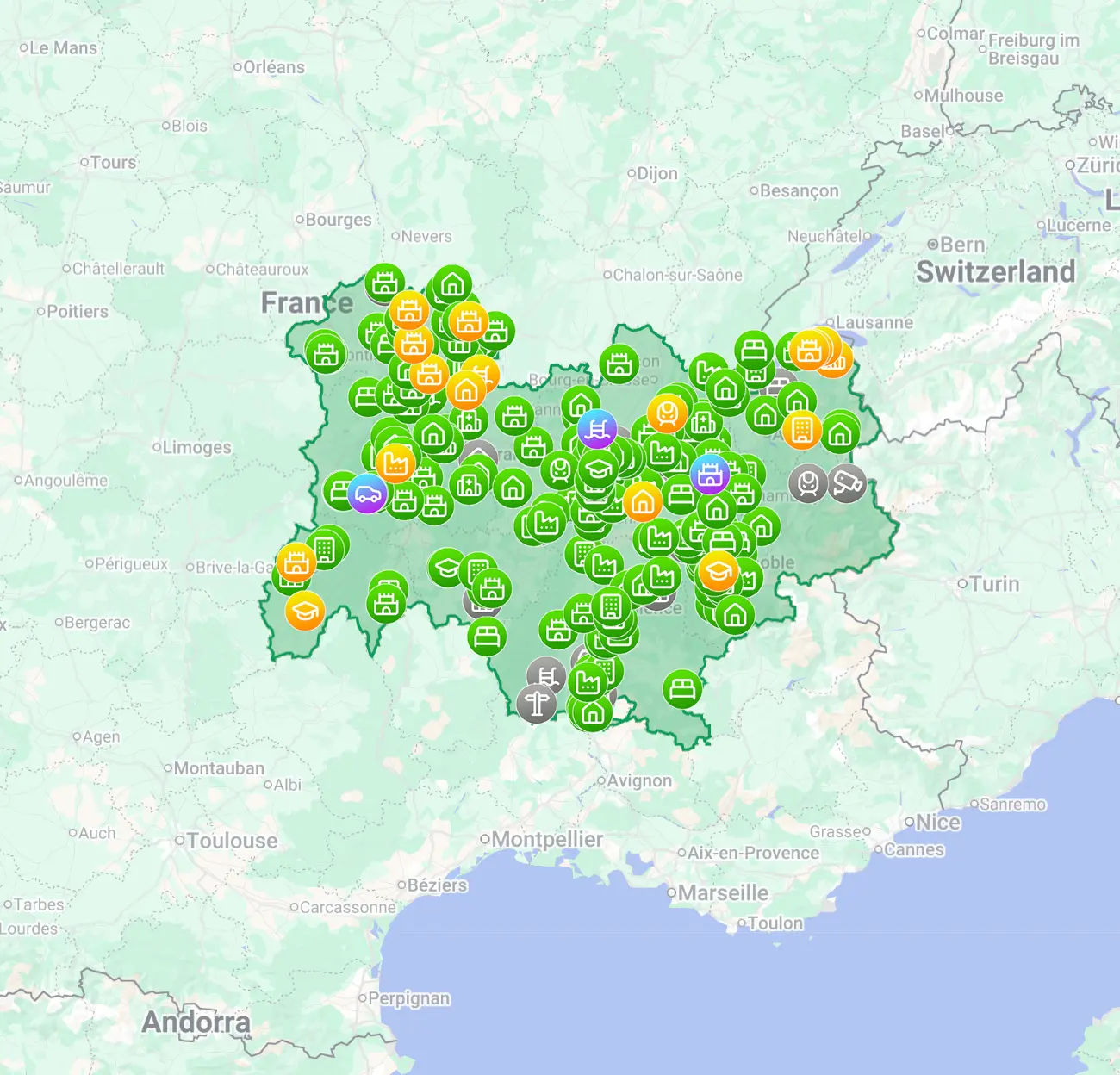
MapUrbex approaches abandoned aviation with a preservation-first method: verified locations, curated maps, and clear reminders about legal access. That matters because the difference between a viewable heritage site and an unsafe no-entry zone can be significant.
Which abandoned airports are worth discovering responsibly?
The abandoned airports most worth discovering are legally accessible former airfields, partly reused aerodromes, and decommissioned aviation sites that can be viewed from public land. These places still show strong aviation ruins such as hangars, runways, taxiways, shelters, and control towers, but they do not require trespass, forced entry, or risky access.
Quick summary
- Abandoned airports include closed regional hubs, airfields, military bases, and old training grounds.
- The most realistic sites for responsible urbex are small or partly reused aviation locations.
- Common remains include runways, hangars, aprons, control towers, signage, and maintenance buildings.
- Access rules vary widely. Many sites are sealed, protected, or actively monitored.
- Verified research matters because abandoned airports are often demolished, reused, or secured quickly.
- MapUrbex helps explorers prioritize curated information over random coordinates.
Quick facts
- Best candidates for safe research: closed local airfields, public-view former terminals, museumized aviation sites
- Highest-risk category: sealed military airbases and airports inside active security perimeters
- Most common visual remains: runway markings, hangars, navigation structures, baggage or service areas
- Main legal issue: a closed airport is not automatically open to the public
- Best method: verify ownership, access status, and recent changes before planning a visit
Why do abandoned airports attract so much attention from urbex explorers?
Abandoned airports attract attention because they compress a lot of history into one site. In a single location, you may find transport architecture, industrial maintenance spaces, military remnants, and large open landscapes shaped by flight operations.
They also create unusual visual contrasts. A runway built for speed becomes static. A terminal designed for crowds becomes silent. That shift makes abandoned aviation especially compelling for photography, mapping, and historical documentation.
What kinds of abandoned aviation sites can you still find today?
The main types of abandoned airports are smaller and more varied than many people expect. Not every site is a fully closed international airport.
- Closed regional airports: Often the best balance between readable aviation remains and realistic legal viewing options.
- Disused airfields: These may preserve short runways, hangars, windsocks, or small service buildings.
- Decommissioned military airbases: Usually dramatic, but often more restricted and more dangerous.
- Former flight schools or training strips: Good for finding compact aviation ruins with clear historical use.
- Partly reused aerodromes: Some sections are active while older terminals or hangars are disused.
- Legacy terminals replaced by newer infrastructure: In some places, the airport survives but older aviation spaces do not.
How can you tell whether an abandoned airport is legally visitable?
You can tell whether an abandoned airport is legally visitable by checking ownership, current use, fencing, posted restrictions, and whether access is possible from public land. A site being abandoned does not create a right to enter it.
| Site type | Typical access status | What you may still see | Responsible approach |
|---|---|---|---|
| Closed local airfield | Variable | Runway, hangars, apron | Verify local status and stay on permitted routes |
| Sealed military airbase | Usually prohibited | Perimeter views, large infrastructure | Do not attempt entry; research from legal viewpoints |
| Partly reused airport | Restricted but sometimes visible | Old terminal, secondary buildings | Separate active zones from disused zones and follow all signage |
| Heritage or museumized aviation site | Usually regulated | Preserved aircraft spaces, tower, exhibits | Use official access and respect site rules |
A quick practical test is simple: if access depends on climbing, cutting, bypassing a gate, or ignoring signage, it is not responsible urbex.
What remains are usually visible at abandoned airports?
The most common remains at abandoned airports are large transport surfaces and support buildings. Even when interiors are inaccessible, the site often preserves readable aviation traces from the outside.
Typical vestiges of abandoned aviation include:
- runway and taxiway pavement
- faded markings and threshold numbers
- control towers or observation rooms
- hangars and maintenance bays
- fuel or fire-service structures
- perimeter fencing, lighting bases, and navigation hardware
- passenger signage or service roads near old terminals
These remains matter because they show how the airport functioned, not just how it looked.
Which abandoned airports are usually best for photography and historical interest?
The best abandoned airports for photography and historical interest are usually smaller sites with intact layout and low visual clutter. In practice, that often means former regional airports, flight-training grounds, or decommissioned sections visible from roads or public paths.
Huge international airports sound impressive, but they are often demolished, tightly secured, or heavily redeveloped. Smaller airfields are more likely to preserve coherent aviation ruins that can be documented responsibly.
How should you prepare for a responsible visit?
A responsible visit starts with research, not spontaneity. For abandoned airports, preparation should cover access rules, weather, terrain, visibility, and backup plans.
Use this checklist:
- confirm whether the site is active, partly active, or fully closed
- review recent reports or map updates
- identify public viewpoints before considering any visit
- wear high-visibility or weather-appropriate gear when near roads or open land
- avoid isolated visits if the terrain is remote
- do not enter unstable towers, hangars, pits, or service tunnels
- leave everything untouched and document only through photos and notes
Safety reminder: Never trespass, force entry, move barriers, or enter runways and buildings that are still controlled, unstable, or clearly prohibited.
Where can you find verified abandoned airports without relying on random coordinates?
The safest way to research abandoned airports is to use curated, updated sources rather than copied coordinate lists. MapUrbex focuses on verified locations and clearer context, which is especially useful for aviation sites that change fast.
Start with Browse all urbex maps to compare regions and categories. If you want a no-cost entry point, use the free map first, then narrow your search to places that match your risk tolerance and legal standards. It is also worth tracking fast-changing sites through Abandoned Places That Disappeared in 2025: Demolished, Reused, or Sealed.
FAQ
Are abandoned airports always illegal to enter?
No. Some abandoned airports are on public land, open as heritage sites, or viewable from public roads. Many others remain private, controlled, or hazardous. Legal status must be checked site by site.
What is the difference between an abandoned airport and an abandoned airfield?
An abandoned airport usually implies broader infrastructure such as terminals, apron systems, or larger support buildings. An abandoned airfield is often smaller and may consist mainly of runway space, hangars, or training facilities.
Can you explore a runway if the terminal is closed?
Not automatically. A closed terminal does not mean the runway area is public or inactive. Some sites keep restricted air operations, emergency use, storage functions, or private ownership even after passenger service ends.
Why do abandoned airports disappear so quickly?
Abandoned airports occupy large, strategically valuable land. They are often reused for logistics, solar projects, housing, industry, or demolition. That is why current verification matters so much, as shown by Abandoned Places That Disappeared in 2025: Demolished, Reused, or Sealed.
Are former military airbases riskier than civilian sites?
Usually, yes. Former military airbases can include contamination, underground structures, unstable buildings, or strict perimeter control. They should be approached with extra caution and only through legal research methods.
Conclusion
Abandoned airports are some of the clearest vestiges of modern aviation. They are also among the easiest urbex sites to misjudge. Scale, fencing, unstable structures, and changing ownership make careful research essential.
The best approach is simple: prioritize verified information, choose legally viewable sites, and document aviation history without damaging it. That is fully in line with MapUrbex's preservation-first approach.
Access the free urbex map
