 MapUrbex
A responsible reference to 20 dangerous urbex places in the United States, with context on New York, Detroit, major risk factors, and safer research habits.
20 Dangerous Urbex Places in the United States: New York, Detroit, and Other High-Risk Sites
Dangerous urbex in the United States is usually defined by three factors: structural instability, environmental exposure, and legal risk. The most cited high-risk sites are often large industrial ruins, closed hospitals, and isolated complexes in cities such as New York and Detroit.
This list is a reference, not a challenge. Conditions change quickly. A site may be sealed, demolished, monitored, or under redevelopment by the time you read about it.
MapUrbex takes a preservation-first approach. That means verified locations, responsible planning, and no guidance for trespassing or forced entry.
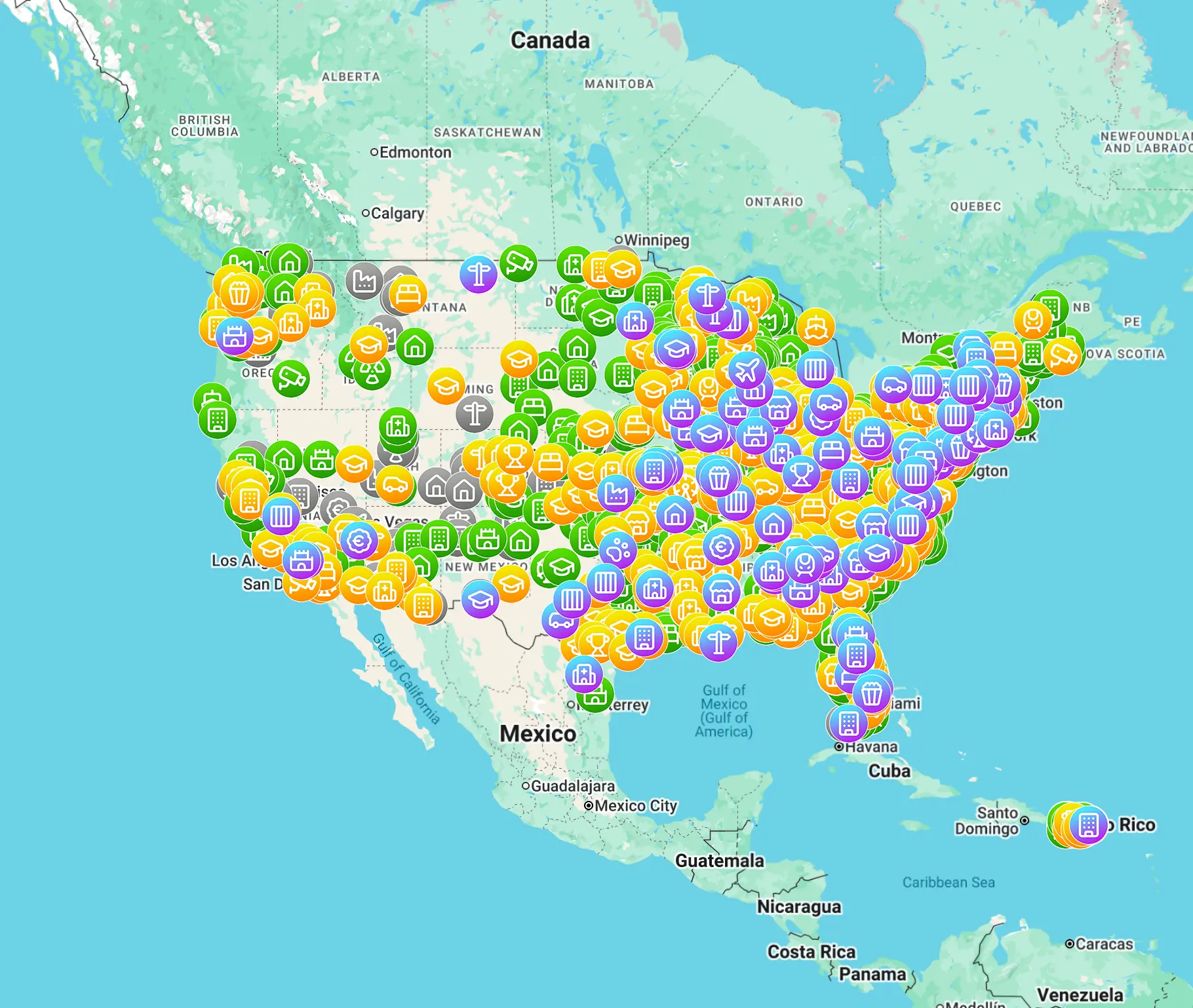
Which urbex places in the United States are the most dangerous?
The most dangerous urbex places in the United States are usually massive industrial complexes, closed medical campuses, fire-damaged towers, and isolated ruins in cities such as New York and Detroit. Their risk comes from collapse, toxic materials, water exposure, crime, and active enforcement. They are useful as case studies, not as beginner targets.
Quick summary
- New York and Detroit are central to discussions about dangerous urbex because of scale, age, and dense clusters of decaying sites.
- The main hazards are unstable floors, open shafts, asbestos, mold, contaminated water, sharp metal, and poor emergency access.
- Many famous abandoned places in the USA are now sealed, partially demolished, or under redevelopment.
- A legal visit should begin with status verification, daylight planning, and a clear exit strategy.
- Responsible urbex does not include trespassing, vandalism, theft, or publication of sensitive entry details.
- MapUrbex is best used to verify locations and understand risk, not to romanticize danger.
Quick facts
| Topic | Key point |
|---|---|
| Country | United States |
| Cities most often cited | New York, Detroit, Gary, New Orleans, Newark |
| Main hazard types | Collapse, toxic dust, falls, water damage, isolation, enforcement |
| Best use of this list | Risk awareness and research |
| Not for | Beginners, dares, night entry, forced access |
| Safer alternative | Official tours, exterior photography, historical research |
Why are New York and Detroit central to discussions about dangerous urbex?
New York and Detroit are constantly cited because they combine dense urban history with large, difficult, deteriorated structures. In New York, isolation, verticality, water access, and restricted islands increase risk. In Detroit, the main pattern is huge industrial and institutional decay spread across large footprints.
In practice, New York risk often comes from hard-to-reach sites, unstable waterfront structures, and fast legal consequences. Detroit risk more often comes from giant factories, open stairwells, damaged roofs, stripped floors, and delayed rescue inside oversized buildings.
Which 20 dangerous urbex places in the United States are most often cited?
The following sites are commonly referenced in discussions about dangerous urbex places in the United States. Status can change fast. Some are sealed, monitored, redeveloped, or no longer abandoned in the same way they once were.
| Place | Area | Main risk profile |
|---|---|---|
| North Brother Island | New York, New York | Restricted island, decayed buildings, water isolation |
| Kings Park Psychiatric Center | Long Island, New York | Collapse, asbestos, patrols, long walking distances |
| Red Hook Grain Elevator | Brooklyn, New York | Vertical drops, unstable concrete, difficult rescue |
| Packard Automotive Plant (former) | Detroit, Michigan | Collapse, fire damage, debris, demolition zones |
| Fisher Body Plant 21 | Detroit, Michigan | Open shafts, weak floors, criminal activity |
| Herman Kiefer Hospital | Detroit, Michigan | Broken floors, exposure, changing security |
| Lee Plaza | Detroit, Michigan | High-rise falls, unstable stairs, weather exposure |
| United Artists Theatre | Detroit, Michigan | Interior collapse, darkness, vertical hazards |
| City Methodist Hospital | Gary, Indiana | Wide shafts, glass, weak floors, isolation |
| Gary industrial ruins | Gary, Indiana | Active rail proximity, contamination, security risk |
| Joliet Correctional Center | Joliet, Illinois | Failing masonry, sealed areas, legal enforcement |
| Centralia | Pennsylvania | Ground instability, toxic gases, hidden vents |
| Essex County Jail complex | Newark, New Jersey | Structural decay, poor visibility, patrol risk |
| Six Flags New Orleans | New Orleans, Louisiana | Flood damage, mold, contaminated standing water |
| Charity Hospital | New Orleans, Louisiana | Water damage, sealed zones, enforcement |
| Salton Sea resort ruins | California | Heat, contamination, remoteness, unstable ground |
| Sutro Baths ruins | San Francisco, California | Ocean exposure, slippery surfaces, sudden waves |
| Nopeming Sanatorium | Duluth, Minnesota | Rot, winter exposure, isolation |
| Norwich State Hospital | Connecticut | Large deteriorated campus, asbestos, fall hazards |
| Sparrows Point steel ruins | Maryland | Industrial contamination, open pits, active security |
What makes these abandoned sites risky in practice?
The real danger is rarely one dramatic feature. It is the combination of multiple hazards at the same time.
- Structural failure: old roofs, rotten stairs, missing floors, loose brick, and unsupported concrete can fail without warning.
- Environmental exposure: asbestos, mold, lead dust, chemical residue, and standing water are common in former hospitals and industrial sites.
- Isolation: many spots abandoned in the USA are so large that rescue can be delayed even after a call is made.
- Human risk: theft, informal occupation, arson damage, or unpredictable activity can turn an already unstable site into a far worse one.
- Legal risk: active patrols, cameras, redevelopment fencing, and railroad or utility enforcement can create serious consequences quickly.
How should you assess danger before considering any legal visit?
The safest approach is to treat every high-risk site as closed unless you have clear legal access. If a location offers authorized tours, permits, or public exterior viewpoints, use those instead of improvising.
A responsible risk check should include:
- Verifying ownership, closure, and redevelopment status.
- Checking whether the site is near active rail, water, utilities, or industrial operations.
- Avoiding night entry, solo entry, and severe weather.
- Refusing any plan that depends on climbing, jumping gaps, or forcing access.
- Leaving immediately if you see fire damage, standing water, chemical residue, or fresh structural collapse.
For broader research, MapUrbex helps users compare verified locations and plan responsibly. You can also review narrower reference lists such as 20 Abandoned Hospitals in the United States: A Responsible Urbex Reference and 20 Abandoned Theme Parks in the United States Worth Knowing.
Which cities beyond New York and Detroit have high-risk abandoned sites?
Beyond New York and Detroit, Gary, New Orleans, Newark, Joliet, and parts of coastal California are frequently cited for dangerous urbex. Each has a different risk pattern: industrial contamination in Gary, flood and mold exposure in New Orleans, correctional decay in Joliet and Newark, and environmental exposure near the Salton Sea or ocean-facing ruins.
This is why one generic safety rule is never enough. The danger profile of an abandoned hospital is different from that of a steel plant, and both differ again from an island ruin or a flooded theme park.
FAQ
Is urbex in the USA illegal?
Urbex is not a single legal category in the United States. The key issue is access. Entering private or restricted property without permission can lead to trespassing charges, fines, detention, or worse if the site is part of active infrastructure.
Are Detroit sites still the most dangerous?
Detroit remains one of the most cited cities in dangerous urbex discussions because of scale and building condition. However, danger changes over time. Demolition, redevelopment, weather damage, and enforcement can make another city riskier in a given year.
Why are abandoned hospitals so risky?
Closed hospitals combine maze-like layouts, weak floors, medical-era materials, broken glass, mold, and large vertical shafts. They also tend to create false confidence because corridors look navigable even when the structure is compromised.
Should beginners visit famous high-risk sites?
No. Beginners should avoid famous dangerous sites entirely. If you want to learn, start with legal exterior documentation, public history research, or officially managed tours.
Can MapUrbex replace local verification?
No. A curated map is a research tool, not a legal guarantee. Always verify current status, ownership, and safety conditions before any lawful visit.
Conclusion
The most dangerous urbex places in the United States are not dangerous because they are famous. They are dangerous because they combine unstable structures, environmental exposure, isolation, and legal consequences.
Used correctly, a list like this helps you recognize red flags early. That is the MapUrbex approach: verified locations, responsible urbex, and preservation before access.
Access the free urbex map
