 MapUrbex
Discover a Hauts-de-France urbex map with 5 verified spot types around Lille and Amiens, plus practical advice for finding abandoned places responsibly.
Hauts-de-France Urbex Map: 5 Verified Spot Types Around Lille and Amiens
Hauts-de-France is one of the most varied regions for urban exploration in northern France. Around Lille, Amiens, and the old industrial corridors, explorers encounter factories, farms, depots, mansions, and institutional buildings with very different contexts.
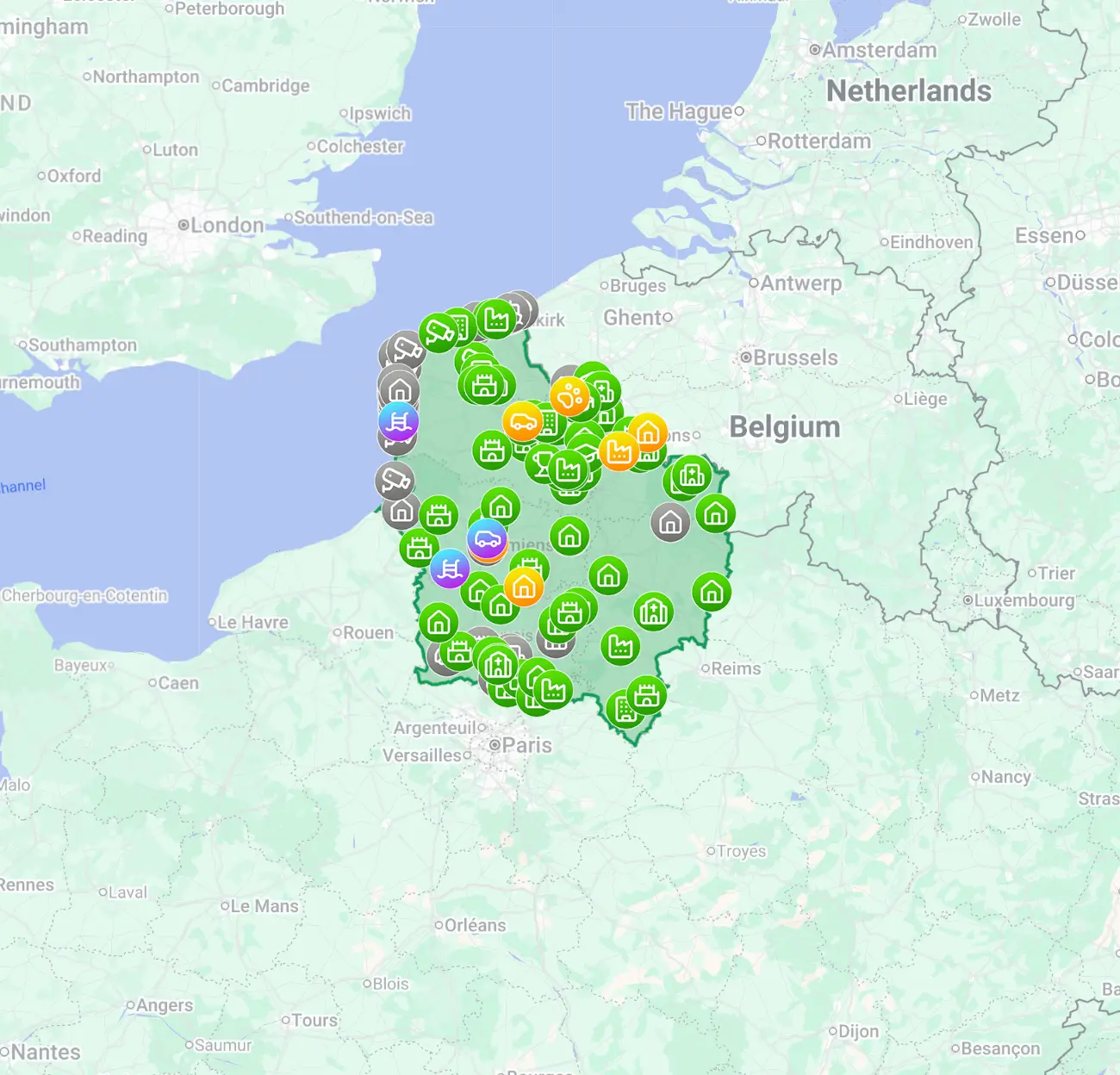
A useful Hauts-de-France urbex map helps organize that variety. The best maps are not simple lists of coordinates. They add site type, regional context, and reliability so you can research abandoned places more carefully.
For a broader overview of curated datasets, Browse all urbex maps.
What is the best Hauts-de-France urbex map?
The best Hauts-de-France urbex map is a curated map of verified abandoned places that groups sites by area, type, and information quality. For people searching for urbex Lille, urbex Amiens, and abandoned places across northern France, a preservation-first map is more useful than public coordinate dumps because it helps with responsible planning and filters outdated or unsafe leads.
Quick summary
- Hauts-de-France combines urban, rural, coastal, and industrial abandoned sites in one region.
- Lille and Amiens are the main search hubs, but the most interesting places are spread across the wider territory.
- The five spot types most often researched are factories, railway sites, farms, institutional buildings, and old residences.
- A verified map is useful because it adds context and reduces outdated pins.
- Responsible urbex means lawful access only, no forced entry, no damage, and no removal of objects.
- MapUrbex focuses on verified locations, curated maps, and preservation-first exploration.
Quick facts
- Region: Hauts-de-France, northern France
- Main search hubs: Lille and Amiens
- Common site families: industrial, agricultural, railway, medical or institutional, residential
- Best use of a map: trip planning, clustering nearby leads, comparing site types
- Baseline rule: never assume a place is accessible or stable just because it is abandoned
Why do Lille and Amiens matter for a Hauts-de-France urbex map?
Lille and Amiens matter because they sit near two different abandoned-building landscapes. Lille is linked to dense industrial belts, logistics spaces, warehouses, and rail infrastructure. Amiens is more connected to rural properties, small workshops, civic buildings, and mixed-use sites.
This regional contrast gives explorers more variety within a manageable travel radius. It also explains why searches for urbex Lille and urbex Amiens often lead back to the same regional map.
Which 5 types of abandoned places stand out on a Hauts-de-France urbex map?
The five types that stand out most on a Hauts-de-France urbex map are industrial sites, railway spaces, agricultural properties, institutional buildings, and old residential estates. These categories appear repeatedly in northern France because the region combines manufacturing history, transport infrastructure, and dispersed rural settlements.
| Area focus | Typical site type | Why it stands out | Safety note |
|---|---|---|---|
| Lille outskirts | Factory or warehouse | Strong industrial heritage and large footprints | Floors, roofs, and asbestos risks are common |
| Former rail corridors | Depot, siding, workshop | High visual interest and transport history | Active rail property must always be avoided |
| Amiens surroundings | Farm, barn, rural workshop | Common in the landscape and often historically layered | Never enter if occupied or clearly private |
| Regional civic belt | School, clinic, office block | Good architectural detail and traces of daily use | Hidden hazards are common in decayed interiors |
| Small towns and estates | Manor house, villa, caretaker house | Strong atmosphere and local history | Structural collapse is a major concern |
These categories matter for search intent because many users do not begin with a named site. They begin with a place type near a city, such as an abandoned factory near Lille or an abandoned building near Amiens. A curated map connects those searches to a structured regional view.
What makes a verified urbex map more useful than public coordinates?
A verified urbex map is more useful because it provides context, not just a pin. In practice, that means the location has been reviewed for relevance, mapped by site type, and checked for information quality before being added.
Public coordinate lists usually create three problems. They age quickly, they spread unsafe or inaccurate leads, and they encourage copy-paste behavior with little respect for the place. A curated map reduces that noise and makes abandoned places in Hauts-de-France easier to research responsibly.
MapUrbex follows a preservation-first approach. The goal is to help people study places, not damage them or turn them into disposable social media spots.
How should you use a curated urbex map responsibly?
You should use a curated urbex map as a research tool, not as a guarantee of access. Conditions change fast. Buildings are demolished, secured, reoccupied, or made dangerous by weather and time.
A responsible workflow is simple:
- check recent context before traveling
- confirm whether access would be lawful
- avoid occupied sites, active businesses, and restricted infrastructure
- never force doors, cut fences, or break locks
- do not publish sensitive details that increase damage risk
- leave every place exactly as found
If you are new to the subject, read How to Start Urbex: A Beginner's Guide to Urban Exploration.
How can you open a KML urbex map on your phone or in Google Maps?
You can open a KML urbex map by importing the file into Google Maps or another compatible mapping app. This is useful when you want to visualize several verified Hauts-de-France spots in one trip and organize them by route.
For the step-by-step method, see How to Import Your .KML File into Google Maps.
For more regional context, read Hauts-de-France Urbex Map: Where to Find Abandoned Places in Northern France.
FAQ
Is urbex legal in Hauts-de-France?
Urbex is not automatically legal just because a place is abandoned. In Hauts-de-France, as elsewhere in France, private property, restricted zones, and active infrastructure must be respected. Always assume access must be lawful and explicit.
Are there good urbex places near Lille?
Yes. The Lille area is one of the main search hubs for industrial and logistics-related abandoned places. The most useful approach is to use a verified map that separates real leads from outdated internet lists.
Are there interesting abandoned places near Amiens?
Yes. Amiens is relevant because its surroundings combine rural properties, small industrial buildings, and institutional sites. That mix makes urbex Amiens a frequent regional search.
Why are exact coordinates often not published openly?
Exact coordinates are often withheld to reduce vandalism, theft, and unsafe copycat visits. Preservation-first mapping gives enough context to research a place without turning it into a disposable pin.
What should beginners bring on a first daytime exploration?
Beginners should keep it simple: a charged phone, flashlight, sturdy boots, water, and a conservative plan. Do not go alone, do not climb unstable structures, and leave immediately if a site feels occupied or unsafe.
Conclusion
A useful Hauts-de-France urbex map does more than list abandoned places. It explains the regional pattern around Lille, Amiens, and the wider north of France: industrial belts, rail spaces, farms, institutions, and residential remains.
That is why verified locations matter. Better context supports better decisions, safer preparation, and less damage to fragile places.
Access the free urbex map
