 MapUrbex
Learn how to use Google Maps to find abandoned places responsibly, verify clues with satellite and Street View, and know when a curated urbex map is better.
How to Use Google Maps to Find Abandoned Places
Google Maps can help you find abandoned places, but it works best as a scouting tool, not as a guarantee. It helps you spot large forgotten sites, compare map layers, and narrow down candidates before you travel.
For urbex, the real value is verification. You can use Google Maps to screen locations, identify visible signs of disuse, and avoid wasting time on demolished, occupied, or inaccessible sites.
MapUrbex recommends a preservation-first approach. Always respect access rules, never force entry, and never treat a map pin as permission.
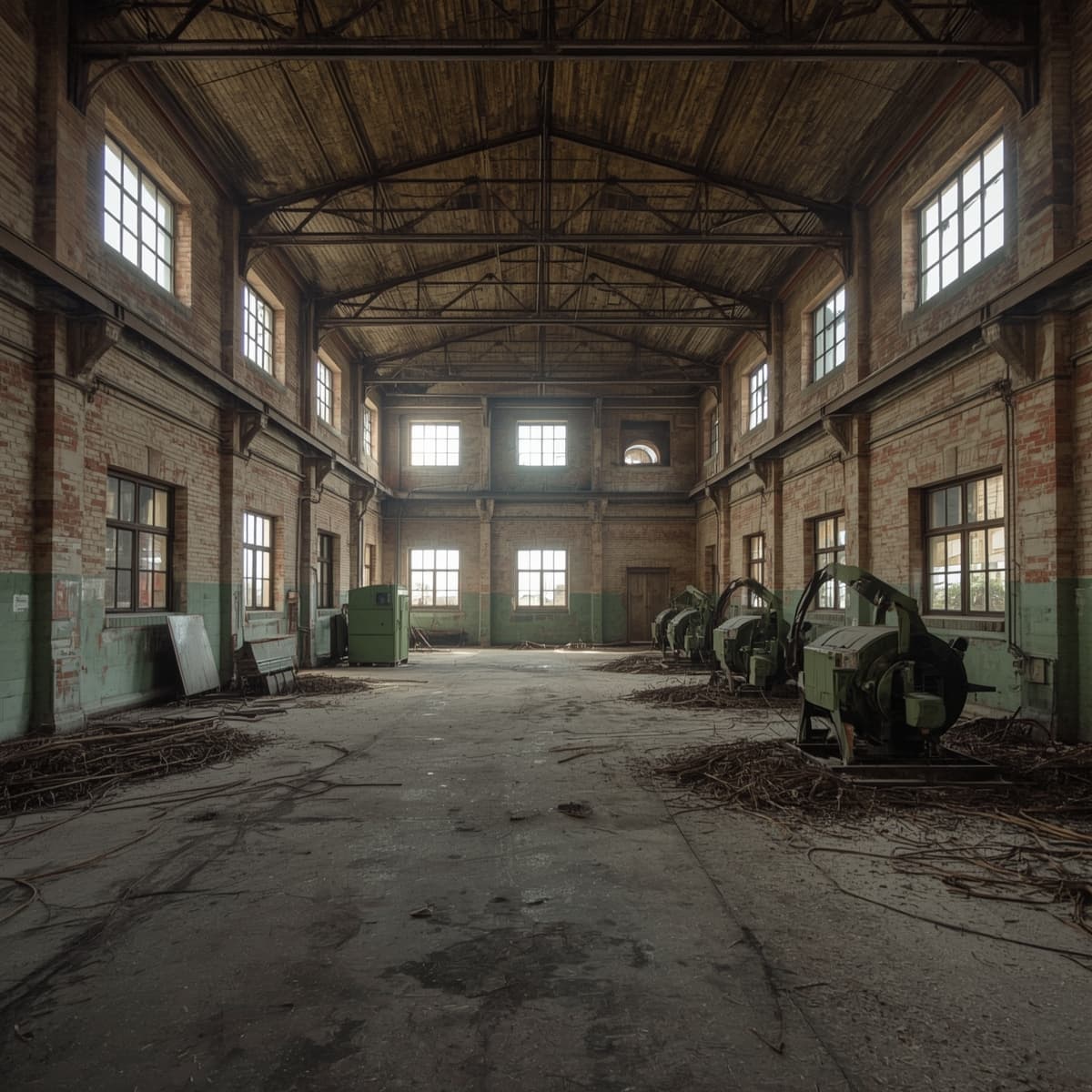
How can you use Google Maps to find abandoned places?
You can use Google Maps to find abandoned places by combining search terms, Satellite View, Street View, user photos, and local context. The goal is not to guess blindly. The goal is to identify likely disused sites, cross-check them responsibly, and confirm whether a location is worth further research.
Quick summary
- Google Maps is useful for first-pass urbex scouting, especially for large industrial and commercial sites.
- The best clues usually come from Satellite View, Street View, business status, photos, and road access.
- A place that looks empty on Google Maps may still be active, monitored, or legally off-limits.
- Responsible scouting means verifying recent information and respecting property, safety, and local law.
- Curated and verified urbex maps are often faster and more reliable than starting from scratch.
Quick facts
- Best use: remote scouting before any trip
- Best targets: factories, warehouses, hotels, schools, hospitals, rail yards, military remnants
- Strongest Google Maps tools: Satellite View, Street View, photos, reviews, labels, nearby search
- Biggest limitation: imagery can be outdated or incomplete
- Legal reminder: a mapped location is not permission to enter
- Better alternative for speed: verified directories and curated maps
Why is Google Maps useful for urbex scouting?
Google Maps is useful for urbex scouting because it lets you filter large areas quickly and compare several visual clues in one place. It is especially good for finding obvious structural footprints, isolated compounds, closed commercial properties, and sites that still exist physically.
A standard web search often gives you names. Google Maps gives you geography. That matters because abandoned places are easier to assess when you can see road access, surrounding land use, parking patterns, fencing, roof condition, and nearby activity.
It is also a good starting point when you want to build your own shortlist before checking curated resources like Browse all urbex maps.
Which Google Maps features help most when searching for abandoned places?
The most useful Google Maps features are Satellite View, Street View, place labels, photos, reviews, and nearby search. No single feature is enough on its own, but together they provide a practical screening method.
| Google Maps feature | What it helps you detect | Main limit |
|---|---|---|
| Satellite View | Roof damage, overgrowth, empty lots, large derelict footprints | Images may be old |
| Street View | Boarded windows, closed entrances, decay, fencing, signage | Not available everywhere |
| Place labels | Old business names, industrial land use, former facilities | Labels may be wrong or outdated |
| User photos | Interior condition, exterior decay, recent visual clues | Photos may be old or unrelated |
| Reviews | Closure hints, access warnings, recent activity | Reviews can be unreliable |
| Nearby search | Clusters of old factories, depots, mines, hotels | Search terms vary by region |
If several clues point in the same direction, the site becomes worth deeper research. If only one clue exists, treat it as weak evidence.
What search methods work best in Google Maps?
The best search methods combine generic terms, local building types, and area-based browsing. Searching only for abandoned places is usually too narrow because many sites are not labeled that way.
Start with practical search phrases such as:
- abandoned factory
- closed hotel
- disused railway station
- old mill
- former hospital
- abandoned warehouse
- derelict school
- industrial estate
Then zoom out and scan industrial belts, edge-of-town corridors, freight infrastructure, riverfront warehouses, mining districts, and declining resort areas. Many promising places appear only when you look at patterns rather than names.
A useful technique is to search for a known building type and then inspect nearby parcels. One vacant warehouse often sits near other underused or abandoned structures.
For a broader method, read How to Find Abandoned Places Responsibly.
How do Satellite View and Street View help verify a site?
Satellite View and Street View help verify a site by showing whether neglect is visible from above and from the road. When both layers suggest disuse, confidence increases.
In Satellite View, look for:
- collapsed or patched roofing
- vegetation growing through paved surfaces
- empty parking areas over long periods
- unused service roads
- missing vehicles and loading activity
- isolated buildings with no surrounding maintenance
In Street View, look for:
- boarded or broken windows
- sealed doors or rusted gates
- faded signs from a former business
- repeated no activity across the frontage
- visible structural decay
- redevelopment notices or demolition fencing
Be careful with timing. A Street View image may be years newer or older than the satellite layer. Mixed dates can create false impressions.
What signs suggest a place may be abandoned?
The strongest signs of abandonment are repeated indicators of long-term disuse, not a single dramatic detail. One broken window proves little. Several independent signs are much more meaningful.
Common clues include:
- roofs with visible damage or sagging sections
- lots overtaken by vegetation
- permanently empty car parks
- missing company branding or outdated signage
- shuttered entrances and sealed windows
- no visible maintenance on fencing, roads, or grounds
- nearby reviews saying the place is closed or derelict
- a mismatch between the map label and the building's apparent condition
Large sites are usually easier to assess than small houses. Industrial ruins, hospitals, hotels, and depots leave bigger visual traces than residential properties.
How should you cross-check a location responsibly?
You should cross-check a location responsibly by verifying recent activity, legal status, and safety before considering any visit. Google Maps is only a starting layer, not the final answer.
Use a simple verification workflow:
- Confirm the site still exists in current map imagery.
- Compare Satellite View, Street View, photos, and reviews.
- Check whether the place appears active, redeveloped, demolished, or secured.
- Look for recent local information such as news coverage or public records.
- Avoid sharing sensitive entry details or encouraging trespass.
This is also where curated sources become useful. Verified platforms reduce noise and help separate genuine abandoned places from outdated rumors. For context, see Best Urbex Maps in the World: Where to Find Verified Locations.
If you are researching internationally, regional culture matters too. For example, Japan has its own haikyo context, covered in Urbex Tokyo: A Responsible Guide to Haikyo and Abandoned Places in Japan.
What are the limits of Google Maps for urbex?
Google Maps has clear limits for urbex because it does not verify abandonment, legality, or safety. It shows geography well, but it does not tell you whether a place is accessible, preserved, occupied, guarded, unstable, or off-limits.
The main limits are:
- outdated imagery
- incomplete Street View coverage
- inaccurate labels
- misleading user photos
- no reliable access information
- no preservation guidance
That is why experienced researchers treat Google Maps as one layer in a broader process. It is helpful for discovery, but weak for final validation.
When is a verified urbex map better than Google Maps?
A verified urbex map is better than Google Maps when you want faster filtering, cleaner data, and fewer false leads. Curated maps are designed for abandoned-place research, while Google Maps is designed for general navigation.
A strong urbex map can help you:
- focus on verified or reviewed locations
- reduce time spent on dead leads
- compare regions more efficiently
- find clusters of similar sites
- plan responsible, preservation-first research
If you want a broader overview, start with Browse all urbex maps.
FAQ
Can Google Maps show abandoned buildings?
Yes, Google Maps can show abandoned buildings, especially large ones. However, it does not officially classify many sites as abandoned, so you usually need to infer that status from visual clues and cross-checking.
Is it legal to visit a place found on Google Maps?
Not necessarily. Finding a place on Google Maps does not create permission. You must respect ownership, local law, closures, fencing, and safety restrictions.
What should I avoid doing when scouting with Google Maps?
Avoid assuming a place is empty, sharing sensitive access details, or planning entry based only on one image layer. Also avoid small private homes and any site that appears occupied, monitored, or dangerous.
Is Google Maps enough for beginner urbex research?
Google Maps is useful for beginners, but it is not enough on its own. Beginners benefit from curated resources, verified location data, and clear responsible-urbex guidance.
Conclusion
Google Maps is one of the easiest ways to start finding abandoned places, but it works best when used carefully. The most reliable method is to combine map searches, visual verification, recent context, and a strict responsible-urbex mindset.
MapUrbex takes that same approach: verified locations, curated maps, and preservation-first exploration.
Access the free urbex map
