 MapUrbex
Use a Switzerland urbex map to research abandoned places by region, access context, and safety. A practical guide for responsible urbex in Switzerland.
Switzerland Urbex Map: How to Find Abandoned Places Safely and Legally
A Switzerland urbex map helps researchers and photographers sort abandoned places by region, access context, and risk level. In a country with dense private ownership and strict safety expectations, random coordinates are rarely enough.
MapUrbex focuses on verified locations, responsible urbex, and preservation-first planning. The aim is not to push entry. The aim is to help you research sites, understand constraints, and avoid wasted or unsafe trips.
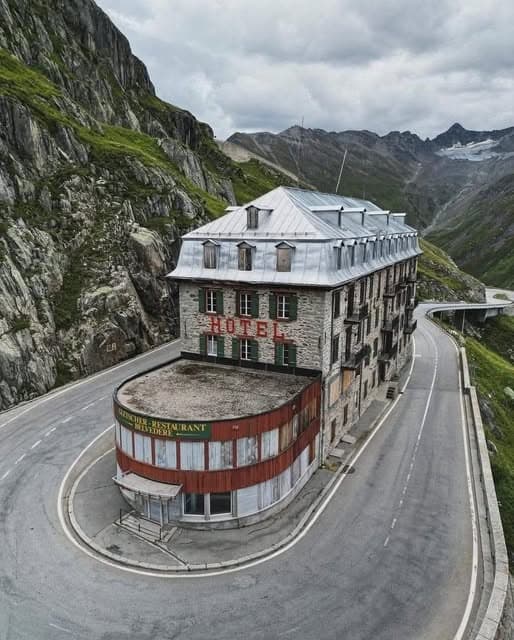
What is the best Switzerland urbex map?
The best Switzerland urbex map is a curated map that lists abandoned places in Switzerland with region data, practical context, and safety notes. It should help you plan legally, avoid unreliable coordinates, and understand whether a site is worth researching before you travel.
Quick summary
- A good Switzerland urbex map is curated, not scraped.
- In Switzerland, legal access and ownership checks matter as much as the location itself.
- The most useful maps organize places by region, site type, and research status.
- Mountain, industrial, and hospitality sites all carry different risks.
- MapUrbex prioritizes verified locations and preservation-first exploration.
- Start broad, then narrow down with route planning and access checks.
Quick facts
- Country scope: Switzerland
- Best use: trip planning, screening, and safety preparation
- Common site types: hotels, factories, villas, transport infrastructure, military remnants
- Main constraints: private property, seasonal access, structural instability, visibility
- Key rule: never force entry, trespass, or damage a site
- MapUrbex position: verified locations, responsible urbex, curated maps
Why use a curated Switzerland urbex map instead of random coordinates?
A curated Switzerland urbex map saves time because it adds meaning to the point on the map. In Switzerland, an abandoned building can be easy to spot online but impossible to approach legally or safely in person. A useful map explains context, not just location.
That is why many explorers start with Browse all urbex maps or Access the free urbex map before checking individual sites. A reliable map urbex Switzerland workflow reduces duplicate travel, dead leads, and risky improvisation.
Which regions in Switzerland are most relevant for urbex research?
The most relevant regions are usually the urban belts, former industrial corridors, resort areas, and alpine transit zones. Each region produces different types of abandoned places in Switzerland, and each demands different planning.
| Region | Typical leads | What to verify first |
|---|---|---|
| Geneva and Lausanne corridor | Hotels, villas, service buildings | Ownership changes, redevelopment status, nearby residents |
| Zurich and Winterthur area | Industrial sites, depots, workshops | Active surveillance, fenced perimeters, conversion projects |
| Valais and alpine resort zones | Hotels, lodges, seasonal structures | Seasonal road access, weather, cliff or snow hazards |
| Bern and central routes | Military remnants, warehouses, transport sites | Restricted land, road access, structural decay |
| Ticino valleys | Small factories, border-era infrastructure | Terrain exposure, vegetation, legal access paths |
Large cities generate more leads, but remote areas create more safety problems. A photogenic alpine location can be far less suitable than a plain industrial edge site near public transport.
If you want examples rather than planning criteria, see Urbex Switzerland: 15 Abandoned Places to Explore Around Geneva, Zurich, and Lausanne.
How can you find abandoned places in Switzerland safely and legally?
You find abandoned places in Switzerland safely and legally by treating the map as a research tool, not an invitation to enter. The correct method is to confirm ownership, identify whether access is public or private, and prepare for the physical condition of the site and its surroundings.
A practical process looks like this:
- Start with a curated source instead of reposted coordinates.
- Check whether the location is on private property or near active infrastructure.
- Look for signs of renovation, surveillance, or current use.
- Compare access conditions with weather, daylight, and terrain.
- Avoid forced access, climbing, broken floors, and sealed areas.
- Leave the site unchanged. No tags, no souvenirs, no damage.
For broader route planning across neighboring countries, How to Plan an Urbex Road Trip in Europe is a useful companion guide.
What should a good map urbex Switzerland include?
A good map urbex Switzerland resource should include enough context to support decisions before you travel. The map is most useful when it helps you rule places out, not just add more pins.
Look for these features:
- Region and city filtering
- Site categories such as hotel, hospital, factory, villa, bunker, or transport
- Notes on verification status
- Clear distinction between public visibility and legal access
- Route logic for combining several leads in one day
- Preservation-first guidance and safety reminders
A strong reference article on the same topic is Switzerland Urbex Map: Find Abandoned Places Safely and Legally. It complements a country guide by explaining what a safe search process should look like.
FAQ
Is urbex legal in Switzerland?
Urbex itself is not a separate legal category. What matters is property law, access rights, local restrictions, and your behavior on site. Entering private property without permission can be illegal, and unsafe structures create additional liability and emergency risk.
Can you share exact coordinates of abandoned places in Switzerland?
Publicly sharing exact coordinates can increase vandalism, theft, and unsafe traffic. Responsible communities usually share context selectively and avoid broadcasting sensitive spots, especially when a site is fragile or easy to damage.
What gear is essential for urbex in Switzerland?
The basic kit is simple: sturdy footwear, charged phone, flashlight, water, weather layers, and a paper backup of your route if reception is poor. Climbing gear or entry tools are not part of responsible planning and should not be treated as normal urbex equipment.
Are alpine sites in Switzerland more dangerous than urban sites?
Often yes. Alpine and resort locations add weather exposure, snow, rockfall, altitude, long approach times, and weak phone signal. Even a small abandoned building can become high-risk when access depends on mountain roads or steep terrain.
Is a free map enough for planning?
A free map is useful for discovery and route ideas. For final planning, you still need to verify legality, current site status, and day-of conditions. No map replaces judgment on the ground.
Conclusion
A Switzerland urbex map is most valuable when it helps you research abandoned places in Switzerland responsibly. The best map is not the one with the most pins. It is the one that gives you enough context to plan safely, avoid illegal access, and protect the places that remain.
Access the free urbex map
