 MapUrbex
A clear guide to abandoned places in Switzerland, including the main regions, building types, and how to approach urbex safely and legally.
Abandoned Places in Switzerland: Where to Find Lost Places Responsibly
Switzerland is famous for alpine scenery, railways, and historic towns, but it also has a quieter layer of abandoned heritage. Across the country, former hotels, factories, military structures, stations, and institutions have been left behind by economic change, tourism shifts, and redevelopment.
That is why abandoned places in Switzerland attract photographers, historians, and urbex visitors. Interest is high, but access is rarely simple. Many sites are private, unstable, monitored, or located in difficult terrain.
MapUrbex follows a preservation-first approach. Verified information, responsible planning, and curated maps matter more than chasing random coordinates.
What are the best abandoned places in Switzerland?
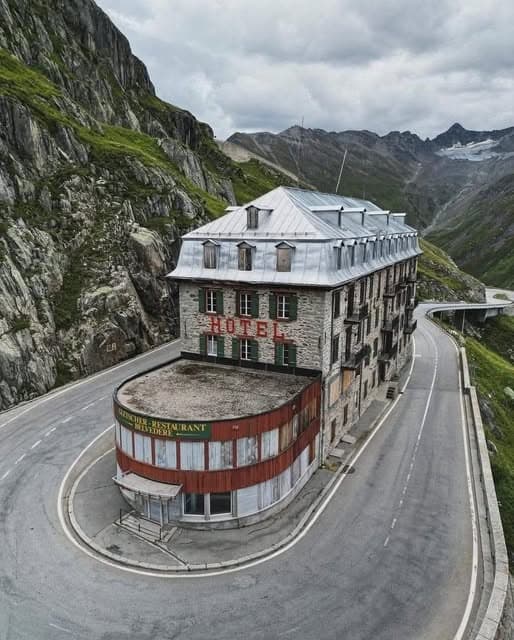
The best abandoned places in Switzerland are usually former mountain hotels, industrial sites, military structures, rail buildings, and isolated medical facilities. The most searched areas include the Geneva-Lausanne corridor, Zurich's outskirts, Valais, and parts of Ticino. For responsible urbex in Switzerland, the right approach is simple: use verified information, respect private property, and avoid sealed or hazardous sites.
Quick summary
- Abandoned places in Switzerland are most commonly former hotels, factories, military sites, and rail-related buildings.
- The strongest search demand is around Geneva, Lausanne, Zurich, Valais, and Ticino.
- A Switzerland urbex map is more reliable than copied coordinates from social media.
- Urban exploration in Switzerland requires extra caution because terrain, weather, and ownership conditions change quickly.
- Responsible urbex means no forced entry, no vandalism, and no publication of damaging access details.
- Verified resources help separate real abandoned buildings in Switzerland from demolished, reused, or unsafe sites.
Quick facts
| Topic | Key point |
|---|---|
| Country scope | Switzerland |
| Main intent | Informational research |
| Most searched site types | Hotels, factories, military sites, clinics, rail buildings |
| Common regions of interest | Geneva area, Lausanne area, Zurich area, Valais, Ticino |
| Main access issue | Private property and changing site condition |
| Best planning tool | A verified Switzerland urbex map |
Why do abandoned places in Switzerland attract so much interest?
Abandoned places in Switzerland attract attention because they combine strong visual contrast with local history. In one country, you can see closed alpine hotels, obsolete industrial buildings, older transport infrastructure, and former institutional properties.
For photographers, the appeal is atmosphere. For researchers, it is evidence of changing tourism, logistics, and land use. For urbex visitors, Switzerland offers variety within relatively short travel distances.
Where can you find abandoned places in Switzerland?
You can find abandoned places in Switzerland most often near former industrial belts, older rail corridors, mountain tourism zones, and edge-of-city redevelopment areas. Region-level research is usually more useful than expecting stable public lists of exact coordinates.
| Region | Common abandoned site types | Why the region matters |
|---|---|---|
| Geneva and western Switzerland | Villas, warehouses, utility buildings, old hospitality sites | Dense urban edge and economic transition |
| Lausanne arc | Service buildings, small industrial sites, former institutions | High redevelopment pressure |
| Zurich region | Factories, depots, workshops, office shells | Industrial legacy and constant urban change |
| Valais and alpine zones | Mountain hotels, seasonal buildings, cable-related infrastructure | Tourism history and isolated terrain |
| Ticino | Hotels, hillside properties, small industrial remnants | Mixed tourism and transport geography |
For a broader overview, Browse all urbex maps is a useful starting point. For Swiss-specific guidance, Switzerland Urbex Map: Find Abandoned Places Safely and Legally explains how verified mapping improves planning.
Which abandoned buildings in Switzerland are most common?
The most common abandoned buildings in Switzerland are old hotels, industrial premises, military remnants, disused transport buildings, and institutional properties. Each category reflects a different part of the country's economic and territorial history.
Common categories include:
- Former mountain hotels affected by seasonality or changing travel patterns
- Small and mid-sized factories replaced by newer production networks
- Military structures or storage sites no longer needed in their original role
- Rail or service buildings made redundant by infrastructure upgrades
- Clinics, schools, or care facilities closed after consolidation
Not every empty building is a real urbex site. Some are under renovation, some are only temporarily vacant, and some are dangerous even from the exterior.
How can you do urbex in Switzerland safely and legally?
You can do urbex in Switzerland more safely and legally by treating every site as private unless clearly stated otherwise, refusing forced entry, checking recent status, and staying away from sealed or unstable structures. Good exploration starts with research, not access.
A practical checklist:
- Verify that the place is still abandoned and not actively reused
- Do not cross fences, locked doors, or posted restrictions
- Avoid roofs, shafts, wet floors, unstable stairs, and exposed alpine conditions
- Travel with a charged phone, offline navigation, and daylight margins
- Never remove objects or publish damaging entry instructions
- Prefer documented sources over viral coordinates
For wider trip planning, How to Plan an Urbex Road Trip in Europe can help structure routes more carefully.
Safety reminder: MapUrbex promotes preservation-first exploration. If entry is prohibited, access is unsafe, or a structure shows signs of collapse, do not enter.
Why use a Switzerland urbex map instead of random coordinates?
A Switzerland urbex map reduces wasted travel, outdated leads, and dangerous guesswork. In a country where many sites are altered, monitored, or quickly repurposed, verification matters.
A curated map helps you:
- Focus on real abandoned buildings in Switzerland
- Filter by region before planning travel
- Compare categories such as hotels, factories, and military sites
- Avoid duplicates, rumors, and dead links
- Build more efficient routes
If you want a practical follow-up list, Urbex Switzerland: 15 Abandoned Places to Explore Around Geneva, Zurich, and Lausanne is a useful companion read.
Which Swiss areas are most searched by urbex visitors?
The most searched Swiss areas for urbex are the Geneva-Lausanne axis, the Zurich region, and alpine cantons with former hotel infrastructure. These areas combine accessibility, history, and a higher concentration of abandoned buildings.
In practice, interest usually follows three patterns:
- Large urban regions with short-lived vacant sites
- Transport corridors with service buildings and industrial remnants
- Mountain areas where closed hotels and seasonal structures stand out
FAQ
Is urbex legal in Switzerland?
Urbex in Switzerland is not automatically legal. Many abandoned sites are on private land, and legality depends on ownership, local restrictions, and access conditions. If there is no permission or there are clear signs against entry, you should not enter.
Do I need permission to visit abandoned buildings in Switzerland?
Yes, permission is the safest assumption. Even if a building looks unused, it may still be owned, monitored, or scheduled for redevelopment.
Are abandoned mountain hotels common in Switzerland?
Yes. Long-closed mountain hotels are one of the most recognizable Swiss site types. They are heavily searched because they combine scenic settings with architectural character, but they also carry serious structural and weather-related risks.
What should I bring for responsible urban exploration in Switzerland?
Bring sturdy footwear, a charged phone, a flashlight, water, weather-appropriate clothing, and offline navigation. Just as important, bring restraint: if access is unclear or conditions look unstable, turn back.
Can I rely on social media coordinates for lost places in Switzerland?
No. Social media coordinates are often outdated, copied, incomplete, or misleading. A verified source is more useful than a viral pin, especially in Switzerland where site status changes quickly.
Conclusion
Abandoned places in Switzerland are varied, visually striking, and often historically rich. The strongest categories are former hotels, industrial buildings, military remnants, and rail-related structures, especially around western Switzerland, Zurich, and alpine regions.
The key point is simple: good urbex in Switzerland depends on verification, legality, and preservation. Use curated information, protect locations, and do not trade safety for access.
Access the free urbex map
