 MapUrbex
A practical Belgium urbex map guide with 20 location profiles, city-by-city tips, and responsible exploration advice for Brussels, Liège, Antwerp, and beyond.
Belgium Urbex Map: 20 Places to Explore Around Brussels, Liège and Antwerp (2026 Guide)
Belgium remains one of the most interesting countries in Western Europe for urban exploration. It combines dense industrial history, military heritage, railway infrastructure, manor houses, and institutional ruins within short driving distances.
This guide explains how to use a Belgium urbex map responsibly in 2026. It focuses on verified location profiles, regional differences, and safe planning rather than exposing entry points or encouraging risky behavior.
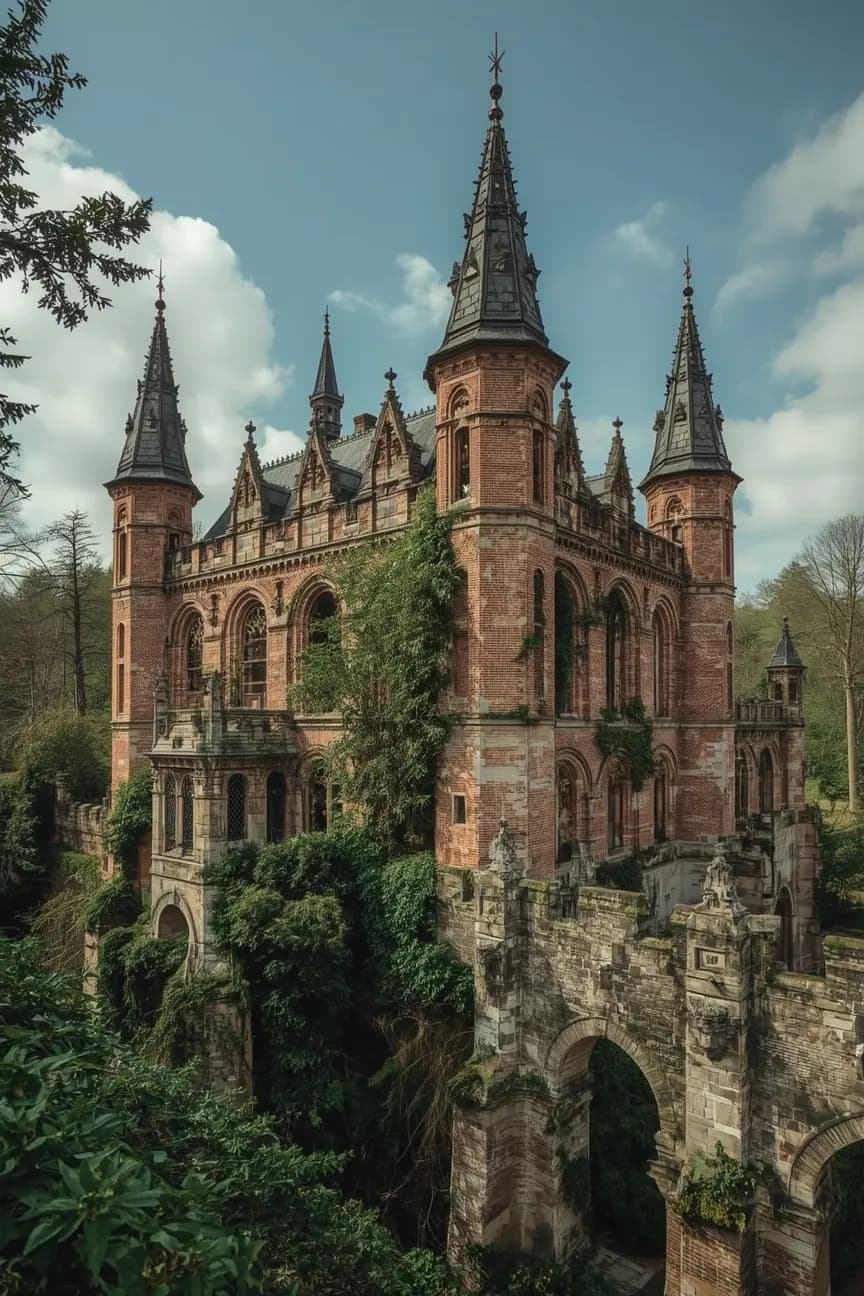
What is the best Belgium urbex map in 2026?
The best Belgium urbex map in 2026 is a curated map that verifies whether abandoned places in Belgium are still standing, whether access is legal or restricted, and what type of site you are actually planning to photograph. A useful map should prioritize status checks, preservation, and route planning over hype.
Quick summary
- Belgium offers strong urbex variety in Brussels, Liège, Antwerp, Charleroi, Namur, and wider Wallonia.
- The best targets are usually industrial sites, forts, depots, villas, schools, and rural estates.
- Site status changes quickly in Belgium because of demolition, redevelopment, and active security.
- Brussels, Liège, and Antwerp each have a different urbex character and different risk profile.
- Responsible urbex means no trespassing, no forced entry, no theft, and no damage.
- Verified maps save time by filtering out closed, demolished, or highly exposed locations.
Quick facts
- Country scope: Belgium
- Main cities covered: Brussels, Liège, Antwerp
- Other strong areas: Charleroi, Namur, Hainaut, Ardennes, Meuse Valley
- Typical site types: factories, forts, warehouses, villas, schools, barracks, hotels
- Best season: autumn to early spring for visibility and lower vegetation
- Legal reminder: abandoned does not mean legal to enter; always respect ownership and closures
Which regions of Belgium offer the widest urbex variety?
Belgium's widest urbex variety is found across Brussels, Liège, Antwerp, Charleroi, and the industrial parts of Wallonia. Brussels is strongest for institutional and office decay, Liège for steel and transport heritage, and Antwerp for dockside, military, and warehouse environments.
| Region | Best known for | Typical visual style | Planning note |
|---|---|---|---|
| Brussels | offices, schools, institutions, canal industry | urban interiors, concrete, paperwork, decay | many sites change status fast |
| Liège | steel, depots, industrial complexes, villas | heavy industry, brick, rust, large halls | access legality varies sharply |
| Antwerp | docks, warehouses, forts, service buildings | port atmosphere, military textures, wide exteriors | security is often higher |
| Charleroi | power and factory heritage | monumental industrial scenes | many classic spots are gone or sealed |
| Namur and Hainaut | forts, farms, abbeys, barracks | mixed heritage and rural abandonment | strong variety, but scattered |
| Ardennes | hotels, sanatoria, country houses | atmospheric, isolated, overgrown | weather and terrain matter |
Which 20 location profiles belong on a Belgium urbex map?
A useful Belgium urbex map should cover not just famous names, but the main location profiles that photographers repeatedly search for. The 20 profiles below reflect the types of abandoned places in Belgium that remain relevant for planning in 2026.
- Canal-side warehouse buildings in Brussels — good for industrial texture, loading bays, and layered graffiti.
- Disused office interiors in Brussels — known for desks, archives, suspended ceilings, and time-capsule details.
- Institutional buildings on the Brussels outskirts — former schools, care facilities, and administrative blocks.
- Anderlecht-style industrial halls — large shells with repetitive architecture and practical access challenges.
- Rail-adjacent structures around the capital — depots, workshops, and utility buildings with strong transport history.
- Liège steel heritage zones — the signature environment for urbex Liège, with rust, conveyors, and huge frames.
- Factory halls in Seraing and nearby valleys — strong scale, broken glass, and layered industrial decay.
- Academic and technical heritage around Val-Benoît — one of the clearest examples of changing status in Liège.
- Hillside villas near Liège — smaller targets that often deliver richer interior detail than giant sites.
- Meuse Valley depots and workshops — good for mixed industrial and transport photography.
- Antwerp dock warehouses — core material for urbex Antwerp, especially exterior compositions.
- Port service buildings in the Antwerp area — offices, workshops, and service compounds tied to logistics.
- Fort belt structures around Antwerp — military corridors, brick vaults, and defensive architecture.
- Kempen industrial compounds — lesser-known but useful for variety away from the city core.
- Suburban villas near Antwerp — often smaller, but visually strong when verified and still intact.
- Charleroi power-industry landscapes — historically important, but many famous spots are demolished or sealed.
- Mining-related buildings in Hainaut — shafts, workshops, and social infrastructure tied to coal history.
- Forts and barracks in the Namur area — solid choice for military heritage rather than pure industrial ruin.
- Rural farms, manor houses, and estates in Wallonia — common on a guide urbex Belgique because they are numerous.
- Hotels and sanatoria in the Ardennes — atmospheric locations where condition, weather, and legality matter most.
How do Brussels, Liège and Antwerp differ for urbex?
Brussels, Liège, and Antwerp differ mainly by site type. Brussels is strongest for dense urban interiors, Liège for large-scale industrial heritage, and Antwerp for docks, warehouses, and military structures.
- Brussels: best for offices, institutions, smaller factories, and rail-adjacent buildings.
- Liège: best for steel heritage, heavy industry, depots, and mixed valley infrastructure.
- Antwerp: best for port-related sites, forts, and large warehouse exteriors.
For many photographers, the simplest strategy is to plan by visual theme rather than by city. If you want paperwork, corridors, and abandoned administration rooms, start with Brussels. If you want rust and giant halls, Liège is usually stronger. If you want exterior port atmosphere and military brickwork, Antwerp is the better match.
How can you use a Belgium urbex map responsibly?
A Belgium urbex map should be used as a planning and filtering tool, not as an invitation to ignore the law. Responsible urbex starts with ownership checks, access status, and a clear decision to walk away from closed or unsafe sites.
Follow these rules:
- Never force entry or bypass locks, fences, or active security.
- Never publish exposed entry instructions.
- Respect private property and local regulations.
- Leave every site exactly as found.
- Avoid solo visits in unstable buildings.
- Use basic PPE when appropriate: boots, gloves, dust mask, torch, phone, and backup light.
- Treat demolition, asbestos, rotten floors, and shafts as real hazards, not aesthetics.
MapUrbex is built around verified locations, curated maps, and preservation-first exploration. That approach is especially important in Belgium, where many well-known sites disappear quickly.
Which related maps and guides help plan a wider trip?
If you want to go beyond one country, the most efficient approach is to combine a Belgium-focused map with broader European planning guides. That helps you compare density, travel times, and site types before a longer road trip.
Start with Browse all urbex maps and Access the free urbex map. For broader planning, read Urbex Map Europe: How to Find Verified Abandoned Places Safely, Best Countries in Europe for Urbex: 7 Strong Choices for Urban Exploration, and Belgium Urbex Map: Best Abandoned Places and Responsible Exploration Guide.
FAQ
Is urbex legal in Belgium?
Urbex in Belgium is not automatically legal just because a place looks abandoned. Many sites are privately owned, monitored, or explicitly closed. Legal access depends on permission, ownership, and local rules.
What are the best cities for urbex in Belgium?
The best-known cities are Brussels, Liège, and Antwerp. Charleroi and parts of Wallonia also matter, especially for industrial and military heritage.
Are famous Belgian urbex sites still worth searching for in 2026?
Some are, but many famous names are demolished, redeveloped, or heavily secured. That is why a verified Belgium urbex map matters more than old forum lists.
What should you carry for a Belgium urbex day trip?
Carry sturdy boots, two light sources, a charged phone, water, gloves, and a dust mask if conditions justify it. Do not bring tools intended to defeat locks or barriers.
Why are verified maps better than public pin drops?
Verified maps reduce wasted trips and help filter out false, unsafe, or no-longer-existing places. They also support a more responsible urbex culture by limiting exposure of fragile sites.
Conclusion
A strong Belgium urbex map is less about collecting famous names and more about finding reliable, current, and responsible location data. Brussels, Liège, and Antwerp each offer different strengths, while the rest of Belgium adds forts, farms, hotels, workshops, and industrial heritage worth tracking.
If you want better results in 2026, focus on verified status, preservation-first behavior, and realistic planning. That is the difference between a wasted trip and a productive, respectful exploration day.
Access the free urbex map
