 MapUrbex
Discover 10 types of abandoned places you can reach on foot, plus route planning tips, safety rules, and a curated MapUrbex map for responsible urbex hiking.
Urbex and Hiking: Top 10 Places You Can Reach on Foot [Map + Route]
Urbex and hiking fit together when the approach is part of the experience. Many abandoned places are not roadside stops. They sit above valleys, behind former industrial tracks, or at the end of old public paths.
The difference between a good outing and a bad one is route planning. A walkable urbex site needs more than a map pin. You need a legal approach, realistic distance, stable terrain, and current access information.
MapUrbex focuses on verified locations, responsible exploration, and preservation-first planning. This guide lists 10 kinds of places that are often accessible on foot and explains how to build a better urbex route.
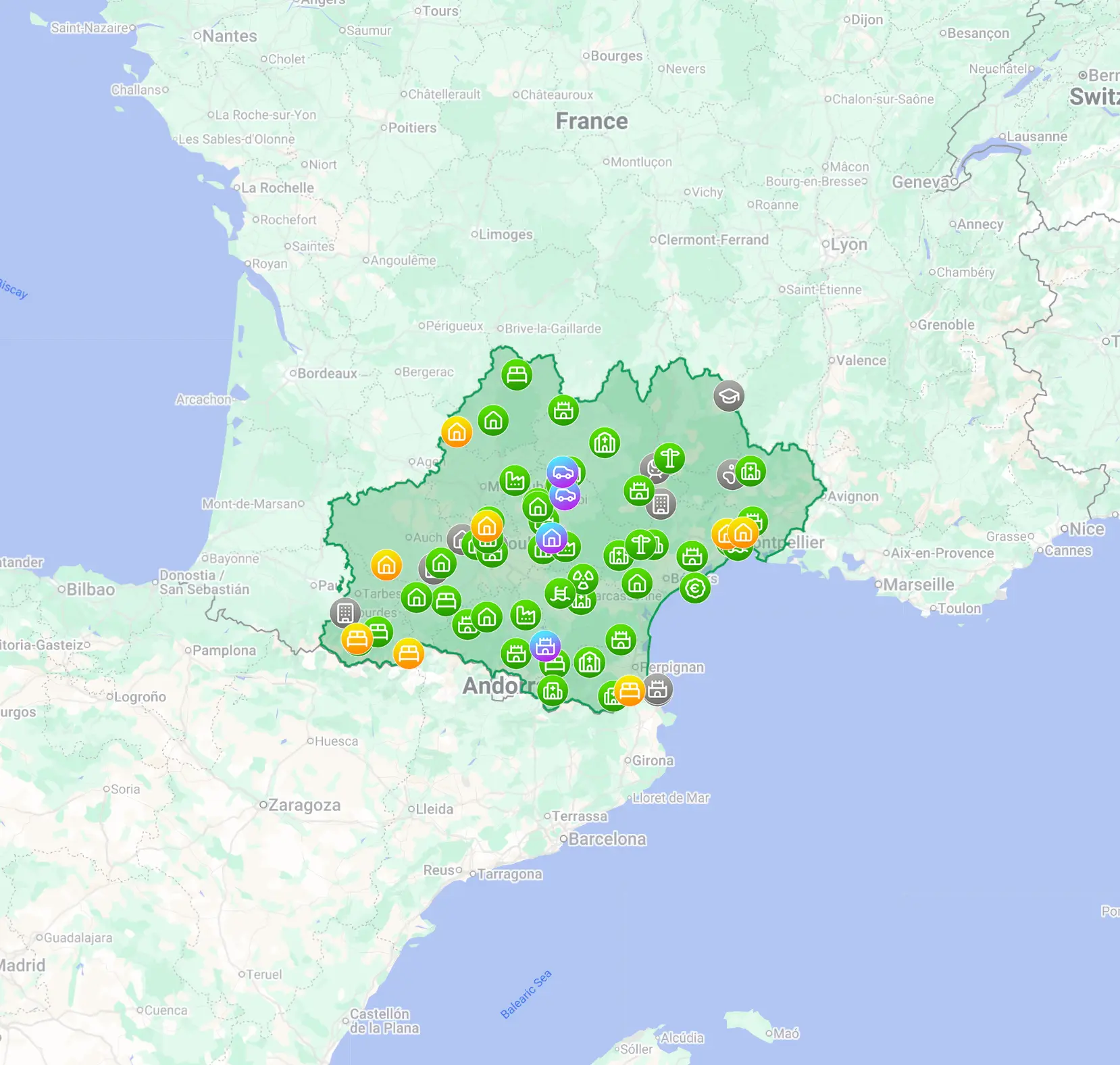
What are the best urbex and hiking places accessible on foot?
The best urbex and hiking spots are abandoned places that can be approached by public paths, marked trails, old service roads, or clear legal access corridors. In practice, the strongest candidates are hilltop sanatoriums, forest bunkers, rail remains, mountain hamlets, coastal batteries, mills, quarries, observatories, chapels, and waterworks with safe exterior access.
Quick summary
- The best walk-accessible sites combine a simple approach, clear navigation, and a safe turnaround point.
- Verified map entries are more reliable than random pins copied from social media.
- A good urbex hiking route starts with public access, not with a parking spot close to the ruin.
- Short to moderate walks usually work best: long enough to filter impulse visits, short enough to stay realistic.
- Preservation-first rules matter more on foot because remote sites are often fragile and unmonitored.
- If a place is sealed, reused, or legally closed, the route is no longer a valid urbex objective.
Quick facts
- Primary use case: responsible exterior-first exploration with a hiking approach
- Best route length: about 2 to 10 km round trip for most casual outings
- Best terrain: marked trails, forestry roads, coastal paths, old public lanes
- Core tools: curated map, offline backup, weather check, daylight margin
- Legal filter: verify ownership, closures, nature regulations, and local restrictions
- Preservation rule: leave no trace and never force access
Which 10 place types work best for urbex and hiking?
The best place types are the ones where the walk is predictable and the site can be appreciated without unsafe entry. These ten categories are the most practical starting points for a responsible urbex and hiking route.
| Rank | Place type | Typical walking approach | Why it works | Key caution |
|---|---|---|---|---|
| 1 | Hilltop sanatoriums | Ridge trail or old service road | Strong views and easy route logic | Weather exposure |
| 2 | Forest bunkers | Woodland path or fire road | Short approaches and clear landmarks | Protected zones |
| 3 | Railway remnants | Disused corridor or public path nearby | Linear navigation | Active rail risk nearby |
| 4 | Mountain hamlets | Hiking trail through pasture or forest | High atmosphere value | Seasonal access |
| 5 | Coastal batteries | Cliff path or coastal trail | Good visibility and navigation | Wind and cliff danger |
| 6 | Old mills | River path or village footpath | Often easy to combine with a short walk | Flooded ground |
| 7 | Quarry edges and lime works | Public approach track | Open terrain and readable layout | Unstable drops |
| 8 | Abandoned observatories | Summit trail or access road on foot | Clear route objective | Fast weather change |
| 9 | Chapels and religious ruins | Historic footpath | Cultural context and simple distance | Active heritage protection |
| 10 | Waterworks and reservoirs | Utility road or valley path | Good for exterior documentation | Restricted infrastructure rules |
How do you plan a responsible urbex hiking route?
A responsible urbex hiking route starts with access rules, then terrain, then backup options. If the legal approach is unclear, the route is not ready.
- Define the objective as a place type, not just a single pin.
- Check whether the approach uses public trails, public roads, or other clearly lawful access lines.
- Estimate round-trip distance, elevation, daylight, and escape options.
- Compare satellite view, topographic layers, and recent status notes.
- Save an offline route and tell someone where you are going.
- Turn back if the path becomes unsafe, signed as closed, or clearly private.
For route research, Browse all urbex maps is useful as a curated starting point. If you also use mapping tools, read How to Use Google Maps to Find Abandoned Places Responsibly before relying on open map data alone.
What makes a place truly accessible on foot?
A place is truly accessible on foot only when the walking approach is both realistic and lawful. A short distance by itself is not enough.
Use these five filters:
- Public approach: The route begins on a public road, trail, or clearly permitted access line.
- Terrain quality: Mud, scree, cliff edges, or washouts can turn an easy map into a bad field route.
- Navigation clarity: You should be able to explain the approach in simple, repeatable steps.
- Turnaround safety: There must be a clear point where you can stop without pressing onward into risk.
- Site condition: If the structure is collapsed, sealed, reused, or posted against entry, treat it as an exterior-only or no-go destination.
This is why a curated Access the free urbex map is often more useful than a generic coordinates list. The goal is not just to find a ruin. The goal is to find a route that still makes sense on the day of the walk.
When is a walking approach better than driving?
A walking approach is better when the final access road is degraded, parking is limited, or the site sits beyond a public trail network. It is also better when the landscape itself is part of the experience.
Walking can improve an urbex outing because it:
- reduces dependence on unreliable roadside pins
- helps you evaluate terrain gradually
- often avoids blocked vehicle tracks
- makes route planning more deliberate
- lowers the pressure to rush into a site
That said, walking is not a tactic for hiding trespass. If a place requires crossing fences, ignoring signage, or entering active infrastructure, the correct decision is to stop.
How does MapUrbex reduce route-planning mistakes?
MapUrbex reduces mistakes by focusing on verified locations, status-aware curation, and preservation-first selection. That matters because abandoned places change quickly.
A location that looked open last year may now be fenced, demolished, reused, or officially sealed. The article Abandoned Places That Disappeared in 2025: Demolished, Reused, or Sealed shows exactly why route plans need updates.
The most common urbex planning mistake is confusing an old online pin with a current, usable route.
If you want a wider overview before choosing a walk, start with Browse all urbex maps. If you want a lower-friction entry point, use Access the free urbex map and compare route types before going into the field.
What gear matters most for urbex and hiking?
The most important gear is navigation, water, weather protection, and a charged phone. The goal is safe movement outdoors, not forced entry.
Recommended basics:
- offline map backup
- fully charged phone and power bank
- water and a small energy snack
- weather layer and waterproof shell if needed
- headlamp for late return, not for entering unsafe structures
- basic first aid kit
- sturdy shoes with grip
Avoid treating remote ruins like adventure parks. No route is worth an injury, a rescue call, or damage to a fragile place.
FAQ
Is urbex and hiking legal everywhere?
No. Legality depends on country, land ownership, protected-area rules, heritage status, and site condition. A public trail to a viewpoint does not automatically grant legal entry into a structure.
How long should an urbex hiking route be?
For most people, 2 to 10 km round trip is the practical range. Longer routes can work, but they need stronger weather planning, daylight margin, and exit options.
Can I use Google Maps alone to plan an urbex route?
No. Google Maps can help with orientation, but it should be checked against topographic context, satellite imagery, current closures, and responsible planning principles. Start with How to Use Google Maps to Find Abandoned Places Responsibly.
What should I do if a location is sealed or reused?
Treat it as unavailable. Do not force access, bypass barriers, or assume older reports are still valid. Update your plan and choose another destination.
Are remote sites always better for responsible urbex?
Not necessarily. Remote places may be quieter, but they can also be more fragile, harder to exit, and slower to reach in an emergency. Responsible planning matters more than remoteness.
Conclusion
Urbex and hiking work best when the walk is planned as carefully as the destination. The strongest routes use public approaches, realistic terrain, and current status checks.
For that reason, the best foot-accessible urbex locations are not simply the most hidden ones. They are the ones you can reach responsibly, document respectfully, and leave without altering the place.
Access the free urbex map
