 MapUrbex
Planning urbex in Canada? Learn the main legal, safety, and ethical rules before visiting abandoned places, with practical guidance for responsible exploration.
Urbex in Canada: Rules to Know Before You Explore
Urbex in Canada attracts photographers, historians, and explorers who want to document abandoned places with care. But the first step is not finding a location. It is understanding the rules.
In Canada, urban exploration sits at the intersection of property law, safety, and ethics. Many abandoned buildings are still privately owned, structurally unstable, or under active monitoring.
This guide explains the legal basics, the safety rules, and the responsible habits that matter before any visit. If you want reliable starting points instead of random internet lists, Browse all urbex maps.
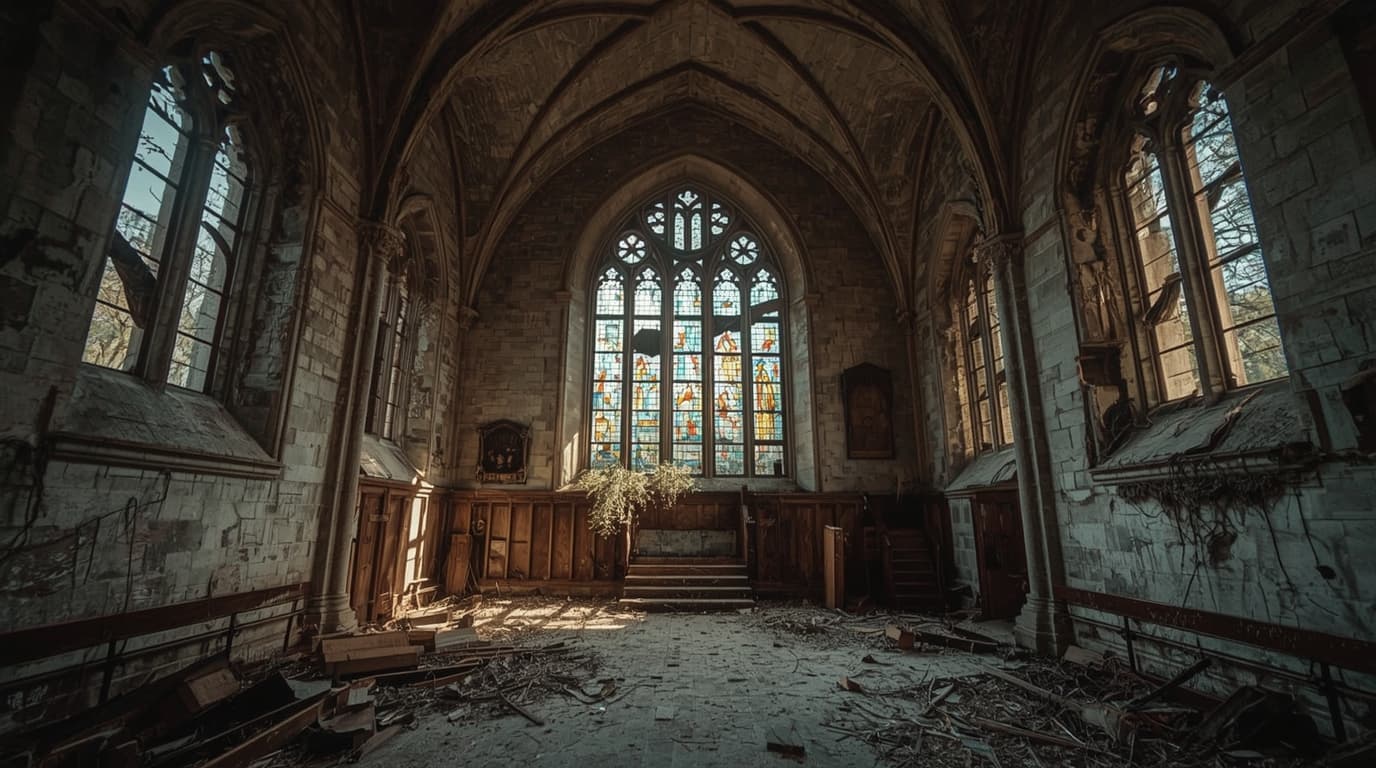
Is urbex legal in Canada?
Urbex in Canada is not governed by one single national ban or one single national permission. In practice, legality usually depends on property access, consent from the owner, posted restrictions, and what you do on site. Entering without permission, bypassing barriers, or damaging property can create legal risk quickly.
Quick summary
- Canada does not have one specific "urbex law" that makes all exploration legal or illegal.
- The main legal issue is usually trespassing on private or restricted property without permission.
- Forced entry, cutting fences, opening sealed doors, or taking objects can turn a visit into a serious offense.
- Safety matters as much as legality because abandoned places may contain unstable floors, asbestos, mold, glass, and hidden shafts.
- Responsible urbex means leave no trace, do not publish sensitive access details, and do not interfere with a site.
- Verified and curated maps are safer starting points than viral lists; see Why Most Urbex Lists Are Fake, and How to Find Real Places.
Quick facts
| Topic | Key point |
|---|---|
| Legal status | There is no single Canadian urbex law. Access rules depend on ownership, consent, and local restrictions. |
| Main risk | Trespassing is the most common legal problem. |
| Higher-risk behavior | Forced entry, vandalism, theft, and entering active industrial sites. |
| Safety hazards | Structural collapse, air quality issues, sharp debris, water damage, and hidden drops. |
| Best practice | Verify ownership, respect signs, and leave immediately if access is not authorized. |
| Better planning | Use curated resources such as Browse all urbex maps and Urbex Canada: Best Abandoned Places and Exploration Guide. |
Which laws and rules matter most for urbex in Canada?
The most important rules are usually about property rights, trespassing, and damage. For most explorers, the question is not "Is the building abandoned?" but "Do I have the right to be there?"
A place can look empty and still be protected by law. That includes closed schools, factories waiting for redevelopment, railway buildings, churches, farms, hospitals, and remote industrial sites. In many cases, ownership remains active even when maintenance has stopped.
The most common legal problems include:
- entering private land without permission
- ignoring posted no-entry signs
- bypassing fences, locks, boards, or barriers
- taking artifacts or scrap from the site
- damaging doors, windows, walls, or fixtures
- entering hazardous or restricted infrastructure
Canadian rules can also vary by province, municipality, and site type. A city may enforce local trespass rules more actively in some districts. Rail property, utility sites, ports, and military areas can involve much stricter consequences.
Legal reminder: this article is general information, not legal advice. If ownership or access status is unclear, do not enter.
How do trespassing and permission work in Canada?
Permission is the clearest line. If you do not have authorization to enter private or restricted property, you should assume access is not allowed.
Many urbex problems begin with a false assumption: "No one uses it, so it must be fine." That is not a reliable legal standard. A building may be vacant, but the land can still be owned, insured, monitored, or scheduled for demolition.
A practical rule set is simple:
- Check whether the place is private, public, or clearly restricted.
- Look for fences, signs, cameras, recent locks, or active maintenance.
- Do not cross barriers or open sealed entry points.
- If a caretaker, security guard, owner, or neighbor tells you to leave, leave immediately.
- Never treat online coordinates as proof that access is lawful.
If your goal is long-term exploration, permission-based access is the safest model. It protects you, the site, and the wider urbex community.
What safety rules matter before exploring abandoned places in Canada?
Safety rules are essential because many abandoned places in Canada are more dangerous than they appear. Cold weather, water damage, roof collapse, mold, asbestos, and poor visibility can turn a short visit into an emergency.
Before any trip, assess whether the site is worth the risk at all. Responsible exploration includes deciding not to enter.
Key safety rules include:
- never explore alone if the site is remote or structurally uncertain
- tell someone where you are going and when you expect to return
- wear boots, gloves, and a reliable light source
- avoid roofs, wet stairs, elevators, basements with water, and visibly damaged floors
- do not touch chemicals, machinery, needles, or suspicious containers
- leave immediately if air quality feels poor or the structure shifts, cracks, or vibrates
Winter conditions add specific Canadian risks. Ice can hide openings, access roads may be isolated, and temperatures can turn a minor delay into a serious exposure problem.
For a preservation-first mindset, the safest principle is this: if entry requires risk, force, or guesswork, do not proceed.
How can you find abandoned places in Canada responsibly?
The best method is to use verified, curated sources and filter locations through legality and safety. Responsible urbex is not just about finding a place. It is about finding a place you can assess realistically.
Public social posts often recycle fake, outdated, or already demolished locations. They also encourage crowd pressure on fragile sites. That is why curated resources are more useful than generic top-10 lists.
MapUrbex focuses on verified locations, responsible exploration, and preservation-first mapping. If you want broader context, start with Urbex Canada: Best Abandoned Places and Exploration Guide. For a reality check on unreliable directories, read Why Most Urbex Lists Are Fake, and How to Find Real Places.
A responsible search process looks like this:
- start with curated maps rather than viral videos
- confirm whether the place still exists
- identify obvious ownership or redevelopment signals
- avoid sharing access details publicly
- favor documentation over conquest
You can also review Urbex Ethics: Rules for Responsible Urban Exploration before your next trip.
What ethical rules should every explorer follow?
The core rule is simple: leave no trace and do not make a site worse because you visited it. Ethics are not separate from legality. They reduce harm, protect access, and preserve history.
Responsible urbex in Canada usually means:
- no forced entry
- no vandalism or tagging
- no theft, "souvenir" collecting, or moving objects for photos
- no publishing sensitive entry methods
- no disturbing wildlife, nearby residents, or active workers
- no romanticizing dangerous behavior for content
This matters because abandoned places are often fragile. A single broken panel, displaced beam, or viral location post can accelerate closure, damage, and surveillance.
MapUrbex takes a preservation-first approach for that reason. The goal is documentation, not consumption.
FAQ
Is trespassing the main legal risk for urbex in Canada?
Yes. In most everyday cases, trespassing is the main legal issue. The biggest practical question is whether you have permission to be on the property.
Does an abandoned building mean it is legal to enter?
No. A building can be abandoned in appearance and still remain privately owned, monitored, insured, or legally restricted.
Are there extra risks at industrial or rail sites in Canada?
Yes. Active or semi-active industrial land, rail corridors, utilities, ports, and similar sites can involve much higher legal and physical risk. They should be treated as high-restriction environments.
Should you share exact locations of abandoned places online?
Usually no. Publicly sharing precise access details can lead to vandalism, theft, unsafe visits, and rapid site closure.
What is the safest way to start urbex in Canada?
Start with verified information, permission where possible, conservative site selection, and strong safety habits. Avoid force, avoid crowds, and avoid any site that seems unstable or actively restricted.
Conclusion
Urbex in Canada can be rewarding, but only when legality, safety, and ethics come first. There is no universal Canadian rule that makes every abandoned place fair game. Access depends on ownership, consent, local restrictions, and your behavior on site.
If you want to explore responsibly, choose verified information over hype, leave places untouched, and walk away when the situation is unclear.
Access the free urbex map
