 MapUrbex
A clear guide to whether urbex is legal in Japan, the main legal risks, the most sensitive types of abandoned places, and the safest responsible practices.
Is Urbex Legal in Japan? Rules, Risks, and Responsible Ways to Explore Abandoned Places
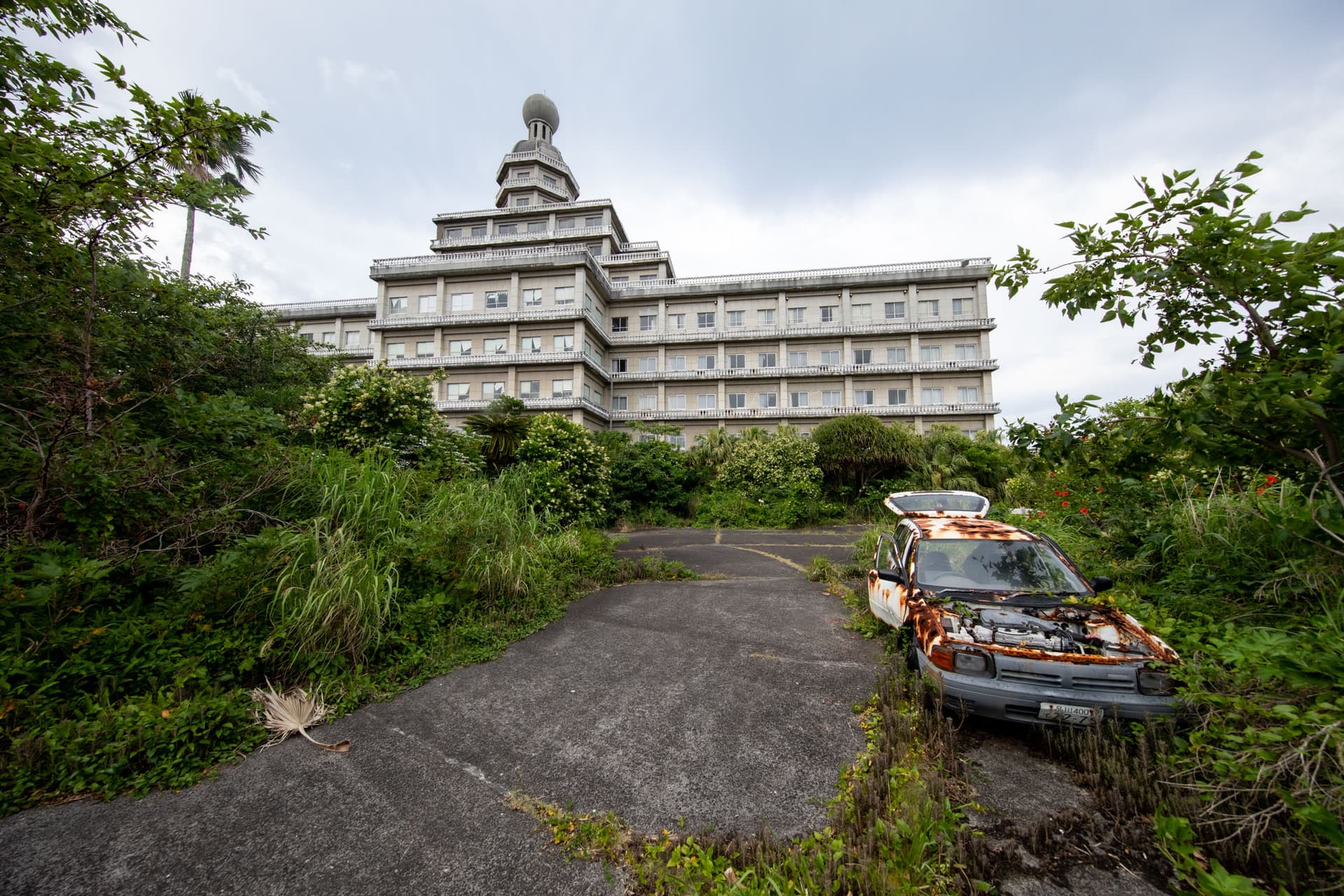
Japan is one of the best-known countries for ruin photography. Old resorts, bathhouses, schools, and industrial sites are often grouped under the word haikyo, a term commonly associated with abandoned places.
That visual appeal creates a practical question: is urbex legal in Japan? For most visitors, the answer depends on ownership, permission, and whether the site is actually restricted, not on whether the building looks empty.
Is urbex legal in Japan?
Urbex in Japan is not automatically legal. Exploring an abandoned place becomes illegal if you enter private property or a building without permission, ignore barriers, damage anything, or access restricted infrastructure. In practice, the legal status depends less on the site's abandoned appearance than on ownership, consent, and local restrictions.
Quick summary
- Japan does not treat abandoned buildings as open-access spaces.
- Permission matters more than appearance. A ruin can still be privately owned, monitored, or awaiting redevelopment.
- The main legal risks are unauthorized entry, property damage, theft, and access to sensitive infrastructure.
- Railway areas, tunnels, utilities, military land, and active demolition sites are the highest-risk categories.
- The safest approach is exterior photography from public space, owner permission, and verified planning through Browse all urbex maps.
- If you need broader legal context first, read Is Urbex Legal? A Clear Guide to Urban Exploration Laws.
Access the free urbex map
Quick facts
- Country: Japan
- Common local term: haikyo
- Main legal issue: entering land or buildings without permission
- Higher-risk sites: rail infrastructure, tunnels, utilities, military areas, disaster zones, demolition sites
- Lower-risk alternative: photographing exteriors from public roads or public viewpoints
- Responsible rule: if access is unclear, do not enter
Why does an abandoned place not mean free entry in Japan?
An abandoned place does not mean ownerless property in Japan. Many ruins still belong to companies, municipalities, families, bankruptcy estates, or redevelopment entities. If you cross onto land or enter a structure without consent, the empty condition of the site does not turn it into a public place.
This is the point many beginners miss. A broken window, faded sign, or overgrown path may suggest neglect, but none of those details prove lawful access. In practice, fences, cameras, neighbors, caretakers, and posted warnings matter far more than the site's appearance.
If you are new to the subject, How to Start Urbex: A Beginner's Guide to Urban Exploration explains the basic mindset behind responsible exploration: preservation first, no forced entry, and no assumption that silence means permission.
Which legal risks matter most for urbex in Japan?
The biggest legal risks for urbex in Japan are unauthorized entry, property damage, theft, and entering restricted infrastructure. Police attention is usually much higher when a site is fenced, signed, actively monitored, or close to transport, utilities, or strategic facilities.
A simple way to think about it is this: the risk rises every time you cross a clear boundary or interfere with the site. Cutting a lock, opening sealed doors, moving barriers, taking souvenirs, or walking onto rail property are the actions most likely to turn curiosity into a legal problem.
| Situation | Likely risk | Why it matters | Safer choice |
|---|---|---|---|
| Crossing a fence, gate, or chained entrance | High | A visible barrier signals restricted access | Stay outside and use public viewpoints |
| Entering a vacant building without permission | High | The structure can still be privately or publicly owned | Seek permission or do not enter |
| Moving items or taking objects | Very high | This can be treated as theft or damage | Leave everything exactly as found |
| Entering tracks, tunnels, or rail yards | Very high | Rail safety and security rules are strict | Avoid entirely |
| Ignoring a no-entry sign | High | Clear notice removes ambiguity | Leave immediately |
For broader context beyond Japan, Is Urbex Legal? A Clear Guide to Urban Exploration Laws gives a useful general framework. The same principle applies here: abandonment does not cancel ownership.
Are some abandoned places in Japan riskier than others?
Yes, some categories of abandoned places in Japan are far riskier than others. The highest-risk sites are the ones tied to transport, security, utilities, government control, or active private ownership.
1. Abandoned hotels and resorts
Abandoned hotels and resorts are among the most photographed haikyo sites in Japan, but they are not automatically lawful to enter. Many remain in private hands, sit inside managed resort zones, or attract attention from neighbors and developers.
They also create a false sense of openness because they can be large, visibly empty, and easy to spot. That does not reduce legal exposure. If a visit requires stepping past a boundary, opening a closed entrance, or ignoring signage, the safer choice is to stay outside.
2. Closed schools and hospitals
Closed schools and hospitals often involve public institutions, local authorities, or complex ownership records. That can make them more sensitive than they first appear, especially when paperwork, equipment, or records were once stored there.
These sites also add non-legal risks such as unstable floors, hazardous materials, and sharp debris. Even when a building looks inactive, formal permission is still the right standard.
3. Railway sites, tunnels, and stations
Disused railway spaces are some of the highest-risk locations in Japan. Even when a line looks abandoned, nearby land, tunnels, service roads, and track zones may still fall under transport rules, security control, or operational oversight.
This is the category that responsible explorers should simply avoid unless access is officially authorized. Rail environments combine legal risk with serious danger, and small mistakes can affect more than the visitor.
4. Military land, industrial plants, and utilities
Military land, power infrastructure, water facilities, and industrial plants are highly sensitive whether they are active, mothballed, or partially disused. Entry can trigger security concerns very quickly.
They also present hazards that are not obvious from the outside, including toxic residue, asbestos, unstable machinery, and confined spaces. These are not appropriate trial sites for photographers or beginners.
5. High-profile private estates and viral locations
Viral abandoned places often become legally riskier because attention changes the context. Once a property is widely known online, owners, police, neighbors, and vandals all pay more attention to it.
A good example of why private ownership matters is Genshiro Kawamoto’s Villa in Japan: Why It Matters and Why He Was Arrested. The lesson is not that fame makes a site fair game. The lesson is that ownership, access conditions, and police scrutiny still define the real boundaries.
How can you explore abandoned places in Japan more responsibly?
The safest and most responsible way to approach urbex in Japan is to treat permission as the default requirement. If you cannot verify legal access, the responsible choice is exterior observation, historical research, or leaving the site off your plan.
A practical checklist helps:
- Confirm whether the place is on private land, municipal land, or restricted infrastructure.
- Read signs carefully. In Japan, even simple warnings can carry important access information.
- If a gate, fence, chain, or closed door blocks the way, do not bypass it.
- Do not move objects, open sealed rooms, or take anything away.
- Avoid nighttime visits because visibility, emergency response, and local trust all get worse.
- Travel with preservation-first habits: leave no trace, share carefully, and never pressure others to cross boundaries.
MapUrbex follows the same logic. Curated information is useful only when it helps people make safer, more responsible decisions. You can Browse all urbex maps to compare regions, plan research, and prioritize verified information over rumor.
What does Japanese urbex culture look like today?
Japanese urbex culture is often framed through haikyo, a photography and documentation interest in ruins, depopulated spaces, and the traces of economic change. At its best, it values observation, memory, and preservation more than access for its own sake.
That distinction matters. A serious documentary approach does not require forced entry or reckless behavior. Many responsible photographers focus on exterior views, historical study, or places that can be visited lawfully through tours, museums, or heritage access.
If you are building your skills, start with the fundamentals in How to Start Urbex: A Beginner's Guide to Urban Exploration. Good urbex judgment is usually less about bravery and more about restraint.
FAQ
Can you enter an abandoned building in Japan if there is no warning sign?
No. The absence of a sign does not create permission. A building can still be privately owned or managed even if nothing is posted at the entrance. If lawful access is unclear, do not enter.
Is photographing abandoned places in Japan legal?
Photographing a ruin from public space is usually the lower-risk option. The legal situation changes once you step onto restricted land or into a building without permission. Sensitive sites such as rail, utilities, and security-related areas require extra caution.
What happens if police stop you near a haikyo site in Japan?
Stay calm, be polite, show identification if requested, and follow instructions. Outcomes depend on where you are, whether you crossed a boundary, and whether there is damage or a complaint. Arguing that a place looked abandoned is usually not a strong defense.
Are there legal abandoned places to visit in Japan?
Yes. Some former industrial sites, mines, heritage areas, museums, and preserved ruins can be visited lawfully through official access. Those options are the best fit for travelers who want history and atmosphere without trespass risk.
Does MapUrbex guarantee that a place is legal to enter?
No map can replace on-site judgment, current ownership checks, or local rules. MapUrbex focuses on curated maps, responsible discovery, and preservation-first planning. You should still verify current conditions before any visit.
Conclusion
Urbex in Japan is legal only when access is authorized. An abandoned appearance does not cancel ownership, barriers, or local restrictions, and the highest-risk sites are usually the ones connected to rail, utilities, government control, or well-known private property.
The most reliable rule is simple: if you cannot confirm permission, do not enter. Responsible urbex in Japan starts with restraint, verified information, and respect for places that are often more fragile, monitored, and legally complex than they look.
Browse all urbex maps
