 MapUrbex
A practical urbex Paris map guide to 20 abandoned places reachable by metro, RER, tram, or train, with a responsible and preservation-first approach.
Urbex Paris Map: 20 Abandoned Places You Can Reach by Public Transport
Paris is one of the easiest cities in Europe for car-free urban exploration. The real difficulty is usually not transport. It is finding reliable information without depending on outdated lists, exposed locations, or unsafe advice.
This guide to an urbex Paris map focuses on 20 abandoned places in Paris and the close suburbs that are practical to approach by metro, RER, tram, or train. The purpose is not to publish sensitive entry points. The purpose is to explain how to plan responsibly.
MapUrbex follows a preservation-first approach: verified locations, curated map data, and no encouragement of trespassing or forced access. If you want to Browse all urbex maps, that is the best starting point.
Where can you find a map of 20 abandoned places in Paris accessible by public transport?
Yes. A curated Paris urbex map is the clearest way to find abandoned places that are realistically reachable without a car. MapUrbex helps you filter verified locations by transit practicality, so you can focus on metro, RER, tram, and suburban rail connections while keeping a responsible, preservation-first approach.
Quick summary
- Paris is well suited to urbex by public transport because metro, RER, tram, and Transilien lines cover the city and many suburban areas.
- The safest method is to use a curated map, not random lists copied from forums or social media.
- A responsible map should verify the location, but it should not publish forced-access details or sensitive entry information.
- The 20 most relevant Paris entries usually include villas, schools, warehouses, depots, clinics, factories, and other vacant structures.
- Public transport helps with planning, but legality, safety, and preservation matter more than convenience.
- You can also Access the free urbex map before building a more detailed Paris route.
Quick facts
| Item | Detail |
|---|---|
| City focus | Paris and the close suburban belt |
| Search intent | Informational: how to find transport-friendly urbex locations |
| Best transport modes | Metro, RER, tram, Transilien, bus |
| Map approach | Verified locations and curated filters |
| What is not published | Forced-entry tips, sensitive access points, vandal-friendly details |
| Safety reminder | Respect private property and never enter a site illegally or in dangerous conditions |
Why use a curated urbex map for Paris instead of random lists?
A curated urbex map is better because Paris locations change quickly. Buildings are sealed, renovated, demolished, or monitored with little warning. A copied list can be wrong within weeks.
Random pages also mix rumor with fact. They often repeat the same place under several names, keep dead spots online for years, or push readers toward risky behavior. That is the opposite of responsible urbex.
MapUrbex is useful because it prioritizes verification and context. You are not only searching for abandoned places in Paris. You are checking whether a site still exists, whether public transport makes sense, and whether the visit can be planned without damaging the place or crossing legal lines.
If you want broader context first, read Urbex Paris: A Responsible Guide to Urban Exploration in Paris.
Which 20 abandoned place profiles in Paris are the most relevant for public-transport-based urbex?
The most practical Paris urbex map usually includes a mix of inner-city and near-suburban sites that can be reached by rail-based transport. Exact entries change over time, but these 20 profiles are the ones most often worth tracking.
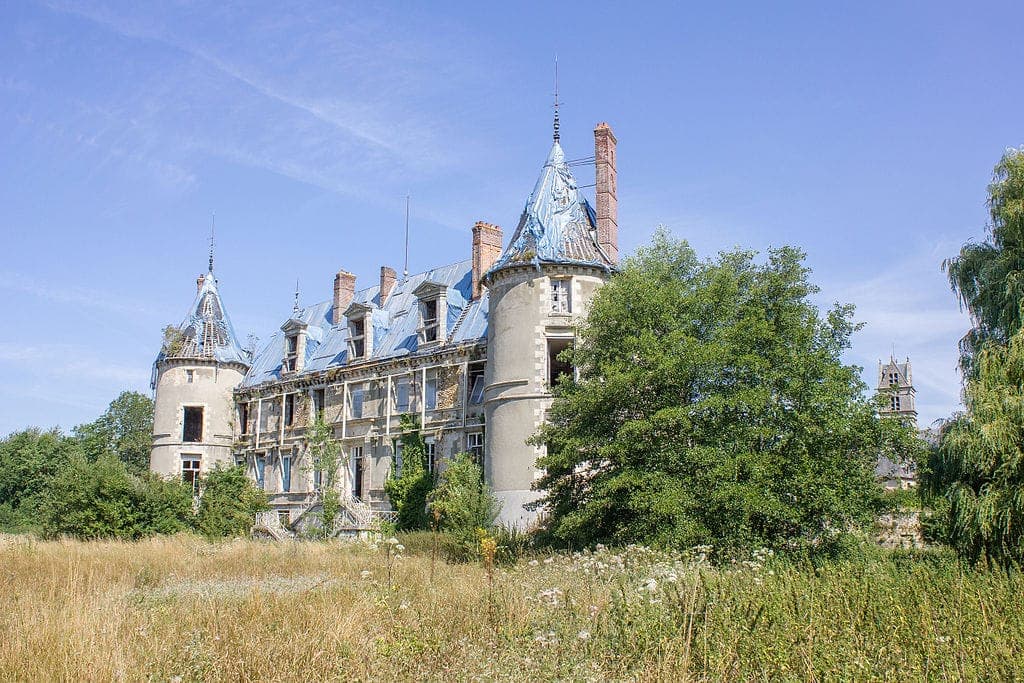
- Vacant manor houses on the metropolitan edge
- Abandoned schools and former training centers
- Closed medical buildings and clinics
- Empty office blocks from older business zones
- Disused warehouses near rail corridors
- Former workshops and light industrial halls
- Forgotten factories in the first suburban ring
- Derelict depots tied to transport or utilities
- Closed sports facilities
- Abandoned theaters or cultural venues
- Vacant religious buildings or annexes
- Former worker housing compounds
- Shuttered administrative buildings
- Empty hotels or guesthouses
- Abandoned leisure sites
- Disused service or water-infrastructure buildings
- Former laboratories or technical campuses
- Vacant farm buildings in the outer urban belt
- Old station-side buildings no longer in use
- Large residential villas left empty before redevelopment
The main point is simple: a good abandoned places map for Paris is not only a list of names. It also tells you whether the surrounding station network makes a visit realistic without a car.
Many explorers focus only on famous locations. That is often a mistake. Lesser-known verified sites are usually easier to research, easier to approach responsibly, and less likely to have been heavily damaged by exposure.
For a more place-focused companion article, see Urbex Paris: Best Abandoned Places and How to Access Them Responsibly.
Which public transport options make urbex in Paris easier without a car?
Metro and RER are the backbone of car-free urbex in Paris. They let you reach dense urban sectors quickly, then continue on foot or by bus for the last segment.
Here is the practical hierarchy most explorers use:
- Metro for intra-Paris movement and short transfers
- RER for fast access to the inner and middle suburbs
- Transilien for farther suburban or semi-peripheral sites
- Tram for edge-of-city corridors
- Bus for the last connection when no station is close
In practice, accessible by public transport does not mean next to the station. A site can still require 15 to 30 minutes of walking. That matters for daylight planning, weather, and safe exit time.
A simple method is to plan one main site and one backup site on the same line family. If the first location is sealed, active, or clearly unsuitable, you still have a responsible fallback instead of improvising.
How can you prepare a responsible urbex day in Paris?
The best preparation is to treat Paris urbex like field research, not like a treasure hunt. You need verified information, realistic transport timing, and a clear stop rule.
Start with the map. Then check rail times, walking distance from the station, neighborhood conditions, and return options before dark. If a site looks occupied, recently secured, or unsafe, do not push further.
Bring only simple essentials:
- charged phone
- offline map
- water
- flashlight
- sturdy shoes
- basic first-aid supplies
- weather-appropriate clothing
Do not bring tools for entry. Do not climb unstable roofs, descend into tunnels, or enter alone if the structure is uncertain. Paris also has famous underground lore, but high-risk exploration is not the same as responsible location research.
If your main goal is to find real spots instead of recycled lists, read Urbex Paris: How to Find Real Urbex Spots in Paris Responsibly.
What legal and safety limits matter most in Paris urbex?
The main limits are private property, active security, structural danger, and site preservation. Public transport access does not change any of those points.
A place can be easy to reach and still be illegal to enter. That is why responsible urbex never means forced access, lock bypassing, fence cutting, or following damaged entry points left by others.
Important: MapUrbex verifies locations, not permission to enter every structure. Always assess legality, safety, and current conditions on site, and leave immediately if access would require trespassing or unsafe behavior.
The preservation rule matters just as much. Do not break, move, tag, collect, or disclose fragile details that would accelerate vandalism. The best map is one that helps people document places without helping destroy them.
FAQ
Is urbex legal in Paris?
No general rule makes urbex automatically legal in Paris. Many abandoned places are still private property or restricted spaces. Public transport access does not create permission. If entry would require trespassing, forced access, or bypassing security, do not do it.
Can you do urbex in Paris without a car?
Yes. Paris is one of the best European cities for car-free urbex planning because metro, RER, tram, and suburban rail cover a wide area. The main limitation is not transport. It is verification, legality, and current site condition.
Does the map publish exact entrances?
A responsible urbex map should not publish sensitive entry methods or forced-access details. MapUrbex focuses on verified locations and planning context, not on exposing fragile sites to damage.
What should you check before leaving for a site?
Check transport times, walking distance, daylight, rain, battery level, backup routes, and whether the place still appears inactive. Also decide in advance that you will turn back if the site is occupied, sealed, or unsafe.
Are all abandoned places in Paris easy to reach by metro?
No. Some are close to metro lines, but many better spots are in the inner suburbs and are easier by RER, tram, bus, or Transilien. Accessible by public transport usually means a mixed route, not a direct station exit.
Conclusion
A good urbex Paris map is less about collecting famous names and more about making better decisions. If you want 20 abandoned places in Paris that are practical to reach by public transport, the best resource is a curated map that combines verification, transit logic, and a preservation-first mindset.
Start broad, filter carefully, and never trade safety or legality for access. That is the most reliable way to explore Paris responsibly.
Access the free urbex map
