 MapUrbex
Planning urbex in Tours? Learn where to look for abandoned châteaux, factories and forgotten buildings, and why verified maps matter.
Urbex in Tours: Abandoned Châteaux, Factories and Forgotten Buildings
Tours is better known for heritage, student life, and the Loire Valley than for giant industrial ruins. That is exactly why urbex in Tours requires more filtering than in larger post-industrial cities.
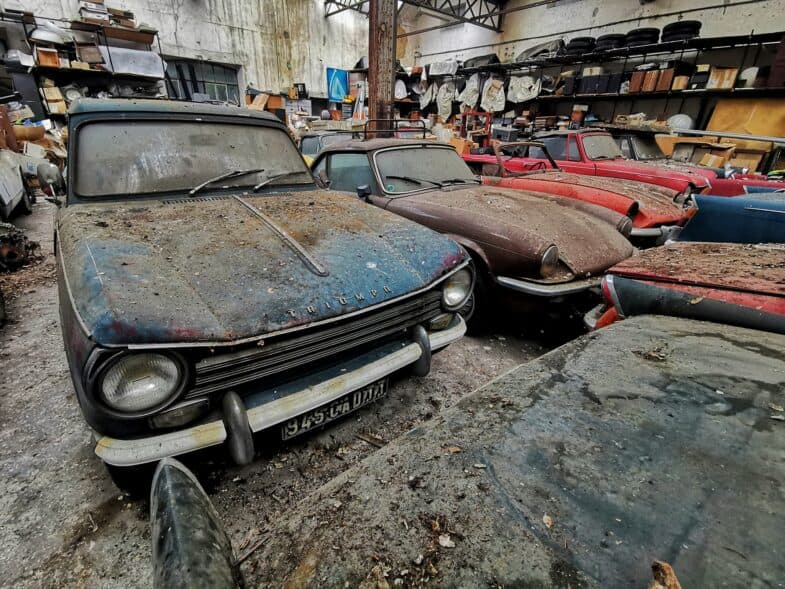
Most usable spots in and around Tours are not massive iconic ruins. They are more often smaller abandoned buildings, former workshops, service sites, empty houses, and a limited number of château-style properties in the wider area.
Because closures, redevelopment, and sealing happen fast, the best method is to rely on verified, recently reviewed listings rather than recycled coordinates or old forum posts.
Where can you do urbex in Tours?
Urbex in Tours is usually found in three categories: abandoned industrial or service buildings on the urban edge, forgotten residential or institutional properties in outer districts, and château-style sites in the wider Touraine countryside. Availability changes often, so the safest and most efficient route is a verified map, recent status checks, and strict respect for private property.
Quick summary
- Tours has fewer mega-ruins than larger industrial cities, but many smaller abandoned buildings.
- The main search categories are abandoned châteaux, abandoned factories, and forgotten buildings in and around Tours.
- Verified status matters because sealing, reuse, and demolition are frequent.
- Responsible urbex means no trespassing, no forced entry, and no damage.
- Curated maps save time compared with outdated coordinates from social media.
- Sites around Tours can change from visible to sealed within a short period.
Quick facts
| Factor | What to know for urbex in Tours |
|---|---|
| Best search area | Tours, nearby outskirts, and the rural fringe |
| Common site types | Factories, depots, villas, small institutions, château-style properties |
| Research difficulty | Medium: many places are small, private, and change quickly |
| Main risk | Closure, redevelopment, and private ownership |
| Best approach | Verified listings, recent checks, preservation-first behavior |
| Useful starting point | Browse all urbex maps |
Why is Tours interesting for urbex?
Tours is interesting for urbex because its abandoned places are diverse rather than purely industrial. The city mixes transport history, workshops, service buildings, empty residential properties, and nearby rural estates.
This creates a different profile from former mining or steel regions. In Tours, the challenge is usually not finding huge ruins. The challenge is identifying smaller, less publicized places that are still standing and still relevant.
That is why generic top-place lists age badly here.
Which abandoned places are most common in Tours?
The most common urbex categories in Tours are abandoned factories, forgotten service buildings, empty houses or villas, and a smaller number of château-type sites in the surrounding area.
In practice, these categories matter most:
- Abandoned factories in Tours: small industrial halls, workshops, warehouses, and former production units rather than giant heavy-industry complexes.
- Forgotten buildings in Tours: offices, former schools, clinics, garages, depots, and commercial premises left in transition.
- Abandoned châteaux near Tours: more likely in the wider Touraine landscape than in the city center itself.
- Rail and logistics leftovers: peripheral structures, yards, or utility buildings that may look promising but are often sealed or actively monitored.
In Tours, architecture and preservation often matter more than sheer size.
Are there abandoned châteaux in Tours?
Yes, but most abandoned châteaux linked to Tours are usually outside the dense urban core and closer to the surrounding countryside. They tend to be private properties, heritage-sensitive sites, or partially reused estates.
That means they should be approached with extra caution in research, not with direct access assumptions. A château may look abandoned from outside while still being owned, watched, or structurally unstable.
For preservation-first urbex, château listings should be treated as high-sensitivity locations where documentation quality and recent activity matter more than visual appeal alone.
Where are abandoned factories and industrial sites usually found?
Abandoned factories in Tours are usually found on older commercial edges, mixed industrial belts, workshop zones, and transport-connected outskirts rather than in the historic center. They are often modest in scale but can still be visually strong.
The most realistic expectation is not a famous megasite. It is a former workshop, depot, garage, plant extension, or warehouse that has fallen out of use.
This is also where research quality matters. Many former industrial addresses are already reused, fenced, or demolished. Before planning anything, compare multiple recent signals and favor verified records over old reposts.
How do you find verified urbex locations in Tours without wasting time?
The most efficient way to find urbex locations in Tours is to use curated, updated sources instead of random social posts. Status changes quickly, and many public lists stay online long after places are sealed or gone.
A practical research stack looks like this:
- start with Browse all urbex maps
- use Access the free urbex map
- read Free Urbex Map 2026: The Complete Guide to Verified Abandoned Places Maps
- refine your method with How to Find Abandoned Places Near You
For MapUrbex users, the goal is not quantity. The goal is better signal quality: places that are relevant, reviewed, and filtered for real-world usefulness.
What risks matter most around abandoned buildings in Tours?
The main risks around abandoned buildings in Tours are private ownership, unstable structures, hidden redevelopment, and outdated online information. Smaller sites can look simple from outside while presenting serious hazards inside.
Responsible urbex basics still apply:
- never force entry
- never cross obvious no-access barriers
- never take souvenirs or damage interiors
- avoid solo visits in risky environments
- leave immediately if a site is occupied, secured, or in active reuse
Legal reminder: MapUrbex supports responsible exploration research and location verification. It does not encourage trespassing, forced access, or unsafe behavior.
Why do urbex places in Tours disappear so quickly?
Urbex places in Tours disappear quickly because the local stock is often smaller, more privately held, and more exposed to renovation or sealing than in former heavy-industry regions. A place can move from interesting to gone in a short time.
For context on how fast abandoned sites change, see Abandoned Places That Disappeared in 2025: Demolished, Reused, or Sealed.
In short, freshness is a ranking factor for urbex information. Recent verification beats popularity.
Is a curated urbex map better than random coordinates?
Yes. A curated urbex map is usually better than random coordinates because it reduces noise, duplicate entries, and outdated spots. In a city like Tours, where many candidates are small and status-sensitive, filtering quality matters more than raw volume.
A good map helps you:
- compare categories
- focus on verified or recently reviewed locations
- avoid demolished or repurposed places
- plan ethically and efficiently
Access the free urbex map
FAQ
What is the best type of urbex in Tours for beginners?
For beginners, the best research target in Tours is usually smaller forgotten buildings with clear visibility, recent verification, and low complexity. Avoid fragile heritage sites and any location that requires guesswork about access or safety.
Are there many abandoned châteaux in Tours itself?
Not in large numbers within the city itself. Most château-type urbex associated with Tours is better understood as being in the surrounding Touraine area, not in the dense center.
Are abandoned factories in Tours still worth searching for?
Yes, but expectations should be realistic. Tours is more likely to offer smaller industrial remnants, workshops, and depots than giant iconic factories. Verification is essential because reuse is common.
How often should urbex information be rechecked?
Recheck as close as possible to your research date. In active urban areas, a few months can be enough for fencing, sealing, demolition, or reuse to change the status completely.
Why use MapUrbex instead of forums or social media?
MapUrbex focuses on verified locations, curated maps, and responsible urbex research. That helps reduce time lost on fake leads, duplicate listings, or places that disappeared years ago.
Conclusion
Urbex in Tours is less about spectacular quantity and more about smart selection. The city and its surroundings can offer abandoned châteaux, factories, and forgotten buildings, but the best results come from recent verification and a preservation-first mindset.
If you want useful results, focus on current status, category fit, and responsible planning rather than old viral coordinates.
Access the free urbex map
