 MapUrbex
A clear guide to the link between urbex and urban legends, how rumors form, and how to separate folklore from the real history of abandoned places.
Urbex and Urban Legends: The Stories Around Abandoned Places
Urbex and urban legends often grow together. The more silent, inaccessible, or visually striking a place feels, the more likely it is to attract stories about hauntings, crimes, disappearances, secret tunnels, or hidden rooms.
Those stories are not trivial. They shape how abandoned places are photographed, described, visited, and remembered. They can preserve fragments of local memory, but they can also distort history and encourage unsafe behavior.
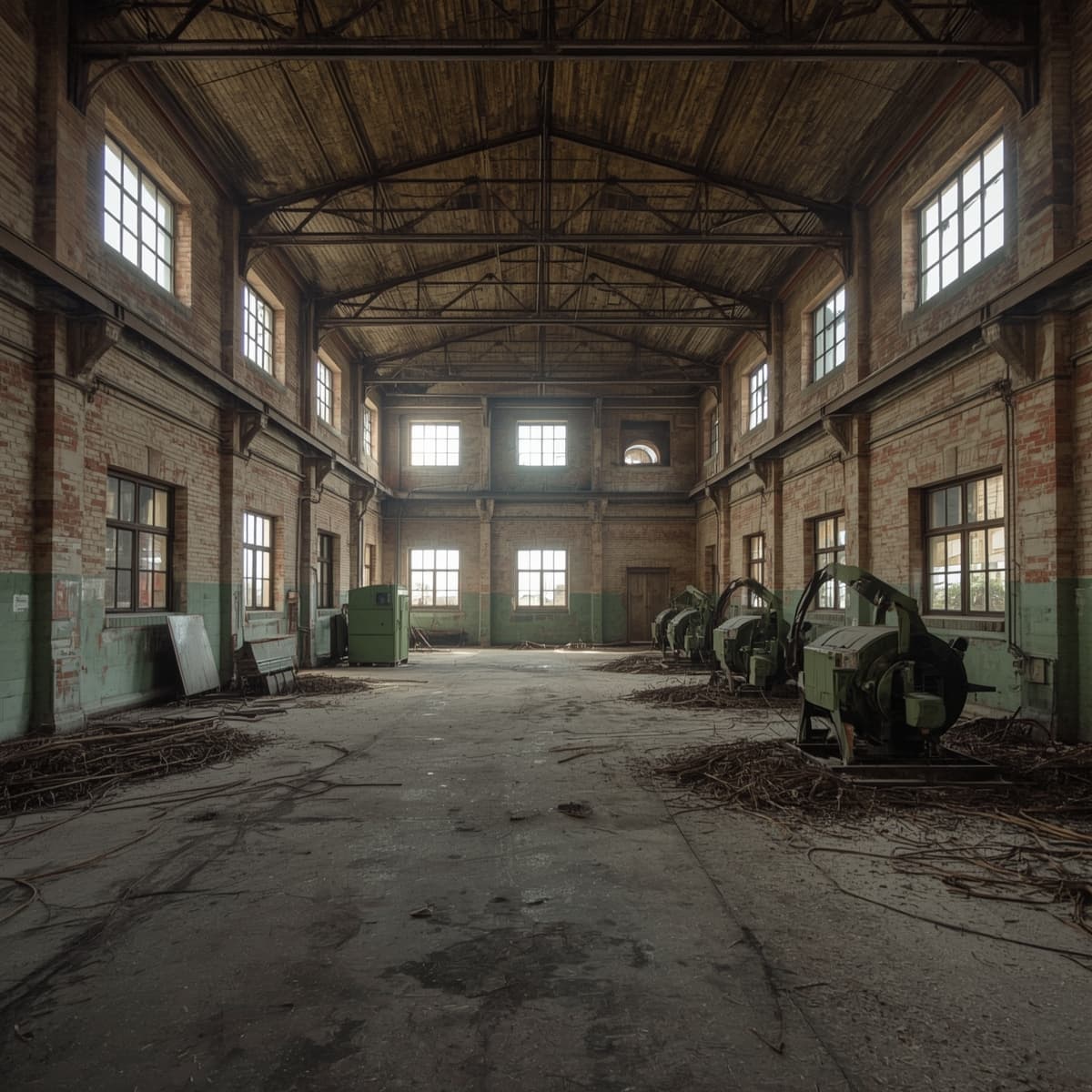
What is the link between urbex and urban legends?
Urbex and urban legends are closely linked because abandoned places create uncertainty, missing context, and strong visual impressions. When a site has no active staff, no posted history, and visible traces of past life, visitors fill the gaps with stories. Some stories preserve memory. Many others turn rumor, fear, and exaggeration into urbex folklore.
Quick summary
- Abandoned places attract stories because they contain visual clues but often lack verified context.
- Many famous myths about abandoned buildings come from repeated rumors, not documented facts.
- Urbex folklore can preserve local memory, but it can also erase the site's real social history.
- The most common legends involve hauntings, crimes, hidden spaces, secret institutions, and sudden abandonment.
- Responsible explorers verify claims with archives, maps, photos, and local sources before repeating them.
- Legal access, personal safety, and preservation matter more than sensational storytelling.
Quick facts
- Scope: global, across factories, hospitals, schools, military sites, hotels, and transport infrastructure.
- Main driver: missing information combined with emotionally powerful spaces.
- Common source of myths: reposted photo captions, second-hand anecdotes, and content copied without citation.
- Best verification tools: local archives, newspapers, land records, historic photos, and multiple independent witnesses.
- Main risk: rumors can lead people to unsafe decisions or to spread false history.
Why do abandoned places generate urban myths so easily?
Abandoned places generate urban myths easily because they combine silence, decay, and incomplete information. People see evidence of past activity, but they rarely see the full timeline.
A chair left in a classroom, a calendar on a wall, or medical files on the floor can suggest drama even when the real explanation is ordinary. Closure may have been gradual, administrative, or economic. Yet the site looks frozen in time, and that visual effect invites narrative.
Urban myths also grow because repetition gives them authority. Once a dramatic version appears in a photo caption, video, or forum post, later visitors often repeat it as fact. Over time, the rumor becomes more memorable than the documented history.
Which legends return most often in urbex folklore?
The same legend patterns appear again and again in urbex folklore because they fit abandoned architecture well. They are visually convincing, emotionally strong, and easy to retell.
| Recurring legend | Usual origin | Better reality check |
|---|---|---|
| Haunted building | Atmosphere, darkness, sound echoes, local ghost stories | Look for documented local folklore and separate it from site history |
| Sudden abandonment overnight | Personal items left behind, staged photos, incomplete cleanup | Check closure dates, bankruptcy records, and phased shutdown evidence |
| Hidden tunnels or secret rooms | Service corridors, basements, blocked access points | Compare plans, older photos, and official site functions |
| Former asylum experiments or secret military use | Sensational labels attached to hospitals and bunkers | Verify the building's real administrative purpose |
| Crime scene legend | Real incident nearby or generic rumor reused elsewhere | Search reliable reporting and confirm dates and addresses |
| Cursed site | Repeated accidents, deaths, or local moral storytelling | Distinguish folklore from documented incidents |
These myths survive because they make a location easier to summarize. Saying a place is haunted or cursed is simpler than explaining decades of labor history, deindustrialization, or institutional decline.
How can you separate real history from rumor?
You can separate real history from rumor by checking whether a claim can be dated, sourced, and independently confirmed. If a story has no document, no witness you can identify, and no timeline, treat it as unverified.
A practical method is simple:
- Compare several sources instead of trusting one viral caption.
- Check whether the same rumor appears word for word on unrelated sites.
- Look for old newspapers, planning records, or municipal archives.
- Match the story to the building type, period, and known owners.
- Distinguish local oral history from internet copy-and-paste.
- Keep uncertain claims clearly labeled as rumors.
In urbex, accuracy matters because false stories spread faster than corrections. A responsible description is often less dramatic, but it is more useful and more respectful to the people who lived or worked there.
Why do explorers keep repeating these stories?
Explorers repeat urban legends because stories help transform a visit into an experience with meaning. A legend gives emotional structure to photographs, videos, and personal memories.
There is also a social reason. Folklore creates belonging. When explorers repeat a local myth, they signal that they know the culture around a site. The problem is that community language can slowly replace evidence, especially when the most repeated version is also the least accurate.
What are the risks of taking urban legends literally?
Taking urban legends literally can distort history, increase risk, and lead people toward irresponsible decisions. A rumor about secret access, hidden passages, or an empty property can be dangerous and false.
Never treat folklore as permission to enter. Legal status, ownership, structural stability, contamination, and active surveillance matter more than any story attached to a place.
Key risks include:
- underestimating structural collapse, asbestos, water damage, or unstable floors
- assuming a site is empty when it is monitored or still partly in use
- spreading defamation about former residents, patients, workers, or owners
- encouraging copycat content built on trespassing or forced access
- burying the real history of labor, migration, healthcare, or conflict under sensational myths
How should responsible urbex handle folklore around abandoned places?
Responsible urbex should treat folklore as cultural material, not as automatic fact. The right approach is to document the story, state its status, and preserve the site's real history with care.
That means using precise language. Instead of writing that a building was definitely cursed, haunted, or abandoned overnight, write that such claims circulate locally and remain unverified unless evidence exists.
It also means avoiding harmful details. Do not publish break-in methods, bypass routes, or instructions that encourage illegal entry. Preservation-first urbex protects places from damage, theft, and performative rumor-making.
MapUrbex follows that logic with verified locations, curated maps, and responsible discovery. If you want structured research instead of hearsay, you can Browse all urbex maps. For a city-level example, see Urbex Brussels: guide to abandoned places in and around Brussels.
FAQ
Are haunted abandoned places common?
Haunting stories are common, but they are usually part of local folklore rather than verifiable site history. The atmosphere of abandoned buildings makes supernatural interpretations easy to attach.
Can an urban legend contain a real event?
Yes. A rumor may begin with a real closure, accident, death, or conflict. What changes over time is the scale, cause, or moral framing of the event.
Should you publish a rumored location online?
Only with caution. If access is illegal, unsafe, or likely to increase vandalism, do not amplify it. If you mention folklore, label it clearly as unverified unless you can document it.
Why do hospitals, schools, and factories attract more myths?
These places hold strong social meaning. People associate them with illness, childhood, labor, authority, and collective memory, which makes them ideal surfaces for myth-making.
What source is most reliable for the history of an abandoned site?
No single source is enough. The best method combines official records, local archives, historic images, reliable reporting, and on-the-ground observations that match the documented timeline.
Conclusion
Urbex and urban legends belong to the same cultural landscape, but they are not the same thing. One is the exploration and documentation of neglected spaces. The other is the layer of rumor, fear, memory, and storytelling that grows around them.
The most useful approach is to keep both in view. Respect folklore as part of how places are remembered, but verify history before repeating it. That is better for accuracy, better for preservation, and better for everyone who wants abandoned places understood rather than exploited.
Access the free urbex map
