 MapUrbex
Discover a responsible reference guide to the top 50 abandoned factories in France, with regional context, safety advice, and verified urbex map options.
Top 50 Abandoned Factories in France: A Responsible Urbex Guide
Abandoned factories in France attract photographers, historians, and urban explorers because they combine scale, industrial heritage, and visible traces of economic change. Former textile mills, foundries, paper plants, food-processing sites, and mechanical workshops all appear across the country.
This guide explains what usually belongs in a top 50 list of abandoned factories in France, why these industrial ruins are so widespread, and how to research them responsibly. MapUrbex follows a preservation-first approach: verified locations, careful documentation, and no encouragement of trespassing or forced entry.
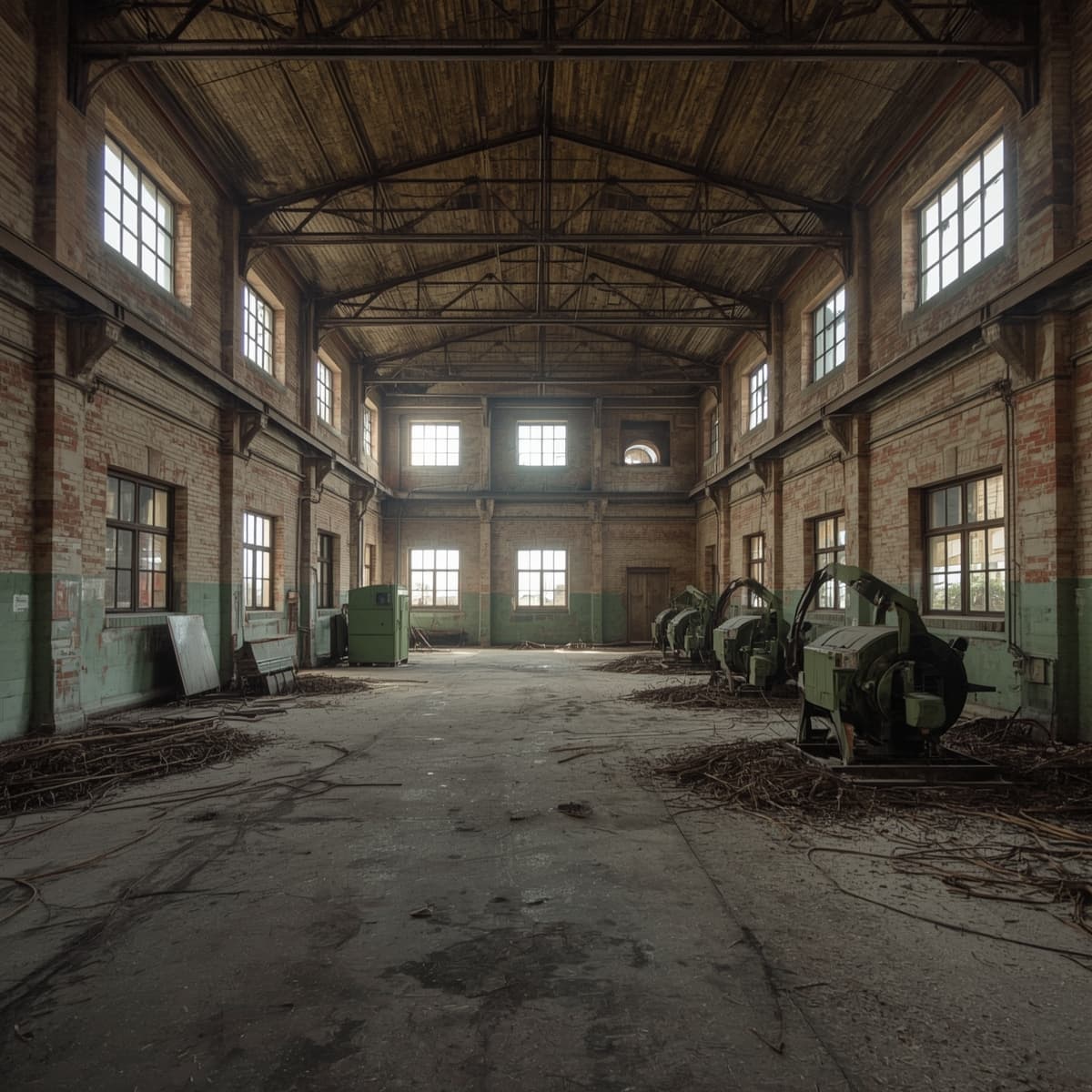
What are the best abandoned factories in France?
The best abandoned factories in France are usually large industrial sites with strong historical character, intact architecture, and clear documentary value. In practice, the most sought-after places are former textile mills, metalworks, paper mills, sugar plants, ceramics factories, and mixed industrial complexes in northern, eastern, and central France. Exact access details should never be shared carelessly.
Quick summary
- France has one of Europe’s richest landscapes of abandoned industrial sites.
- The most common factory ruins are linked to textiles, metallurgy, paper, food production, chemicals, and ceramics.
- A good top 50 list should focus on historical value, visual quality, and responsible research, not viral hype.
- Legal access varies by site. Many factories are private property or structurally unsafe.
- Responsible urbex means no forced entry, no theft, no vandalism, and no public dumping of sensitive coordinates.
- Verified, curated maps are the safest way to research industrial ruins in France.
Quick facts
- Country: France
- Main keyword: abandoned factories in France
- Related searches: top 50 abandoned factories, factory urbex France, industrial ruins France, abandoned places France
- Common sectors: textile, steel, paper, ceramics, food processing, chemicals, mechanical engineering
- Most active former industrial belts: Hauts-de-France, Grand Est, Normandy, Auvergne-Rhône-Alpes, Bourgogne-Franche-Comté
- Best research approach: verified maps, historical sources, legal checks, and preservation-first planning
Why does France have so many abandoned factories and industrial ruins?
France has many abandoned factories because its industrial development was broad, old, and regionally specialized. When industries moved, consolidated, automated, or shut down, large production sites were left behind in urban belts, river valleys, rail corridors, and working-class suburbs.
This pattern is especially visible in former textile regions, steel basins, logistics corridors, and manufacturing towns. Some sites closed after long decline. Others became obsolete after relocation or changes in global supply chains. The result is a dense map of friches industrielles France would recognize instantly: brick mills, reinforced-concrete plants, boiler halls, chimneys, workshops, depots, and office wings.
For explorers and researchers, that diversity matters. Not every factory ruin offers the same documentary interest. Some sites are important for architecture. Others matter because of machinery remnants, signage, worker housing, rail links, or their place in local memory.
| Industrial family | Where it often appears | What makes it notable | Main caution |
|---|---|---|---|
| Textile mills | North, East, old river valleys | Large windows, weaving halls, brick architecture | Floors weakened by moisture |
| Metalworks and foundries | Lorraine, Ardennes, central belts | Heavy structures, furnaces, cranes, workshops | Rust, collapse, sharp debris |
| Paper mills | Jura, Normandy, eastern valleys | Water-linked layouts, turbines, long production lines | Flooding and unstable basements |
| Food plants | North, West, agricultural regions | Silos, refineries, canning rooms, tiled interiors | Contamination and sealed areas |
| Ceramics and glass | Limousin, Grand Est, south-west | Kilns, chimneys, craft-industrial mix | Fragile interiors and dust |
| Chemical and rubber plants | Major industrial corridors | Complex layouts and technical remains | Hazardous residues |
Which 50 abandoned factory profiles best represent France?
A useful top 50 list of abandoned factories in France should represent the country’s main industrial regions and sectors. The profiles below are not public access instructions. They are a responsible overview of the kinds of factory sites that usually define French industrial urbex.
- Textile mill in the Roubaix area.
- Spinning mill in the Tourcoing basin.
- Weaving factory in the Lille industrial belt.
- Hosiery plant in the Troyes region.
- Lace factory near Calais.
- Wool mill in the Vosges.
- Cotton mill in Normandy.
- Dye works in Alsace.
- Garment production plant near Saint-Étienne.
- Shoe factory in the Cholet area.
- Sugar refinery in the Somme.
- Flour-processing factory in the Beauce region.
- Canning plant in Brittany.
- Former brewery in northern France.
- Distillery plant in Charente.
- Dairy-processing factory in Normandy.
- Oil mill in Provence.
- Pasta or dry-food plant in the south-east.
- Biscuit factory near Nantes.
- Chocolate or confectionery workshop in the south-west.
- Steel workshop in Lorraine.
- Foundry in the Ardennes.
- Machine-tools plant in the Lyon area.
- Rail-equipment workshop in central France.
- Automobile-parts factory on the outskirts of Paris.
- Boiler-making works in Burgundy.
- Metal-stamping plant in Franche-Comté.
- Aluminum-related industrial hall near the Alps.
- Shipyard workshop on the Atlantic coast.
- Heavy mechanical factory in the Le Creusot tradition.
- Paper mill in the Jura.
- Cardboard plant in Alsace.
- Printing works in the Paris region.
- Ceramics factory in Limoges.
- Porcelain workshop in central France.
- Glassworks in Lorraine.
- Tile factory in the south-west.
- Brickworks in Occitanie.
- Cement-related plant in Provence.
- Stone-processing workshop in the Rhône valley.
- Chemical factory in the Rhône corridor.
- Fertilizer plant in an Atlantic estuary zone.
- Rubber works in the Clermont-Ferrand orbit.
- Plastics factory in western France.
- Paint factory in an industrial suburb.
- Pharmaceutical plant in central-eastern France.
- Electronics assembly plant in Brittany.
- Packaging factory tied to a logistics belt.
- Tobacco-processing plant in the south-west.
- Mixed industrial complex with workshops, offices, and warehouses in peri-urban France.
How should you evaluate an abandoned factory before planning a visit?
You should evaluate an abandoned factory by checking legality, ownership, structural condition, and documentary value before anything else. Good research prevents bad decisions.
Use this checklist:
- Confirm property status. Many factory sites are private, monitored, or under redevelopment.
- Check legal access. A site being abandoned does not make it legal to enter.
- Review current condition. Roof loss, water damage, fire damage, and vandalism can change risk quickly.
- Study historical context. Older maps, trade history, and local archives help distinguish major sites from empty shells.
- Avoid public coordinate sharing. Sensitive factory ruins degrade fast when exposed carelessly.
- Prioritize preservation. Leave machinery, documents, and interiors untouched.
For broader research, you can Browse all urbex maps or Access the free urbex map. If you want more French context, see Top 20 Abandoned Factories in France for Urban Exploration, 20 Creepiest Abandoned Places in France, and French Urbex YouTubers: 5 French-Language Channels Worth Watching.
What risks are most common in factory urbex in France?
The most common risks in factory urbex in France are structural collapse, contaminated surfaces, unsecured shafts, asbestos-era materials, broken glass, unstable stairs, and hidden water damage. Industrial ruins can look solid in photographs while being unsafe in reality.
Key hazards include:
- brittle upper floors and rotten timber inserts
- corroded metal walkways and ladders
- chemicals, oils, soot, and unknown residues
- exposed rebar, sheet metal, and shattered glazing
- darkness, voids, pits, and lift shafts
- security systems and active redevelopment work
A responsible reminder matters here: never force access, never bypass barriers, and never treat a derelict factory as a safe public attraction.
Where can you find verified factory locations in France without exposing sites publicly?
Verified factory locations in France are best found through curated, preservation-minded resources rather than open coordinate dumps. That protects sites and gives better research quality.
MapUrbex is built for that approach. Instead of rewarding reckless exposure, it organizes verified places, map-based discovery, and practical filtering. Start with Browse all urbex maps for the wider catalog, or use the free entry point if you want a lighter starting set.
Frequently asked questions
Why are many abandoned factories in northern and eastern France?
Many abandoned factories in northern and eastern France come from historic concentrations of textiles, coal-linked industry, steel, chemicals, and cross-border manufacturing. These regions industrialized early and at scale, so later closures left many large sites behind.
Are abandoned factories in France legal to visit?
Not automatically. Many abandoned factories in France are on private land, fenced, monitored, or subject to redevelopment. Legal access depends on ownership, local rules, and site status. Urban exploration should never assume that abandonment equals permission.
What makes a factory ruin especially interesting for photography or research?
The most interesting factory ruins usually combine readable industrial layout, remaining machinery, good light, strong textures, and clear historical identity. A site with intact signage, production halls, and layered office spaces often has more documentary value than a completely stripped shell.
Should exact coordinates of factory ruins be shared publicly?
Usually no. Public coordinate sharing often accelerates vandalism, theft, fire damage, and unsafe visits. A preservation-first method uses verified maps, selective disclosure, and context instead of viral exposure.
How does MapUrbex approach responsible discovery?
MapUrbex focuses on verified locations, curated map research, and responsible exploration. The goal is not to push illegal entry. The goal is to help users understand places, filter quality, and protect fragile industrial heritage.
Conclusion
A serious guide to abandoned factories in France should do more than chase dramatic images. It should explain why these places exist, which industrial families define the landscape, and how to research them without putting sites or people at risk.
If you are building your own list of the top 50 abandoned factories in France, focus on history, architecture, condition, and legality. That is the most useful approach for both research and responsible urbex.
Access the free urbex map
