 MapUrbex
A responsible guide to the top 20 abandoned hospital site profiles in France, including sanatoriums, asylums, legal points, risks and research tips.
Top 20 Abandoned Hospitals in France
France has a large medical heritage, and that legacy includes many disused hospitals, sanatoriums, clinics and psychiatric institutions. For urbex researchers, these places are among the most searched abandoned sites in the country.
They are also among the most sensitive. Medical buildings often contain unstable structures, contamination risks and strict access issues. That is why a useful guide should focus on context, verification and safety rather than leaked coordinates.
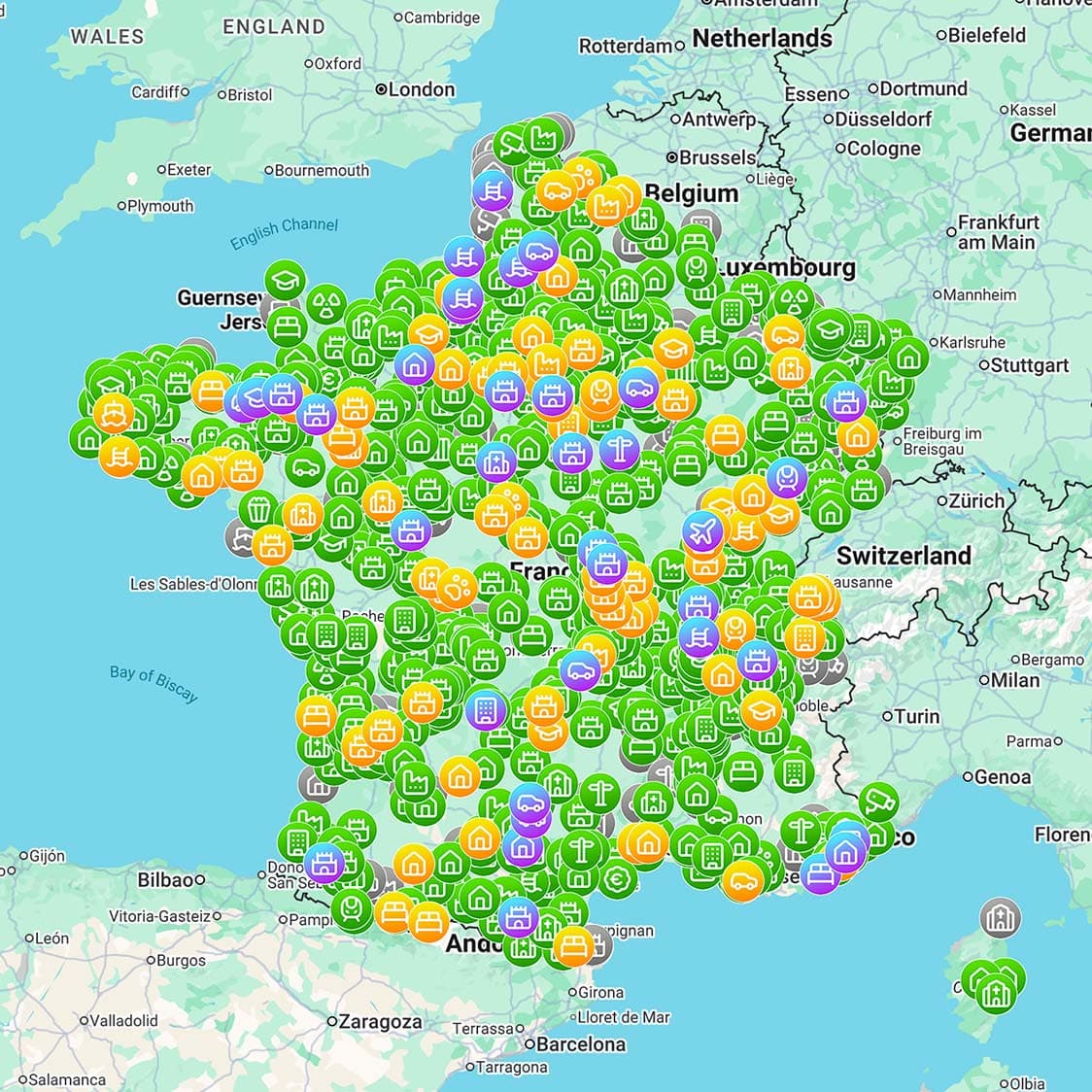
What are the top 20 abandoned hospitals in France?
There is no single official public ranking of abandoned hospitals in France. The most useful answer is a curated top 20 of recurring site profiles: former sanatoriums, rural hospitals, psychiatric institutions, military hospitals, thermal clinics and closed hospital annexes. For responsible urbex, verified context matters more than viral names or leaked coordinates.
Quick summary
- France has many abandoned medical sites, but they do not all have the same history or risk level.
- The most common categories are former hospitals, sanatoriums, asylums, clinics and convalescence centers.
- Many closures came from healthcare centralization, mergers and changing treatment models.
- Hospital urbex is not automatically legal, even when a building looks empty.
- Exact addresses should not be shared publicly when a site is unsecured or vulnerable.
- MapUrbex prioritizes verified locations, responsible research and preservation-first mapping.
Quick facts
| Factor | Detail |
|---|---|
| Country | France |
| Main site families | Hospitals, sanatoriums, asylums, clinics, hospices, medical annexes |
| Typical current status | Abandoned, partially reused, sealed, under redevelopment, or demolished in phases |
| Main risks | Unstable floors, shafts, asbestos, broken glass, contamination, security systems |
| Legal baseline | Entry without permission can be unlawful even if the site appears disused |
| Best research method | Use verified mapping and cross-check historical and current sources |
Why are so many abandoned hospitals, sanatoriums and asylums found in France?
France has many abandoned medical sites because healthcare was progressively centralized. Small hospitals, isolated sanatoriums and older psychiatric compounds were often merged into larger regional systems or replaced by modern facilities.
This pattern is especially visible in rural areas, mountain zones and former spa towns. A site may look fully abandoned from outside while still belonging to an active public body, a private owner or a redevelopment project. That is why "abandoned" does not automatically mean "accessible."
Which 20 abandoned hospital site profiles stand out in France?
The most representative abandoned hospital sites in France fall into 20 recurring profiles. They show how the French medical network evolved over time and why so many hospital-related buildings now appear in urbex searches.
- Former mountain sanatoriums used for tuberculosis treatment in isolated, high-air-quality settings.
- Disused tuberculosis pavilions attached to larger health estates.
- Closed wings of general hospitals left behind after modernization works.
- Rural hospitals merged into regional centers and no longer maintained.
- Former psychiatric hospitals with large estates, outbuildings and perimeter walls.
- Religious hospices and convent infirmaries closed after changes in care structures.
- Military hospitals and rehabilitation wards no longer needed after restructuring.
- Thermal medicine clinics in spa towns that lost patients or investment.
- Old maternity buildings replaced by larger specialized centers.
- Industrial or mining medical clinics tied to vanished local industries.
- Infectious disease pavilions made obsolete by new hospital layouts.
- Convalescence and rehabilitation centers abandoned after ownership changes.
- Children's preventoriums and pediatric sanatoriums closed as treatment models changed.
- Coastal or border quarantine facilities no longer used in their original function.
- Teaching hospital annexes left empty after campus reorganization.
- Private clinics closed after bankruptcy or failed redevelopment.
- Retirement-care hospital annexes replaced by newer geriatric facilities.
- Air-cure institutions on plateaus or in forest zones designed around climate therapy.
- Emergency or dispensary annexes attached to larger estates but no longer active.
- Small-town infirmaries absorbed into larger hospital groups and then left vacant.
Not every site type exists in every region, and many former hospitals are only partially abandoned. In practice, mixed-status sites are common: one wing may be empty while another remains monitored, repurposed or sealed.
How can you verify an abandoned hospital before adding it to your research list?
The safest method is to verify a site through multiple sources. Rumors spread fast in urbex, but medical sites are often misidentified, demolished or still in use behind an inactive facade.
A solid research process usually includes:
- checking recent aerial imagery and older maps
- comparing official property information with local reports
- identifying whether the site is fully abandoned, partly reused or under works
- avoiding posts that publish forced-entry routes or stale coordinates
For a structured method, read How to Find Abandoned Places in France??. If you want a curated overview of verified places, start with Browse all urbex maps.
What risks are specific to hospital urbex sites?
Hospital sites are among the highest-risk abandoned places. Their danger comes from both building decay and the technical nature of former medical infrastructure.
Common hazards include:
- unstable floors and service tunnels
- elevator shafts, basements and roof voids
- asbestos, dust and mold
- broken glazing, sharp metal and loose ceiling systems
- old chemicals, medical waste remnants or contaminated rooms
- active alarms, cameras or security patrols on partly used estates
A responsible approach means no forced entry, no solo risk-taking and no interference with remaining medical property. If a site is fenced, alarmed or still managed, do not enter.
Is hospital urbex legal in France?
Hospital urbex is not automatically legal in France. Even if a medical building appears abandoned, entering without authorization can expose you to legal risk depending on ownership, fencing, notices, damage, heritage protection and the exact circumstances.
The safest rule is simple: abandoned does not mean public access. For a legal overview, see Is Urbex Legal in France in 2026? and Is Urbex Legal in France in 2026? Law, Risks and Official Texts.
How does MapUrbex handle abandoned hospitals in France?
MapUrbex treats abandoned hospitals as high-sensitivity sites. The platform emphasizes verified locations, curated context and preservation-first research instead of open coordinate dumping.
That means checking whether a place is truly abandoned, distinguishing hospital ruins from active medical property, and helping users browse information responsibly. You can explore the wider French database through Browse all urbex maps.
Frequently asked questions
Are abandoned hospitals in France easy to access?
No. Many are fenced, sealed, monitored or only partly abandoned. Easy-looking access often means outdated information.
Are abandoned sanatoriums safer than urban hospitals?
No. Sanatoriums may look more open, but they often have severe structural decay, weather damage and dangerous vertical drops.
Why do abandoned asylums appear so often in urbex searches?
Former psychiatric institutions were often built on large self-contained estates. When care models changed, many peripheral buildings became vacant, which makes them highly visible in local memory and online searches.
Should exact coordinates of hospital sites be shared publicly?
Usually no. Public coordinate sharing increases vandalism, theft and unsafe visits. Sensitive medical sites should be handled with extra caution.
Conclusion
The phrase "abandoned hospitals in France" covers many different realities: sanatoriums, asylums, clinics, closed wards and medical annexes. The best reference list is not the one with the most sensational names. It is the one that explains site types, risks, legal context and verification standards clearly.
If you research these places, use a preservation-first method and rely on verified sources rather than rumors.
Access the free urbex map
